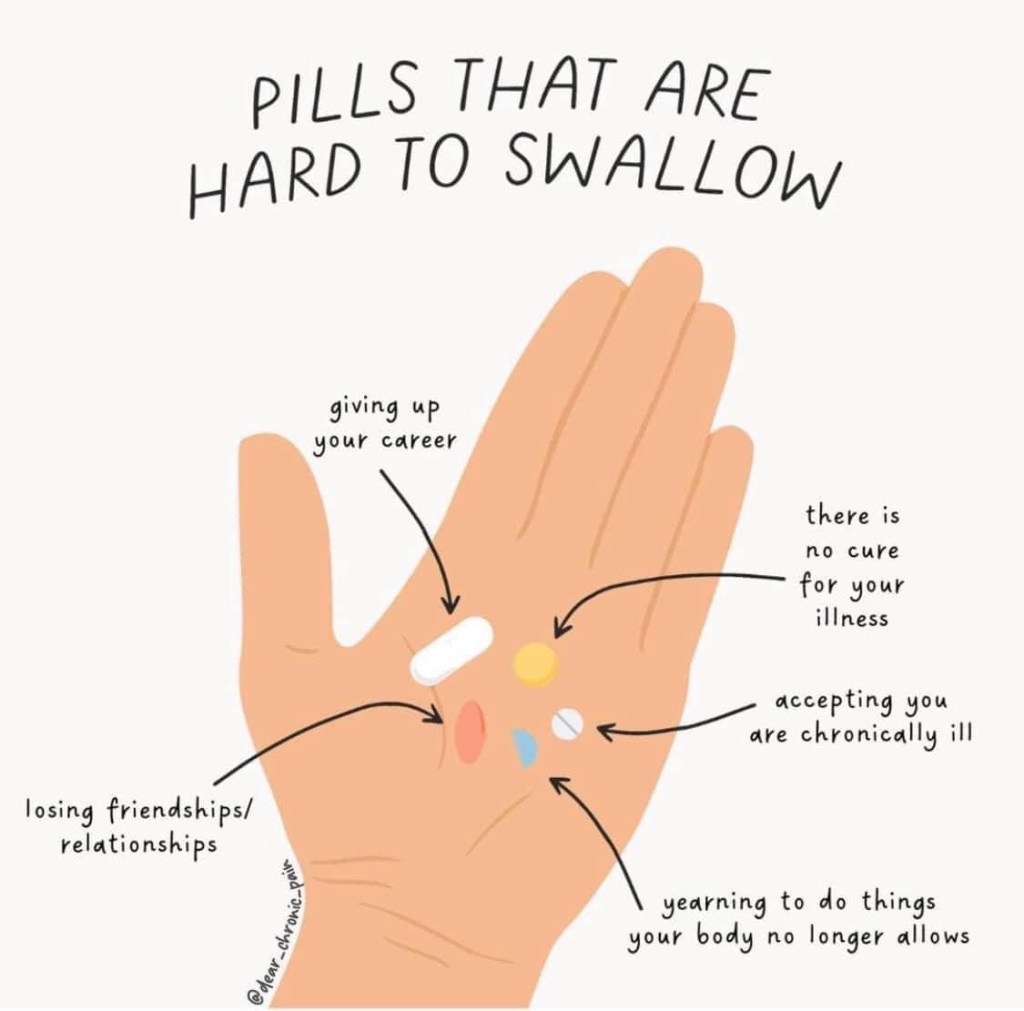
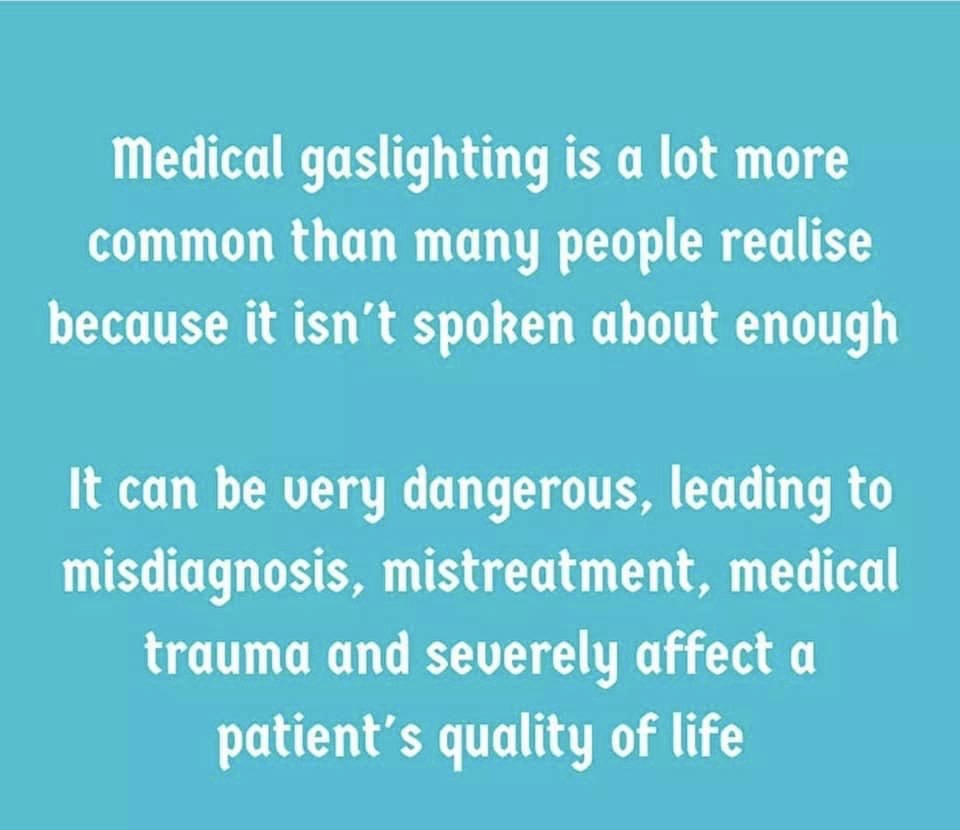
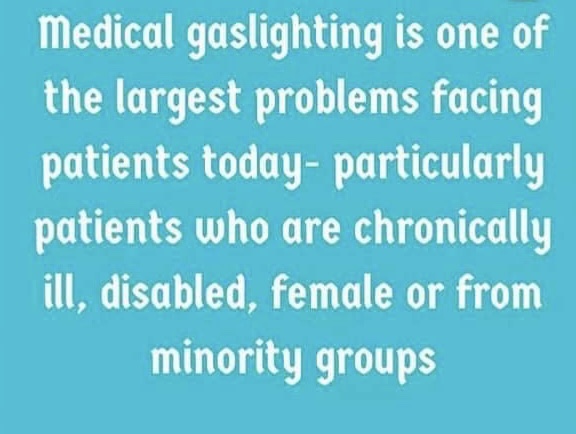
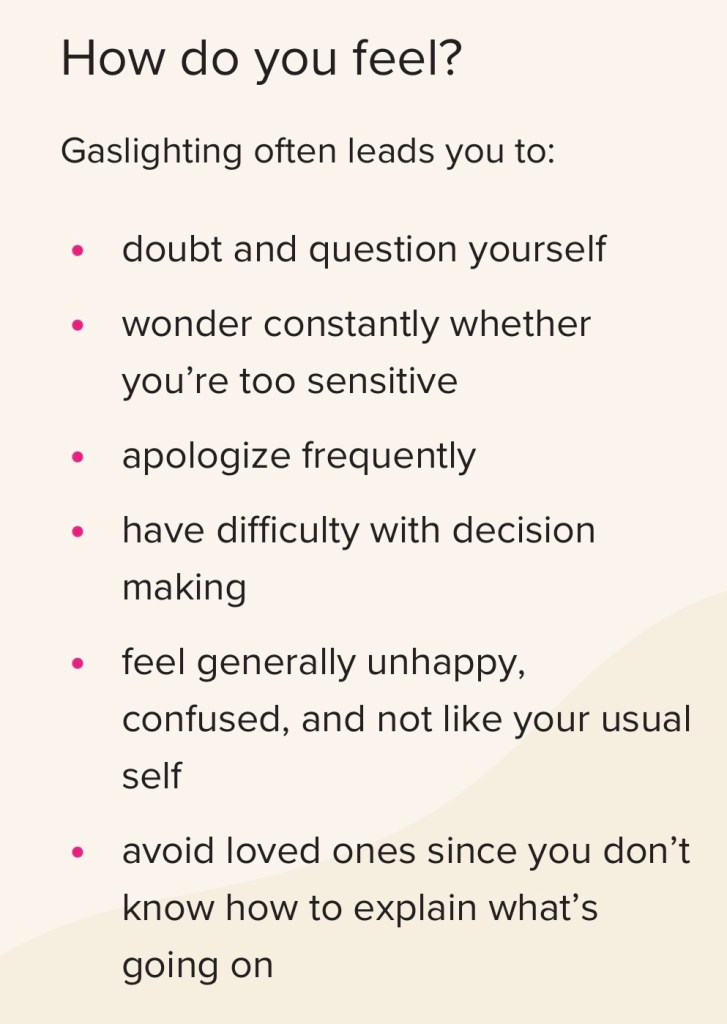
All posts by dsf2779

The Silent Struggle: A Personal Reflection on misdiagnosed/ misunderstood conditions

I recently had to attend a doctor’s appointment with a doctor who had ordered a lung function test way back in the fall. At the end of August I got extremely sick with what she thought was pneumonia. After weeks of antibiotics, trips to the emergency room and the cough worsening over time, she decided to order further testing on my lungs.

Advertisements

Fast forward to a few weeks ago…2025

My results were normal. The doctor was left puzzled to why I got a viral infection which worsened by the day for almost two months straight – instead of getting better over time. “The test results don’t make sense. They don’t match how sick you got and for the duration.” I knew it was lyme and bartonella complicating my health struggles – lyme is known for shutting down the immune system from functioning properly and bartonella co infection is known to affect one’s respiratory system. After ten months of not informing my doctor of the lyme diagnosis, I decided to “let it slip”. I decided to bring up lyme due to the fact that I do think it is impacting my lungs in some capacity. You may be wondering why I withheld such important information – most medical doctors do not believe in lyme.

Advertisements

I had prepared myself for her reaction – which was exactly what I expected. I was told the lyme tests are unreliable and most likely I had a false positive. She is right, the two tier lyme tests are unreliable and often produce FALSE NEGATIVES even if one has lyme disease. It is very RARE to have a lyme test produce a false positive. However, the lyme test I had done is more in depth and is even recommended by Canlyme ( Canadian lyme disease foundation). We are also told over and over again that we do not have ticks here or have ticks that carry lyme disease – I totally disagree with this statement.

I also mentioned the SIBO gut issues I was being treated for -“SIBO is controversial, we don’t really know if it is a thing!” Say what? If you do a quick google search on SIBO, thousands of medical articles are found. In a matter of a minute, two of my biggest health struggles at the moment were dismissed just like that! I did get referred to a pulmonary specialist – maybe the specialist will be able to to run more in depth testing on my lungs.

Advertisements

Over the last week, I have stepped back to reflect on this experience. How are we supposed to get proper treatment/help when so many medical providers do not think our health struggles/issues are valid and are labelled as controversial? Many medical providers world wide still believe fibromyalgia is not a legitimate condition and is often labeled as a mental illness. I wish I had some inspirational advice to give everyone, but I don’t. It is a frustration many of us face with invisible illnesses or misunderstood conditions.

I often thought my fibromyalgia was diagnosed too quickly. Even though my doctor at the time was thorough in running tests, there were symptoms that just did not match a fibromyalgia diagnosis. These symptoms were left without an explanation for years. I eventually just “accepted” the fibromyalgia diagnosis and tried to move on with life managing symptoms – with little success. Symptoms got worse as did the intensity of the pain. I saw no positive changes, because lyme was the underlying cause of my pain and symptoms – most doctors are not trained to diagnose lyme or simply do not believe lyme disease is an issue. I do have fibromyalgia, but the lyme diagnosis was the missing link.
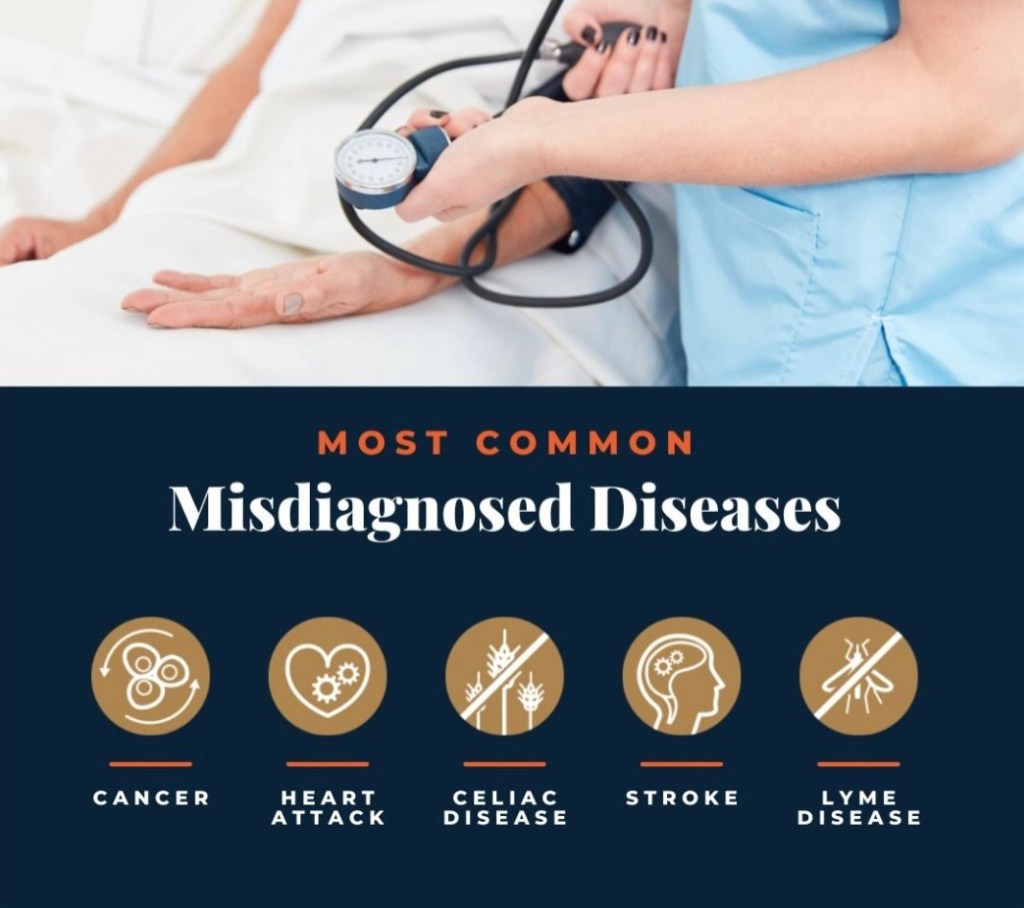
According to one law firm lyme disease is one of the top misdiagnosed diseases.
Advertisements

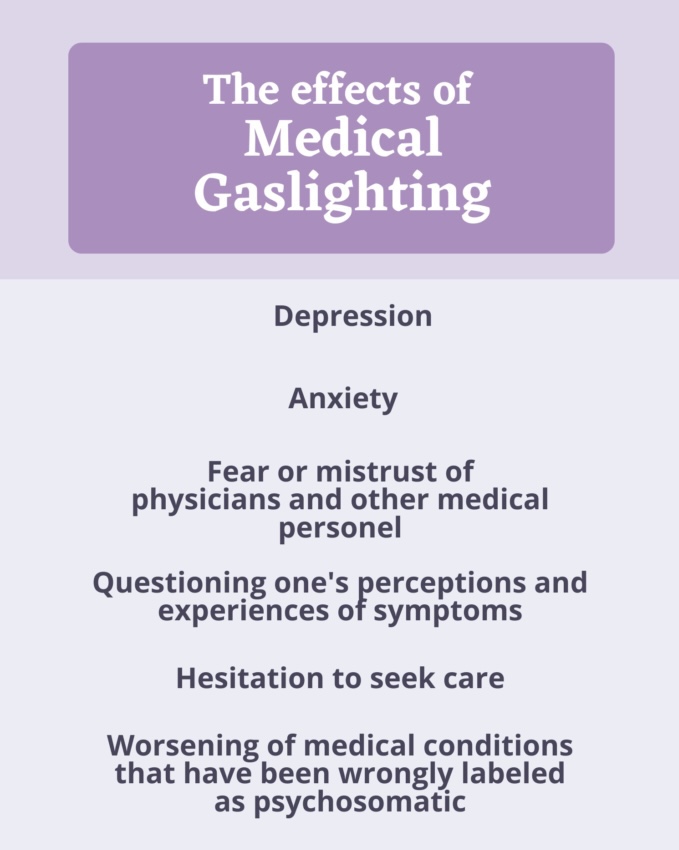
When medical professionals fail to understand a condition or simply do not believe a condition exists the following may take place:

  1. Being misdiagnosed with the wrong conditions.
  2. With the misdiagnosis – insufficient support and improper treatment .
  3. Health consequences. People continue to get sicker because because of delayed treatment.
  4. Psychological distress

It is hard for me not to think..

1 “If only the lyme had been caught sooner, I wouldn’t have become so sick!” The longer lyme is left untreated the more damage it can cause to one’s body head to toe. It can cause damage to vital organs if left untreated. This week I go for for an ultrasound on my heart to make sure the lyme bacteria has not entered into the layers of my heart muscles – it is known to cause an enlarged heart.

2. ” If only I had reached out to the naturopathic doctor (ND) sooner, instead of repeating the same lab tests over and over which all reflected normal. A friend of mine had given me the ND’s contact information two years prior to me actually reaching out to her. I wish I had done so way sooner.

3. The doubt from some medical providers ( not all) contributed to my anxiety disorder. If I had to see a doctor who was unfamiliar with my file, they would immediately blame the symptoms on anxiety. I’ve also been told by several health providers I was not trying to get better.

I am working on not focusing on the what ifs, as I can’t change what took place. All I can focus on is what is in front of me now – today. The what ifs were only contributing to my anxiety levels – increasing symptoms and making me sicker.


The Struggles of Maintaining Friendships Amidst Chronic Illness: A Personal Journey

We often form friendships with people who have similar hobbies and interests as we do. However, what happens when chronic illness takes away our ability to take part in those activities? Those friendships often cease to exist because we no longer have ” things in common”. This does not happen just with having a chronic illness – but at times friendships just tend to grow apart. Our hobbies and interests may change over time as well as our life goals – it is just how life goes.

Advertisements

How do we make new friends when we have a chronic illness? I often found it difficult to make new friends as an adult before chronic illness set in- it seems like unless one is into the bar scene it is near impossible. It is even harder when you factor in a chronic illness. I soon realized I was hearing from friends less and less even if I reached out first – messeges often showed read and I received no response. For myself, when I got diagnosed with fibromyalgia in 2019, I started joining online support groups to be able to interact and chat to other people who understood the struggle with chronic pain and every other symptom fibromyalgia seems to throw at us. I found a few people on the group that lived locally and we started going out for lunch or coffee. There was never any hurt feelings if we had to cancel last minute due to not feeling well. I later started fibrofighters – there are quite a few followers who I speak to daily, eventually adding them to my personal Facebook account and consider them to be some of my closest friends. I can always count on them to be there to listen to my struggles even though they are half way around the world. They get it! Strange how people who you have never met can become your main support systems.

Advertisements

In April 2024, when I received my lyme diagnosis I found myself facing another bout of lost friendships. When I expressed how disappointed I was in “friends” reactions to being diagnosed with lyme disease to the doctor treating me, she looked at me and asked me one simple question , ” Do you really want/need people like that in your life?” Of course my answer was no. Even though it still stung for several weeks, she was right – I don’t need people like that in my life. These “friends” decided to voice their opinions on my treatment routes – it is fine to have an opinion ( we all have opinions), but was it necessary to launch a personal attack and name call?! NO!! You would think my decisions were impacting their lives directly – when they were not. I know their responses were due to lack of knowledge on lyme – however this did not give them the right to treat me in this manner.

Advertisements

We can’t control how people react and respond, but what we can control is how we react and respond to them. Over the last week I have been listening to Mel Robbins “The Let Them Theory” audiobook. It has been an eye opener for me. I won’t be going into detail about the book itself in my blog as there is just too much information to cover. ” The Let Them Theory” has gone viral and was only published December 24, 2024! I kept seeing her book in every store I went into the last several weeks, so I decided to listen to the audiobook version.

Advertisements

“If they want to leave… let them.

If they choose someone else…let them.

If they don’t support you…let them.

If they don’t invite you…let them.

Stop wasting your energy trying to change or control other people.

Let them show who they really are.

And then you can choose what you do next!”

These seven sentences resonated with me. I felt a sense of peace take over. I realized “friends” opinions and actions reflect who they are, not who I am as a person. The way I respond reflects who I am. I wish I knew about this theory months ago when these situations took place. I would have responded way differently. I think I am going to put this theory to the test. It is going to take time and commitment – but I think it will also better my mental health and over all well being.

LET THEM!

SIBO – What is it? Is there a correlation between SIBO and Fibromyalgia?

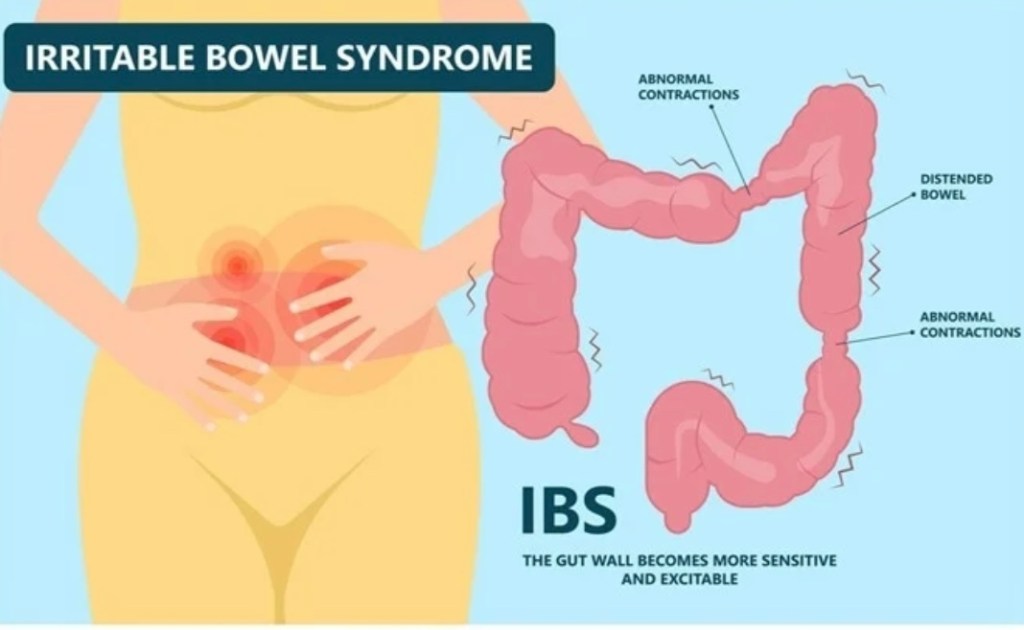
Have you ever heard of SIBO? Most people will say no to this question. I hadn’t heard of SIBO until I started seeing a naturopathic doctor. SIBO stands for small intestinal bacteria overgrowth – it is not the same as IBS or c diff.

I started seeing a naturopathic doctor (ND) in April of 2024 to treat chronic Lyme disease. Before we had even tested for Lyme, the ND was positive I was dealing with SIBO. She immediately put me on a herbal treatment for it and it was gone in three weeks. It is said that 70% of people who have lyme disease often get SIBO. This is my third time being treated for SIBO and it has been the worst case I have had thus far.

Advertisements

What is SIBO?

SIBO is a condition where there is an abnormal increase of bacteria in the small intestine.

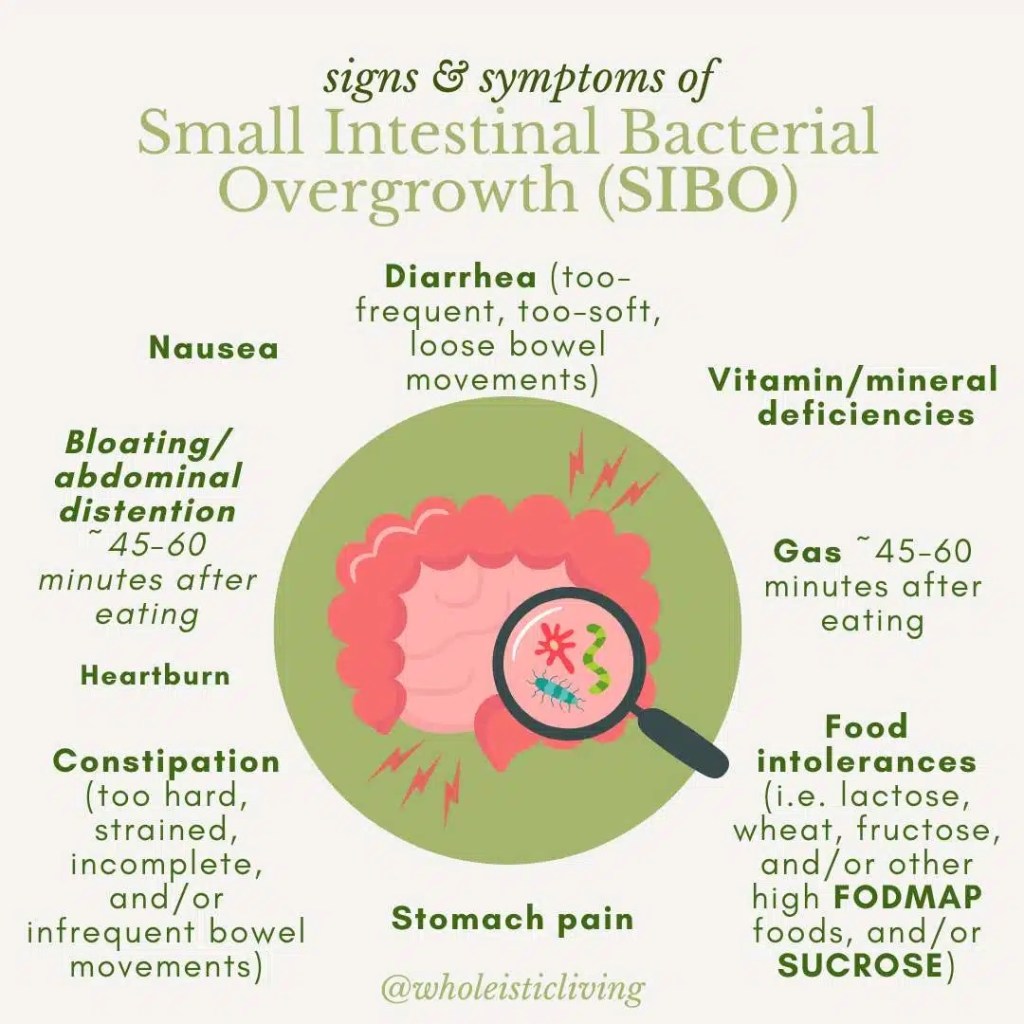
Symptoms of SIBO:

You can find more information about SIBO at the Mayo Clinic here.

Advertisements

How is SIBO diagnosed?

  1. Symptoms. If medical providers know the warning signs of SIBO, a conversation with your provider may lead to a SIBO diagnosis. In my case the ND I see treats SIBO often and she knew what was wrong before we even sat down to discuss details.
  2. There is a breath test that can be done to determine how much hydrogen or methane one breathes out after drinking a mixture of glucose and water. I do not think this test can be ordered in a regular medical lab ( maybe in some areas of the world) . I do know many naturopathic doctors offer the testing, but it can be fairly pricey.
Advertisements

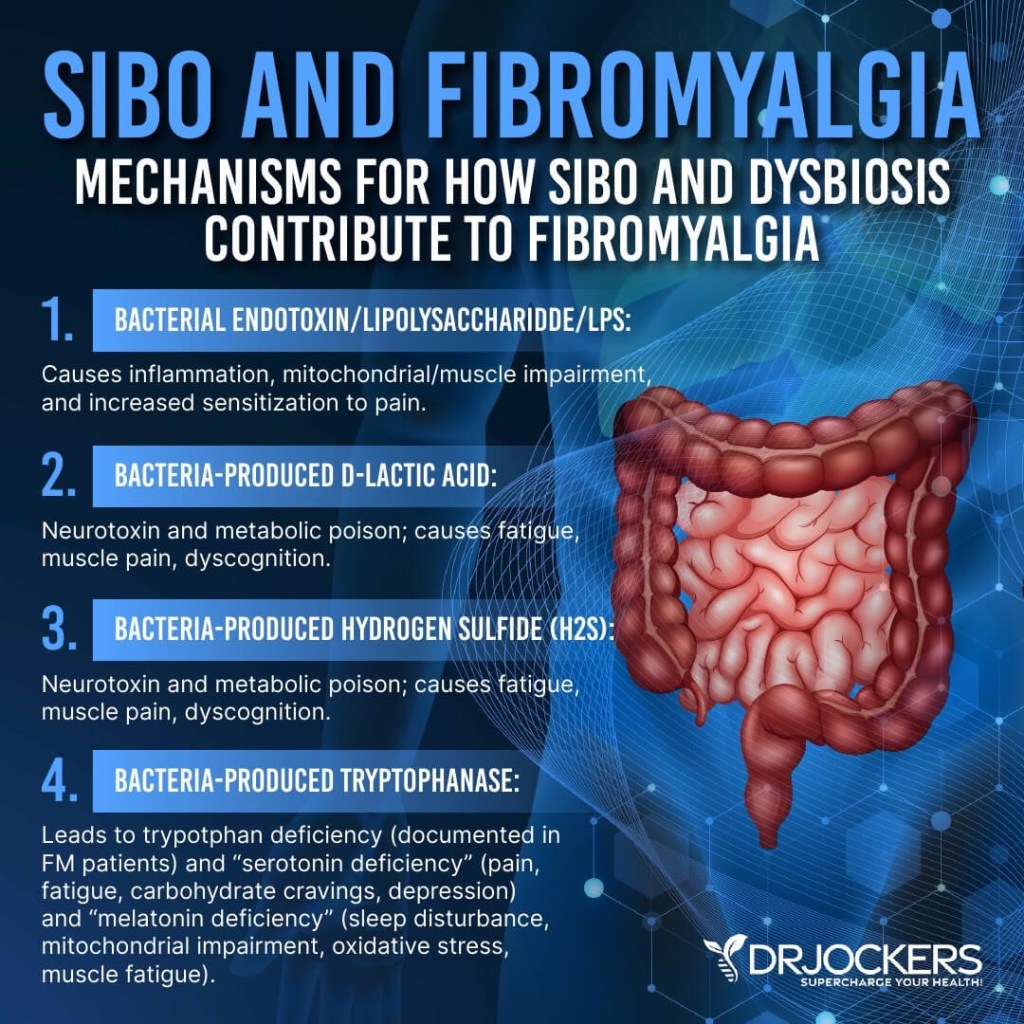
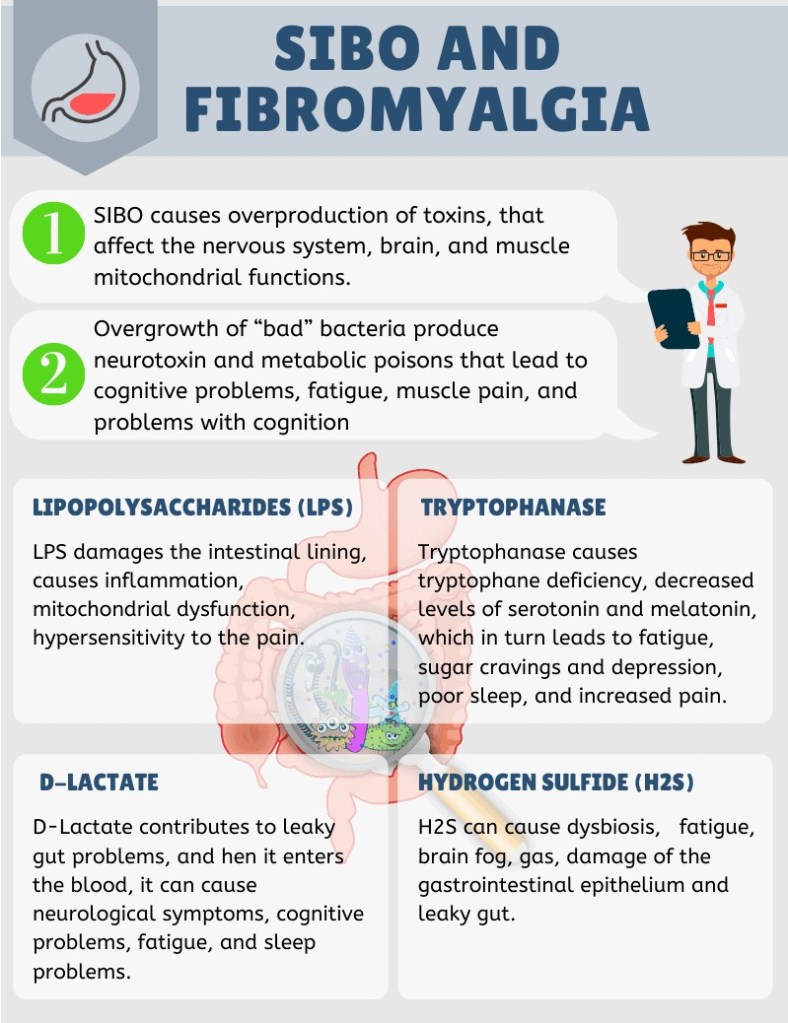
SIBO and Fibromyalgia

Out of curiosity I began googling fibromyalgia and SIBO – and found many studies indicating there is a correlation between the two conditions. Over the years, I have read that gut health needs to be corrected if one has fibromyalgia, but never understood the connection. I continue to do reading on how the gut biome can affect many health conditions to try to understand. Experts state the gut is connected to many parts of the body – including the brain.

Advertisements

In one study, 815 people were tested for SIBO using the breath test. 123 people in the study were known to have fibromyalgia. Out of the 123 people tested for SIBO, 96 tested positive. That is 78%. The study concluded that small intestinal bacteria over growth is associated with a fibromyalgia and when treated for SIBO intestinal symptoms improved. You can read about the study here.

Another study conducted in 2004, concluded that 100% of the participants with fibromyalgia had SIBO. This study can be found here

Advertisements

Even though these are both older studies the findings/results were consistent. I found a few other studies regarding SIBO and fibromyalgia, but due to very little information on the studies themselves, I chose not to include the links in my blog. I think this is due to the fact that the studies are older so only giving you the quick run down of the studies. It would be interesting to see some current studies on the subject conducted to see if the findings are still similar.

Advertisements

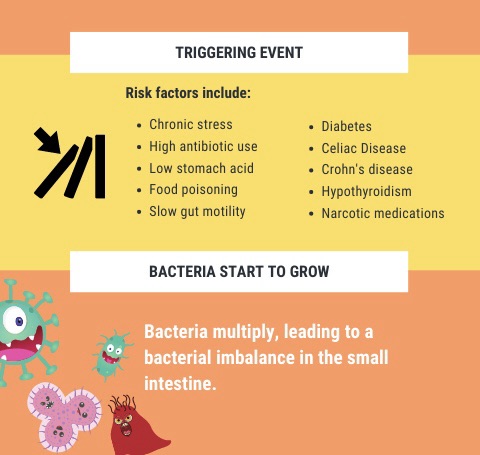
After beginning treatment for SIBO through herbal routes, I mentioned to a few medical doctors that I was being treated for SIBO. To my surprise, their response was, “What is that?” Medical doctors do not seem to even know what SIBO is – yet alone how to diagnose it or treat it. SIBO can be treated with antibiotics, but in my case heavy antibiotic use for seven months for lyme treatment was the culprit to why I developed SIBO in the first place. I was on several probiotics while on antibiotics to help counter act the gut biome from being destroyed – sadly in my case it didn’t seem to be enough and the SIBO bacteria got away on me.

Advertisements

After 4 weeks on various herbal supplements provided by the naturopathic doctor, I began to see improvements. The stomach bloating began to settle down, along with severe cramping, loss of appetite and severe diarrhea. Week 6 – has been fairly up and down with SIBO symptoms yet again. I am attributing the increase of symptoms due to having to switch to another supplement that may not have been strong enough to keep eliminating the bacteria.

I often wonder how I would have gotten the proper medical treatment without the naturopathic doctor being able to recognize the warning signs of SIBO – being medical doctors don’t seem to know what it is. I know I have several months left of treatment, but at least it is slowly getting better.

Next time you may be having major gut issues, consider SIBO as a possibility. You may have to advocate for yourself as many health care providers may not know what SIBO is.

Here is a good ebook i found online about SIBO symptoms. I thought I would include it for those interested in reading more information.

Advertisements

Beyond Fibromyalgia: Uncovering Lyme Disease and Its Impact on My Life

Hey Fibrofighters…

It has been forever since I have written a blog – just shy of 7 months was my last post release. I have not forgotten about you all! For those of you who follow my Facebook page, you all know I continue to post there fairly consistently along with monitoring Fibrofighter’s private support group. I first set out to just take a few weeks break from writing and then life happened….

Advertisements

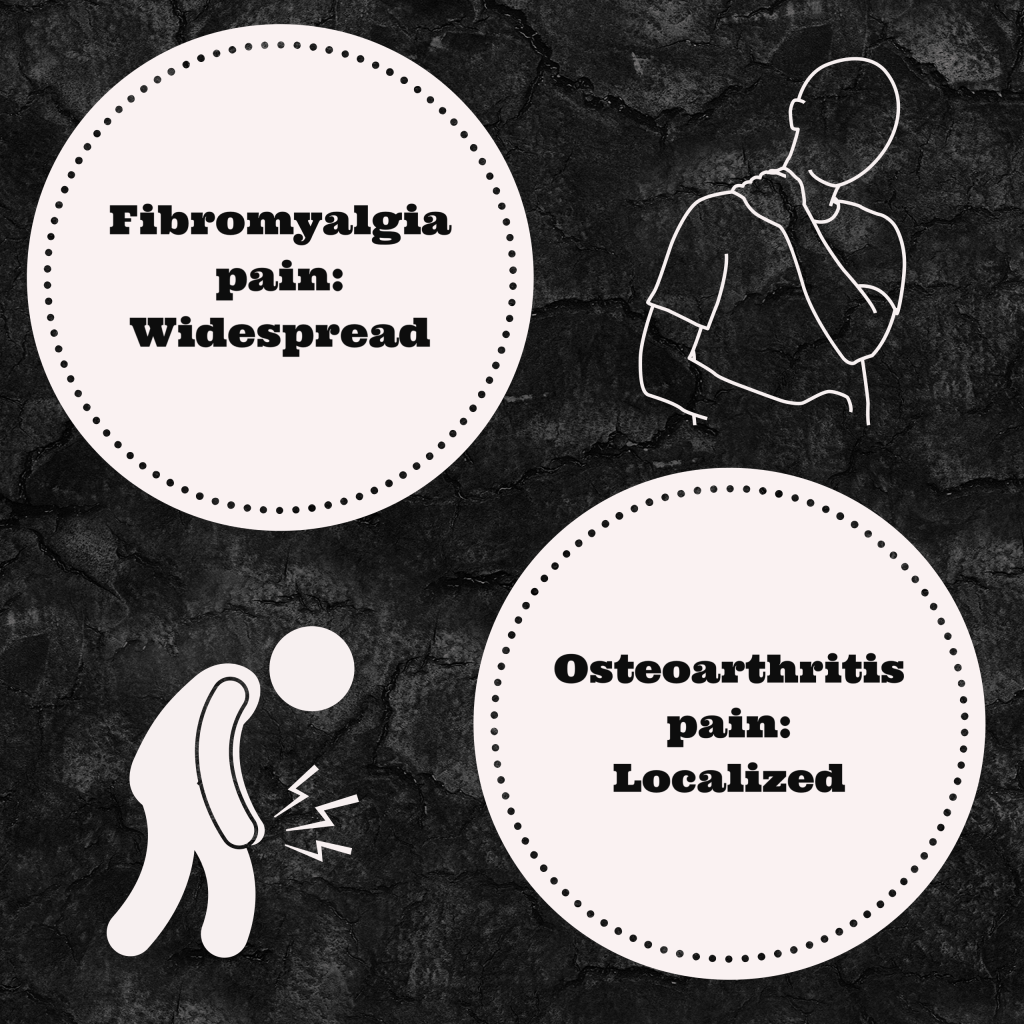
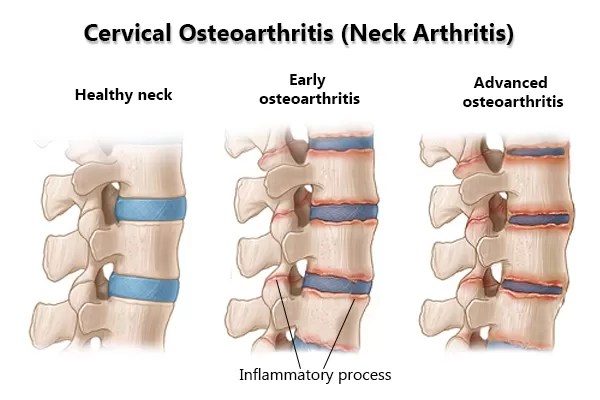
In February of 2024 my fibromyalgia symptoms got severely worse. I assumed I was in a fibro flare up. The muscle pain turned into full body joint pain and the muscle pain seemed to be non existent. I rarely experienced joint pain since being diagnosed with fibromyalgia – it was usually always muscle pain. The sudden change, left me confused and scrambling to try to figure out what caused such a drastic change to take place. I knew I had confirmed osteoarthritis in my neck and lower back – I just assumed I had osteoarthritis in many other joints through out my body. The joint pain began to severely impact my ability to move. I tried every pain reliever, muscle relaxant, pain medication I was prescribed to help with my fibromyalgia pain over the years with absolutely no relief. I found myself laying in bed almost all day barely finding the motivation to even walk to the bathroom because my hips and knees were so sore. Even to weight bear made my knees want to buckle from the pain. I started having daily high fevers of 105 F , swollen lymph nodes and a sore throat as if I had strep throat. I felt like I had been run over by a bus. Although fibromyalgia can cause these symptoms it is usually not seen daily and at the severity I was experiencing. I had been on a wait list to see an infectious disease doctor to investigate more in depth.

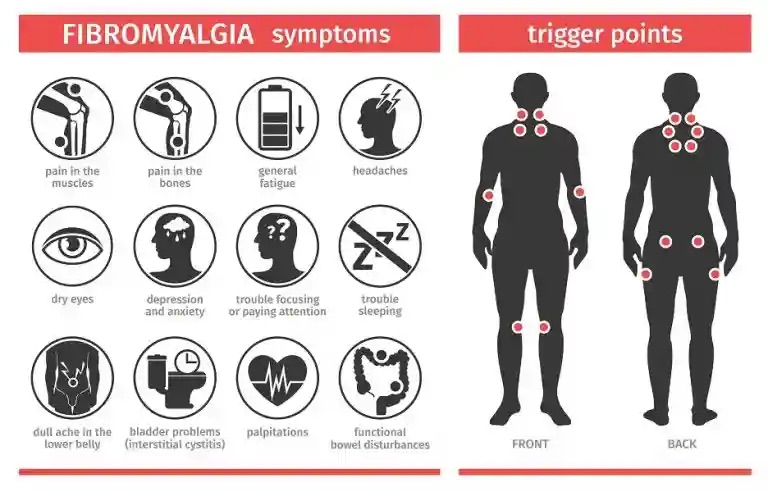
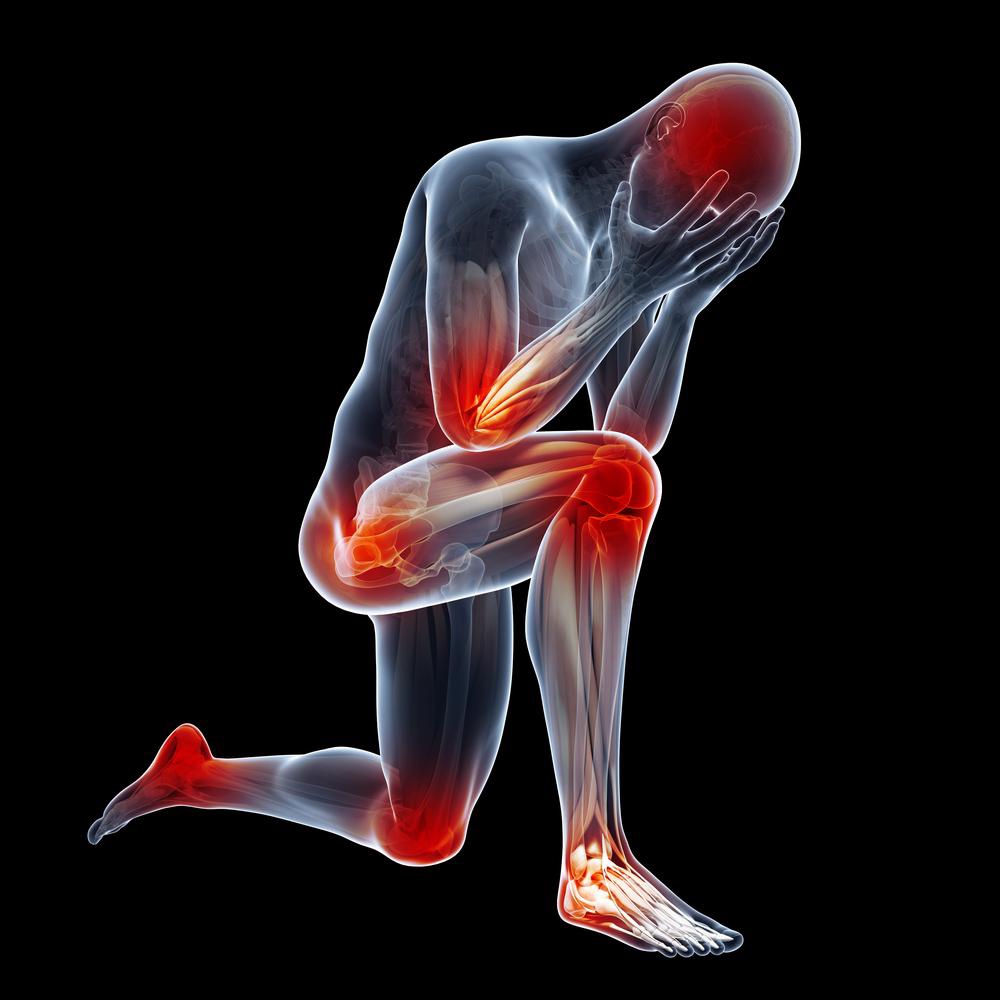
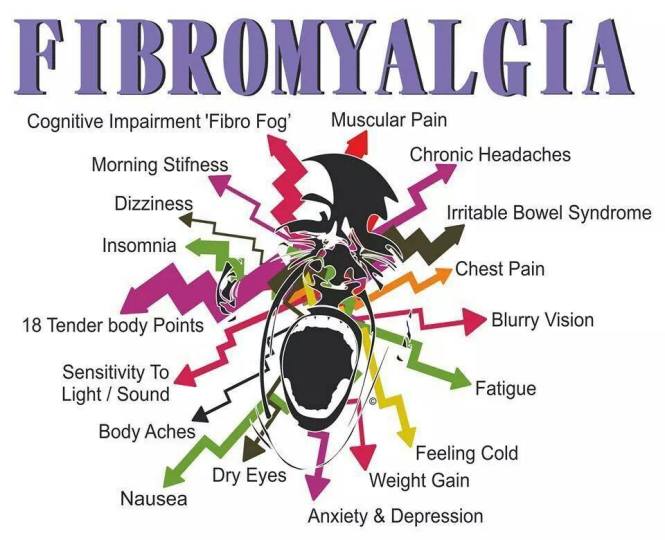
Some fibromyalgia symptoms. There are many more symptoms to fibromyalgia.
Advertisements

Fast forward to April 2024 – knowing I would be told by my doctor it was most likely fibromyalgia and it was just “part of the package”, I never really had an in depth conversation about the new symptoms or worsening symptoms. I did mention the joint pain in my shoulders and was recommended to attend physio. I declined this recommendation as I knew it was all my joints not just my shoulders. My blood work always comes back “pristine” as I am often told. Doctors always responded back stating it is “just fibromyalgia”. If you are reading this post and have fibromyalgia, you totally get the frustration that comes from this comment. The comment we all dread hearing because it makes us feel unvalidated, crazy and as if we are just exaggerating our symptoms. Doctors don’t refer to cancer as “just cancer”, why is fibromyalgia “just fibromyalgia”? Fibromyalgia in itself can be very debilitating and life changing just like cancer can be. I decided it was time to step out of my comfort zone. I reached out on Facebook- on a local group looking for a naturopathic doctor. I was at my wits end after a month and half of severe joint pain, fevers, swollen lymph nodes and a sore throat.

Advertisements

The local licensed naturopathic doctor reached out to me personally on Facebook messenger and we set up a phone call. After a 45 minute phone consultation the naturopathic doctor took me as an urgent new patient. We went ahead with the 2 hour initial assessment and by the time we were done she was confident in stating she was 95% suspicious I had lyme disease ( from a tick bite) and most likely a co infection of lyme. We went ahead with the Germany lyme test – I got a call with the results stating I was positive for lyme and a co infection. The lyme test indicated an active infection which had turned chronic – this means I have had lyme disease for many years making it harder to treat and no cure. All the answers I had been searching for, for years had been answered. I had many symptoms that did not align with fibromyalgia alone. The swollen lymph nodes, sore throat and fever mystery had been solved. Lyme and bartonella are the culprits. Sadly routine blood work does not usually indicate any signs of lyme disease. This part still confuses me – lyme is a bacterial infection, but regular blood work did not indicate any bacterial infection in my body. This is because lyme is smart and can make itself undetectable and hide in tissues instead of the blood. It can even disable the immune system from producing antibodies against the bacteria in order to survive. Lyme disables the innate immune system – which is our body’s first defense against “intruders” ( bacteria or germs). Lyme also produces extremely high inflammation, but does not necessarily show on an inflammation blood test. My body inflammation was low, but lyme was causing inflammation to take place in all my joints. The way I see it ( this is just my personal opinion), lyme defies the scientific world and what doctors are taught in medical school. If lyme can outsmart even the scientific world, what is it really capable of doing to the human body? I try not to over think the possible answers to this question because it becomes overwhelming and my anxiety begins to rise.

Advertisements

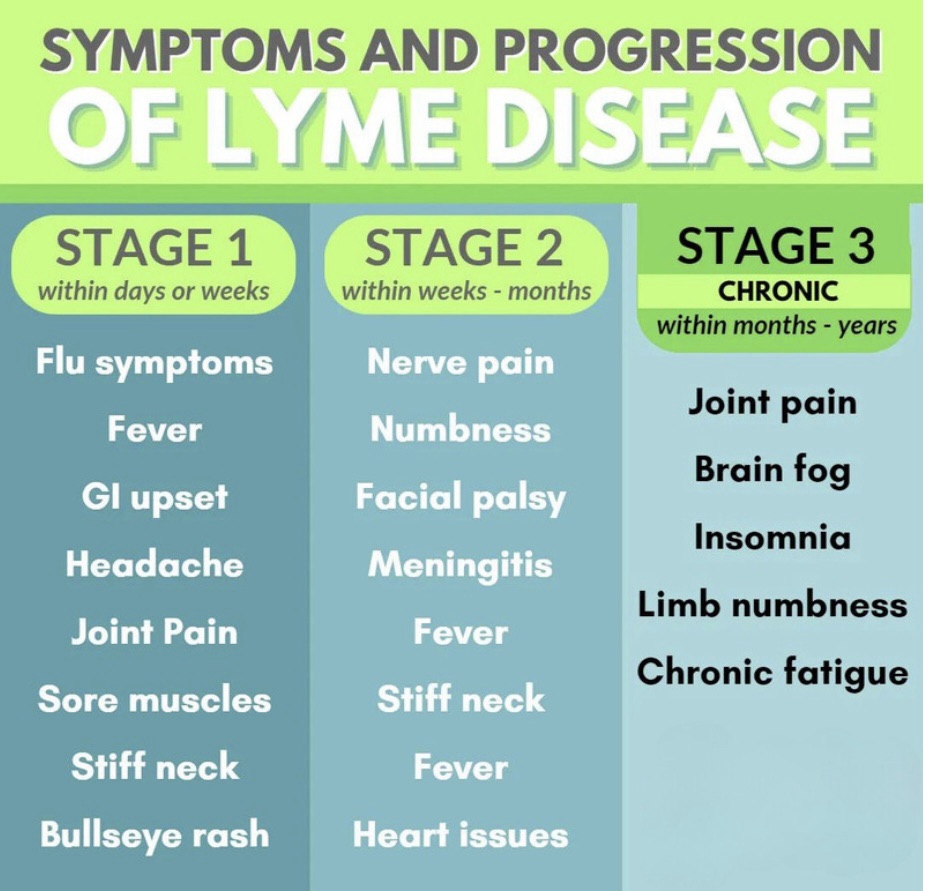
Lyme disease is often misdiagnosed for fibromyalgia because both conditions have many over lapping symptoms. I won’t be going into the over lap in this blog post, but I will be sure to write a blog with this information in the near future. Sooner rather than later!

I started treatment for lyme at the end of April 2024 and it has been a horrendous road thus far. It is definitely not as simple as taking antibiotics for say strep throat or a chest infection. I was not prepared for how sick I would become 2 hours after taking the first dose of antibiotics. I was bed ridden for the first two months of treatment. I thought my symptoms were bad in February and March, it got much worse. I had to learn how to manage a whole new diagnosis, how to treat, manage side effects from supplements and medications and mentally come to terms with the diagnosis in a hurry. I am coming to the end of month four of treatment and still feel lost in this new journey. Chronic lyme means the bacteria has made it into every part of my body – Every tissue, every joint, every organ and has even passed the blood brain barrier. I have many years ahead of the unknown. Our hope is to eliminate as much bacteria as we can and put the lyme into remission. The sad part is chronic lyme can never be fully eliminated. Even if I am lucky enough to get to remission, a stressor or catching even a bad flu could trigger dormant bacteria out of hiding and the infection becomes active again. I have a long road ahead, but when I got diagnosed with lyme I decided it was time to take my life back!

Advertisements

My advice to you all:

  1. If you feel it is more than fibromyalgia never stop looking for answers. Never assume every symptom you experience is fibromyalgia related. Make sure to mention new or worsening symptoms to your doctor.
  2. Trust your gut instinct! I knew deep down that something was extremely wrong, but general doctors often miss the symptoms of lyme. The naturopathic doctor I reached out to is lyme literate and trained to treat lyme.

3. Advocate for yourself. If you don’t stand up for your medical needs, who will? You know your body the best. You know when something is not right.

Much love

Fibrofighter

Progressive muscle relaxation and fibromyalgia

Progressive muscle relaxation is a technique used to help decrease muscles tension. It focuses on one part of your body at a time with a goal of relaxing that part. Believe it or not this technique focuses on slowly tensing and releasing each muscle group at a time. You might be discouraged as soon as you read tensing up your muscles, but the technique states to stop tensing before you feel pain!

Advertisements

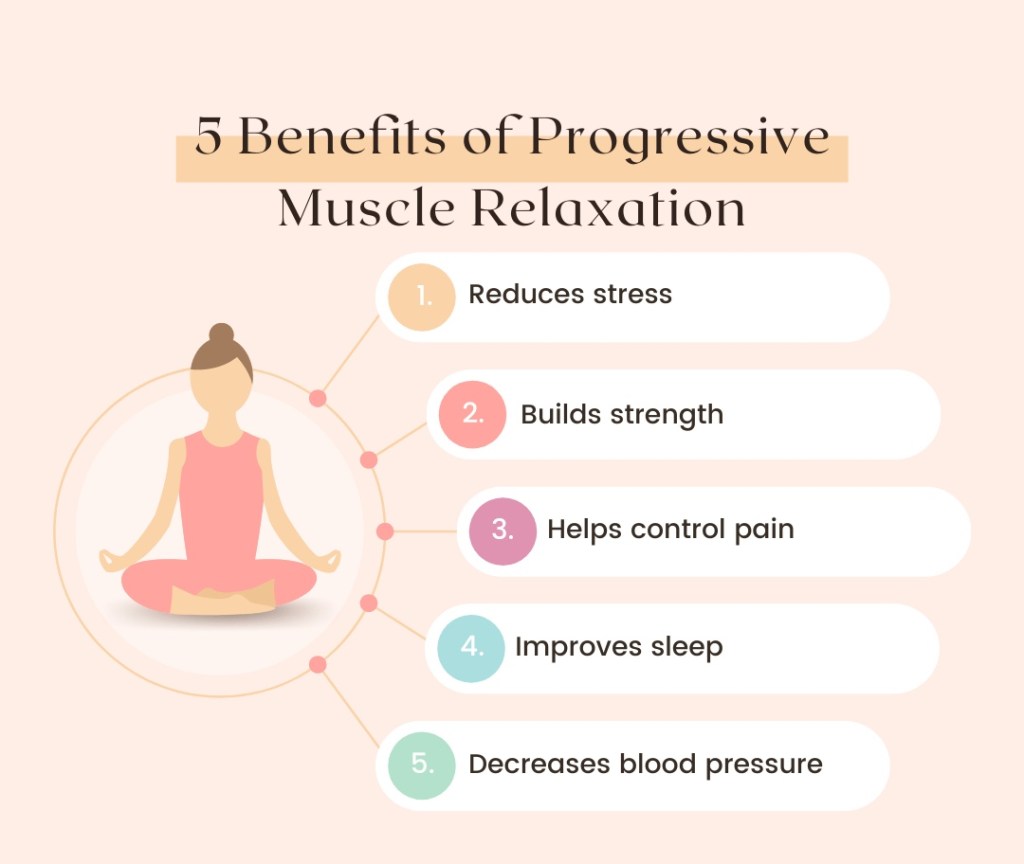
I actually read about this technique in a book I have in regards to PTSD. I decided to research more about progressive muscle relaxation and came across articles stating this technique may be used to help fibromyalgia. There are also many other benefits to using this technique – it helps reduce anxiety, stress, lowers blood pressure, helps migraines, improves sleep issues and lowers pain levels. These are just a few benefits to using progressive relaxation techniques!

Advertisements

A 2022 study (small study) put progressive muscle relaxation to the test to see how people with fibromyalgia were effected. Thirty seven people with fibromyalgia were randomly selected along with a control group of people without fibromyalgia. The group with fibromyalgia took part in progressive muscle relaxation twice a week for eight weeks. The results of the study showed pain and fatigue among the fibromyalgia group significantly decreased. Perceived stress, blood pressure and pulse rate also decreased.

Advertisements

Conclusion.

According to the study progressive muscle relaxation is a feasible treatment route to help improve pain, fatigue, and stress symptoms in people with fibromyalgia. Of course this is just a small study completed, I feel a wider study should be completed to verify the findings. To read the study visit here.

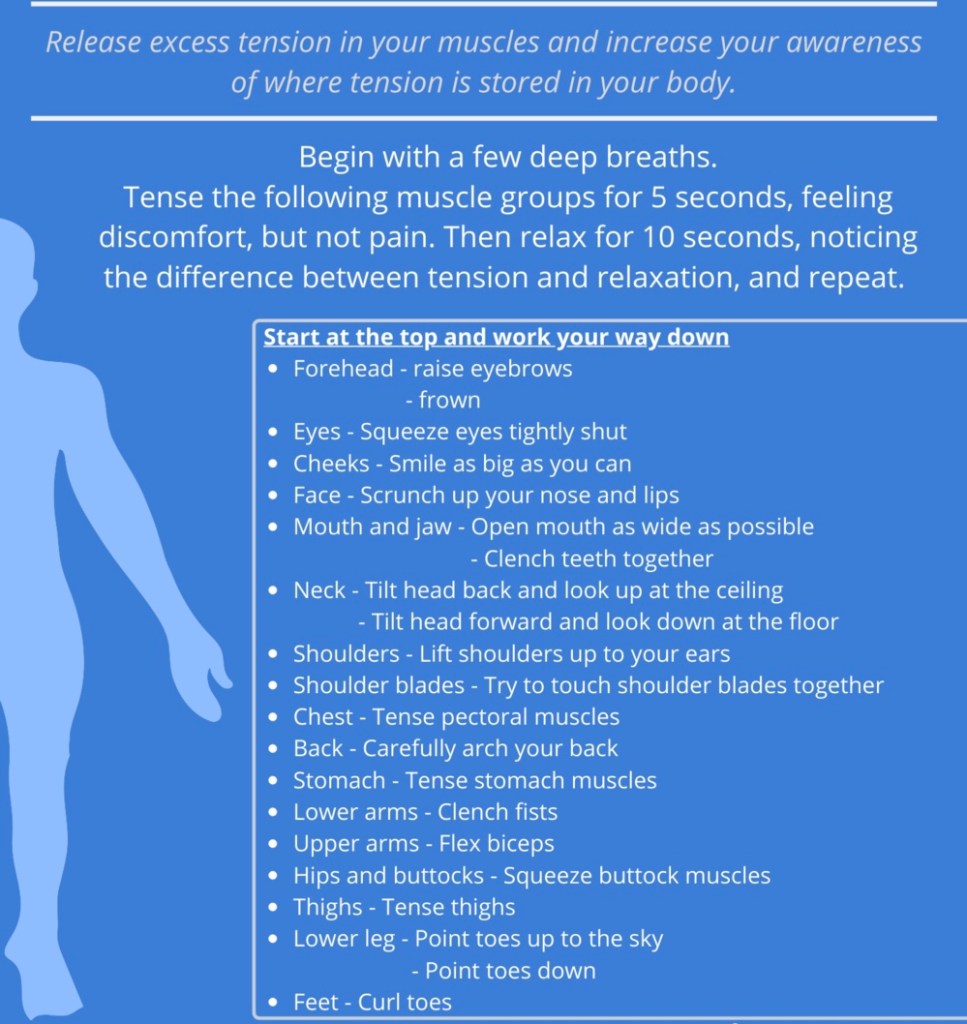
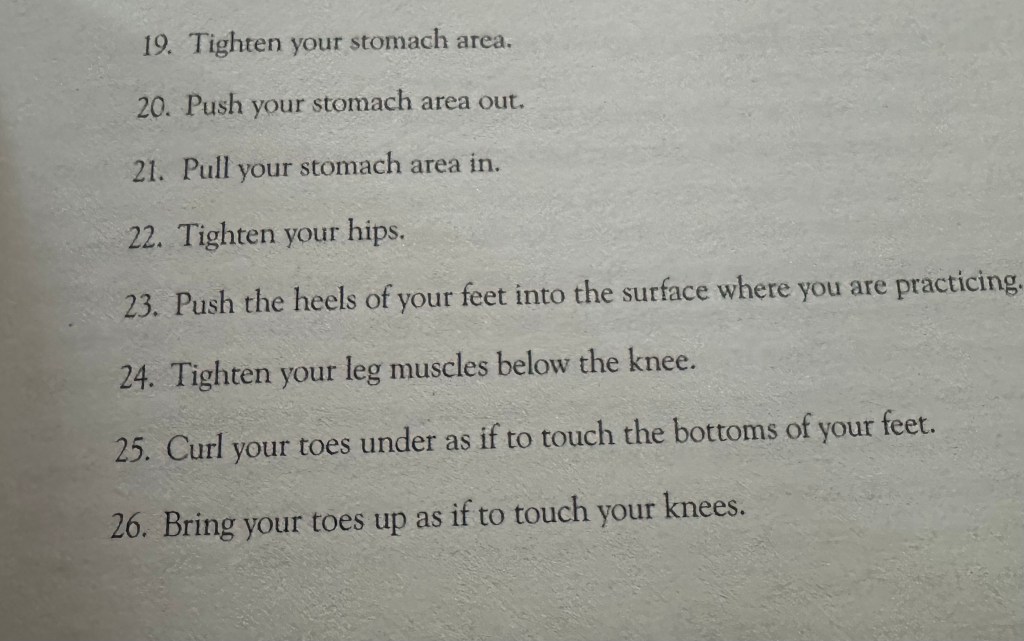
Here is a basic progressive relaxation sequence.

Taken from the book “The PTSD Workbook” third edition
Advertisements

Taken from the book “The PTSD Workbook” third edition
Advertisements

There are many other examples online if you look up progressive relaxation techniques. The above sequence is just one example. I have not personally tried this technique, but I think I will trial it for a few weeks to see how my body reacts.

For more information on progressive muscle relaxation visit the following websites.

1. https://www.healthline.com/health/progressive-muscle-relaxation#about-pmr

2. https://www.anxietycanada.com/articles/how-to-do-progressive-muscle-relaxation/

How I found purpose in life living with fibromyalgia – My story!

When we live with fibromyalgia ( or any chronic condition) we may eventually question ourselves to how can we find purpose to life. What is the purpose in life if we are constantly in pain, extremely fatigued to be productive or struggling with other symptoms of the illness? How does one find purpose in life when even simple tasks such as showering becomes daunting and drain us mentally and physically? We often attribute purpose to our career. When we work, we have daily purpose. What happens to that purpose when we can no longer work?

Advertisements

Before my fibromyalgia diagnosis, you could find me working either as an educational assistant (EA), community disability worker or early childhood educator. I based all my college training around these three jobs – certified to work as an EA, level two early childhood and had taken many training courses as a disability worker. I also had all my training completed to work as a mental health rehabilitation worker. As you can see, I based my education around supporting others around me. Reality is – I probably won’t be able to return to any of these work settings as they are too demanding for my body to keep up. It is very difficult to learn to accept this. Reality is – you have to learn to accept this as your new reality and move forward. Are there days that I find myself still angry that I can no longer work in any of these fields? YES! Is it ok to feel angry, disappointed and discouraged? YES! Does it make me a weak person for not being able to return to these jobs? NO! Even though some days I do feel that it does make me weak. 
Advertisements

I recently ran into the parents of a client I used to support in the community I lived in years ago. Reminiscing about those days made me really begin to question what my purpose in life is living with fibromyalgia. I no longer have a career or job to see to daily as it became too much for me to handle shortly before I got diagnosed. I suppose I measured purpose in life by my career.

Advertisements

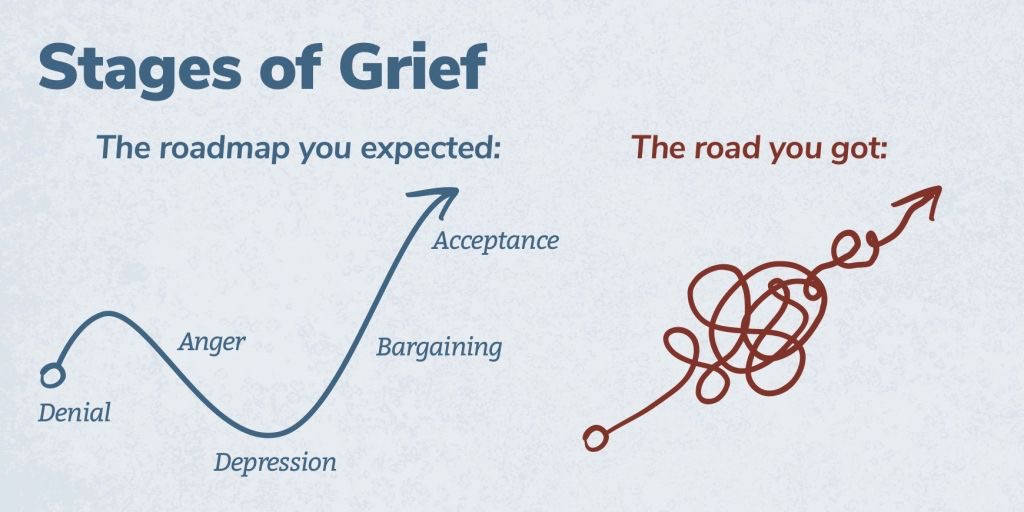
A few weeks ago, I was discussing purpose of life with the psychologist I see regularly. I shared my frustrations and we had a discussion about purpose. I was reminded that there are other ways to find purpose in life – even through hobbies. I thought I had grieved the loss of my career years ago – however what we often forget is that one can return to any stage of grief at anytime. Grief is not a one way street.

Advertisements

A conversation I had with a very wise lady ( also a life coach) said to me months ago – ” What if you haven’t lost yourself or your purpose in life!? What if you are only just realizing who you are now. The person you were before fibromyalgia may not of been who you were meant to be and you are just finding that out now.” It is a true statement, because as our lives change over the years ( even without a chronic illness) our purpose in life will alter and change. Our experiences and goals will alter our purpose. I had mentioned that I had begun blogging about my fibromyalgia journey. “What if you were meant to be a blogger all this time? You are helping more people blogging than you do in a year working in a classroom as an EA!” I can’t disagree with that statement – my blog has gone worldwide – many followers make time daily to stop into “my world” to see what I have posted. In 2022, my blog posts were viewed over 50.2K times. I was shocked at my year in review stats I received January 1, 2024! I had also submitted my blog to be considered to be listed on the top 60 blogs for fibromyalgia and to my surprise it was accepted to be listed for high quality informative information. I am currently holding spot 23, but it changes position monthly depending on how many blog posts I release. Obviously the more I blog the higher on the list my blog is. Even though I am currently sitting at 23, I see this as an accomplishment as many of the bloggers listed on this site are highly known fibromyalgia advocates/ speakers or even doctors who treat fibromyalgia!

Advertisements

In a way my blog could be considered a job even though it is not a “paid” position. Not only am I a blogger about fibromyalgia I have become an advocate and educator. When I began my blog in 2022, I was set out to help people with fibromyalgia worldwide not feel so alone and isolated. I write many educational blogs which help inform and educate people on fibromyalgia worldwide. My blogs are reshared over and over by people – I was hoping by educating people even without fibromyalgia the stigma of fibromyalgia may decrease even by a little bit. I do have many followers without fibromyalgia who are following and reading my blog to help understand and support a loved one or friend with fibromyalgia.

Advertisements
Advertisements

I have slowly been working on writing a book on my fibromyalgia journey that I hope to eventually publish and sell. I am no where near being ready to publish it and it is in a very rough draft at the moment. Most is just jotted down and not even formed into sentences yet. It is a work in progress. I also attend many fibromyalgia online conferences and summits and often thought about possibly becoming a speaker/advocate at one of these summits. I did get approached shortly after starting my blog to be a speaker on a fibromyalgia podcast, however being new to the blogging world I was not confident enough in speaking live about my fibromyalgia journey. I was still learning to adjust to life with a chronic illness and struggling a lot myself. If approached again, I would possibly jump at the opportunity now! If it is meant to be, the opportunity will present itself again.

Advertisements

For a lot of us with fibromyalgia, it becomes so overwhelming when we don’t feel like our life has meaning. Our purpose doesn’t have to be big and grand. For those of you who follow my Fibrofighter’s Facebook page, you may even leave a comment that might help pull someone out of a depression. You may find yourself offering an ear to just listen to someone vent through a messege – that gives you purpose.

Fibromyalgia and Neuroinflammation – Neuroinflammation is being found in people with fibromyalgia!

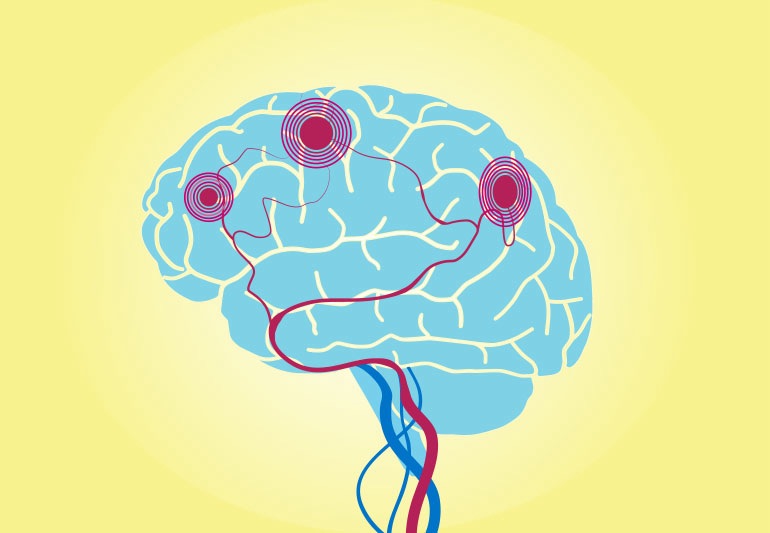
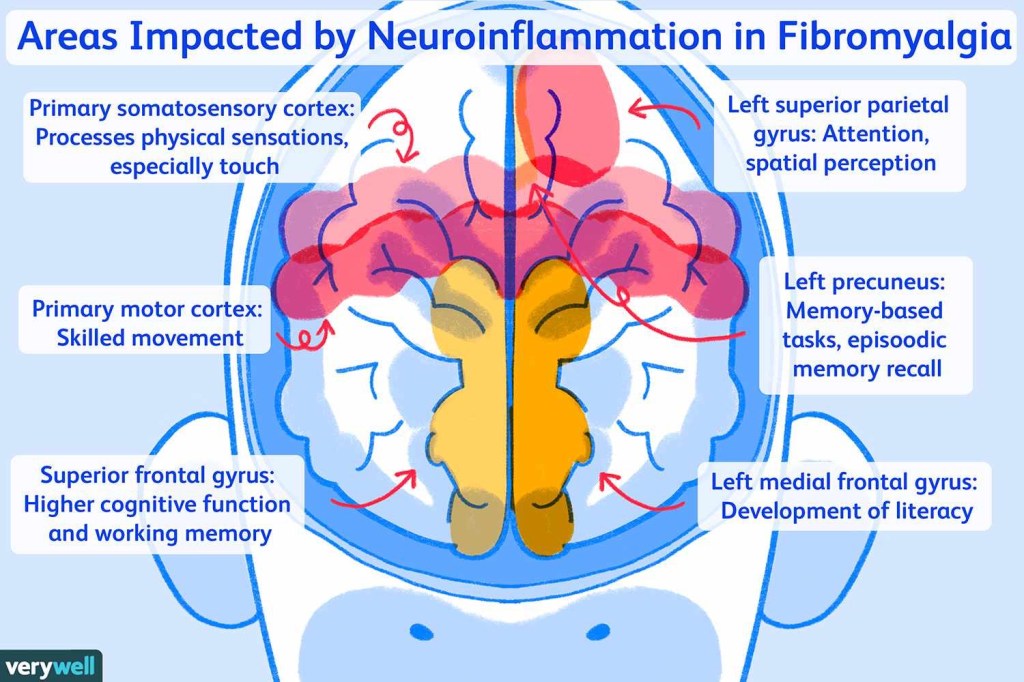
Fibromyalgia can be a very confusing condition. Not all healthcare providers believe fibromyalgia derives from the same body system issues. Some classify fibromyalgia as arthritis, others state it is neurological and then there are still health care providers out there that believe fibromyalgia is a mental illness. The one question we all ask is “Does fibromyalgia initiate an inflammatory response in the body? If one was to do a quick google search the results quickly reveal fibromyalgia does not produce inflammation in the body. However, many of the current speakers at fibromyalgia summits (usually doctors) state there is actually inflammation – neuro inflammation. The regular blood test to check for over all body inflammation does not seem to diagnose this inflammation. This makes it difficult to measure the actual inflammation seen in the body with fibromyalgia!

Advertisements
Advertisements

A 2018 study revealed that there appears to be increased neurological derived inflammatory mechanisms taking place in the peripheral tissues , spinal cord and brain in people with fibromyalgia! Why do doctors not know about these studies on neuroinflammation? Is it because these were just smaller studies and more evidence is needed? Regardless, these results were logged at the end of this study.

Advertisements

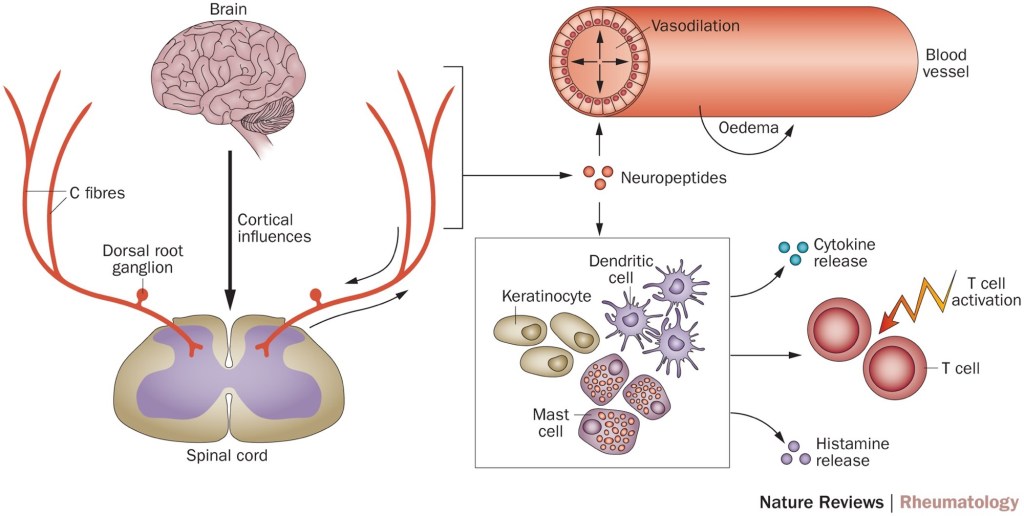
The study suggests that neuropeptides, chemokines and cytokines are all affected and cause activation of the innate and adaptive immune systems. I had no idea what these two systems were so I had to do further research. The innate immune system is the bodies first line of defense against invading pathogens while the adaptive immune system is set out to destroy the invading pathogens. As this process takes place, several peripheral clinical features of fibromyalgia are produced – swelling and dysesthesia ( unpleasant feelings in the body). The central nervous system may also be influenced thus causing changes in cognition and produces fatigue. As a result, stress related psychological mechanisms and emotional stress is triggered. All this will increase neuro inflammation. Food for thought ( my own opinion) is this why fibromyalgia is known to cause flu like symptoms in many people with fibromyalgia? I often have daily flu like symptoms and when I get sick the illness seems to last even longer compared to those I know without fibromyalgia. Is it the innate and adaptive immune system causing these symptoms? If both the innate and adaptive immune system are at play – is this more evidence that fibromyalgia may have an autoimmune component? I don’t have these answers for you all, but when I read this study, this are the questions that kept floating through my mind. Maybe one day this study will give us more insight into fibromyalgia.

Advertisements

When you put all this information together, it does make sense. We are always told that these are all fibromyalgia symptoms, but no one ever explains why. This study breaks it down. Hopefully the explanation I gave wasn’t too scientific. Here is the link for the 2018 study. It is only the summary – the study in its entirety doesn’t seem to be available anywhere.

Advertisements

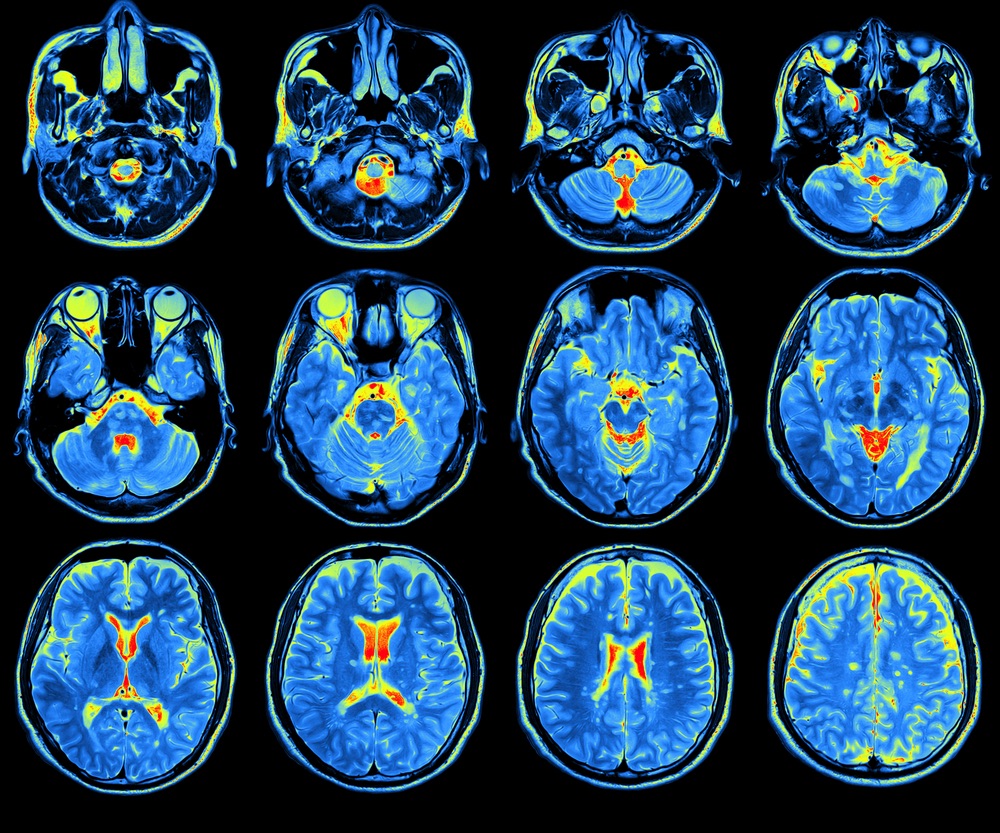
Another study done in 2021 on neuro inflammation using PET scans. There is not much for me to summarize as this study does not give much details. I will include the link. Again the results revealed that people with fibromyalgia showed a significant higher neuroinflammation than those in the control group. Conclusion – abnormal neuroinflammation can be an important pathological factor in fibromyalgia. The study revealed critical regions affected by neuroinflammation – which could help improve diagnosis and effective medical treatment for fibromyalgia.

Advertisements

A third study completed in 2022, using Diffusion kurtosis imaging was also completed. By using this technique, microstructural alterations associated with neuroinflammation were able to be observed. Again, the results showed that people with fibromyalgia have significantly higher neuro inflammation then thee control group. The report stated that the results will help provide valuable information in regards to brain neuroinflammation. To read the study visit here.

Advertisements

Hopefully in the near future, these studies help improve the way fibromyalgia is diagnosed and treated. There appears to be consistent results and findings at the end of all three studies – neuro inflammation is known to be prevalent in people with fibromyalgia!

Fibromyalgia – It is okay to not be okay…It does not make you weak!

I saw the above picture being shared over and over on many chronic illness/pain and fibromyalgia communities. I often share my belief that it is okay to have days where your chronic condition wins. Trying to find relief and battling our own bodies day in and day out can be exhausting in itself. I am definitely struggling with this lately myself. How do we keep pushing forward when there is no cure for fibromyalgia? Some days I wonder how I do it myself – reality…we are not given a choice. However, it can become very discouraging and daunting at times.

Advertisements

I was recently scrolling through a fibromyalgia advocate’s Facebook page and came across a few facts about fibromyalgia. I am unsure where these stats came from, but from a 2021 post she shared… “Of the currently available medication treatment for fibromyalgia, only 40% of those with this medical condition find mild to moderate relief of their symptoms.” To put this into further perspective that means out of 22,200,000 people world-wide with fibromyalgia only 8,800,000 find any relief! That leaves 13,320,000 million with fibromyalgia with NO relief at all for their symptoms. I am sure the stats read a bit different now as we are nearing the end of 2023 and these stats were from 2021 – however the point is so many people world-wide are left without relief. No break from fibromyalgia.

Advertisements

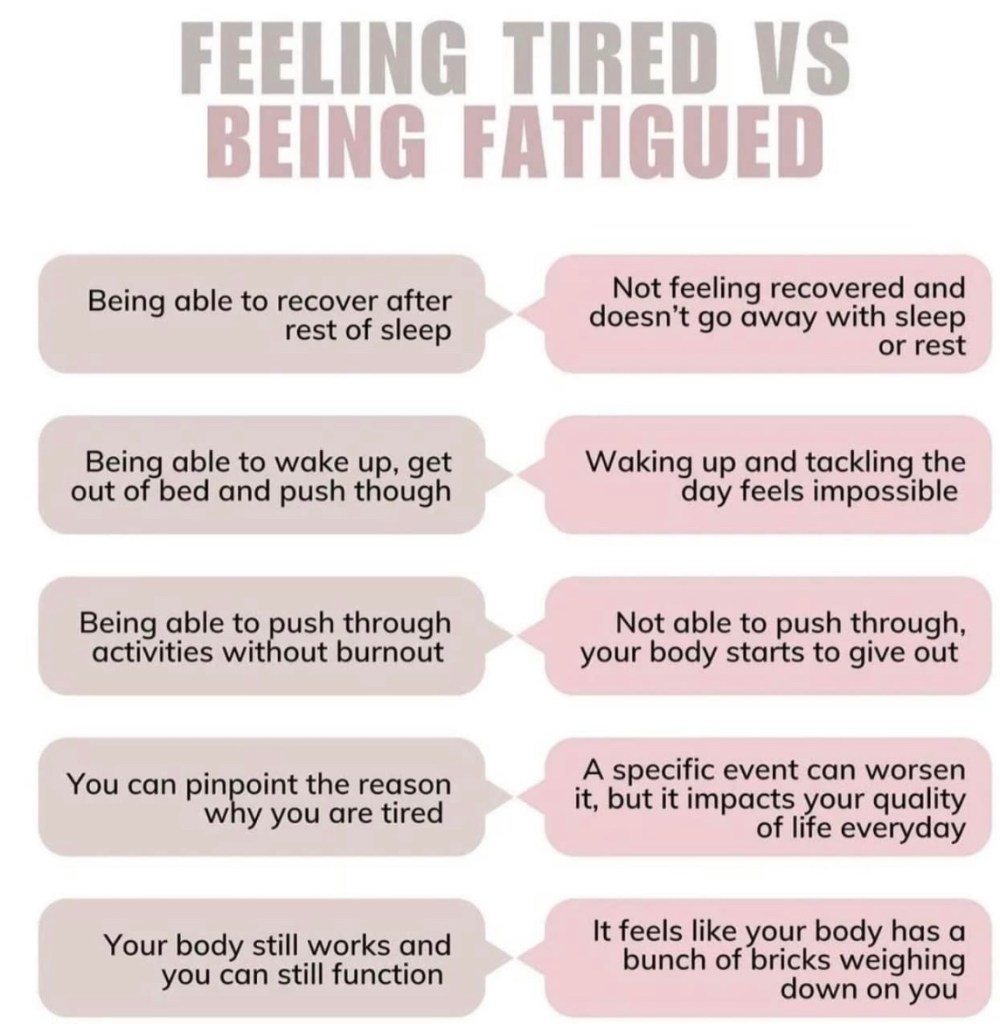
I am one of those 13,320,000 people with fibromyalgia who has found little to no relief from many of the symptoms. I have tried many different strategies to try to diminish symptoms and improve my overall quality of life. I think health care providers often forget that pain and fatigue are not the only symptoms we suffer head on from fibromyalgia. Did you know fibromyalgia has over 300 possible symptoms? Yes! You read that right. Most likely a person won’t ever have 300 of the symptoms at one time ( or even develop all 300) – but many symptoms begin to pile up on top of one another and we are left scrambling to remedy these symptoms (without much guidance). The pain and fatigue is enough to deal with on their own. I’ve once noted over 50 fibromyalgia symptoms in one day. It is near impossible to try to even diminish 50 symptoms at a time! These are the days I allow my chronic condition to win. These are the days I shut the world out and sleep my day away because trying to remain put together and functionable are just not realistic goals. If you haven’t already read my blog post about how having a chronic illness/condition can become a full time job, you can read it here!

Advertisements
Advertisements

I often say that fibromyalgia will not win nor define who I am, but lately I feel like it has won. Some days I feel like I am wasting what little energy I do have on trialing and erroring different strategies to maintain fibromyalgia – in most cases the strategies back fire and I find myself bed ridden for days on end. Some days I stop and wonder if I should just enjoy the good days instead of worrying about making sure I add in exercise or another management strategy because that is what the medical system expects. Maybe instead – I should be out having lunch or having a coffee with a friend. Many of us who live with fibromyalgia feel like we are just existing and not really living anymore.

Advertisements

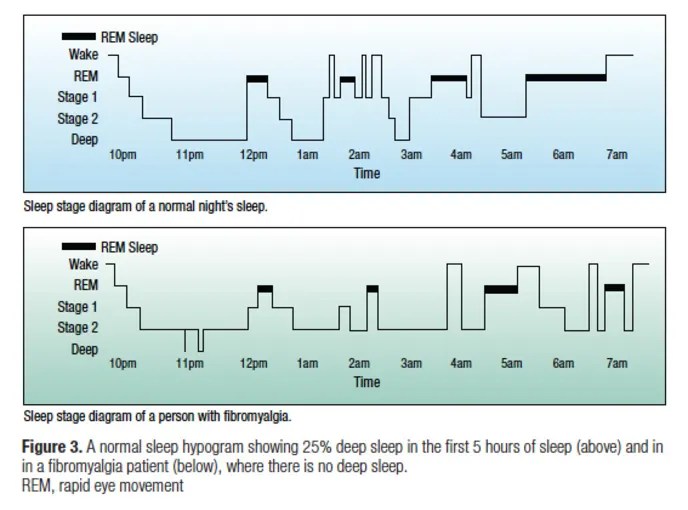
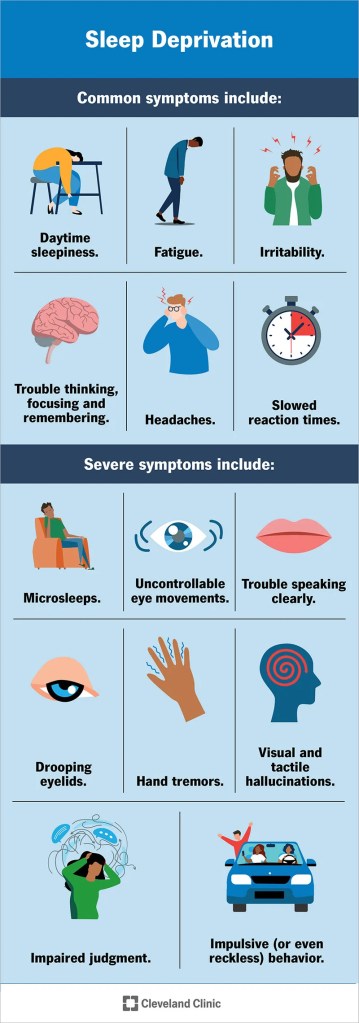
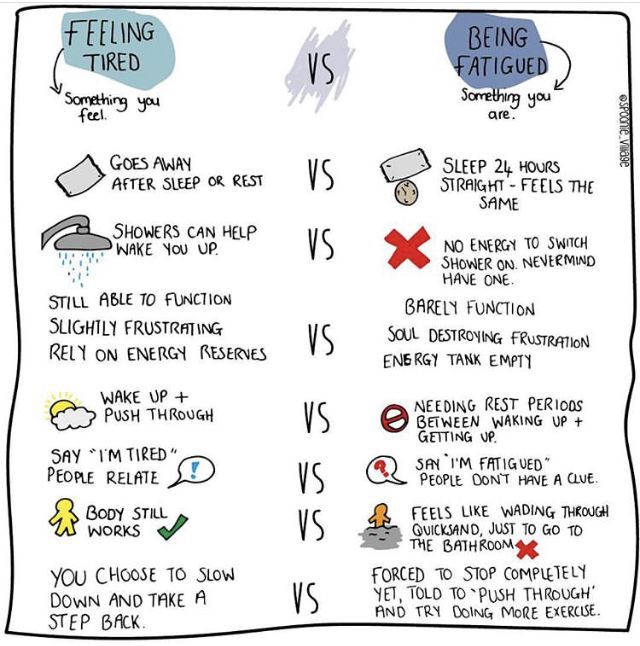
For those of you reading this who do not have fibromyalgia – experts state that in order to understand the severity of chronic fatigue alone that fibromyalgia can create – you must stay awake for three consecutive days. 72 hours without sleep and continue on with your daily routines. Signs of sleep deprivation set in after 24 hours of no sleep and become evident to people around you. Here is a fact: after staying awake for 24 hours similar cognitive effects of a blood alcohol level of .10% begin to take place. That is actually higher than the legal blood alcohol level to drive! Sure puts things into perspective. Here is a breakdown of what happens to ones body after 72 hours of no sleep.

Advertisements
Advertisements

Usually I write to inspire and encourage everyone who reads my blog posts. However today’s blog I decided to write realistically and from the heart. After all a blog is meant to be realistic and personal. I am sure many of you reading this can relate 100% to being so discouraged at times. Negative thinking takes over and it is difficult to pull ourselves out of this cycle. I always say – it is okay to have bad days – just don’t unpack and live there! Gentle hugs to all who need it. Don’t forget – no matter how bad of a day you have or situation there is always something yo be grateful for ( no matter how small it is).

Advertisements

Fibromyalgia – You Can’t force healing/improvement to happen…

One aspect of dealing with chronic pain that has always frustrated me is how many health care providers think that they can rush you through a program or treatment route as fast as possible and have success at the end. A chronic illness is just that – chronic. You can’t rush a patient through various sessions and advance them above their capabilities faster then they can keep up. This last week I have been enrolled in an overcoming chronic pain summit. One presenter made a key point that you can’t force healing to take place. All that we can do is to create circumstances that make it more likely! Many chronic illnesses ( including fibromyalgia) can’t be healed or cured, but we can learn how to manage our symptoms to the best of our abilities. In order to do so we must first find strategies that work for us as individuals. What works for one person may not benefit another , but make their pain worse.

Advertisements

We can’t force heal a sprained ankle or broken bone. Both injuries take time to heal. If a person requires a cast for six weeks we can’t take that cast off after three and call it good. What makes health care providers think that chronic pain can be forced to be cured or improved!? Even for myself when I was first diagnosed with fibromyalgia I thought I would have myself back up and on the go within a month – was I ever wrong.

Advertisements

We are often convinced that if we take part in yoga, exercise, getting a good night sleep, eating a healthy diet and adding meditation – our chronic pain will magically disappear. It is ingrained into our mind to do as the health care providers say to get our life back to how it once was. I was convinced at the beginning that if I followed what the doctors told me, the pain would stop, and the fatigue would ease. What I found was as time went on both symptoms got worse, and new symptoms appeared. Fibromyalgia is not limited to just pain and fatigue! There are over three hundred symptoms a person with fibromyalgia may experience! I felt like a false sense of hope was engraved into my brain by being told to use these strategies and I would improve. After seeing no improvements you begin to blame yourself as a human being for seeing no changes. You begin to ask yourself what you are doing wrong. You question your sanity more and more. All of which takes a toll on you mentally and physically – causing higher pain levels to result. I personally feel health care providers need to be more clear and explain that these strategies can help create circumstances that MAY improve symptoms. I often think doctors expect patients to read as a text book – meaning here is a symptom and here is the fix. Sadly sometimes illnesses defy the scientific world and it is not always that easy to treat the said symptoms or condition at hand.

Advertisements

I think back to the first pain clinic I attended. I found that the pain clinic wanted to advance me between exercises too fast. Most of the stretches I could not even do or they had to be modified to a laying down version. I found at each appointment they wanted to add more and more exercises on, when I felt I hadn’t had time to allow the previous ones to benefit my body or explore them enough to even see if they would be appropriate for me. They began advancing through sessions so quickly I was beginning to have anxiety and becoming emotional because it was so rushed. I felt like the quickness of the program, set me up for automatic failure. There was such a long waiting list to be accepted into the program, that it began to feel like I was just a number and being pushed through the motions of the program so that they could discharge me and move onto the next patient. I never felt like the multidisciplinary team that was involved in my care while I was in this program even cared about my well being – just going through the motions to get me in and out of the program as fast as possible.

Advertisements

The same experience was noted at the second pain clinic I attended. Even though the main focus of the program was to help improve my quality of life, I was only given a max of eight sessions before being discharged from the program. I again felt I had not benefited from the program due to the fact it was such limited guidance. People with chronic conditions can’t even begin to possibly unravel and decode what they need in such a limited time frame – especially when the symptoms/condition change by the minute or hour. I was never really even given any useful strategies that could help lower pain levels.

Advertisements

Trying to get a grasp on chronic pain takes commitment and dedication. There is no such thing as a one size fits all when it comes to health and well being. Different strategies work for different people at different times in their lives. Often times we must step out of our comfort zones to find strategies that work.

My advice to others struggling:

1. Never give up. Even if strategies do not work at first. Slow but steady wins the race. Keep trying new strategies. Go back and try old strategies later on.

Advertisements

2. You can’t rush through chronic pain strategies and expect success. Slow down. Listen to your body.

Advertisements

3. It takes dedication and commitment. You can’t try a strategy for a week or two. It takes time to see results. Many people get discouraged when results are not immediate. For example, athletes must become dedicated to train to win the final race. They have to keep at it to see results.

Advertisements

4. Be open to all strategies even if they sound strange. We sometimes have to step out of our confront zone to find successful strategies. I used to roll my eyes at the thought of meditation helping lower pain levels and helping me sleep. After a month of meditating right before bed, I have noticed a decline in pain levels at night and sleep better. In the past meditation always failed – or did it? I think it was more me sabotaging the success from thinking it wouldn’t work. I am also learning the way we think and react to situations affect pain levels.

Advertisements

5. If you are finding health care providers are rushing through the motions to help improve chronic pain speak up ( the sooner the better). I felt I waited too long and then when I spoke up I got labelled as difficult. My doctor who diagnosed me also had to tell other providers to slow down and listen to what I have to say.

Advertisements

Fall Weather – The struggle is real! My personal story!

Living with fibromyalgia we learn quickly how unpredictable the condition and its symptoms can be. We learn how to manipulate and change our surrounds and routines to avoid certain symptoms from spiraling out of control. However, what happens when we can’t prevent said symptoms from arising or becoming worse?? If you have fibromyalgia you know too well what I mean by this comment. For those of you reading this who do not live with the daily struggle of chronic pain you may be wondering how one can’t possibly control their symptoms.

Advertisements

For myself as summer changes to fall weather – my fibromyalgia symptoms go out of control and no matter what steps I take to prevent this from happening , it happens. The extreme fatigue appeared like clock work – the beginning of October the fatigue showed up full force. By 6 pm every evening I am barely able to keep my eyes open. I am even finding myself sleeping in past 7 am every morning ( which is not normal for me). This cycle has been consistent since my fibromyalgia diagnosis. As fall turns into winter weather, the fatigue sets in even further. The last few weeks all my body wants is to sleep all day long – even though the acquired sleep does not leave my body feeling any more refreshed. I am absolutely exhausted. Exhausted from battling the exhaustion! I try not to allow myself to sleep all day, as we all know it is not exactly a healthy habit to form. However, as my body transitions to the winter weather I allow myself to rest more. This was a learning curve for me over the years as if I do not allow my body to rest, the more intense my fibromyalgia gets. I don’t consider the added rest as a failure to control my fibromyalgia, or allow my mind to convince myself I am lazy anymore. I have simply come to terms with this is what my body needs at this moment – to rest. Eventually the fatigue eases a bit to the point where I don’t feel the need to sleep all day.

Advertisements
Advertisements

Lets talk about pain levels…

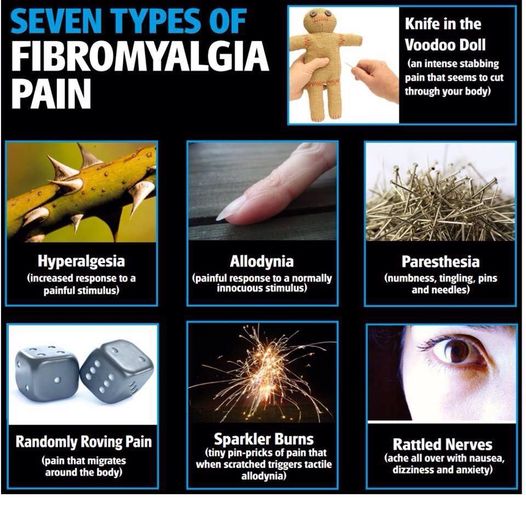
For those of us with fibromyalgia most of us can agree that we are never totally pain free. Even on days when I say my pain levels are lower, I still feel a degree of pain. A degree of pain that I can still function enough to get a few chores done around the house. However again the summer to fall/winter weather aggravates my pain. The intensity increases the cooler the weather gets. The last week has been a very trying week. A week of unpredictable fluctuating pain. Head to toe pain that feels like my bones are being drilled into. For the ladies out there with long hair ( or the males who may have long hair) – you know that feeling you get when you have worn your hair up in a ponytail for so long and then you try to brush your hair and your scalp hurts?! I often describe this as my hair hurts. What really causes the pain – the hair has been compressed so tight in the ponytail that it has caused the nerves in our scalp and under our hair follicles to become sensitive and aggravated. Seriously though it is called ponytail headache and is considered a form of allodynia. People with fibromyalgia experience allodynia which is pain due to a stimulus that does not normally create pain. This is how I explain how my entire body feels every fall.

Advertisements
Advertisements

It took me a long time to accept the fact that weather is one of my biggest flare up triggers. Weather is one aspect we have no control over. What I can change is my attitude towards the increased pain/fatigue levels and how I cope through these challenging times. It is definitely a learning curve. What I have learned is to be gentler with myself during season changes and weather that triggers my pain levels. Do I still get annoyed, discouraged and even angry at times – YES. After all I am only human. What I have allowed myself to feel these emotions and pick myself back up and carry on with life. After all – what more can a person do when living with a chronic condition. Some days are harder to pick myself back up, but giving up and allowing fibromyalgia to win is not an option. Stay strong fibrofighters. Remember to be kind to yourself! Gentle hugs to you all.

Advertisements

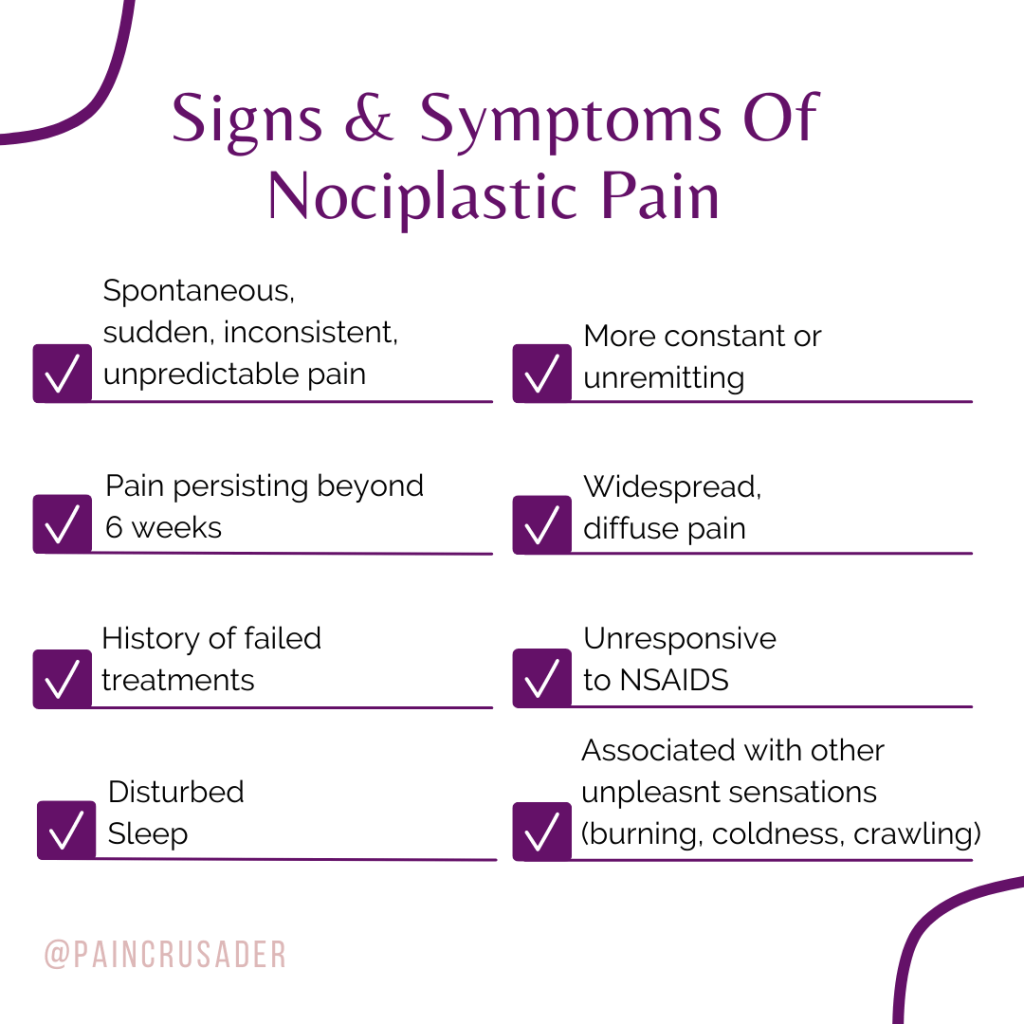
Nociplastic Pain and Fibromyalgia. What exactly is Nociplastic Pain?

When we stop and think of pain many of us think pain is just pain. I have recently bought two books on how to “live” with chronic pain and to make the best life possible. Both these books introduced a concept that I was not aware of. I am sure the terms have existed for years in the medical field, but since I have been dealing with chronic pain I have not had a doctor explain it using these terms.

Did you know there are actually three types of pain?

1. Nociceptive pain which occurs if there is an injury such as a broken bone, appendicitis etc.

Advertisements

2. Neuropathic pain occurs when there is an injury or condition to the nerve system. A spinal cord injury or multiple sclerosis are a few examples.

Advertisements

3. Nociplastic pain takes place when the pain system has become sensitized. Nociplastic is the pain felt in fibromyalgia.

Advertisements

You can compare the three types of pain like an alarm system. Nociceptive pain takes place when the alarm system is working properly. In neuropathic pain, the wires of the alarm system are damaged and in nociplastic pain the alarm system has a total malfunction.

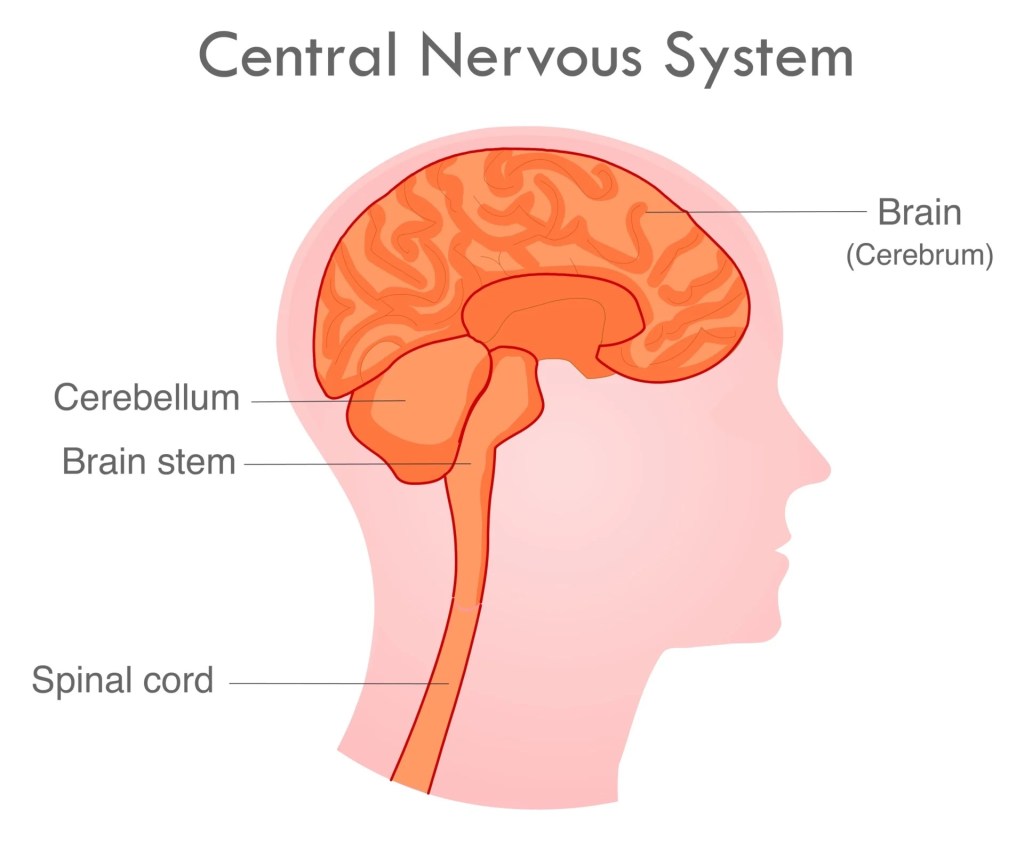
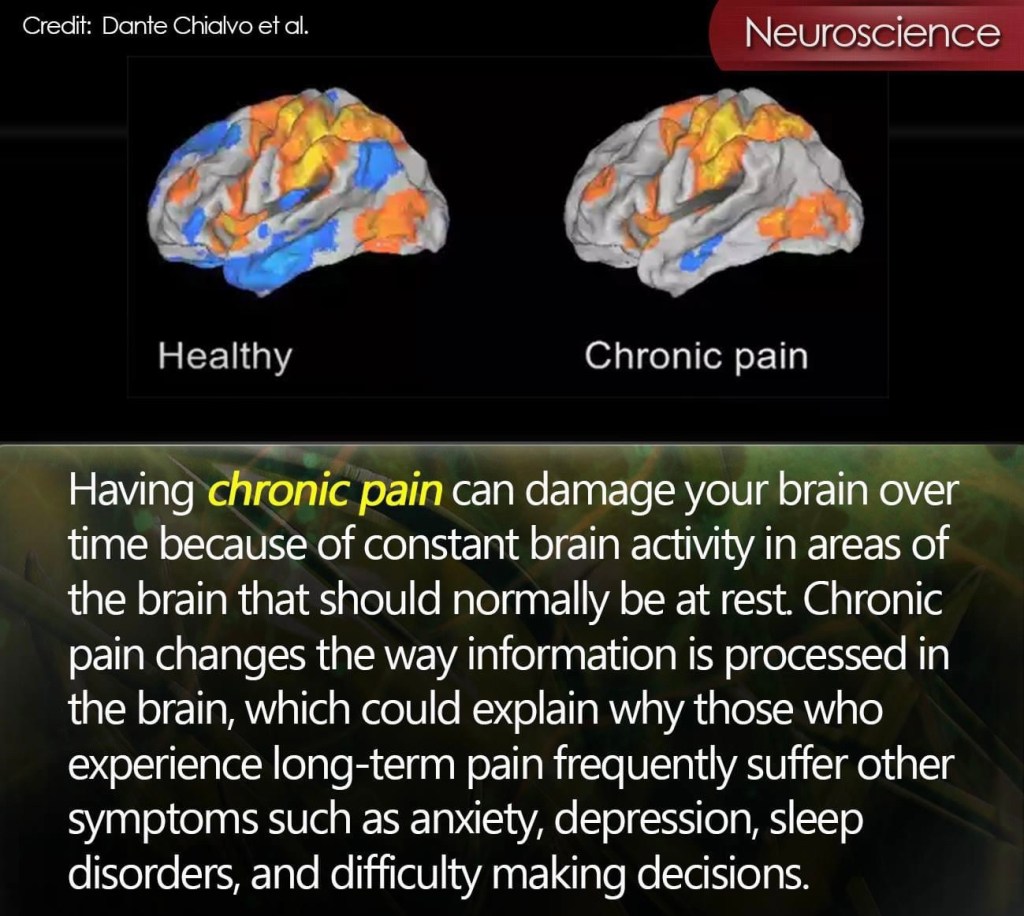
When acute pain becomes chronic – changes within the pain system takes place. These changes lead to central sensitization. In central sensitization the spinal cord becomes more sensitive to pain. Our pain system has now altered and become dysfunctional. How do doctors make comments such as “fibromyalgia is just a mental illness” is beyond me when there is proof that the nervous system is affected.

Advertisements

Living in chronic pain will eventually change the synapses ( nerve impulses passing from one neuron to another) in the brain. These synapses become so strong that we feel chronic pain without something triggering pain or without us even being conscious about the pain. According to experts we must reconstruct these synapses in order for the chronic pain to ease or change patterns. Fibromyalgia often leaves areas feeling sore and painful when there is actually no “injury” to treat. For example, I often have upper back pain. It seems to be a very problematic area since my fibromyalgia diagnosis. I can apply heat, ice and take as many pain killers as possible, but my brain still alerts me with chronic pain to that area. It is impossible to fix the area of pain because the problem does not reside in the body part anymore. Make sense?

Think of it this way, we learn to bike or even drive a vehicle. It takes practice. The more we practice the stronger those synapses in the brain become, Eventually it becomes second nature to get on a bike or drive to the store. Same concept happens with chronic pain.

Advertisements

I have not made it far into the book to explain how to deconstruct these synapses to help alleviate chronic pain. Is this where the idea of slowly working our way up to longer increments of time helps reconstruct these synapses?! I am hoping as I make it through the book, it explains how to do this. Many resources explain what needs to be done, but not how to carry out any strategies to make the changes happen! I will be sure to share in a later blog, what I have learned.

Advertisements

According to experts many doctors do not know how to diagnose or treat nociplastic pain. Nociplastic pain is a fairly new concept. When I conducted research to write this blog it was documented that nociplastic pain was only really mentioned and introduced in 2016! That is not very long ago. Many doctors often recommend opioids to their patients to treat chronic pain. However, it is noted that opioids are ineffective in treating nociplastic pain or could eventually lead to worsening of pain. Opioids are also known for making central sensitization worse over time.

Advertisements

No matter what the treatment route is this process will not happen over night. It takes commitment and dedication. A person cannot expect to take part in a week or two program and expect it to resolve. Long lasting pain improvement requires a long term plan which has to be followed to show improvement.

For more information on nociplastic pain and fibromyalgia visit the following websites:

  1. https://www.ncbi.nlm.nih.gov/pmc/articles/PMC9561334/
  2. https://www.thelancet.com/journals/lancet/article/PIIS0140-6736(21)00392-5/fulltext
  3. https://arthritis.ca/living-well/2022/fibromyalgia-new-science-shows-the-pain-is-real

Don’t disregard medication side effects if you don’t experience any at the beginning – What I have learned on my journey!

Just when I thought I had fibromyalgia figured out, my body decides to throw another curve ball and I am left trying to find that path I swayed from.

Advertisements

At the beginning of my fibromyalgia journey ( 2019) I trialed and errored different medications used to help lower the pain levels that comes with fibromyalgia. After several months, I finally found one medication with minimal side effects. It lowered the intensity of the pain immensely. I even found a sleeping medication that was able to be used nightly with low chances of addiction and dependence. I’ve remained on this regiment for years. A few medication dosage adjustments were needed over time to both medications ( to be expected).

Advertisements

What I forgot to take note of is with higher dosages comes more changes of having side effects from the medications. We often start on lower doses and work our way up to higher doses. Our bodies tend to build up a tolerance to medications. As a result, a higher dose is required to achieve the same results as before. I wish I had paid closer attention to the listed side effects of each of my medication at every dose increase. Instead I never even gave the medication side effects another thought as I never experienced any side effects at lower dosages.

Advertisements

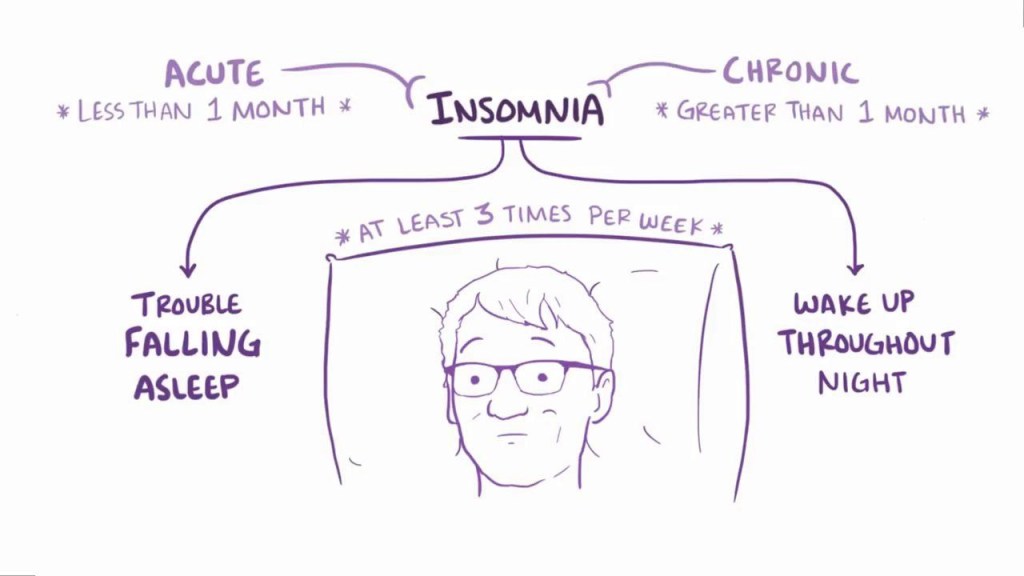
Two months ago I developed extremely debilitating insomnia. I often have pain wake me up through the night, but I would re-adjust sleeping positions and fall back to sleep before. In July I began having chronic insomnia. I would fall asleep and be awake within an hour of taking my sleeping pill. There was no getting back to sleep. Sadly my doctor was on holidays at the time and to have a doctor who does not know your file make adjustments doesn’t usually result well. In fact, many doctors do not want to take on medication adjustments unless they know you.

Advertisements

My sleeping pill also stopped working. My doctor did one final increase on my dosage – with no change to how I was sleeping. I am slowly tapering off this sleeping pill and a new sleeping pill was added. Since the new sleeping pill, I have been getting seven consecutive hours of sleep a night. I had forgotten what sleep felt like. While my doctor was on holidays I had started digging deeper on possible side effects. Nausea, diarrhea, blurred vision, headaches, muscle aches/pain were some of the noted side effects – all of which I have been experiencing. Now some of the side effects over-lap fibromyalgia symptoms making it even harder to distinguish the difference.

Advertisements

Here is the dilemma…

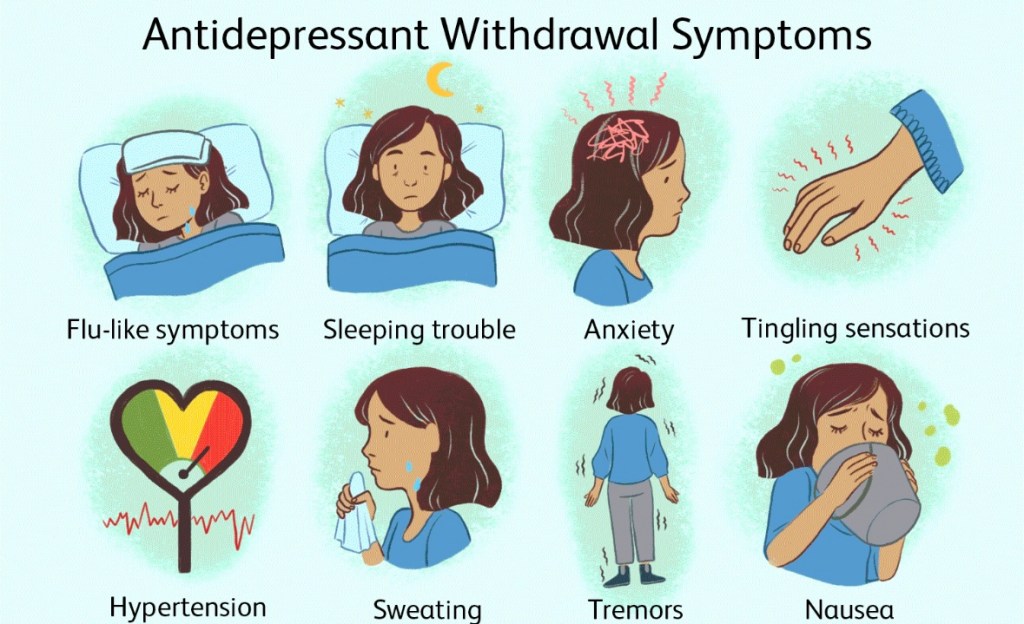
I started doing more research on my medications. Sure enough my medication which I take for pain management, has a side effect of insomnia. If fact it stated that insomnia is one of the main side effects! At lower dosages I did not have insomnia as a side effect, but after two dosage increases insomnia hit hard. One to two hours of sleep for two months led to sleep deprivation. Now is my pain medication really causing insomnia or was it my sleeping pill just became ineffective causing me not to sleep? I was supposed to begin to taper off this medication this week, but now I am not so sure this is the best decision. It is also a very difficult medication to taper off of with alot of with-drawl symptoms and brain zaps! I recently joined a Facebook support group on this medication and alot of people are having the exact same issues as me while using this medication. Again, when I first started using this medication very low side effects. As the dose went up, I noticed more and more symptoms arose.

Advertisements

Have you had a similar experience? Please share your story with me if you have and feel comfortable doing so. What I have learned is, tapering off medications is a slow process. Please work with your doctor/pharmacist if you are tapering off of your medications. I am being monitored weekly by my doctor and have contacted a pharmacist several times since the tapering process has started.

Should I continue to work once diagnosed with fibromyalgia? How I made the difficult decision….

People who are diagnosed with fibromyalgia eventually find themselves asking the question,” Should I continue to work?” Debating whether it is appropriate to stop working due to fibromyalgia can be a very confusing time. Not everyone is able to stop working and they continue to push themselves through their shifts day by day. Here is a shout out to all of you who have managed to stay working ! Everyone will have to make the decision to continue to work or resign due to medical reasons. You must do what is right for you and your circumstances.

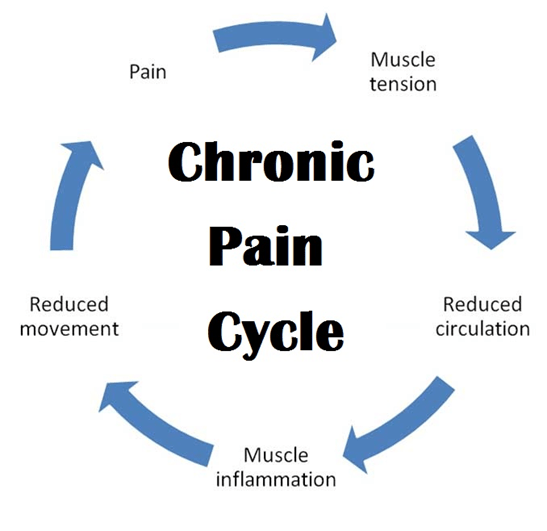
For myself, I tried to take a month off from work thinking I could quickly learn to manage fibromyalgia. I soon realized, it wasn’t as simple as it seemed. As the weeks went on, new symptoms arose and intensity levels changed. Just as I thought I had my symptoms under control, a new symptom would appear or the ugly cycle of chronic pain would begin over and I was back to square one.

Advertisements

According to “experts”, people with fibromyalgia should remain working. Researchers state that people with fibromyalgia who continue to work tend to feel less pain and fatigue. I totally disagree with this statement. I believe it depends on the severity of your fibromyalgia. Obviously if a person has mild symptoms it may be a bit easier to continue to work. Symptoms are easier to manage when they are mild. For myself, I was the complete opposite. My symptoms were mot considered mild but severe. I tried to continue working and it did not improve my fatigue levels or pain levels. It intensified both symptoms to the point I could not function. I pushed through for several weeks until I just couldn’t push anymore and found myself requesting time off of work from the doctor.

Advertisements

I made the hard decision to not return to work for several reasons. Maybe my reasons will help you make your own decision.

The fatigue began to set in severely. I found that by the time I got out of bed, ate breakfast packed lunch and drove to work ( fifteen minutes down a busy highway), I would pull into the school parking lot feeling like I “pulled an all nighter.” The fatigue got so intense that I caught myself falling asleep at work. Not the safest when you are in charge of a group of students or one on one with a student who needed high supervision due to safety concerns. The day I almost dozed off behind the wheel driving to work, was the day I knew I no longer could work.

Advertisements

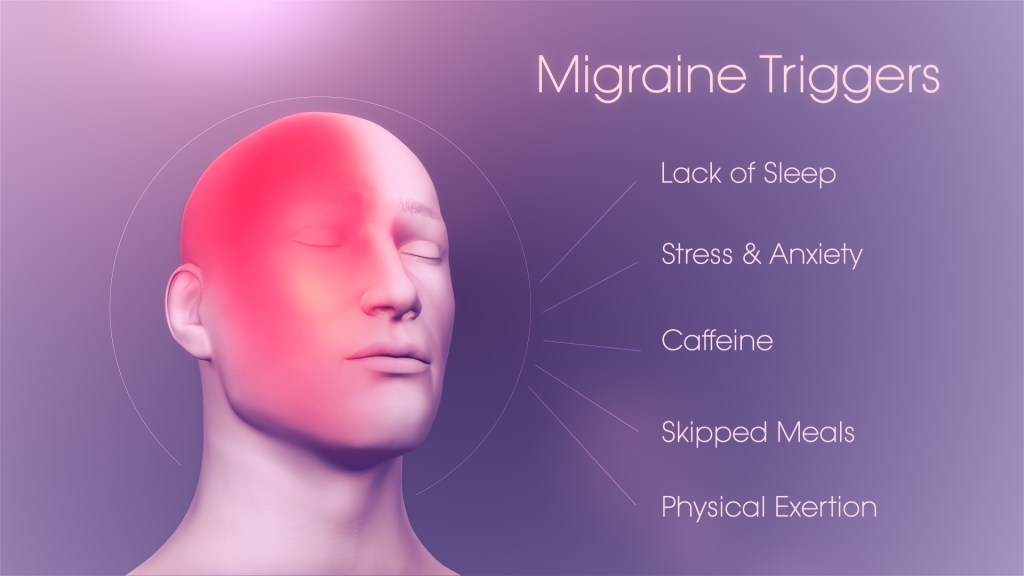
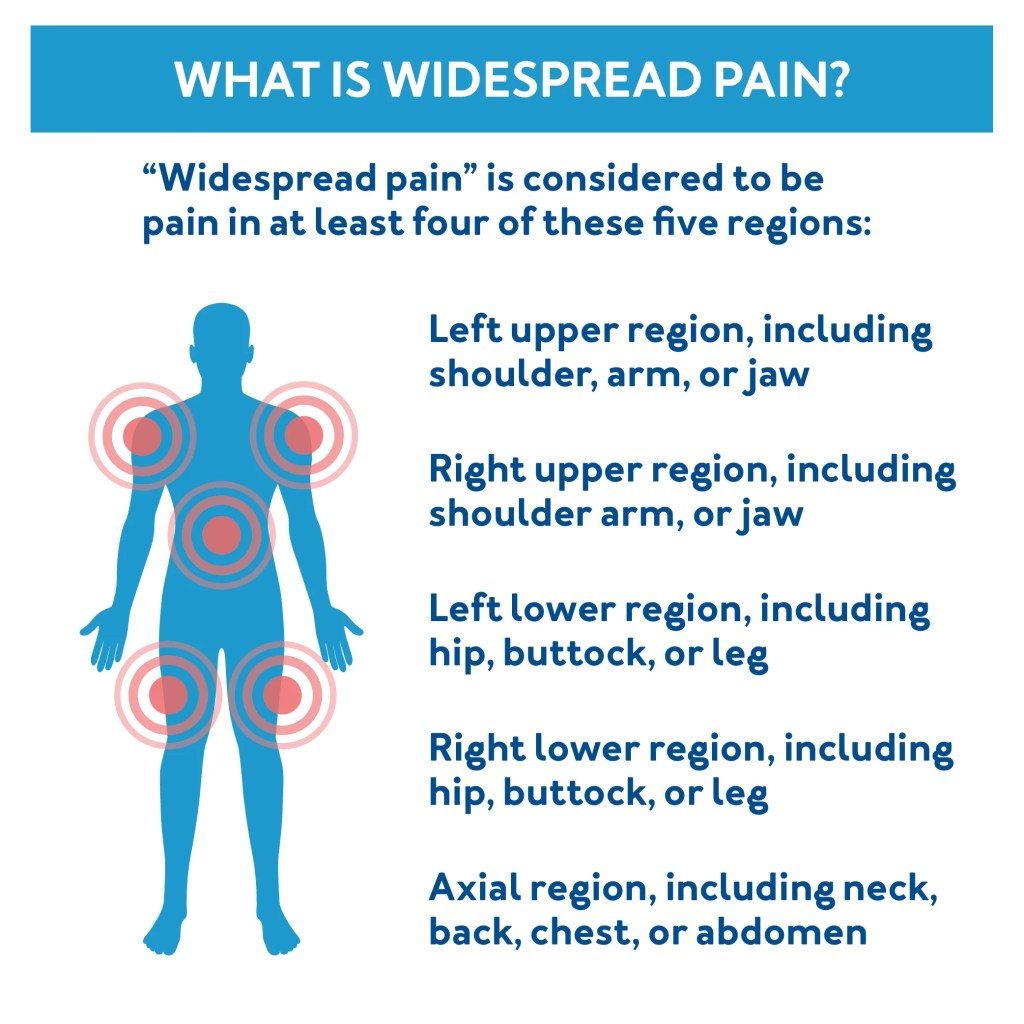
The unpredictable widespread pain played a factor in remaining off of work. At first the pain was only in my fingers, elbows and knees. It quickly turned into widespread pain that jumped locations every five seconds. Who knew pain could strike every part of the body at once?! I found out what this felt like. Trying to work with chronic unpredictable pain makes it near impossible. Here is an example. Ever try to go to work with a migraine before? Imagine the throbbing/pulsating pain you felt with that migraine. Now imagine the pain three times worse. Yes, people with fibromyalgia often feel pain three times more then what people without fibromyalgia feel. I don’t know about you, but having such intense pain affected my overall ability to function. I began to feel emotionally exhausted as well as physically exhausted from the pain itself.

Advertisements

Brain fog began to clutter my thoughts. I started having problems understanding grade three school curriculum. This confused me as before I was working in a junior high school in grades seven to nine- which has more complex information to process! I was able to explain algebra to students in grade eight, but yet I could not explain a 3D shape to a small group in grade three. I found myself stumbling over reading simple sentences to students on a test, or explaining instructions backwards to worksheets. I was hired to help support students, not hinder their learning.

Advertisements

Some people with fibromyalgia can work with modifications to the work environment or find a job that is less demanding to allow them to continue to work. For myself, being an educational assistant in a school working with special needs students, I was not able to modify my work load or schedule. Obviously my schedule followed the students school schedule.

Advertisements

I never did try to return back to any job as the symptoms got worse as the years went by. At first I had improvement once I started on a medication to help manage the pain, but the fatigue set in deeper. My doctor explained to me that I had hit a plateau in my “recovery”. A new level of exhaustion was felt. I began having trouble mustering up enough energy to shower, felt like my shin muscles in my legs were being torn from my body walking up a few steps and I began to get daily sore throats and fevers. When the fever begins I feel like I have been hit by the worlds worst flu bug. I began battling my own body each day and unsure of what tomorrow would bring.

Advertisements

As the saying goes , “You can’t pour from an empty cup. Take care of yourself first!” In the end I decided that if I couldn’t take care of myself and my basic needs first, how was I going to support students in a classroom? It just doesn’t work that way. If you are finding yourself in the same position, I would encourage you to weight the pros and cons of leaving the workplace. All the best! Hope my reasoning may help you make the tough decision!

Clinical Hypnosis and Fibromyalgia ( or any chronic pain disorders) Does hypnotherapy work to lower chronic pain?

When most of us think about hypnosis our minds often wander to watching someone get hypnotized on stage and running around barking like a dog or clucking like a chicken. This is known as stage hypnosis. The hypnosis therapy I am referring to is clinical hypnosis. It is very different then stage hypnosis and has many benefits.

Advertisements

A bit of a personal story before I get into what hypnotherapy is and the benefits…

In January (2023) , I began seeing a psychologist ( I will call her T. in my blogs) who is trained to understand chronic pain and to perform clinical hypnosis on clients she works with. She had introduced me to a self hypnosis video early on for chronic pain. I won’t lie, I probably tried not to roll my eyes when she told me she was going to send me the link to this video. ( Haha. Sorry T. for any eye rolls you may have witnessed). I’ve had very negative experiences with previous mental health counsellors and psychologists in my fibromyalgia journey that I found it difficult starting with a new psychologist without being sarcastic and defensive. I was used to having to defend myself and the guidance was not the best. “You are on the right track.” ” I can’t see you anymore, because you are too negative.” are two comments that stand out in my mind when I think back. I often thought to myself if I was on the right track I wouldn’t be sitting in your office. I always thought a psychologist was there to help a person work through the negativity and look at situations in a different way to help lower negativity. Although I do not think I was being negative simply by stating, “I feel like there is no program here for me at the pain clinic due to sitting on waiting lists for 6 months.” I know it was a lack of knowledge on chronic pain and fibromyalgia. However lack of knowledge should not result in comments that make the patient feel belittled and leaving the office crying. I began having anxiety attacks the night before when I saw the previous therapists, which then resulted in fibromyalgia flares. The one therapist I decided to walk away from treatment, but the other one had been set up by insurance disability and I was not allowed to walk away.

Advertisements

After several appointments and building rapport, I decided to allow T. to perform a hypnosis on me during my appointment. In order for hypnosis to actually work, one must feel comfortable enough with the clinician. The first session I was extremely nervous and felt uneasy because I didn’t know what to expect. T. reassured me that I would be aware of everything going on and that she can’t make me do anything I didn’t want to do while being hypnotized.

Advertisements

To my surprise the hypnosis was very relaxing and calming. She picked the perfect hypnosis script to use that I was able to resonate with. I can’t really reflect on whether it changed my pain levels as we only did one session with a script. I’m looking forward to trying more hypnosis sessions to see how my body reacts to the therapy. My goals are to help use it to lower pain levels, maybe see improvement in sleep quality and help keep my anxiety at bay. Maybe along the way other symptoms may diminish. Even the self hypnosis video helped me get into a deep state of relaxation. I often fall asleep while listening to this video. You can find this video here. It is geared towards chronic pain. There are many different self hypnosis videos on Youtube. I’ve tried different versions and always come back to the same one.

I decided I wanted to explore the hypnosis more, however hypnosis got put on hold for several months as I ended up needing talk therapy more at that given time. Now back on track, my next appointment we will step back into hypnosis sessions.

Quick run down on hypnosis…

Advertisements

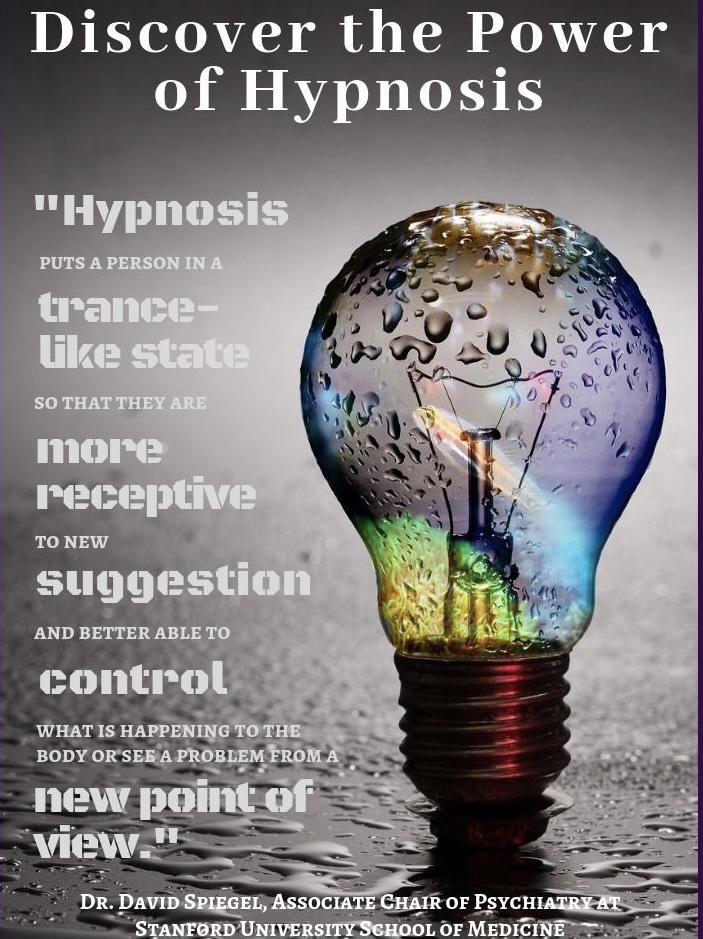
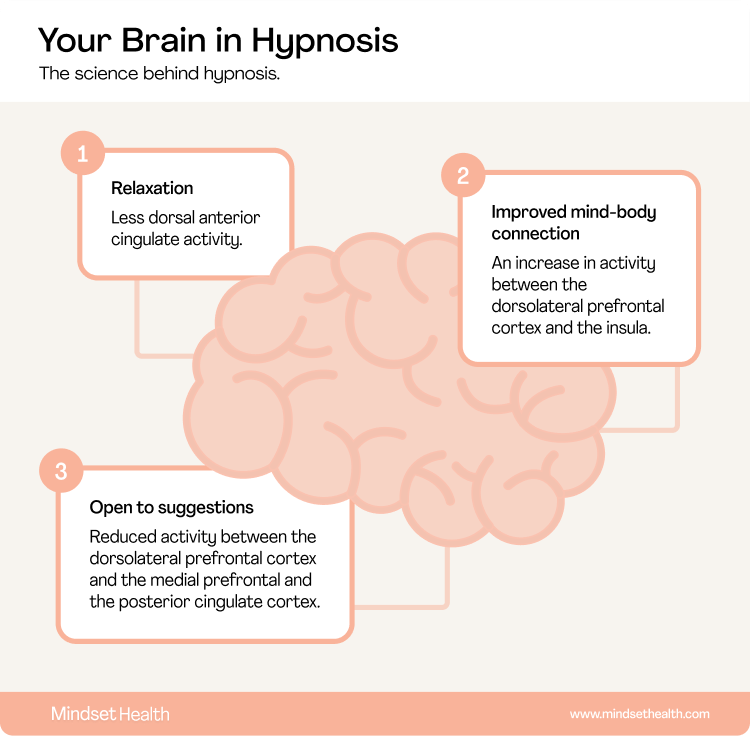
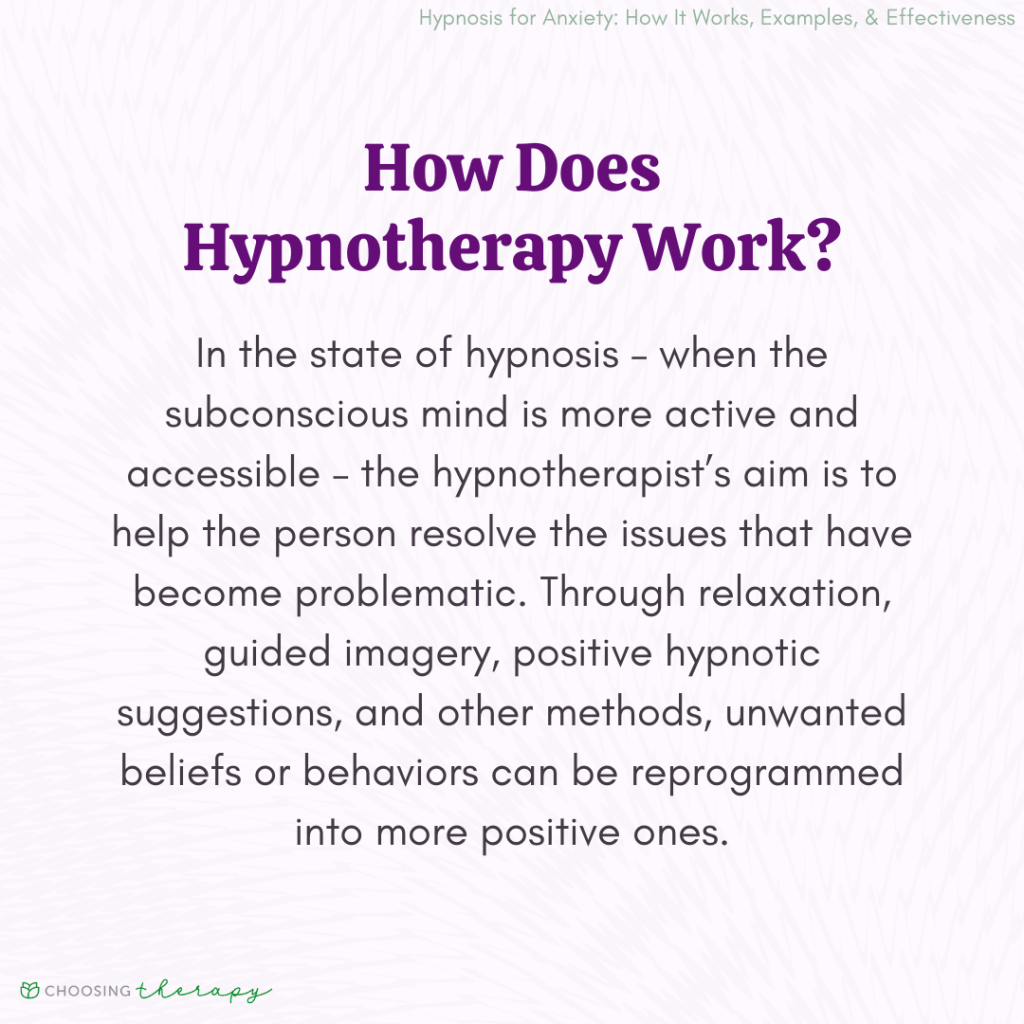
Hypnosis is a strategy that is used to help people enter a deep state of relaxation and focused concentration. For myself I find hypnosis easier then meditation. While in the deep relaxation, it is said that one is more open to suggestions a clinician may make to help improve your health. The clinician will use guided cues, repitition and imagery to help you enter into this state of relaxation. Remember, you remain aware of what is going on around you at all times. Hypnosis accesses your subconscious mind.

Advertisements

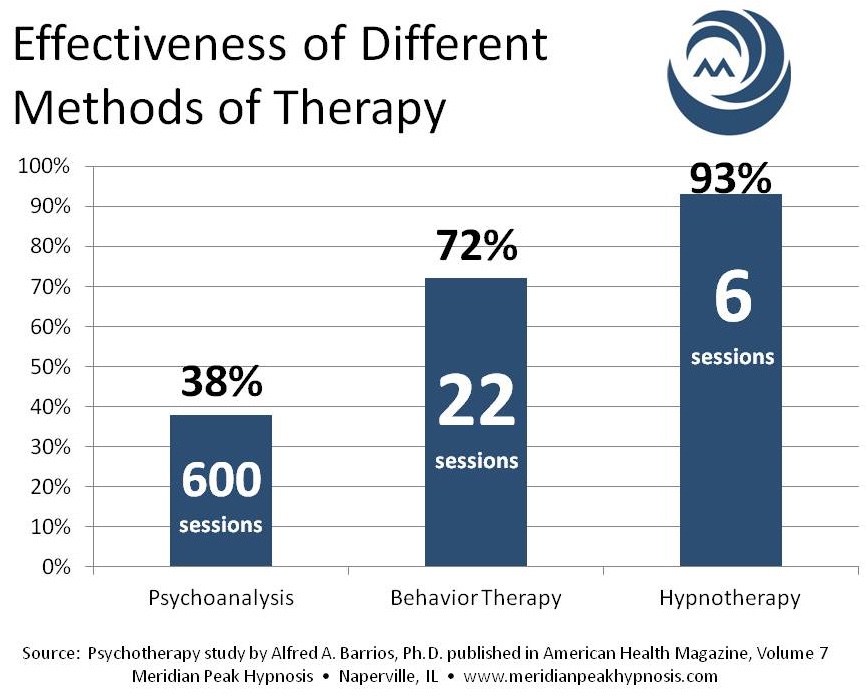
Success rates with hypnotherapy is higher then other methods of treatment used by psychologists. . Hypnotherapy has a 93% success rate! That is a pretty high success rate in my opinion. Less sessions seem to be needed when hypnotherapy is used. Studies reveal that more than 75% of people with arthritis and related pain conditions – have pain relief after using hypnotherapy. If hypnotherapy can help lower arthritis pain why can’t it help fibromyalgia pain? Both are chronic pain conditions. I found this website with a ton of studies done on hypnotherapy. There are too many studies to begin to discuss in my blog. Here is the link to these studies.

Advertisements

Benefits of hypnotherapy on chronic pain

1. Known to help lower chronic pain levels.

2. Helps lower stress levels.

3. Helps lower depression and anxiety.

Advertisements

4. A study revealed people who use hypnosis for fibromyalgia reported 80% fewer painful episodes versus people who did not use hypnosis. Wouldn’t it be wonderful for symptoms to possibly diminish up to 80%??

5. Hypnosis can enhance quality of sleep. As we know lack of sleep causes fibromyalgia symptoms to be worse.

6. Hypnosis is said to influence the autonomic nervous system. it helps regulate the autonomic nervous system. Thus, allowing people to control their symptoms better.

Advertisements

There are many more benefits to clinical hypnosis, but these are the ones that stood out when I did my research on hypnosis. One must keep an open mind when starting hypnosis and trust the process. It may awkward at first. Allow the process to happen. After all, what have you got to lose? Hypnosis doesn’t always work on everyone, but you won’t know until you try. I am learning, the mind is a very powerful, with the right guidance. I will write a blog later on reflecting on consistent hypnosis sessions and how my body responded.

Here are a few websites on hypnosis

  1. https://www.mayoclinic.org/tests-procedures/hypnosis/about/pac-20394405
  2. https://my.clevelandclinic.org/health/treatments/22676-hypnosis

Hyperbaric Oxygen Therapy and Fibromyalgia.

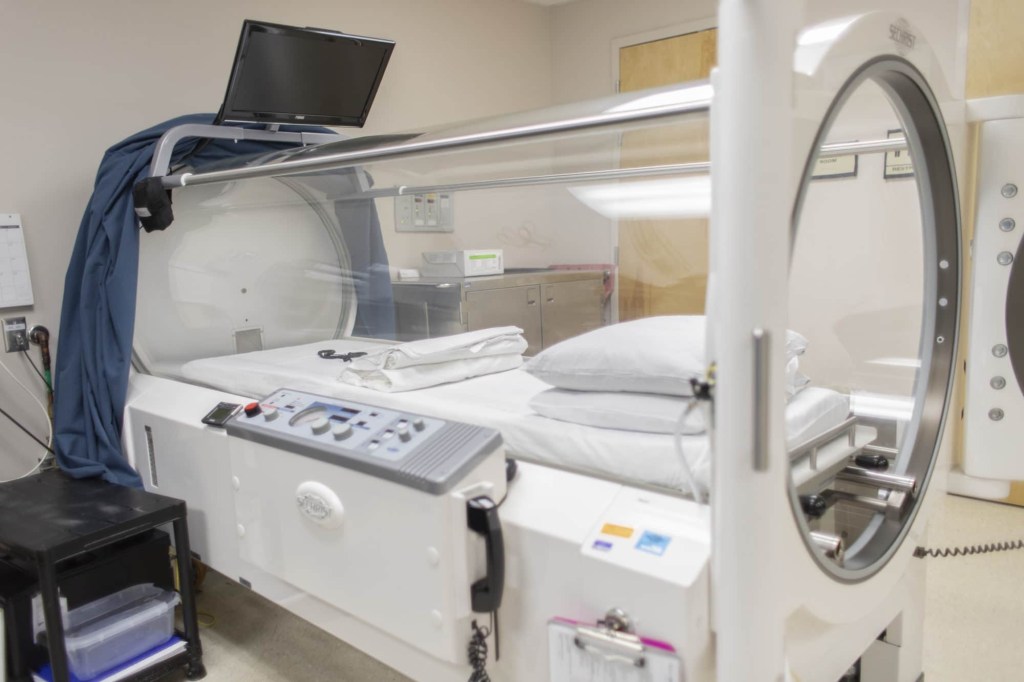
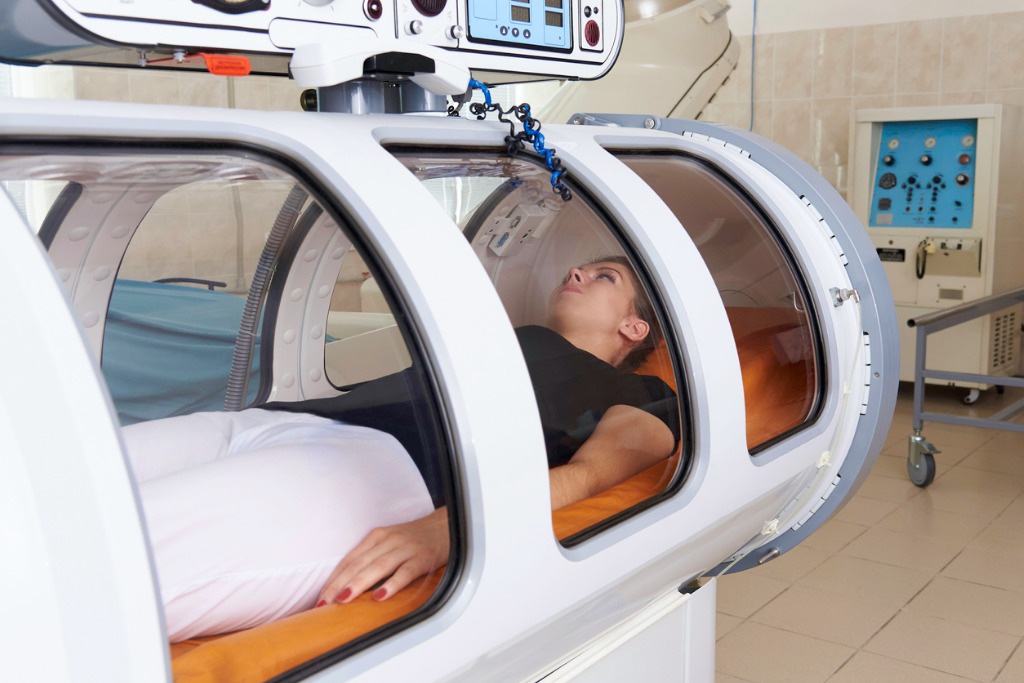
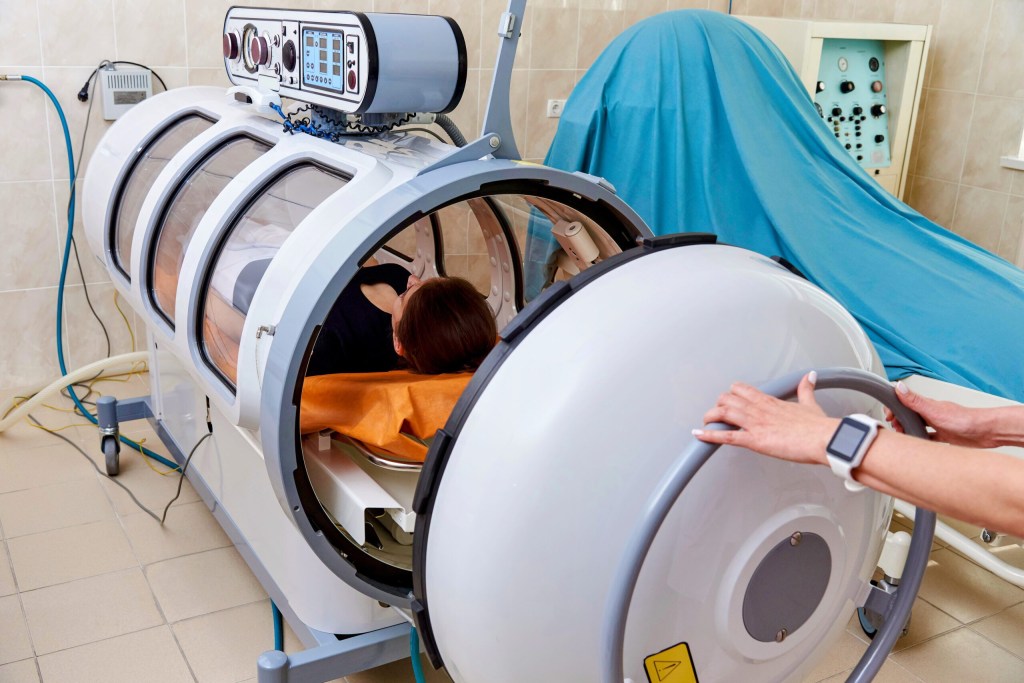
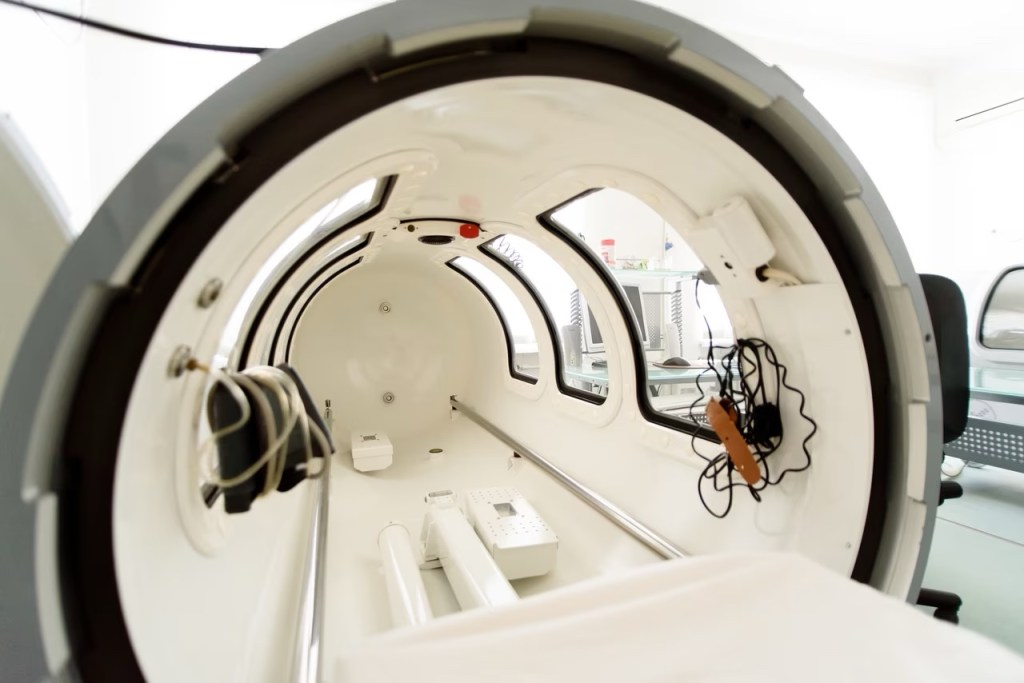
Over the last six months I have been doing a lot of reading about hyperbaric oxygen therapy (HBOT) being used to treat fibromyalgia. You are probably wondering what hyperbaric oxygen therapy is… here is a quick run down on the concept. HBOT involves breathing 100% pure oxygen in a hyperbaric chamber. While in the chamber the air pressure is raised to a higher than normal pressure level. Raising the air pressure in the chamber allows a person’s lungs to collect more oxygen. Normal air we breath only consists of 21% oxygen levels. Oxygen is necessary for our body’s tissues to function. Sooo… how does HBOT help fibromyalgia?!

Advertisements

There have been many studies completed on HBOT and fibromyalgia. A 2015 clinical study was conducted to determine if hyperbaric oxygen therapy can diminish fibromyalgia symptoms. Patients were evaluated at baseline ( before HBOT treatments), after a control period of no treatment and after HBOT treatments. Each individual was evaluated physically which included tender points and pain threshold, evaluations on quality of life and SPECT scan which evaluated brain activity. The study revealed that there had been improvements of all fibromyalgia symptoms and improvement in quality of life. The SPECT imaging revealed that the brain’s hyperactivity in areas of the brain decreased in pain related areas of fibromyalgia patients. Read about the study here.

Advertisements

In 2022, 9 studies were compiled together for review to compare data on HBOT treatment on fibromyalgia. A total of 288 patients were included in this review. Again the results showed that HBOT could relieve the pain in fibromyalgia patients compared to the control intervention. The treatments helped improve tender points, fatigue, multidimensional function and sleep disturbances. Read the full study here.

Advertisements

What are the benefits of hyperbaric oxygen therapy for fibromyalgia?

1. Known to lower chronic pain levels.

2. Known to diminish nerve pain.

3. Increases oxygen levels throughout the body, thus increasing blood flow to areas on the body.

Advertisements

4. Has been shown to improve brain function and cognitive abilities.

5. Decreases inflammation and swelling.

6. Increases the body’s ability to fight toxins that can build up in cells and cause damage.

There may be many other benefits, but for my blog these are the ones I chose to list.

Advertisements

There are also risks involved in using hyperbaric oxygen therapy.

1. Ear pressure or popping feeling in the ears due to higher air pressure in the chamber.

2. The therapy can cause lightheadedness and fatigue. These are normal side effects and should reside shortly after treatment.

3. Due to changes in air pressure treatment could possibly irritate the sinus. The pressure can cause the sinuses to become inflammed.

4. “Tooth squeeze” can result from the pressure changes. It can cause pain in the teeth.

Advertisements

5. Eye pain and pressure. Research states therapy can cause possible change to the shape of the lens of the eye. These changes are temporary and rarely permanent.

More serious complications include

1. Lung damage

2. Ruptures middle ear. My research stated that this is more common due to the pressure.

3. Oxygen poisoning. There are specific directions to preventing this from happening. Prolonged exposure and very rare.

Advertisements

The complications sound scary, but with proper protocols being followed, side effects are often short lived and begin to correct themselves after resting.

Read more about the possible complications here.

Advertisements

Please note not everyone will be a match for hyperbaric oxygen therapy. Certain health issues or conditions make it too risky for therapy to take place. I won’t list all the conditions here as I do not know the entirety of the list. For example, many articles stated people with COPD should not use HBOT therapy.

Hyperbaric oxygen therapy is used for many other conditions. It is also known to slow dementia progression, help heal skin grafts, help recover from traumatic brain injuries and even improve carbon monoxide poisoning. It is no surprise that HBOT can possibly help fibromyalgia. If I was given the opportunity to try hyperbaric oxygen therapy I would – after all it is less invasive then adding more prescriptions.

Fibromyalgia and hearing loss. Another correlation found!

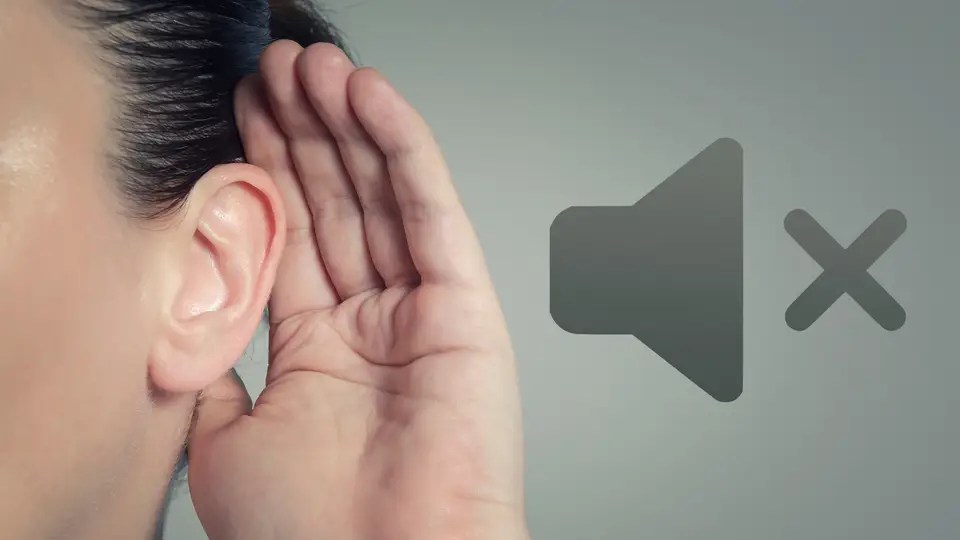
Since I started conversing with people world-wide who live with fibromyalgia, an interesting topic in regards to associated coexisting issues keeps arising. I never had the answer or even heard complaints of this topic before – hearing loss. I thought to myself hearing loss can’t be yet another possible condition that coexists with fibromyalgia. To my surprise, it is possible to suffer from hearing loss from fibromyalgia!! According to researchers, a study revealed people with fibromyalgia are 4.5 times more likely to suffer from hearing loss then people without the illness! Visit here to try the online hearing test.

Advertisements

A Norwegian study was conducted – 44, 494 people with fibromyalgia or other forms of musculoskeletal pain disorders participated. The study was set out to determine if there was a correlation between pain disorders and hearing loss could be established. A control group was also part of the study. The study never clarified possible causes of hearing loss with musculoskeletal pain disorders. I researched over and over and could not find any further explanations. The results revealed that individuals with fibromyalgia reported hearing loss compared to people without fibromyalgia or other musculoskeletal pain conditions. You can read about this study here.

Advertisements
Advertisements

A more recent study was done in 2021. The study was much smaller, which included only 33 people with fibromyalgia and 33 healthy volunteers. Each individual underwent various testing on their hearing. The results of the study revealed pure-tone hearing thresholds of right and left ears were found to be decreased in those with fibromyalgia compared to the healthy individuals. Read about this study here.

These are just two studies completed. I found a few other studies which all seem to report hearing loss is prevalent among people with fibromyalgia.

Advertisements

Another ear issue that can occur with fibromyalgia…

Tinnitus is also prevalent in those with fibromyalgia. If you do not know what tinnitus is – it is when a person hears ringing in their ears or other sounds that are not produced by external sounds. Other people around you will not hear the ringing sounds. A 2021 study revealed that fibromyalgia patients were more likely to suffer from tinnitus then those without fibromyalgia. 59.3% with fibromyalgia were found to have tinnitus and 7.7% of the control group ( without fibromyalgia). Another study also revealed that that patients with fibromyalgia and severe tinnitus had lower functional impairments and their overall quality of life was low then those without fibromyalgia.

Advertisements
Advertisements

You can read about both studies here

1. https://pubmed.ncbi.nlm.nih.gov/35077079/

2. https://www.ncbi.nlm.nih.gov/pmc/articles/PMC10324957/

Tinnitus does not contribute to deafness, ( according to many websites I used while researching). However, other sites state it does contribute to hearing loss. I am getting mixed information, so I cannot state if it does or does not contribute to deafness. Either way, tinnitus can cause interference with your hearing.

Advertisements

How accurate are pain scales? Do pain scales really gather relevant information?

I was shuffling through my filing cabinet the other day organizing my files for fibromyalgia. As I reorganized papers, I soon realized how many different pain scale forms I have filled out over the years. I got wondering are these pain scales really as accurate as the scientific world perceives them to be? Are they a valuable tool for doctors across the globe? I never really stopped to think about it until now. Everyone perceives pain at differently.

Advertisements

There is no exam/test that can be completed by health care providers that gives an accurate reading of what pain levels may be. Doctors, specialists and any other health care provider rely on the patient to self report about their pain type/severity/duration. During self reporting we are often given a pain scale and/or a survey to fill out. I often found these forms extremely difficult to fill out because describing pain is not an easy task. People with fibromyalgia experience many pains at different severities. Each body part might feel a different level of pain at the same time – making rating your current pain level out of 10 at the time in my opinion obsolete. I might state my pain levels are severe, but everyone perceives severe in a different way. Everyone’s definition of severe is different as well.

Advertisements

Pain scales were created to help health care providers understand a person’s pain levels. With the pain scales, doctors are able to help guide individuals on how to possibly lower pain levels. Some pain scales gather basic information while other pain scales gather more context and details about pain levels.

Benefits of pain scales:

Advertisements

1. Pain scales can help keep track of pain levels over time. This can be helpful for everyone involved in your treatment plan. Many of us with fibromyalgia know we are often passed back and forth between different providers as many don’t know how to guide us in finding relief. Having a pain scale log allows for new practitioners coming on board to get an idea where daily pain levels sit.

2. Pain scales are often quick and easy to fill out unless you are completing a more complex pain scale log/questionnaire.

Advertisements

Disadvantages of a pain scales:

1. Pain scales are often labelled from 0-10. There are no explanations to these numbers. It would be easier if there would be explanations attached to these numbers to be able to rate our pain levels better. Everyone has a different pain tolerance making it hard to pick a number 0-10. What does 5/10 pain level actually entail? Its just a number.

Advertisements

2. Pain scales often reflect only that – pain levels. They often don’t take into account how living with chronic pain changes our daily lives. I often wish this question would be added to the pain scale questionnaires. The pain scales also don’t document that pain levels fluctuate and that with activities most people experience heightened pain levels.

Advertisements

3. Pain scales also do not take into consideration a person’s emotional state. Again, I think it is important to ask questions to include a person’s mental health. Our emotional state can also cause an increase of pain levels. Many people with chronic pain often have anxiety or depression. Both these conditions can exacerbate pain levels.

There may be many more advantages and disadvantages of pain scales, but the above listed are just my personal opinion.

Advertisements

No matter what pain scale is used, the scales must provide health care providers with a baseline to begin treating chronic pain. For myself detailed questionnaires with various questions are more informative in my case. I might have minimal pain in my arms, but extreme pain in my legs. I rather be handed a questionnaire that allows me to answer questions about how the pain affects my daily life then one that asks to rate my pain out of ten.

Fibromyalgia: Doctor-patient relationship. How does empathy make a difference?

I have been reading the book, ” The Invisible Kingdom”, written by Meghan O’Rourke. The chapter on doctor-patient relationship really resonated with me. I grew up in a smaller town, were your family doctor had the time to spend an adequate amount of time with you during appointments. It wasn’t out of the ordinary to ask how life was going and have a short personal conversation about family. Today, with such a shortage of doctors (in many areas of the world), finding a family doctor is near impossible. We are left attending walk in clinics, where you end up seeing a different doctor every time. Doctors and patients are not even given enough time in appointments to discuss medical concerns. We are often told to limit our visit to one or two health issues to discuss and only have maybe ten minutes in which to do this.

Advertisements

People living with chronic conditions, have a difficult time discussing one topic in an appointment yet alone two health issues. Having such limited one on one time together, I feel that the doctor- patient relationship is slowly beginning to fade away and has become a thing of the past. In “The Invisible Kingdom” the writer explains that doctors don’t seem to display much empathy towards patients anymore. I believe many of us suffering with fibromyalgia have been in many situations where empathy has failed to be shown. However, research states that doctors should take the time to empathize with each patient. Showing empathy often results better.

Advertisements

Have you ever watched the movie “Patch Adams” with Robin Williams?! It is actually based on a true story. If you have never watched it, I recommend it! “Patch” admits himself into a mental institution for suicidal thoughts at the beginning of the movie. After witnessing how doctors treat the other patients and himself while in their care, he quickly discharges himself from their care and sets out on a mission attending medical school. He graduated becoming a doctor. His goal was to help other people – taking into consideration the PERSON not just the illness. He wanted to connect with each and every patient he encountered. Patch was set out to bring joy to all patients – no matter how grim of a diagnosis they had just been given. He gained patients trust and made a huge difference in many peoples lives.

Advertisements

Empathy and compassion in a doctor-patient relationship can make a huge difference. Both qualities are said to be highly effective and powerful. Empathy requires health care providers to put themselves in the patient’s shoes. If the physician takes the time to pay attention to a patient’s emotions a caring treatment plan can be created. A well thought out ,treatment plan will have positive results instead of negative.

Advertisements

In one study, 2898 patients took part who suffered from moderate to severe chronic pain. The same doctor visited each patient at baseline, 1, and three months – having each patient fill out questionnaires. At the end of the study it was reported that chronic pain significantly decreased. It is said that by showing empathy patients are more likely to adhere to treatments and more improvements are seen. This study did not state if people with fibromyalgia were part of the study, but regardless it revealed how powerful empathy can be. You can read the results of this study here.

Advertisements

Empathy not only allows the doctor and patient to connect on a better level, it also is proven to lower a patient’s anxiety levels. In fibromyalgia, stress and anxiety are one culprit of raised pain levels and other symptoms. I’ll use the pain clinic I attended for an example. The clinic began to have a very negative effect on my health. I was beginning to have anxiety attacks the day prior to my appointments – which then led to a full blown fibromyalgia flare up the following morning. I never saw eye to eye with a few of the pain clinic staffing who were directly involved in my care. When I stated I felt my fibromyalgia may have been triggered by a knee injury I got the spring prior, I was told an injury was not a possible cause of fibromyalgia. An injury is considered trauma – trauma is a possible cause of fibromyalgia is it not? As the months went on staff began belittling me and told me I was making their job too difficult. I complied with treatment, but when I expressed my frustration to the mental health counsellor that all strategies were only increasing my pain – I got told I was being too negative and that mental health would not continue to see me. I always thought psychologists and counsellors were there to help a person through the tough times and help change the negative to more positive thinking. “Making their job too difficult “- in my eyes this meant they didn’t know what else to do to help me – so they put the blame on me. It is easier to blame the patient then admit the program failed to help me. I often wonder if empathy was used, if I would have had a better outcome? I soon realized I was just a number to push through their pain clinic program so it would free up a spot for their long wait list. They eventually discharged me without even speaking to me first.

Advertisements
Advertisements

Here is a video I found that brings a powerful meaning on empathy. It has been viewed 6.9 million times.

Fibromyalgia and Pain Journals – What should I document?

When dealing with any chronic illness a pain journal can be very helpful. Most health care providers will recommend to keep this type of journal. Even if you are years into your battle, it is never too late to begin this documentation. If you do not know what a pain journal is – this is where you can write down and keep track of what kind of pain you have, pain levels you are experiencing, what you were doing at the onset of the pain and more.

Advertisements

There can be many benefits to using a pain journal. Over time, the pain journal will allow people to monitor fluctuation in their daily pain levels. It also can be used when communicating with the various doctors and other health care providers you may have appointments with. A person also becomes aware of what increases and decreases pain levels in order to manage daily pain levels. It can also help document over all progress in your fibromyalgia journey.

Advertisements

I started my pain journal by writing down all medications I take and the dosage, any side effects I experience from my medications ( such as higher fatigue levels). I also took note of what makes the pain worse or better. I always keep a running medication list (updated ) on hand to take to all my appointments. We are often asked what medications we are taking at every new appointment we attend with the various doctors appointments we attend ( there are many appointments.).

Advertisements

Most pain journals will have you document the following information:

1. How you slept the night before. Did you continuously wake up? How many hours of sleep did you get? Woken up by pain? Pain levels through the night? you can document whatever you feel relevant.

Advertisements

2. Daily symptoms. What symptoms did you experience through the day? pain levels? What made the pain worse or better? Medications needed to relieve

Advertisements

3. Mood symptoms. How did you feel when you woke up? Stressed? Anxiety? Depressed?

Advertisements

4. You can also document activities you do during the day – laundry, cleaning, working, etc. Document how long you were able to work at the task? Did you have to stop due to pain? Outcome? More pain? Delayed pain?

Advertisements

5. Keep track over pain levels and what type of pain you are feeling and location. Is your pain 0-10? Where is the pain located ( okay we all know explaining where the pain is , is difficult) , Is the pain throbbing? Stabbing? tingling? Deep down? Dull? Etc.

Advertisements

6. Track your fatigue levels. What makes fatigue worse, a little better? What time do you run out of energy? Does resting help? Make it worse? Worse in the morning? Afternoon? Evening? Fatigue level 0-10.

Advertisements

7. Food sensitivities or triggers of pain. Some people keep a food diary also to help determine if certain foods cause increased pain levels or other symptoms to become worse.

Advertisements

The journal can be as complex as you want to create it or just simple. It all depends on what you decide is relevant information to be documented. The above are just examples of possible topics to include in your journal.

For myself I stopped writing a pain diary for several reasons.

1. I felt like documenting my daily symptoms, pain levels, etc became too time consuming and I was focusing all my attention to my pain levels. Focusing solemnly on symptoms all day long can become unhealthy. We need to be aware of symptoms/ pain levels, but not 100% absorbed in this process. I found the pain journal was consuming me.

Advertisements

2. The pain journal also felt like a slap in the face. Every time I looked back at the log, it reminded me how much I couldn’t do anymore. I tried so hard to build up my stamina over time and it seemed like no matter what I tried it failed. The journal was a constant reminder of failed strategies. Fibromyalgia took a lot away from me and looking back in the journal was a constant reminder of loss, instead of focusing on what I could do. Sometimes looking at what we can’t do all the time takes a toll on our mental health. I decided I needed to focus on what I could do rather then what I couldn’t ( for my sanity)

Advertisements

3. After living with fibromyalgia for several years, I began to know my triggers inside out. I already know what makes my fibromyalgia symptoms worse and better. The one thing living with a chronic illness, you begin to read your body and needs like a pro! When I hit a certain pain or fatigue level it is time to stop and rest. No one else can determine this “imaginary” stop sign better then we can.

Advertisements

4. I actually found not one doctor, specialist or health care provider wanted to see my pain journal. Most appointments are limited to 10-15 minutes that doctors simply do not have time to discuss in detail a pain journal. If only we lived in a perfect world where doctors could actually spend the time with their patients to understand their needs better.

Fibromyalgia and Irritable Bowel Syndrome (IBS) have more in common then you think! Both conditions often co-exist!

A subject that is rarely discussed in fibromyalgia is irritable bowel syndrome (IBS). IBS and fibromyalgia are two separate conditions, but seem to have a connection between the two. According to the UNC Centre for functional GI and Motility disorders, 70% of patients with a diagnosis of fibromyalgia also have symptoms of irritable bowel syndrome. Fibromyalgia also occurs in 60% of patients with irritable bowel syndrome. For reference of these stats visit here.

Advertisements

When we think of irritable bowel syndrome, most of us probably think about a condition that affects the stomach and intestines (gastrointestinal tract). When a person has IBS the nerves in the “gut” are extremely sensitive and the brain processes these signals from your gut differently then it would if you did not have IBS. For example a small gas pain can trigger IBS symptoms. Just like in fibromyalgia, IBS causes the brain to process the pain differently and responds to stress. In the case of fibromyalgia, our brain misinterprets pain signals and sends out widespread pain, while in irritable bowel syndrome the body responds by causing gastrointestinal tract issues. Both fibromyalgia and IBS serotonin levels are usually low.

Advertisements

What are the symptoms of irritable bowel syndrome?

Advertisements

Fibromyalgia and IBS are both stress sensitive conditions. This means any stressors (even the small ones) can cause both conditions to “flare up”. However, in IBS experts state that stress is NOT the direct cause, but triggers IBS symptoms. In fibromyalgia, we are told stress can be a root cause. With both conditions flaring up, our body reacts to physical symptoms and emotional symptoms creating anxiety to increase. The increased anxiety adds to the stress our body endures making our pain and symptoms even worse. It becomes a vicious circle.

Advertisements

Ever hear of Central sensitization? If not here is a quick explanation. Your central nervous system ( brain and spinal cord) become extremely sensitive to pain. The sensitivity makes you feel more pain than what you would normally feel, resulting in pain signals in your body increasing. People with fibromyalgia and IBS both exhibit lower pain thresholds. This shared pain sensitivity predicts that both conditions share a common cause, which may explain why both conditions are often seen go coexist.

Advertisements

If you have both conditions, treatment options may overlap as well.

1. Anti depressants may be used in both fibromyalgia and IBS. Many doctors recommend amitriptyline for both conditions. For example, Amitriptyline will increase serotonin levels. In fibromyalgia, it is said to help reduce pain. In IBS amitriptyline blocks pain messages between the gut and the brain limiting hypersensitivity. I assume the same process takes place in fibromyalgia – blocking pain messeges from being sent throughout the body. ( there are more anti depressents used, I just chose one as an example). For more information about IBS and anti depressant use please visit here.

Advertisements

2. Experts also recommend regular exercise. Exercise can help manage IBS symptoms. Low intensity exercise is recommended for both conditions. These exercises include walking, yoga, and swimming. Exercise will not cure IBS, but can help reduce stress therefore limiting IBS symptoms. The same goes for fibromyalgia. Lower stress levels, means lower pain levels. ( not in all cases).

Advertisements

3. A balanced diet is recommended for both conditions. Eating a balanced diet can help alleviate symptoms. Foods that are rich in probiotics may help reduce IBS symptoms. A person can also take a probiotic supplement to be sure to get probiotics. I take a daily supplement, however you can find foods with probiotics such as yogurt and fermented food items.

Advertisements

4. Cognitive behavioral therapy (CBT) is another route being used for fibromyalgia and IBS. If working along side a psychologist , I recommend trying to find one who you are able to connect with and understands chronic pain. It makes a huge difference. CBT for IBS has shown significant effects on symptoms and quality of life. For more information on CBT and IBS visit here.

Advertisements

There are many treatment routes for IBS. My blog only touches on a few of these routes. The routes of treatment will also depend on the severity of irritable bowel syndrome. An individualized treatment plan is important in both fibromyalgia and IBS. Trial and error techniques are often used to determine which treatment routes are best. Everyone’s body is unique and reacts to medications and treatment routes differently.

For more information on IBS visit here.

Fibromyalgia and increased bruising or unexplained bruising. Possible causes.

Many symptoms of fibromyalgia remain unexplained and confusing to those of us who have to live day to day with fibromyalgia. One of the mysterious symptoms is increased unexplained bruises. How many times have you found yourself thinking “How did I get that bruise on my arm?” Only to look down at your legs to notice two or three more bruises.

Advertisements

I have never really found in depth information on why people with fibromyalgia bruise easier and more frequently. We are often told it is just part of fibromyalgia. Fibromyalgia often creates skin issues – increased bruising is included in that category. In one article, I read 50% of fibromyalgia patients reported having skin issues, while another article reported 80% of patients reported skin issues. Either way the percentage is fairly high for skin issues.

Advertisements

Here are a few POSSIBLE causes of increased/unexplained bruising. I am not stating this could be the SOLID explanation for bruising in fibromyalgia.

Has anyone ever stopped to think about medications as the possible culprit? Some medications can possibly have a side effect of increased bleeding and bruising easier. From my research NSAID medications such as ibuprofen, Naproxen( Aleve), aspirin , diclofenac etc. can all cause you to bruise easier. People with fibromyalgia often take many of the above painkillers looking for some relief of chronic pain. SSRI anti depressants can also cause easier bruising. Fibromyalgia pain is often treated with anti depressants. Both NSAID and SSRI medications block/limit certain blood platelets from working resulting in easier bleeding and bruising. Keep in mind a bruise forms when blood vessels under the skin break ( this is what I mean by easier bleeding in this case). A small bump on a chair could easily cause a blood vessel to break, even if you barely hit yourself. There may be other medications that cause easy bruising to form.

Advertisements
Advertisements

If certain vitamin levels are low or a deficiency exists a person may also notice more bruises. Fibromyalgia is known to cause many nutrient deficiencies to exist. I have not done a lot of research on lack of nutrients, but here are a few that can cause easier bruising if a deficiency exists. You MAY bruise more if your iron is low, vitamin d, calcium, vitamin K and B12. I am sure there are more to add to this list. For example low iron can cause unhealthy blood cells, which results in your body not getting the required oxygen that it needs to function. This can possibly leave your skin more susceptible to bruising. Vitamin K is essential in blood clotting and also helps strengthen capillaries . Lower vitamin K can cause the capillaries to weaken and break under the skin leaving behind a bruise.

Advertisements
Advertisements

Fibromyalgia can leave a person very clumsy. Clumsiness can be caused by lack of mobility due to pain, sleep deprivation, etc. I know I am clumsier since my fibromyalgia diagnosis then in the past. I find myself always running into things – the corner of the counter, a chair or even the bed-frame! I think fibro fog (brain fog) can possibly contribute to unexplained bruises. For myself I may have done something to cause a bruise to form and simply do not remember – but my family members remember the cause of some of my bruises as they witnessed it happen. For example my vehicle door swung back on my leg as I was reaching in to get an item out of the back seat due to wind. I later discover I had several bruises on my leg from the incident, but don’t remember the door swinging back on my leg. Fibro fog causes us to become forgetful at times. Could this be the cause of some of the unexplained bruising? Just food for thought!

A Mindfulness technique – Active Listening Music Strategy

For people with fibromyalgia, we are often recommended to take part in mindfulness exercises. Mindfulness is the ability to be fully present. For many of us, our mind wanders while we are doing things and it is like we are on auto pilot. Endless thoughts invade our mind all day long. When we remain mindful, our mind is fully attending the task/activity at hand – we are present of our surroundings and what we are doing. However, being mindful takes practice and is not an easy strategy.

Advertisements

For myself, I often found being mindful extremely difficult and I would give up soon after beginning the process. I was given several strategies from various health care providers I had been working along side to help lower fibromyalgia symptoms. In this blog I will speak about one strategy , as there are too many strategies to cover in one blog post.

For you music lovers out there, you can incorporate a mindfulness activity in while you are listening to music. Many of us turn music on for background noise, but this mindful strategy requires you to actively listen to the music. If you have problems with traditional meditation ( like I do), mindful music listening can act as a great substitution for a meditation session. Five minutes a day listening to music can be just as effective as meditation if you really focus on the music.

Advertisements

Be sure you pick music to actively listen to that you enjoy. It makes active listening easier if you use a song you like. You can expand later on and experiment by using other songs for this activity. Experts state that many people tend to listen to music that reflects their current mood. I wonder if this is why we may choose to listen to different genres from day to day?!

Advertisements

During a session, I was asked what song I would use for this exercise. At the time I was feeling very defeated and frustrated from seeing no improvements with my fibromyalgia. I felt I was at rock bottom. Of course I couldn’t think of a song title on the spot so I picked the last song that was on the radio driving to my appointment. The song was “Fight Song” by Rachel Platten. Obviously, I had heard this song probably 100 times on the radio and never really paid attention to the lyrics. I went home and tried to actively listen to this song. Did I ever pick the right song. The lyrics seemed to fit my current situation- feeling defeated, judged by people/ previously involved health care providers and failing to get a handle of my symptoms. The song lead me to the following lyrics….

Advertisements

Here are the steps to active listening that I was given.

1. Pick a song. You can pick a song you have heard or a song you have never listened to before. You can use music with lyrics or instrumental. The choice is yours. I was guided to pick a songs that I would normally listen to.

Advertisements

2. Take a moment to ground yourself and breathe. Take a few deep breaths in and out. Take note how your body feels as you do this. Notice how you are positioned – sitting, standing, laying down, walking etc. Assess anything your body is physically touching. Do you have any tension or tightness in your body?

Advertisements

3. Listen, and only listen! Shut out any external sounds by using headphones. Allow yourself to hear only the music. I often close my eyes or put my sleep mask on so I am not tempted to look around and lose the music.

Advertisements

4. Notice the small details. What instruments can you hear in the music? Does the tempo of the song change? Does the volume change? Do the lyrics reflect anything? Do any visual images arise while listening to the music? How does the music make you feel? Does the song make memories arise? Notice how your body feels.

Advertisements

5. Reflect. Does anything feel different? Any shift in your mood? Calmer? More tense? If you found your song choice was not the best, what other songs could you try next time?

Advertisements

This is just one example of a mindfulness activity. There are many others. I will write about several other techniques in later posts that have helped me with taking part in everyday mindfulness. Active music listening can help lower stress and anxiety levels. Practicing mindfulness can put you in touch with the moment and help lower your worries. Lower overall stress levels, means lower chronic pain felt in fibromyalgia. This strategy is easy to adjust as well. You can use the same song over and over if you find a particular song easier to be mindful to, or you can explore with new genres and artists. Since I have such a difficult time even “getting into the zone” to meditate, I often use this strategy since I am a music lover! Happy listening!

Fibromyalgia – Worst advice received by someone who doesn’t understand chronic pain

During a discussion on Fibrofighter’s facebook page and private group, I had asked “What’s the worst piece of advice you’ve ever received from someone who doesn’t understand chronic pain?” Here are the top five answers from people around the world who live with fibromyalgia!!

Advertisements

1. “You just need to exercise more”

Probably 100% of fibromyalgia patients have been told this exact sentence by their doctor or any other health care provider. I believe exercise is important whether you have fibromyalgia or not. However, have health care providers ever stopped and asked you once how physically active you were before fibromyalgia? I never have! I used to always be on the go. I used to be able to walk for hours on end, bike ride outside during summer and ice skate in the winter. When a person was very active before their fibromyalgia diagnosis and loses the ability to take part in any of these physical activities -“just add exercise” is not the answer we want to hear.

Advertisements

Second of all, no one ever stopped to tell me exercising with fibromyalgia looks completely different then what we perceive as exercise when healthy. “Just add exercise” is a very vague statement. Exercising with fibromyalgia needs to be less strenuous and more gentle. We need to be taught HOW to exercise with chronic pain conditions. I am so sick and tired of this sentence from health care providers and/or friends. Yoga is often recommended as an exercise for fibromyalgia, but did you know there are many different types of yoga? I didn’t. Which yoga is better for fibromyalgia? We are never informed. “Try yoga, it help you!” I recently found out there is chair yoga – which looks to be more suitable for my physical capabilities.

Advertisements

2. “You just need to lose weight!”

Ummm… hello!!! Fibromyalgia affects people of all weight and sizes. Fibromyalgia does not pick and choose who to affect by weight! Anyone of any size can be diagnosed with fibromyalgia. Do people understand this? Obviously, we understand that being overweight is not the healthiest. Yes, we all know it is important to eat healthy. However, many of us with chronic pain – we gain weight for several reasons. We have a difficult time moving around due to increased pain / fatigue and other symptoms. Obviously we move around less because moving simply feels like our muscles, tendons, legiments, or our bones feel like they are being ripped out of our body. Less movement means weight gain for many of us. It is not because we want to gain this weight! Secondly, many medications used to help lower fibromyalgia pain, one of the side effects is weight gain! This weight gain shows up and is hard to lose it without discontinuing the medication. Bone pain or some extra weight. I think I would rather live with the weight gain then the debilitating pain fibromyalgia causes.

Advertisements

3. It is all in your head – it must be your mental health.”

Fibromyalgia is not a mental disorder. It is not a fake or imaginary condition. I personally believe depression can possibly cause fibromyalgia due to a high stress response. Depression can cause the body to have a high stress load. Stress can be a trigger for fibromyalgia to develop. Just food for thought ( my personal opinion). When I hear people tell me it is all in my head – I always state “It is in my head! My brain amplifies pain signals and reads them wrong.” Fibromyalgia is actually considered a neurological condition, not a mental health condition. A recent study, reported finding an autoimmune response which could make fibromyalgia a rheumatoid condition in the future. We are not mentally crazy. There is scientific evidence fibromyalgia exists and is very debilitating. Anyone who solemnly blames fibromyalgia on mental illnesses is not informed and educated on current findings.

Advertisements

4. “You will feel better if you get more sleep!”

What is sleep?! Most of us with fibromyalgia struggle with sleep disruptions or insomnia. If sleep was the answer we would have an easy cure. Sleeping when you have chronic pain is near impossible when the pain wakes you up every hour all night long. ” Get more sleep!” How do we get more sleep when scientific studies report that people with fibromyalgia do not remain in deep sleep long enough to benefit the body?! Even when I manage to get a solid 5-8 hours of sleep, I wake up looking like a zombie and feel like I have not even gotten an hour of sleep. Adequate sleep is recommended for everyone, but when you factor in chronic pain it just doesn’t fix the problem. No amount of sleep is going to fix a person with fibromyalgia. We might replenish a small amount of energy to get through the next day.

Advertisements

5. “You just have to push through the pain”

This comments boils my blood. Pushing through pain from a sprained ankle is one thing, but pushing through chronic pain is nearly impossible. When we push through the pain we feel with fibromyalgia, it often results in amplified chronic pain or a full blown fibromyalgia flare up! What is the purpose of pushing through the pain to only end up bed ridden? In my opinion it is not worth pushing through the pain. Pushing through results in uncontrolled symptoms. Read more on my previous blog about pushing through here.

Fibromyalgia and Trigger Point Injections

When I was attending the pain clinic, I spoke to the pain specialist doctor who recommended trigger point injections to help ease pain in specific areas. If you have not heard of trigger point injections – the injections often contain lidocaine and corticosteroids. The lidocaine helps block pain receptors in the muscles and the steroids helps reduce inflammation in the muscle and connective tissues surrounding the nerves. The injection is inserted into a muscle knot found in the trigger point injection sites. A muscle knot is tense muscle fibers – which prevents the muscle from relaxing. The knots cause the affected muscles to remain tense even when the muscle is at rest. The following picture shows several trigger point injection sites.

Advertisements

While I was attending the pain clinic a nurse practitioner had evaluated me to see if I qualified for trigger point injections. A quick physical exam on my upper back revealed several knots in my neck and upper back had formed. Fibromyalgia pain seems to attack these knotted muscles twice as hard ( in my case). The pain in these areas are always steady and worse when I am in a flare.

Advertisements

Trigger point injections are supposed to be a safe treatment option ( pain relief) for those with fibromyalgia. Fibromyalgia causes tense muscles and knots can form. The injections can help relax the muscles and allow your muscles to work properly. The relaxed muscles decreases tension thus reducing nerve pain. The trigger point injections may be more painful because fibromyalgia can make you extra sensitive to pain. I was always encouraged to try trigger point injections, but due to the fact it contains corticosteroids – I was unable to even consider it after researching the procedure further. I do know several people who do get the injections done for fibromyalgia pain. What they have all stated is the injection does relieve pain but does not last long enough before they can get another round.

Advertisements

I decided to opt out of trigger point injections for several reasons. One of my main reasons was due to the fact that the pain specialist doctor could not seem to provide me any information about the trigger point injection procedure. When I asked how the injection provided relief, I got told ” We don’t actually know! It just does.” The doctor did not even want to provide me with information of what was in the injection itself. These are need to know information before I allow any procedure to be done. I was also not given any time to think about it or have my questions clarified. The doctor wanted to just begin injections five minutes into what I thought was just a consultation appointment.

Advertisements

I am glad I choose to decline the trigger point injections. I later found out the injection contains lidocaine and a corticosteroid. My body is sensitive to many corticosteroids – leaving me feeling like I have bugs crawling under my skin. Corticosteroids have been marked on my medical file for years – not to be administered to me due to possible allergy/sensitivity. I am someone who can’t even use prednisone. I was shocked that this doctor did not review my file to be sure it was safe to administer trigger point injections before hand.

Advertisements

When I researched trigger point injections I also found many sites that state these injections can have a possible side effect of damaging the muscles and nerves. However, I do not know the prevalence of possible damage caused by these injections. If you consider using this treatment route – I would speak to your doctor about this concern. The muscle damage is called myonecrosis – which appears to be treatable.

Advertisements

Read more information about trigger point injections at the following websites:

1. https://www.onehealthcare.co.uk/treatments/trigger-point-injections/#:~:text=A%20more%20serious%20side%20effect,if%20symptoms%20continue%20beyond%20this.

2. https://www.thefibroclinic.com/trigger-point-injections-patient-questions-answered-part-ii/

3. https://www.medicalnewstoday.com/articles/327384

Do doctors know how to diagnose fibromyalgia properly? Do they know the fibromyalgia diagnostic criteria?

As we know, fibromyalgia is a difficult condition to diagnose. With no specific test to help diagnose fibromyalgia it can become complicated and time consuming for the doctor. There is specific criteria that must be met to be diagnosed with fibromyalgia and also ruling out many other conditions. However are doctors familiar with the diagnosis criteria?! Over the years, the diagnosis criteria has changed and altered.

Advertisements

An article I read explained that a doctor and his colleagues distributed a 37 item questionnaire which tested physician’s knowledge on the 1990 fibromyalgia criteria and the 2010 diagnostic criteria. I was rather shocked at the findings.

Overall, 12% of the respondents used only the 1990 criteria in their practice, 27% used the 2010 criteria, 12% used both, and 49% used no criteria. Therefore, only 51% of respondents adhered to these sets of criteria in diagnosing fibromyalgia.

Advertisements

The results did show that specialists were more familiar with the diagnostic criteria, but did not have in depth knowledge. Even doctors who had the “most specialist training” only showed having 55.4% knowledge on the 1990 fibromyalgia diagnostic criteria and 72.4% on the 2010 diagnostic criteria. I believe the latest fibromyalgia diagnostic criteria was updated in 2016. It makes me wonder if doctors even know of the update as this article only lists the 1990/2010 diagnostic criteria.

For more information visit here.

Advertisements

In addition (my personal thoughts)….

Many doctors are reluctant to begin testing early for fibromyalgia ( ruling out other conditions). In order to be diagnosed with fibromyalgia, symptoms must be present at a similar level for at least three consecutive months. Do doctors wait to see if symptoms last that long before beginning to rule out other conditions? My doctor began ruling out other conditions as soon as he suspected fibromyalgia. The waiting game is one of the hardest parts of fibromyalgia. We wait to see doctors or specialists, we wait for specific tests to be completed – then we wait some more for the results and repeat this process for months to come ( in some cases years).

Advertisements

I won’t mention all the tests doctors may decide to run, but it is very time consuming. My doctor ruled out many other conditions then had a rheumatologist verify his fibromyalgia diagnosis. The rheumatologist agreed 100% on the diagnosis stating I meet all the diagnosis criteria listed.

Advertisements

Another difficult aspect about a doctor evaluating fibromyalgia is that it is also diagnosed by self reporting. Doctors are often left trying to decipher if the patient is telling the truth to the many questions asked during the assessment. I understand their side of it as well – some people do try to play the system and fake fibromyalgia as there is not a test to diagnose. Sadly, those of us who are being honest and truthful when self reporting our symptoms often feel the backlash of not being believed.

Advertisements

Doctors and other healthcare providers should be informed about diagnostic changes to the fibromyalgia criteria. If they are informed and educated about fibromyalgia more – it would save a lot of frustration all around. The first question I ask doctors is what they know about fibromyalgia and if they believe in the diagnosis. If they can’t answer these questions I know the frustration will soon set in on both sides.

Fibromyalgia – Are opioid medications used to treat fibromyalgia pain?

If you are one who suffers from chronic pain you know too well the debilitating deep down pains we are having to live with. We often make several trips back and forth to the doctor for a prescription to help alleviate even a small fraction of the pain. Often times the use of opioids to help with pain is asked. Most doctors will not prescribe opioids for fibromyalgia pain. Why are opioids not recommended for the treatment of fibromyalgia?

Advertisements

My doctor actually did have me on an opioid in combination with a medication for nerve pain, however I stopped taking it as I noticed no change to my pain levels while using it. I had a pain specialist explain to me that opioids don’t usually work for fibromyalgia pain when I mentioned I found no change of pain levels while in use. I started to do my own research and soon enough realized opioids are not the best choice for chronic pain management – at least when it comes down to fibromyalgia pain.

Advertisements
Advertisements

What many of us don’t understand is opioid drugs are made to be used short term. We all know fibromyalgia is not a short term kind of condition. With many medications our body adjusts and begins to build up a tolerance level to the prescribed dose. Once that tolerance level is hit, higher doses are needed for the same effect to take place. Prolonged use of opioid use is associated with significant risk of addiction. Opioids are very addictive medications. The higher the dose, the higher the chance of addiction. I think this is a concern of many doctors – so they try everything possible before prescribing an opioid medication.

Advertisements
Advertisements

A 2007 study revealed that people with fibromyalgia were found to have reduced binding ability of a receptor in the brain that is the target for opioid painkiller drugs. To simplify the findings – when these medications cannot bind to the receptors in the brain and spinal cord like they should, they cannot alleviate a person’s pain. If this is true, it could be why many people find opioids unsuccessful to treat fibromyalgia. You can read about the study here.

“These findings could explain why opioids are anecdotally thought to be ineffective in people with fibromyalgia,”

Advertisements

Furthermore, frequent use and using opioids for too long are known to increase pain levels. You are probably thinking how can a medication increase pain when it is being used to decrease pain? This is known as opioid induced hyperalgesia. Read more information on OIH here.

Advertisements
Advertisements

Sometimes opioids are prescribed for fibromyalgia. Depends on the doctor and circumstances. For myself, I stay away from them as the majority of research findings and reports state opioids are often unsuccessful in treatment for fibromyalgia. I was on a mild opioid – which caused further fatigue as opioids often have a side effect of sedative effects. You may be one of the people who finds pain relieve from these medications. My advice is to weigh your pros and cons when considering opioid medication for fibromyalgia pain.

What are some common fibromyalgia treatment routes?

1. Medication.

Various medications out there that have been FDA approved to treat fibromyalgia. Doctors often will prescribe anti depressants or anti convulsive medications as they are known to help fibromyalgia pain. There are other medications that your doctor may prescribe. My doctor has me on venlafaxine as many of the other medications had too many side effects or did not work for me. Please note that everyone responds differently to medications. Some people may find medications help while others do not find any improvement. With use of medications, there are also side effects to deal with. Weigh the pros and cons of using medications – speak to your doctor if you have any concerns.

Advertisements
Advertisements

2. Exercise

I have always had a hard time accepting this as a treatment for fibromyalgia. I used to be such a physically active person before fibromyalgia set in. To be told by health care professionals to add exercise begins to become so redundant and frustrating. Don’t get me wrong exercise is important whether you have fibromyalgia or not. What I have learned, exercise looks much different with fibromyalgia then to someone without fibromyalgia. Fibromyalgia requires gentle exercise.

Advertisements
Advertisements

3. Stress management.

I never could understand why health care providers kept telling me to practice mindfulness skills or meditation – until now. Before I always rolled my eyes at the thought because I would think ” meditation will not fix fibromyalgia!” It won’t fix it, but it can help control stress. By controlling stress in our lives, fibromyalgia symptoms may ease. Stress releases cortisol into our body. High cortisol levels in the body can cause muscle tension. Muscle tension causes higher chronic pain levels.

Advertisements
Advertisements

4. Education on fibromyalgia.

As I always say arm yourself with knowledge about fibromyalgia. Do NOT rely on health care providers to do it for you. As the saying goes “Knowledge is power!” Take your health into your own hands since fibromyalgia is often misunderstood by many! We have access to the internet which can be a wealth of information if you use the right sources to research.

Advertisements
Advertisements

5. Alternative treatments – acupuncture, massage therapy, dry needling, physiotherapy, counselling etc.

There are many alternative treatments that may help alleviate fibromyalgia symptoms. If you have insurance, many of these treatments have some coverage per year, but not enough coverage that is needed for maintenance treatment for fibromyalgia. For example, I get $700 a year for physiotherapy, but when each session is $70-$100 you max out the coverage very quickly. Many people do not have insurance coverage at all – leaving them having to pay out of pocket for each session. Many of the recommended alternative treatments that help improve fibromyalgia cost us money and are often not utilized for this reason alone.

Advertisements
Advertisements

6. Learning to pace

Learning to slow down and pace yourself is essential. Sadly, not everyone is always given the choice to slow down as life gets busy with family obligations such as kids. If you are able to pace yourself, it can help lower fibromyalgia symptoms and flare ups. It does take time to learn how to pace. For more information of pacing visit my previous blog here.

Advertisements

There may be more treatment routes out there that doctors may suggest or even a pain clinic. I have just listed the most recommended/used treatment options in this article. Whatever route you choose to explore – remember it takes time and commitment. I hope you find the right combination of strategies that work for you!

Advertisements

Fibromyalgia – What causes fibromyalgia?

The cause of fibromyalgia remains unknown, but there are many possible theories to what cause fibromyalgia to develop. Please keep in mind these are just six possible causes and there are likely more not listed in my article . For my article I am just listing the most talked about causes.

1. Hereditary.

Believe it or not fibromyalgia can be hereditary. If there is a family history of fibromyalgia, you have a higher chance of developing it. However, little is known about the genetic basis of fibromyalgia. More research is needed. A 2014 study suggests that a person is 8.5 times more likely to get diagnosed with fibromyalgia if a first degree relative has fibromyalgia.

Advertisements

2. Physical trauma

Any form of physical trauma is believed to possibly trigger fibromyalgia. It could be trauma from an injury from being in a vehicle accident or even an injury such as a broken bone. I often tell health care providers I think my fibromyalgia began from a knee injury. The spring of 2019, I tore the meniscus and MCL in my knee. Shortly after it “healed” fibromyalgia symptoms began to surface. Keep in mind there are many forms of physical trauma – a vehicle accident to an abusive relationship.

Advertisements

3. Emotional trauma

Experts believe that emotional trauma can also be a cause of fibromyalgia. Emotional trauma can happen in many situations. Dealing with the loss of someone you were close to can possibly cause fibromyalgia. I was also told by a doctor in 2015, he believed I had fibromyalgia symptoms after I lost my father to cancer. I shrugged it off because the symptoms were so minor back then and only affected me in the fall for a few weeks. Again, abusive relationships also cause emotional trauma. There are many other examples, but for my article I am only listing these two.

Advertisements

4. Built up toxins in the body/gut

There are theories out there that the build up of toxins in your body are the root cause of fibromyalgia. I have not done much research on this specific theory, so I won’t comment/explain any further. I will say this though…the body removes toxins and waste from our bodies while we sleep. Many of us with fibromyalgia suffer from insomnia or sleep issues. Since this removal takes place while we sleep, can inconsistent sleep cause our body to not properly filter toxins and waste – resulting in toxicity and causing fibromyalgia to form? I don’t have the answer! Just food for thought!

Advertisements

5. Stress

I personally believe being exposed to high amounts of stress can cause fibromyalgia. There is also a lot of research stating stress can trigger fibromyalgia to develop! Any form of stress! We all know that extreme amounts of stress is not good for our body – eventually our body says enough and respond in one way or another. Maybe for those of us with fibromyalgia that was our body’s response – developed fibromyalgia while others may respond with just getting sick with a cold.

Advertisements

6. Illness

When we are sick with anything our body is put under stress. Could contracting a certain virus/ bug contribute to fibromyalgia developing? I know a few who contacted the Epstein Barr virus and later got diagnosed with fibromyalgia. Some viral infections have been linked to the development of fibromyalgia. When I attended an online fibro summit, a speaker spoke about seeing an increase in fibromyalgia diagnosis’s for those who had contracted covid19. Is it really fibromyalgia or long-covid symptoms?! Once again, I do not have the answer.

Advertisements

In the future, researchers may eventually be able to pinpoint what causes fibromyalgia to develop in some people and not others. More research is needed!

How my father’s terminal cancer battle/memories have helped me through my fibromyalgia struggle!

As of recent, I have been focusing a lot of my time on grieving. After being diagnosed with fibromyalgia, I learned grieving the loss of my old life needed to take place. When one is diagnosed with fibromyalgia we often lose our identity. It took me years to realize this. Once I grieved the loss of myself, I began to find the strength to push through again. At an appointment with the psychologist I currently see, I soon realized I did not really grieve the loss of my father. I once again had to allow myself to grieve ( and still in the process). Grieving the loss, many conversations my dad and I had while he was sick began to flood my mind.

Advertisements

In 2015, I lost my father to a long battle with cancer. One of our conversations always comes back to my mind. “No matter what, take care of yourself. Get all the testing possible to detect anything at early stages. I am not just referring to cancer! Promise me this my girl. ” As we sat on the couch I whispered beneath my tears I promise. My dad always called my mom and I his girls and he was always so proud to have been able to call us this. I don’t have cancer, but I do have fibromyalgia which is also a very debilitating condition ( obviously not the severity as terminal cancer).

Picture taken at the moment of the above conversation in 2014.
Advertisements

I kept my promise. Doctors probably think I am a hypochondriac because when my symptoms of fibromyalgia began I insisted on every test possible. I even pushed for a brain MRI to make sure it was not MS ( MS and fibro have many overlapping symptoms) – even though there was no indications of rheumatoid conditions in my blood work detected. We only get one body, so it is important to take care of it no matter what. I know I am not a hypochondriac, so I decided if doctors want to have that opinion of me, they can own the problem.

This text I hold close to my heart. My last text my dad sent to me.

I look back at my dad’s courageous battle, and realized not once did he ever complain about the pain from cancer or side effects of chemotherapy. I often wonder how he did this with the bone pain he experienced. I too have bone pain with fibromyalgia and wonder if the bone pain I have is similar to what my father felt. I assume the pain from cancer is much worse and it amazes me how he never complained once. Obviously many tears were shed, but never once did I hear him speak negatively. The bone pain I experience breaks me most of the time – to the point I can’t stand up out of bed or off the floor. I try to stay strong remembering how strong he was during his battle. It motivates me to not allow fibromyalgia to overtake my life. I refuse to let it win. I was recently listening to a podcast on fibromyalgia and Dr. Liptan ( author of The Fibro Manual and fibromyalgia warrior herself) spoke two sentences which resonated with me. “Your life is not over. It’s probably going to look different, though!” It sure does look different, but she is correct when she states your life isn’t over because of fibromyalgia.

Advertisements

My dad often was heard saying “It is what it is!” after being diagnosed with terminal cancer. These five small words have made such a drastic impact on me and have stuck in my mind. The saying is often used when a person is facing a challenging situation that cannot be changed and must learn to accept these circumstances. I often find myself saying these exact words in regards to being diagnosed with fibromyalgia. I had to come to terms with the fact I got diagnosed with a chronic pain condition with no cure. There are many strategies out there that can help improve fibromyalgia symptoms, but finding the right combination is the challenging part. What works for one person may not work for the other.

Advertisements

My journey has led me down a pathway of stepping out of my comfort zone and trying new strategies with the guidance of a psychologist. Strategies that I finally feel are showing benefits instead of resulting in failures. I got so frustrated and discouraged with health care providers trying to “fix” me instead of helping me learn how to manage fibromyalgia and it’s symptoms or trying to repeat failed treatment routes. False hope does not help improve fibromyalgia – just like false hope does not cure cancer. It can create high anxiety/depression and further frustration to set in ( at least in my case). Even the rheumatologist who confirmed my fibromyalgia diagnoses told me ” Go enjoy nature alone and ignore society – your fibromyalgia will improve!” Say what!?!? Nature is good for the soul, but please do not take this rheumatologist’s advice. Don’t hide from society! Find the courage to live your best life under the circumstances that you are faced with . “Fly above negativity.”

The occupational therapist I was working along side, gave me this decorative piece at discharge. She knew I felt I had hit rock bottom, and needed to hear these words of wisdom!
Advertisements

As for my father…I hold the memories close to my heart. My father’s final words to me were “Smile, don’t be sad! The last life lesson he taught me before he passed away – GRATITUDE!

Can fibromyalgia go into remission?

Living with fibromyalgia can be like being on a rollercoaster. You never know what to expect day to day or even hour to hour. One minute you can be on that incline to the top of the rollercoaster, the next you are declining to the bottom. We are told fibromyalgia has no cure, but can a person with fibromyalgia go into remission? Believe it or not – the answer is YES!

Advertisements

The chances of going into remission are better if you have been suffering with fibromyalgia two years or less – with only mild symptoms. Sadly for most of us, our fibromyalgia symptoms are not mild. Experts state that if you have mild symptoms and can learn to control these symptoms, you have up to an 80% of going into remission with fibromyalgia. With fibromyalgia there can be short and long term improvements. When a person is able to find success in long term improvements, this phase is considered remission. For myself, my fibromyalgia symptoms are classified as moderate to severe – the chances for remission is extremely low.

Advertisements

There are many aspects to consider when trying to lower fibromyalgia symptoms. Your entire life is flipped upside down, and affects every aspect of your life. It can become overwhelming to try to “control” symptoms – as many of us find the symptoms control us. How can we try to put fibromyalgia into remission? Fibromyalgia does not improve without hard work and dedication. We must fight through every step.

Here are a few important areas that I feel should be addressed. Again, please remember the below are based from my personal experience living with fibromyalgia. The areas in which you work towards will most likely look differently then mine.

1. Work towards improving sleep

In all the research I have done over the years and attending fibro summits online by doctors who treat patients with fibromyalgia , trying to improve sleep quality is important. I know, easier said then done. I myself struggle with sleep issues and each year it seems to get worse. I often wonder if I could get the adequate amount of sleep needed if I would experience less fibromyalgia symptoms. Dr Liptan, who is the author of “The Fibro Manual”, states in her book that sleep is the first thing that needs to improve before any other treatment will even begin to work.

Advertisements

2. Mind and body practices.

At the beginning of my fibromyalgia journey, I would just roll my eyes at suggestions about improving mindfulness skills. After so many failed treatment plans, I have stepped out of my comfort zone and started to focus on mindfulness practices. The previous attempts at mindfulness practices always failed me in the past – or did they? I think having the wrong guidance by health care providers was the issue. I am currently in the care of a psychologist who is helping guide me in mindfulness strategies. The difference this round – the psychologist I see is trained to focus on chronic pain, while the others were not trained on chronic pain strategies. It sure makes a difference when you attend sessions and are not judged. In the past I was heavily judged for failed attempts and told I was not trying hard enough to improve my condition. With those judgements eliminated, mindfulness practices are making a positive change.

Advertisements

3. Lifestyle changes are necessary.

Advertisements

Many lifestyle changes need to take place when diagnosed with fibromyalgia. Obviously if one sits back and does nothing fibromyalgia can get worse. Learning to slow down and pace is one strategy that one must acquire. You may not be able to get everything done like before, but setting priorities will help you learn to pace. If you haven’t already you can read about pacing on my previous blog.

Advertisements

Dietary changes may benefit. There is not a specific dietary plan for fibromyalgia, but there are many foods out there that can cause symptoms to flare. I bought Dr. Liptan’s book ” The Fibro Food Formula”. Liptan explains how certain foods seem to make pain and symptoms worse. We are often told to avoid eating foods with aspartame, MSG, sugar etc. – basically your unhealthy foods. Alcohol is also listed to avoid or limit. For myself, I often find alcohol triggers my pain to go out of control. Sadly watching your diet is hard to do at times when fibromyalgia is attacking full force. When I am in a flare up, I tend to eat whatever is easy to make – usually full of ingredients that won’t benefit me further down the road. I package of mac and cheese is quick and easy to make – but not the healthiest choice.

Advertisements

For some people just adding in a bit of exercise helps their symptoms. For myself, exercise just brings on a huge flare up. I choose not to focus my treatment options around exercise as much anymore. I go for walks when I can. Exercise for fibromyalgia must be gentle. Walking, yoga, tai chi, etc. all are considered exercise.

Advertisements

Medications and supplements. I am not going to go into a huge discussion about either products. Some people benefit from medications prescribed for fibromyalgia while others find it creates too many side effects or have absolutely no change in their condition. One medication might work for one person and make life even more miserable to another. I was lucky to find a medication that has lowered my pain levels enough to at least get out it of bed and get a few tasks done throughout the day. I know many others who found the same medication I am on useless.

Advertisements

There are many aspects to consider. The above are just a few to mention. Everyone has to find the right combination for themselves. You can’t simply be on the same treatment route of someone else with fibromyalgia as it is very much individualized. Whatever routes you take, I hope you find the balanced combination to allow relief of symptoms and/or possibly allow you to experience fibromyalgia remission! Never say never, because I have seen a few people succeed. I often wonder if I had the right guidance early on, if I could have gotten my fibromyalgia under control. My symptoms were mild at the beginning, but due to covid restrictions taking place I was unable to access the early interventions at all.

Fibromyalgia and migraine headaches show a high correlation…

Advertisements

Fibromyalgia and migraines have a correlation. It is not understood why fibromyalgia causes migraines to form or why migraines may cause fibromyalgia. However, there is a theory that both conditions are linked to the levels of the hormone serotonin. Serotonin is a chemical in the body that is necessary for communication between nerve cells. Low serotonin levels can cause blood vessels surrounding your brain to dilate. The dilation of these vessels can cause the throbbing pain felt in a migraine. People with fibromyalgia often have low serotonin levels as well. What happens when you experience a migraine along side fibromyalgia!?

Advertisements

In 2015, a study was conducted on the frequency of migraine headaches in patients with fibromyalgia. A total of 1730 people were surveyed. The results concluded that migraines are very common among people with fibromyalgia. Doctors and healthcare providers should be aware of the two overlapping conditions. Individuals who have both conditions are more likely to see an increase in cumulative health problems. My question is, do doctors know migraines and fibromyalgia often coexist? Most doctors only include unexplained pain in their diagnosis.

You can read more about this study here.

Advertisements

“Over 30 percent of people with migraine also have fibromyalgia, according to a study published in Clinical Rheumatology, and the frequency of migraine in people with fibromyalgia is 55.8 percent”

https://www.everydayhealth.com/migraine/what-you-need-to-know-about-migraine-and-fibromyalgia/
Advertisements

In 2018, another study on migraines and fibromyalgia revealed several factors. Fibromyalgia can increase the intensity of migraines. Individuals without fibromyalgia, might feel migraine pain levels at moderate ( but can be severe) , while people with fibromyalgia might have severe pain. The intensity of these migraines can be extremely debilitating and disabling. People with both conditions experience a higher headache intensity and disability. The study also reported that people who have both conditions will also have higher depressive symptoms. I personally can see the higher rate of depressive symptoms as a possibility. both conditions are chronic pain conditions, which lowers one function ability even lower.

For more information about this study, you can visit here.

Advertisements

A few facts…

1. Women are more likely to suffer from fibromyalgia and migraines.

2. A survey concluded that 97% or respondents reported that light was a trigger for pain and other symptoms

3. In the same survey, 63% were sensitive to light between attacks.

Advertisements

For myself, my neurologist prescribed appropriate medications to treat my migraines. A rescue medication to be taken at the onset of a migraine and a preventative. It has lowered my migraines, but I still find I do get more then my share of migraines. I’ve experienced really intense headaches since I was in my early twenties. However , I was always told they were cluster headaches or tension headaches. It wasn’t until last year I was diagnosed with chronic migraines with aura.

Advertisements

Conclusion

I do believe fibromyalgia can intensify migraine pain levels. Fibromyalgia lowers our body’s tolerance to stress ( migraine) and also lowers our pain threshold. Both factors can increase how we feel pain levels. For now, I take every step to try to prevent migraines from occurring as much as I can, because the migraines I do experience are debilitating and leave me bed ridden.

Here is a website about migraines which I found very detailed and informative. Migraines.

Chronic pain appears to change the brain. Does it cause damage? According to research, chronic pain can possibly can damage our brain

According to experts, fibromyalgia has a neurological component. In fibromyalgia the brain interprets all stimulus as pain – when it really isn’t painful. In return our brain misfires pain signals all over the body causing chronic pain to form. Have you ever stopped to think about what happens to our brain if it is constantly at work sending pain signals out? You may be surprised.

Advertisements
Advertisements

In a healthy brain, all the regions exist in a state of equilibrium. When one brain region is active, the other regions should not be as active. However, chronic pain causes the front region of the brain ( responsible for emotion) to never deactivate. It is always in “full throttle” – meaning it is always fully active. The constant activation can wear out neurons ( information messengers) alternating connections to each other. Researchers used MRI scans to scan the brain a group of people with lower chronic back pain and a pain free group (control group). What they found was that parts of the cortex were activated in the pain free group and others were deactivated ( maintaining the equilibrium). Your brain cortex is responsible for memory, thinking, learning, reasoning, problem-solving, emotions, consciousness and functions related to your senses. However, in the chronic pain group, one of the nodes did not quiet down. Researchers state that then constant firing of neutrons could cause permanent damage. The connections could die because they can’t sustain high activity for this long without a break. People with chronic pain have pain 24/7 – which makes areas of the brain always active. This could hurt the brain. You can read the article here.

Advertisements
Advertisements

In another study in 2007, researchers discovered that people with fibromyalgia, grey matter of the brain is lost. We lose grey matter as we age, but it appears that fibromyalgia may speed up this process. The study revealed that fibromyalgia patients showed a reduction in grey matter and total brain volume compared to the healthy control group. The grey matter that was lost occurred mainly in the regions of the brain related to stress and pain processing. In areas of the brain, the parahippocampal and frontal cortices, the grey matter lost is consistent with cognitive deficits of fibromyalgia ( cognitive impairments seen in fibro). Grey matter atrophy is partially reversible. Grey matter irregularities caused by chronic pain do not reflect brain damage. It will normalize when the pain is treated or under control. You can read this study here.

Advertisements
Advertisements

Both these articles sure made me think and evaluate the neurological aspect of fibromyalgia. Are the changes in the brain that were discovered in these two studies, the reason behind some fibromyalgia symptoms or even a cause to why fibromyalgia may develop? I do not have the answer, as I am not a scientist. I believe a wider study is needed to verify the above findings. These are only two smaller studies completed.

Advertisements

Fibromyalgia – Why we simply can’t push through the pain.

In the past I have gotten many comments from health care providers and others ( who don’t understand) stating I should “just push through” the pain. However, I have never agreed to this saying when it comes to chronic pain in fibromyalgia. Chronic pain is not like the pain felt after that intense work out at the gym. Yes, both produce pain and both cause physical limitations, but in my eyes the circumstances are so different.

Advertisements

There are times I may push my physical limits – attending a special occasion like celebrating a birthday or even to get a task done around the house. However, most times pushing my limits and “pushing through” results in a fibromyalgia flare up/ crash for days on end! For those of us who have fibromyalgia we all can relate, but for those of you reading this who do not have a chronic pain disorder, it may be much more difficult for you to understand – and that is ok.

Advertisements

Imagine you are driving down an unfamiliar road and you eventually hit a dead end. Obviously you can’t drive any further as the road ends. You have to turn around and go back the way you drove in. I guess you could technically keep driving off the road if there is no barrier stopping you, but it is risky. Is there any dangers beyond this dead end sign?! I use this example to compare to fibromyalgia because if we push through and keep driving our body to do more then we can handle we risk the unknown ( heightened pain, fatigue, flare up, etc.) When we feel like we need to stop to rest, we see that barrier in sight and have to decide if continuing is worth it.

Advertisements

Imagine driving your vehicle until it hits empty. I’m usually the type of person to add gas everywhere where I stop just to be safe. Some people take the risk and let the gas gauge hit the empty area. If you keep driving without stopping to put gas in, eventually you will run out of gas and the vehicle will not run. You are left stranded on the highway wondering what to do next. Many days my energy level runs on that empty gas tank reading. We must learn our limits and work within those limits. Obviously we have to keep pushing in circumstances. If we push through we eventually hit completely empty and can not function. – just like a vehicle that has run out of gas.

Advertisements

I had a doctor once tell me “No pain, no gain.” I am totally against this saying when it comes to chronic pain. We need to lower our pain levels not cause a further increase in pain and a flare up to occur. Pushing ourselves through an exercise routine ( etc. ) that causes higher pain defeats the purpose. Pushing yourself way beyond your pain tolerance – will not help increase your pain threshold. It will only feed the pain cycle further. Just like the dead end road or driving until your gas tank is empty , people with chronic pain must stop before they hit an empty tank or dead end road.

Advertisements

So please understand that when we say we can’t do things and need to rest, we are not being difficult or unmotivated. We simply are facing our reality – a slower paced life so we do not run out of gas like the car or hitting that dead end road. If we push through – we eventually hit empty! We hang on by a a thread until the thread breaks and we crash!

Advertisements

You can’t put a time limit on learning to manage fibromyalgia or any chronic condition

When I first got diagnosed with fibromyalgia I was set out to fix myself – the doctor wrote a letter to keep me off of work for two weeks to try to figure out how to get a handle on my fibromyalgia. Little did I know, learning to manage fibromyalgia was not just a two week process. My two weeks on medical leave ended before I even figured out what fibromyalgia was! Weeks turned into months, then a year – Here I find myself three and a half years later. I have realized you can’t put a time limit on learning to live with fibromyalgia – as it can change drastically in minutes. After all – it is considered a chronic condition.

Advertisements

My doctor referred me to a persistent pain clinic after I had a rheumatologist confirm my fibromyalgia diagnosis. Pain clinics usually function as a multidisciplinary team. The team works together to help relief pain and help you learn how to maintain the pain on a daily basis. I had high hopes when I finally got a call back to come in for my initial appointment. After a few appointments at the pain clinic I soon questioned myself to whether I made the right choice in attending a pain clinic. There are many mixed emotions on pain clinics. Some people feel they have benefited from them, while others are at the totally opposite end of the scale and express they have not helped manage their chronic pain at all. My experience was by far the worst experience of my life.

Advertisements

With that being said, I come to my first word of advice about learning to live with fibromyalgia.

1. Take your health into your own hands and take responsibility. Don’t wait for someone to “fix” you. I soon realized that many health care providers did not want to help guide me in trying to manage my fibromyalgia. It is not our fault we got diagnosed with fibromyalgia, but it is our responsibility to step up, and try to improve symptoms.

Advertisements

2. Learn your limitations! Do not let anyone else determine these limitations for you. You know your body best- especially if you learn to pay attention to the warning signs! I always explain to doctors that I know I am close to my limit by a certain level of pain or fatigue at the time. No one else can determine this, but YOU! Obviously everyone has a different pain threshold and tolerance. It took me months to realize when to stop and rest. I can’t even begin to put it into minutes. Usually we are asked by health care providers how long can we work at a task before the pain or fatigue set it. I stopped trying to explain this to people in minutes, because frankly it changes everyday. I now explain – until I feel a certain pain level or fatigue.

Advertisements

Let’s talk about pain threshold for a second. A pain threshold is a ” minimum intensity at which a person begins to perceive a stimulus as being painful.” If you push yourself way over this pain threshold – you will experience more pain or a fibro flare. Experts say to push yourself just above this threshold line, to allow your pain tolerance to slowly increase.

3. Learn your strengths! I learned a long time ago, instead of concentrating on weaknesses, one should find their strengths. Your strengths can help build up your weaknesses. If you focus solely on your weaknesses you may feel defeated. Fibromyalgia can bring about many weaknesses/limitations. By building off your strengths, one will be more motivated and involved in their treatment routes too! Example: I may be able to walk for 10 minutes at a time. Before fibromyalgia took a front seat I could walk hours on end. However, walking 10 minutes is a strength in my eyes. Not my weakness. I can still walk and move! A ten minute walk is better then zero? Correct?

Advertisements

4. Don’t compare yourself or allow anyone to compare you to others. If you know others with fibromyalgia and you are also faced with having to learn to live with fibromyalgia – don’t compare yourself to them. Don’t let health care providers compare you to other patients with fibromyalgia either! Your fibromyalgia journey is your own. You can’t begin to compare yourself to others. You may experience the same symptoms, but the way your body responds will be far different. I’ve had health care providers tell me they saw success when a specific patient did a certain exercise routine. That same routine caused me flare ups every time.

Advertisements

5. Self care is not negotiable. Life gets busy and it begins to pass by in the blink of an eye. Our schedules get hectic and we often forget to take those moments for self care. I soon realized when living with fibromyalgia, self care is not an option – it is a SURVIVAL tool. You must take those moment to indulge self-care practices – even if it is five minutes to watch the last few moments of the sunset disappear behind the horizon while you drink a cup a tea from your favorite coffee mug. There are many other ways to take part in selfcare. Try a 30 day self care challenge like the one below!

Advertisements

6. Learn to live life at a slower pace. Ever hear the saying, ” stop and smell the roses!” It simply means slow down and enjoy life. It is hard to enjoy life when we live in constant pain all the time, but living with fibromyalgia has taught me to slow down and look at life a little differently. When I slowed down ( I was always on the go) my pain levels began to lower. Having a slower paced life, does not mean you have failed. It means you are doing what your body needs – and that is okay!

Advertisements

Now is all we have. We don’t know what an hour from now will look like or even what tomorrow will bring. One moment you are feeling well enough to get something done, the next there is severe pain ruining your day. The unpredictability of fibromyalgia had made me realize I have to live in the NOW. Is this why we are often told to work at being more mindful? Did you know practicing mindfulness can help relieve stress, lower blood pressure, reduce chronic pain, and improve sleep!

Advertisements

I have come to the conclusion learning to manage fibromyalgia is a lifetime process. You cannot put a time limit on this process. I found when I did try to set a time frame, I became frustrated and discouraged when those goals were not met. Day by day – or better yet minute by minute!

FM/a blood test for fibromyalgia – does it really detect fibromyalgia?

We are often told that there is no one test that can detect if we have fibromyalgia. Last year, I read about the FM/a test that supposedly can detect if a person has fibromyalgia or not. I do not think this blood test is readily available world wide and is costly. However, is it a reliable test? Does this test create false positives or false negatives?

Advertisements

According to the official website of the FM/a test, they state that the test gives you a definite diagnosis of fibromyalgia. However, I am not sure how much I trust this statement as the test itself does not seem to be FDA approved. They state the test is FDA approved, however it is not listed on the FDA site when I search for the FM/a test. This has left me a little confused. Is it or is it not FDA approved?!?

Advertisements

“FM/a is a cytokine assay of in vitro stimulated peripheral blood mononuclear cells. Production of cytokines by stimulated immune cells in patients with fibromyalgia has been shown to be significantly different from that of healthy control patients. Based on the concentrations of four cytokines, a cytokine/chemokine composite score, calculated as 1 / (1 + e−x) * 100, on a scale of 0 to 100 was developed. A score greater than 50 is considered positive for fibromyalgia.”

Advertisements

The site that there is a 99% accuracy rate, however in another article I read stated the test showed a higher false positive for people with RA –rheumatoid arthritis (29%) and lupus ( 31%). From speaking to many people with fibromyalgia over the internet many also have RA or lupus alongside their fibromyalgia. Why is their site reporting a 99% accuracy while the other study reveals false positives were detected ? You can read about the study here.

Advertisements

Their website also goes on to list twelve symptoms of fibromyalgia. These include chronic pain/tender areas, chronic fatigue, brain fog, anxiety/nervousness, feeling depressed, trouble concentrating, headaches, restless legs when sleeping, poor sleep, joint pain, leg cramps and areas of numbness /tingling. The site states you must have at least four of the listed symptoms to qualify for the FM/a test. I agree that these can be symptoms of fibromyalgia, but they can also be symptoms of many other conditions. I personally think having four of these symptoms alone is not enough evidence that it could be fibromyalgia. I can’t justify spending $1080 for the blood test. Yes!! You read that right. The test costs $1080 per pop! Most insurance companies will not pay for the blood test to be completed, but on the FM/a website states it is covered by insurance. The people I have conversed with who did have the test done, all states it was not covered and they had to pay out of pocket. Maybe some insurance companies will pay, but I also think it depends on the company and where you reside. I have just learned in the last week many countries do not even accept fibromyalgia as a diagnoses or even a disability!

Advertisements
FM/a test results will be shown as above.
Advertisements

Downsides to the test

1. Patients must stop taking ALL medications that may alter their immune system for two weeks prior to taking the FM/a blood test.

2. High percentage of false positives are detected.

3. The cost of the test is $1080!

Advertisements

To have a positive diagnosis the FM/a test must be at least 50/100. Any lower they state it can’t be confirmable. If your test comes back positive for fibromyalgia and you are 18 years of age, you can qualify to enter into a clinical trial for treatment – which includes BCG. I had no idea what was meant for BCG, so I googled it. The search returned BCG as being a vaccine used years ago for TB (tuberculosus). I could not find any other uses for BCG. According to canada.ca, the routine use of BCG is not recommended. Maybe being used in a clinical trial to treat another condition may be different. I do not have the answers.

Advertisements

I have seen discussions online from people who have had the FM/a test completed and got a positive diagnosis of fibromyalgia. It would be interesting to have an in depth discussion with these individuals to acquire more information about the experience. For those of you who have gotten the test, please know I do not judge your decision as each of us have to do what we feel is right. For myself, there are just so many unanswered questions about this specific test and why is it not mentioned by doctors we see?

Advertisements

Conclusion: If this blood test is so accurate, why is it not FDA approved ( or listed on the FDA website) ? Why do the doctors in the states who have fibromyalgia themselves and run fibromyalgia clinics, not speak of this test? If the blood test is 99% accurate why isn’t this test being used worldwide to help diagnose fibromyalgia at a faster rate?!? As of right now, it can take years to get a solid diagnosis for fibromyalgia. If you are like me, every health care provider I have seen, including specialists have told me there is not a test to diagnose fibromyalgia and that it becomes a rule out kind of diagnosis. Are doctors unaware of this test ? I do not have the answers to my own questions.

Advertisements

The FM/a test could be a step in the right direction. It would be great to have a blood test be able to detect fibromyalgia. However, I personally will not be spending $1080 for a blood test at this point. I feel like there needs to be a wider study done on the blood test to verify its accuracy. I fear jumping straight to getting the test completed, could possibly lead to many possible misdiagnoses due to false positives and negatives.

Fibromyalgia makes even grocery shopping difficult

Fibromyalgia can make grocery shopping a very daunting task. For people without chronic pain conditions, it is just another errand to get done. For those of us with chronic pain, shopping can be overwhelming and absolutely exhausting – which can often leave us having to rest for hours on end or land us in bed for days to come. You may wonder what I mean when I say shopping with fibromyalgia is a daunting task. Here is why…

Advertisements

Grocery shopping takes time and energy. First of all, pushing a shopping cart begins to hurt me. The heavier the cart gets, the harder it is for me to push. If I am only shopping for lighter food items, I am able to push the cart. However, if I start adding in laundry detergent, a bunch of canned items or a case of soda the cart is too heavy. If I try to push the full cart, my arms begin to ache down to the bone snd feel overworked and my neck and upper back begin to hurt beyond words. I never grocery shop alone, unless it is for just a few light items.

Advertisements

Walking the aisles of the grocery store also wears me out physically. What little energy I had, is now gone. My feet/toes begin to burn and ache, along with jumping pain in my legs. Who knew shopping could cause someone so much pain to result? I know the grocery store has those motorized shopping carts, but I also know if I use one I will get the “look” from people because I do not look sick.

Advertisements

Grocery stores can also cause sensory overload to result. Many people with fibromyalgia report sensory overload becoming an issue. Grocery stores can become loud with various noises and the lights can be very bright. Depending on what time you decide to venture out to get your groceries, it can become very busy and crowded. I tend to go complete my shopping as early as possible to beat the crowds. Even the store intercom can seem overwhelming and too loud at times.

Advertisements

A lot of grocery stores now offer a shop from home option. You shop online, make a shopping list and someone else will shop for you. All you have to do is go pick up the order or better yet they will delivery straight to your home. I have never used this convenient shopping option because I like to select my own produce such as apples, oranges ect. There usually is a delivery fee, but for some people it is worth shopping this way.

Advertisements

How to make grocery shopping easier with fibromyalgia:

1. Shop grocery stores you are familiar with. This way you know what aisles the exact food items you are looking to buy.

2. If possible take someone shopping with you.

Advertisements

3. Make sure you take a cart that the wheels roll easy so you won’t struggle even more pushing the cart.

4. Possibly wear earplugs if you get sensory overload while shopping.

5. Shop during quieter times to avoid crowds and added noise levels.

6. Create a shopping list before you go to the store. Most people own a smartphone and take it along with them shopping. It is easy to make a shopping list on your phone so you don’t forget your list at home.

Advertisements

7. Use motorized riding carts if you need to.

8. Park as close to the door as possible.

Advertisements

Four reasons I blog about my fibromyalgia journey…

You may be wondering why I write and blog about my fibromyalgia journey. There are many different reasons behind why I began blogging. Many people probably think I blog to receive attention – wrong assumption! Here are the reasons I began blogging…

Advertisements

1. After being diagnosed with fibromyalgia I soon learned that I was beginning to journey down a pathway that many health care providers and people do not understand. I realized fibromyalgia was recognized as a condition, but it is very much misunderstood. After different “treatment” routes attempted and no improvements noted, my frustration soon set in. I figured people all over the world who are diagnosed with fibromyalgia, must be feeling the exact same frustration as myself. It took me a long time to find the courage to begin my blog, because I was afraid of being judged or my blog would simply fail. After months of deep consideration I started my website and promoted as much as I could. My goal was to help other fibro fighters feel not so alone. Chronic illness can be just that- lonely. It becomes a journey that is only understood by those directly affected by fibromyalgia.

Advertisements

2. As I research to write blog posts, I learn more information about fibromyalgia. I’ve learned a lot of new information about fibromyalgia – probably more then most health care providers I have seen know. Most doctors know the basic information about fibromyalgia, but are they able to provide information on all the previous fibromyalgia studies completed? Probably not. The more I research, the more quality information I can also share for you all.

Advertisements

3. Through blogging I am able to find purpose in life. Since being diagnosed with fibromyalgia I had to stop working, give up my career I trained in and stay home most days to learn to manage my fibromyalgia. I felt a loss of identity ( which is often felt by people with chronic illness). As human beings we seek purpose in life. We wake up, go to work, work towards a goal, ect. When one is diagnosed with chronic pain such as fibromyalgia, our whole life is turned upside down. I find since I started my blog I have a sense of purpose back. Blogging gives me a goal to work towards – helping others. It brings a sense of accomplishment when I see people connecting to what I have written! When you have purpose, you are more likely to actively seek self management for your fibromyalgia!

Advertisements

I came across a 2018 study which stated that “regular blogging is potentially useful for people with chronic pain as it provides a conduit to enable them to connect with others who understand and share their experiences of pain, possibly encouraging increased participation in personally meaningful life activities, positive pain management experiences, and social connectedness.” You can read the article here.

Advertisements

4. Raising awareness and fighting stigmas. Writing about fibromyalgia raises awareness – especially if people without fibromyalgia read my blog posts. My posts give people the opportunity to read and understand what living with fibromyalgia is really like. My blogs also help spread fibromyalgia information/awareness to anyone who has just recently been diagnosed as well. When you are newly diagnosed, it can be overwhelming. There is also such a stigma attached to a fibromyalgia diagnosis – even if I can make a small change in one person’s attitude towards chronic pain- I have succeeded!

Advertisements

There you have it! The four main reasons I decided to begin blogging about my journey with fibromyalgia. I hope as you read my blog posts, at least one post resonates with you!

Advertisements

The Spoon Theory – What is it and how to use it?

Have you ever heard of the spoon theory?! The spoon theory was created to help give a visual picture to help illustrate the energy limitations on people who live with a chronic illnesses ( which included chronic pain). The spoons represent a unit of energy. Every task you work at during the day uses up a spoon – depleting your energy reserve. Some tasks use more spoons then others. This theory not only helps people living with the chronic illness, but also helps those living without a chronic condition understand those who live with chronic illnesses.

Advertisements

The spoon theory is usually based on a 12 spoon count. You begin each day with 12 spoons. If one doesn’t get a good nights sleep, forgot medications or even skipped a meal immediately take a spoon away. If you have a cold or are sick automatically take four spoons away. Imagine starting your day with limited spoons. How would you function?! For example, you have a cold bug, were too exhausted to eat supper the night before, forgot to take your evening medication and did not sleep well. That leaves you 5 spoons left for the day.

Advertisements

I was introduced to the spoon theory in the fall of 2022. Before this I had never heard of this theory before. I wish health care providers would have shown me this theory long ago. We are often told to pace ourselves during the day, but most of us struggle with what pacing looks like when factoring in chronic pain. When given the visual aid of the spoon theory, we are able to understand how to be economical in how to spread and use our energy ( spoons) through out the day! I try to refer to this theory so I remember to pace myself everyday.

Advertisements

To “replenish” spoons a person needs to rest or take breaks between tasks to allow energy reserves to build back up. Keep in mind, just because you rest between tasks, does not necessarily mean your energy will rebuild. If you are like me, once I hit my limit for the day, no matter how much I rest, my energy does not seem to rebuild. Example. If I clean the floors in the morning and then rest for a few hours, my energy is still not replenished by the evening. Even though I use pacing the day, I still find myself exhausted. To help replenish spoons practicing self-care can help restock your energy.

Advertisements

Here are a few examples of what helps me replenish my energy ( your list will look different)

1. Music

Advertisements

2. Resting in bed

Advertisements

3. Reading

Advertisements

4. Time with pets

Advertisements

5. Puzzles

Advertisements

6. I recently found a few guided meditation sessions that relax me so much that I am almost asleep at the end of them.

Advertisements

There are many websites out there explaining the spoon theory in greater depth. If you need more examples of which tasks use how many spoons, I found looking under images on google have a lot of different visual aids with different tasks. For more information on the spoon theory visit: here.

I asked! You shared! What advice would you give to a fellow fibrofighter!? 40 answers shared

I asked the following question on many different social media platforms. “What advice would you give to a fellow fibrofighter?” I asked. You all shared. I decided to put together a post sharing all these wonderful ideas and tips. I hope those reading these can find some comfort, useful tips and feel understood.

1. Give yourself permission to take as many breaks as you need and don’t ever feel lazy or guilty about it!

Advertisements

2. Slow down! Don’t push yourself!

Advertisements

3. Give yourself time to grieve.

Advertisements

4. Advocate for yourself.

Advertisements

5. Adaption and acceptance are long term processes, they don’t come over night. You will develop routines that help you adapt to situations better.

Advertisements

6. Know your limits!

Advertisements

7. Having compassion for yourself is so important. Take things slowly and listen to your body.

Advertisements

8. Learn to pace and read your body’s signals. This isn’t something anyone can teach you. It is something you have to figure out on your own. How much can you do in a day? How often you should take a break? How much exercise does your body needs and how much is too much? Only you can answer these questions!

Advertisements

9. Breathe. Remember to breathe!

Advertisements

10. Take it one day at a time. You have good days and bad days. Give yourself credit for what you can do and don’t beat yourself up over what you can’t do.

Advertisements

11. It is okay to be frustrated by fibromyalgia. Especially since there is no cure. Don’t dwell on it, but allow yourself to grieve.

Advertisements

12. Accept modern medicine will not cure fibromyalgia. Look at other aspects such as diet and exercise.

Advertisements

13. We shouldn’t belittle another’s pain. We feel things a little differently then the average joe. Others may not have the same pain tolerance! What may bring the average joe to their knees is something most of us deal with on a daily basis. For them it is more shocking, dramatic and immediate.

Advertisements

14. Don’t push yourself to the point of exhaustion, because that just makes it worse.

Advertisements

15. Listen to your body. If it tells you to rest, then rest.

Advertisements

16. Fibromyalgia is a long haul situation. Try to accept that now. I think acceptance makes life easier.

Advertisements

17. Don’t be ashamed to use mobility aids if you need to! It does not mean it is the end of the world. Those aids are there to help us, not shame us.

Advertisements

18. Find your new normal, slow your pace of life and say NO if you have to!

Advertisements

19. You don’t have to fight all the time. Retreat and regroup!

Advertisements

20. Be more purposeful with your days. By that I mean instead of just trying to get through them, try to be actively present throughout the day. Check in with your mind, body and surroundings often. Catching any off moments, can prevent the pain from getting worse.

Advertisements

21. Look after yourself. Do things according to how you feel and how your body feels. Don’t pressure yourself and be patient!

Advertisements

22. Keep up on electrolytes. We burn through them faster then people without fibromyalgia.

Advertisements

23. Deep relaxation and meditation helps.

Advertisements

24. You are not weak. Having to survive and get by in daily pain is something only tough people can do! Let the insensitive comments roll off your shoulders.

Advertisements

25. Find new hobbies you can succeed it. It helps take your mind off the pain!

Advertisements

26. Do something every day that warms your heart!

Advertisements

27. Do your best, because that is good enough!

Advertisements

28 . Do not give up. Pain is real. It is very tough, but not stronger then our hope!

Advertisements

29. You don’t have to try to be positive every second of every day! It is okay to say, ” this is really S***. I can’t do this today and wallow. As long as it isn’t everyday!

Advertisements

30. I tell myself, ” yes today is rough” and I allow myself to take it easy!

Advertisements

31. Don’t try to do everything all at once. Don’t feel guilty or berate if you are not able to get things accomplished. Do listen to your body. Rest when you need to.

Advertisements

32. Be patient and gentle with yourself. Remember every day is different.

Advertisements

33. What works for one person might not work for someone else. Keep trying different things.

Advertisements

34. You don’t have to validate your pain to others.

Advertisements

35. Accept that a sofa day is not being lazy, it is healing yourself.

Advertisements

36. Accept that not everyone will understand that your pain is real. Don’t worry about them, worry about you!

Advertisements

37. Don’t be scared to ask for help. If people offer you help, don’t be afraid to accept it.

Advertisements

38. Focus on what you can do, rather then what you can’t do! ad

Advertisements

39. Don’t let family or friends push you into doing more than you can.

Advertisements

40. Do not let fibromyalgia define who you are!

What I wish I knew early diagnosis of fibromygia!

1. Learn to slow down and pace myself! Fibromyalgia requires you to slow down so you don’t cause a flare up to form! It also helps reserve energy. I wish I was told this earlier on. I could have prevented so many flare ups from forming. You may not get everything done that you wanted to in a day and that is ok. Learn to prioritize what is most important. There are many days where I have a list of things I want to get done. I may only get to one or two on the list.

Advertisements

2. Health care providers stress self care with fibromyalgia! I wish I knew how important this truly is when dealing with chronic pain. Most times our lives get so busy to even factor in self care, but once you are diagnosed with fibromyalgia or any chronic pain condition self care becomes so important. Make sure to take the time for you! Even if you can’t manage to take say 30 consecutive minutes, I am sure 5 minutes is possible. I noticed once I started to take time for me to wind down or relax my pain levels stay a bit lower.

Advertisements

3. I wish I would have known how important self advocacy was earlier on! I was always too scared or shy to speak up. After 3.5 years I have learned to use my voice! After all, we know our body best and know what may work and not work by gaging from our limitations. I feel by not speaking up sooner, I have now gotten labelled as being “difficult” by many health care professionals. It is not that I am difficult, I now know what works and what doesn’t. Repeating failed treatment routes is not where I want to find myself. It only causes frustration and anxiety to form!

Advertisements

4. I wish I knew that there was more to fibromyalgia than just chronic pain! When we see the list of possible symptoms that can occur along side fibromyalgia, we often think it isn’t possible. Reality is it is possible! As the months pass, I often find myself dealing with a new symptom.

Advertisements

5. Fibromyalgia is not a uniform condition. Everyone’s fibromyalgia journey will look very different! What works for some people, will not work for others. Do not compare yourself to others with fibromyalgia. This is not how the condition works. Remember, your body does not read like a textbook. Just because a symptom or solution is listed on a site or book, doesn’t mean it will be successful! Keep exploring ideas for relief if one option fails. I have watched several attempts fail, but I keep searching for something new to try!

Advertisements

6. I didn’t realize I would grieve my diagnosis before I could accept it! Fibromyalgia is a very debilitating condition with no cure. It took me three years to come to terms with the fact that my life is very different now. Fibromyalgia takes a-lot away from a person and you need to learn to accept and adjust to the new normal! Don’t feel weak if you are grieving. Grieving does not make you weak!

Advertisements

7. That I would come across many people who do not understand fibromyalgia. There will be many insensitive comments and gestures be made. Remember, it is lack of knowledge and understanding fibromyalgia at work here! Many doctors and health care providers don’t quite understand fibromyalgia themselves. Friends and family may make remarks that are hurtful and insensitive! Try to share information you know to be true about fibromyalgia to help educate people around you – to be able to somewhat understand the condition!

Advertisements

8. How exhausting fibromyalgia actually is. We are always told that fatigue is a symptom of fibromyalgia, I never realized how much fatigue would control my life. The exhaustion is not simply just being tired. It is a complete life altering fatigue to the point where it can become difficult to take care of your basic needs. Early diagnosis I had fatigue, but it has gotten worse over the years. Every task no matter how small it is, just drains every last energy reserve I had built up!

Advertisements

9. I wish I would have known how important it is to listen to my body. As the saying goes your body never lies to you! If your body is telling you to rest, then rest. It is what it needs at that moment. We learn that being in tune with our body becomes an important survival mechanism needed when dealing with fibromyalgia.

Advertisements

10. I wish I knew the amount of strength it requires to push through each day living with fibromyalgia. We are often thought to be weak because we can’t handle the pain levels. It is actually the opposite. It takes alot of courage and strength to live everyday in extreme pain levels and actually succeed to get at least something done in 24 hours!

Advertisements

Fibromyalgia – I wish doctors and other health care providers could live in our shoes for a month! Would they be able to take part in their own recommendations?

There are times I wish every health care provider we deal with could actually put themselves in our shoes for a month to see how it truly feels to live with chronic pain on a daily basis. I bet if they were faced with the chronic pain and other symptoms that they too would have a difficult time finding the energy to take part in all the recommendations to decrease pain levels. When health care providers recommend these routes, do they stop to understand the whole picture? Or are they just recommending these routes because according to science it works? Most times I now take many of the recommendations as a “grain of salt.” If you haven’t heard of the saying ” take it with a grain of salt” it simply means to not completely believe something that you are being told. During early diagnosis, I believed what I was being told could fix fibromyalgia. I soon learned that this was not the case and my body does not respond well to many of the recommendations.

Advertisements
Advertisements

There have been many recommendations made to me that I should attend physiotherapy, massage therapists, and just learn to exercise more. I know health care providers mean well by recommending these treatments, but I know they don’t exactly understand how painful it can be for us who live daily with fibromyalgia. Adding chronic fatigue on top of the pain makes it very difficulty to find the courage to take part.

Advertisements

I recently started physiotherapy for osteoarthritis in my lower back. After assessment I felt it might actually be a great decision. However, after my third appointment, I found myself in a full blown flare up. After almost a week of increased pain levels and major fatigue I am second guessing myself. A treatment that was supposed to help relieve my lower back and hip pain has turned into widespread jumping pain down to the bone. Most times we are told to push through and it will get easier- in most cases it doesn’t get easier and we are left bed ridden.

Advertisements

I had the same experience when I attended a pain clinic and was working along side a kinesiologist. The basic stretches they gave me would send me into a complete spiral and I would go into a flare for days. After months of trying to slowly work stretches in without causing a flare up, I gave up. For myself the extra pain the stretches were causing was just too much to handle on top of my everyday pain I was dealing with.

Advertisements

Massage therapy is often recommended to help relieve fibromyalgia. I am sure there are many out there that find it helpful, but I do not think it is the right route for me to take. I have never attended a massage therapist, but even the slightest pressure to my muscles hurt me. I could not even imagine someone trying to manipulate my muscles to make them feel less painful. Even a muscle roller where I can control the pressure causes extreme pain to form.

Advertisements

Exercise! Don’t get me wrong, exercise is important, but it just isn’t as easy as it sounds when you factor in fibromyalgia. Is anyone else absolutely tired of being told to exercise more and fibromyalgia will get better? I was always told to get a gym membership and go to the gym, but reality is the gym is just too much for me to handle. They want me to use the treadmill to walk, but what they don’t understand is I can’t even walk fast enough on the warm up setting. A stationary bike was also recommended, but my legs burn so bad after 15 seconds of peddling and my knees begin to ache. When I step off the bike I feel like collapsing. I won’t push through because I will just end up in a flare.

Advertisements

I often wonder why certain routes work with some people and not others. Does it come down to how severe your fibromyalgia is? I know fibromyalgia isn’t exactly classified as mild, moderate or severe, but some of my symptoms over the years have gotten worse. I can guarantee it isn’t because I don’t exercise and move. My doctor always said some people recover fully from fibromyalgia with adding some exercise and lifestyle changes , some improve and then hit a plateau and remain there, while others get worse. After speaking to many people on numerous fibromyalgia support groups world wide, I now realize how true his statement was. He believed I hit that plateau. We exhausted all routes we could possibly explore – it has now been quality of life based treatments.

Fibromyalgia and sound sensitivity. Why do sounds become difficult to deal with? Is brain inhibition responsible?

Before being diagnosed with fibromyalgia noise rarely bothered me. Working in a school you learn to ignore all the different sounds. Since my fibromyalgia diagnosis, sounds begin to bother me more and more. People who live with fibromyalgia are hypersensitive to muscle, joint and widespread pain, but research is revealing hypersensitivity to sound as well.

Advertisements

For myself I find noise can create many emotions to arise. These may include:

1. Feeling annoyed

2. Feeling anxious

3. Feeling panic

Advertisements

Other symptoms I experience:

1. Pounding heart

2. Tightness in chest as anxiety increases

3. Headaches may appear

4. Increased pain levels

5. Sounds feel like they echo within my ears

7. Loss of concentration

Advertisements

There are a few theories to why people with fibromyalgia develop sound sensitivities. In one study, researchers had people with fibromyalgia listen to certain sounds through earphones and they were asked to rate the sounds based on how mild or severe they sounded. The study also had a group of participants without fibromyalgia do the same. Three different stimulus intensities were used. The participants with fibromyalgia required less sound pressure to report similar loudness ratings then people without fibromyalgia. The conclusion of the study showed people with fibromyalgia are more sensitive to sound and reported lower volume sounds to be more intense.

Advertisements

Most times we are often told the sensitives are just “in our head”. However studies such as the one described above are proving this to be wrong. Studies are beginning to reveal that it is most likely due to nervous system problems. Our nervous system makes people with fibromyalgia perceive sound more severity then those without fibromyalgia. More research is still needed.

Advertisements

A second theory has to do with brain inhibition. I had never heard this term before. Inhibition is when our brain filters out things that are unimportant. Easiest way to understand it is imagine our brain has a noise cancellation function – almost like a set of headphones with noise cancellation. For example you may be working in your office and the florescent lights may be making a loud buzzing noise. Usually our brain inhibition eventually stops us from hearing the buzzing noise. However, experts explain that people with fibromyalgia will lack inhibition – which means we have a difficult time tuning out sounds. Our senses will bombard our brain with so much information and our brain can’t handle it! Our bodies react from over stimulus. We may be unable to concentrate and we forget what we are doing. Anxiety or panic attacks can even form – pounding heart, sweating,dizziness,etc. This creates stress to form within our bodies which make pain levels of fatigue get worse!

Advertisements

I am still learning to deal with the sound sensitivities. I am still working at identifying which sounds trigger me. I can identify most of my triggers, but the sounds still irritate me and cause my anxiety to rise. I read one strategy is to work on lowering the symptoms of anxiety and panic before a full blown anxiety/panic attack is set off. If you need guidance in how to lower anxiety, there are many excellent Youtube videos on anxiety management. If in doubt, I would recommend speaking to your doctor or a psychologist who may be able to guide you further!

Advertisements

There are a lot of situations I may avoid to prevent having to deal with some of the sound sensitivities or alter my routine when possible. I often go to the store earlier in the day to beat the loudness or go out for dinner slightly early to avoid the overwhelming restaurant hustle. When I attend the pool to swim, I often go when the pool has a quieter atmosphere. They set aside certain hours dedicated for those who live with sensory issues. Sound sensitivity can be manageable if using the right strategies. I believe there may be cognitive behavioral therapy strategies out there to help one cope with living with sound sensitivities. I am still researching how to manage my own noise sensitivity!

People with fibromyalgia may also be sensitive to light, smell, heat or even to tactile. To prevent my blog post from becoming to long and overwhelming I broke it down. I will write another blog on other sensitivities later on!

Advertisements

Fibromyalgia and osteoarthritis (OA) – Is there a comorbidity between the two conditions?

Three and a half years ago I never thought I would be being diagnosed with fibromyalgia. Now here in 2023 I find myself being diagnosed with osteoarthritis. Both fibromyalgia and osteoarthritis are chronic pain conditions. Fibromyalgia in itself is debilitating enough. Experts share that fibromyalgia often co occurs with some form of arthritis. In a study 88.7% of participants reported chronic joint pain/degenerative arthritis along side their fibromyalgia. Read more here about the study!

Advertisements

I found out last spring that I have osteoarthritis in my neck. My neurologist had ordered a cervical neck MRI which revealed arthritis. I always thought the neck pain I was experiencing was all fibromyalgia pain. When I found out I have osteoarthritis in my lower back as well, it came as no surprise. If osteoarthritis is found in one area of the body, it is most likely in other areas of the body too! My doctor suspects I may have OA in my finger joints and knees as well. Osteoarthritis has no cure. The belief is that OA often gets worse over time- but not in all cases. Experts say lifestyle measures such as exercising, maintaining a healthy diet/ weight, or attending physiotherapy sessions can help relieve pain and possibly slow progression. However, when you factor in fibromyalgia it complicates osteoarthritis greatly.

Advertisements

Fibromyalgia and osteoarthritis are two separate conditions. the coexistence of both together can make the symptoms of each condition worse! Both conditions have overlapping symptoms such as stiffness, pain and limited range of motion.

Advertisements

Fibromyalgia causes the brain to misread pain signals. In my case, my fibromyalgia makes my osteoarthritis pain feel worse then what it actually is. Technically my OA is considered mild, but I’ve had several doctors tell me that I am most likely feeling the pain at moderate to severe pain levels. For example, the arthritis is my neck causes severe pain to form leaving me unable to turn my head or even lift my arms. The pain radiates into my shoulders and upper back limiting my range of motion in all areas. Fibromyalgia tender points are often seen in the neck and upper back as well. Adding the pain from both conditions can become very debilitating.

Advertisements

Fibromyalgia and OA both report sleep disturbances. Fibromyalgia rarely left my lower back and hips with pain. When the pain got unbearable I knew something was not right. The lower back and hip pain would continuously wake me up through the night. It was impossible to find a sleep position that wouldn’t exacerbate the pain. I already suffer with insomnia from fibromyalgia,` then the OA pain made sleeping even harder. Research states 70% of people with OA have a sleep disturbance. Cortisol ( hormone that helps control inflammation) levels in your body also drop through the day and are the lowest at night. When cortisol levels are low more inflammation takes place causing pain and discomfort to result. Read more about how osteoarthritis impacts our sleep here.

Advertisements

Mental health issues can also be seen in people with fibromyalgia and any form of arthritis. Anxiety and depression are two examples of mental health issues that can form. No matter what mental health condition you are faced with, it adds extra stress to your body causing more pain or higher pain levels to be felt. It is know that mental health conditions can lower one’s pain threshold even lower. In return, the chronic pain being felt will cause higher levels and anxiety to form even more. It becomes a vicious circle! Learn more about how arthritis can impact your mental health here.

Advertisements

How to limit pain levels in both fibromyalgia and osteoarthritis

1. Massages are often recommended for both conditions. Massages may help relax tense muscles which will reduce pain. In osteoarthritis, massage can help reduce swelling, improve joint mobility, and provide stress relief! If you can handle hands on treatment routes you may find this helpful!

Advertisements

2. Drink plenty of water. Dehydration can cause muscle cramps. Fibromyalgic muscles are tense. Adding dehydration on top can exacerbate the pain. Water helps the muscle flush out toxins that need to be removed. Same goes with osteoarthritis – water helps flush out body toxins and can help fight inflammation and hydrated cartilage helps reduce friction between bones ( move easier) .

Advertisements

3. Swimming or walking in water. Swimming has been proven to help both conditions. Water exercises are easier on your joints and muscles then dry land exercise. Swimming will also help stimulate blood circulation and can help reduce muscle stiffness and ease pain levels. Experts state that the water provides resistance that helps boost your strength and over all range of motion!

Advertisements

4. Walking. Walking has been proven to help both fibromyalgia and osteoarthritis. With both conditions, we need to continue to stay active to prevent muscle/joint stiffness or loss. Even if you can only handle walking for one minute, it will help. Slowly build yourself up in walking time. My max walking time most days is 15-20 minutes at a time. I pushed myself on a walk yesterday and I almost had to send someone home for a vehicle. Walk within your limits! Walking is considered a low impact exercise, which is recommended for both fibromyalgia and osteoarthritis!

Advertisements

5. Heat. For many of us applying heat to our aching bodies help relieve fibromyalgia pain. Osteoarthritis pain can also be relieved with heat. Heat can be very effective to help relieve stiffness of the joints from inactivity!

Advertisements

I am sure there are more strategies out there to help combat fibromyalgia and osteoarthritis. I am currently working along side a physiotherapist to help gain some strength and mobility back. I am also seeing a psychologist who is helping me find routes to help lesson my pain levels. I have only just started my journey with both these health care providers, but I have a feeling both treatment routes will be very beneficial!

According to experts adding vitamin/mineral supplements in may help reduce fibromyalgia pain and symptoms! Vitamin deficiency often accompany fibromyalgia.

Before I got diagnosed with fibromyalgia my vitamin levels were perfectly normal. As the years pass, my vitamin levels continue to drop. I do know aging can causes our vitamin levels to be lower, however I believe fibromyalgia has played a part in my vitamin levels dropping fairly low. Research actually proves fibromyalgia can lower certain vitamins in the body, which may make fibromyalgia symptoms worse. There are actually theories out there that vitamin deficiencies are partially responsible for fibromyalgia development. I recently had blood work done and a I have learned a lot of my vitamin levels are extremely low.

Advertisements

Iron

Having low iron levels can either mimic or possibly contribute to heightened fibromyalgia symptoms. Women with fibromyalgia are more likely to have iron deficiency. Low iron can cause extreme fatigue to form. For those of us with fibromyalgia the chronic fatigue, muscle/joint pain, headaches, weakness, further decreases endurance levels and sleep disturbances may all heighten, as low iron levels can cause all theses symptoms to arise. Having low iron can also cause a person’s pain threshold to lower and increasing pain sensitivities! I’ve had lower iron levels for some time now, even with iron supplements. I now wonder if low levels of iron are causing some of my fibromyalgia symptoms to feel worse.

Advertisements
Advertisements

A study done in 2010, revealed that there appears to be an association between ferritin levels and fibromyalgia. People with fibromyalgia tend to have lower levels of ferritin then those without fibromyalgia. Ferritin is responsible for storing iron in the body. For myself my ferritin level has remained stable. This study is older, but as far as I know there has been no current study done. Here is the link for the study.

Advertisements
Advertisements

You can read more about iron deficiency here.

Calcium

Studies reveal people with fibromyalgia often have a calcium deficiency. Calcium is the main content in bones and joints and is important in muscle contraction. Low calcium can cause muscle cramps, fatigue, lack of energy and can also lead to insomnia. In fibromyalgia our muscles remain tight and have a difficult time relaxing and contracting. Adding a calcium deficiency on top of fibromyalgia can possibly heighten the tight muscles and other symptoms. Here is a short article about fibromyalgia and calcium deficiency.

Advertisements
Advertisements

You can read more about calcium deficiency here.

Magnesium

Magnesium plays a crucial role in our bodies – muscle and nerve functioning and energy production. Magnesium deficiency is associated with muscle cramps, fatigue, sleep disturbances, and anxiety. Again the result of a magnesium deficiency are all the common symptoms of fibromyalgia. Women with fibromyalgia are often seen to exhibit lower magnesium levels. Magnesium supplements are often recommended to help relieve fibromyalgia pain and other symptoms. Ever hear of Epsom salt?! You can purchase it at a pharmacy. Magnesium is the main ingredient in it. We are often told to soak in a tub with Epsom salt to help relax muscles. It is said that Epsom salt will be absorbed through our skin as we soak in the bath. However, this theory has not been proven. For myself Epsom salt makes me feel nauseous after. Doctors always told me it was because my body absorbs too much magnesium. You can read more about Epsom salt here.

Advertisements

Advertisements

You can read more about magnesium deficiency here.

Vitamin d

Vitamin d deficiency is frequently seen in people with fibromyalgia. It is common to have lower vitamin d levels during the winter months. We produce vitamin d when sunlight hits our skin. There are many symptoms of vitamin d deficiency. Some symptoms include muscle cramps/soreness body aches, fatigue/weakness,exhaustion and decreased endurance – which overlap with fibromyalgia symptoms. A study revealed people with fibromyalgia who used vitamin d supplements reported reduced musculoskeletal pain and helped improve their quality of life. You can read more about the study here.

Advertisements
Advertisements

You can read more about vitamin d deficiency here.

One can try to up their iron, magnesium, calcium and vitamin d thorough your diet to try to raise the levels. For myself, I have decided to add in supplements as it can be rather time consuming to keep track of it through diet alone. You can discuss with your doctor how many mgs of each supplement you may need to take. The supplements can be found in many different dosages. You can even consult a pharmacist to help guide you.

Advertisements

Before fibromyalgia is diagnosed, many other conditions should be ruled out. There are many conditions that can mimic fibromyalgia!

Polymyalgia rheumatica

Polymyalgia rheumatica is an inflammatory disorder that can result in muscle pain, stiffness, muscle weakness, flulike symptoms and sleep disruptions. Before I got my diagnosis of fibromyalgia my doctor was debating whether my condition was polymyalgia or fibromyalgia. He was very certain I had one or the either. He ran a blood test to see if I had high inflammation markers to help diagnose. I had very little inflammation markers found – which led my doctor to believe it was fibromyalgia. One can still be diagnosed with polymyalgia even if there is low inflammation found. Polymyalgia can be treated with a corticosteroids.

Advertisements
Advertisements

You can read more about polymyalgia rheumatica here.

Rheumatoid arthritis.

Rheumatoid arthritis is an autoimmune disease. It is also an inflammatory disease. In rheumatoid arthritis the lining of your joints is affected. It causes painful inflammation that can lead to bone erosion and joint deformity! I originally went to the doctor because my finger joints were very painful and beginning to throb. My elbows were the same as my hands. According to blood test results, I was not showing signs of any autoimmune diseases and had a negative CPP result. A CCP blood test can usually detect antibodies present in rheumatoid arthritis. To be cautious my doctor referred me to a rheumatologist who screened me for RA. The rheumatologist did ultrasounds on both hands and my elbows. There was no evidence in my joints of any inflammatory joint disease being present. At this point RA was ruled out and the rheumatologist confirmed a diagnosis of fibromyalgia.

Advertisements
Advertisements

You can read more on rheumatoid arthritis here.

Multiple sclerosis (MS)

Multiple sclerosis is a disease that affects the central nervous system ( brain and spinal cord). The immune system will attack the myelin sheath that surrounds your nerves. It results in inflammation and destroys nerve cell processes and myelin. MS can cause pain, fatigue, stiffness, numbness and tingling and more. Often times health care providers will order an MRI to help determine if it is MS. Multiple sclerosis can cause lesions to form on the brain and cervical spinal cord. My doctor agreed to order an MRI. We both figured nothing would show. Results showed one lesion on my brain stem – usually where MS lesions are found. I was referred to a neurologist. The neurologist repeated the MRI. no other lesions were found. The lesion found was most likely causes by my migraines.

Advertisements
Advertisements

You can read more on MS here.

Lupus

Lupus can also be misdiagnosed as fibromyalgia. However lupus is an autoimmune disease. Lupus involves widespread inflammation throughout the body and affects many organs. Your immune system will attack its own tissues and organs resulting in inflammation. Lupus can cause fatigue, muscle pain, fevers, headaches etc. Doctors can run a blood test to check your ANA levels in your body. A positive ANA test may mean you have lupus. 97% of people with lupus have antinuclear antibodies (ANA) in their blood. Keep in mind Just because your ANA test is positive doesn’t always mean you have lupus. My doctor ruled out lupus as my inflammatory markers were low and My ANA was negative. The rheumatologist also agreed I did not have lupus due to all blood work indicating negative results. I know people who had a negative ANA reading and still got diagnosed with Lupus.

Advertisements
Advertisements

You can read more about lupus here.

Chronic fatigue syndrome (CFS)

Chronic fatigue syndrome usually accompanies fibromyalgia. However, they are both completely different conditions. CFS symptoms can mimic fibromyalgia symptoms. Once again chronic fatigue syndrome is difficult to diagnose just like fibromyalgia. Fatigue does accompany fibromyalgia, but the fatigue felt in CFS can be worse and life altering. I have not been diagnosed with chronic fatigue, but I stand firm when I tell many health care providers that I have it. I suffer from daily sore throats, swollen lymph nodes, fevers, awake unrefreshed and any physical/emotional stress causes extreme exhaustion to result. This year I will be pushing the subject of CFS with my doctor.

Advertisements
Advertisements

You can read more on CFS here.

Lyme disease

Lyme disease is caused by the bacterium borrelia burgdorferi. People can contract it from ticks. Lyme has many fibromyalgia symptoms such as muscle/joint aches, swollen lymph nodes, headaches, fatigue, and rashes. In Canada it can be very difficult to get tested for Lyme disease. We do have testing for it, but I often hear it is not very reliable. Many people will seek Lyme testing in the USA or pay to see a natural path who can test for it, but it is sent to Germany to actually be tested. I often hear that even if it does come back positive, health care providers still so not accept the results. Maybe where you live, you have better options to being tested for Lyme disease.

Advertisements
Advertisements

You can read more about lyme here.

Thyroid diseases

People with hypothyroidism may display symptoms of fibromyalgia such as fatigue, depression and muscle/joint pain. Hypothyroidism results when your thyroid doesn’t produce enough hormone. A simple blood test can confirm if you have hypothyroidism. It will test your TSH levels. (thyroid stimulating hormone) My doctor quickly ordered blood work, which indicated my thyroid was working as it should.

Advertisements

Read more about hypothyroidism here:

Hashimoto’s disease can also be mistaken for fibromyalgia. Hashimoto’s is actually an autoimmune disorder. A health care provider can order a test to see if there are specific antibodies in your body. The antibodies created by your immune system attack thyroid cells as if they were bacteria or viruses – leading to damaged cells and cell death.

Advertisements

Read more about Hashimoto’s here:

I am sure there are possibly more conditions that can be mistaken for fibromyalgia. However, these are the ones that come to mind. I’ve had many of these conditions ruled out from blood work. Many are autoimmune diseases and my blood work indicates no autoimmune diseases detected. One can still be diagnosed with an autoimmune disorder with negative indicators – but in my case it has been ruled out.

Advertisements

People with fibromyalgia can develop trochanteric bursitis – which results in swelling and hip pain.

Have you ever heard of trochanteric bursitis? It is common condition that can form in people who have fibromyalgia. Trochanteric bursitis affects the fluid filled sacs (bursae) found between bones and soft tissues of the joints. The outer lining of the bursae becomes inflamed. I have recently had a lot of hip pain through the night, which prevents me from sleeping. No matter what position I try to sleep in, both hips ache with pain. I decided to research ” fibromyalgia and hip pain – and trochanteric bursitis was the first condition that showed up on my browser. After reading about bursitis – it sure sounds like this could be what I am experiencing. I will be getting it checked by a doctor in then near future.

Advertisements
Advertisements

What are the symptoms of hip bursitis?

  • Joint or hip pain
  • pain in the hip , buttocks and thigh
  • Pain when laying on the affected side ( in my case it is both sides)
  • May have soreness when you push on your hip area
  • Hip pain taking part in certain activities
  • Pain when you walk up stairs
Advertisements

For myself I find my hip pain worse when I am trying to sleep. I tend to sleep on my side, so there is always pressure on my hips. I wake up with one hip sore, so I switch to the other side. It eventually wakes me up from being so painful. It is a dull aching. I spend half my night trying to get comfortable. I even try to sleep on my back, but after I have pain on both sides of my hips, even that is too painful. My hip pain is not consistent, but I go through periods where it remains painful for weeks. By morning, it is difficult to stand up out of bed and aches on and off all day.

Advertisements

Treatment of bursitis often requires one to rest and allow the swelling to subside. This is the most important part of healing. One must avoid activities that could make the bursitis worse. If you do not, the recovery time may become longer. Icing the areas will help the pain levels and help decrease inflammation. I did read you can use heat later on. Over the counter anti inflammatory medications such as naproxen can be used. Your doctor may even prescribe a prescription anti inflammatory. If you are able to add in stretches, it is recommended. People who suffer from bursitis often have a tight IT band. Fibromyalgia itself can also cause a tight IT band due to the muscle tension. If the above treatments fail steroid injections or surgery may be considered.

Advertisements
Advertisements

When I speak to my doctor next week, I will have her assess me to be sure it is bursitis. I have been reading that bursitis and osteoarthritis can be mistaken for each other. I do know I have arthritis starting in my neck, but I’m unsure about my hips. My hip pain has only become a major issue in the last several months. I rarely had hip pain before this. The hips can also be a tender point area for fibromyalgia pain to attack. Always be sure to speak to your doctor first. Don’t assume it is automatically bursitis.

Advertisements

Here is A link about bursitis and fibromyalgia!

https://www.news-medical.net/amp/health/Fibromyalgia-with-Bursitis.aspx

Advertisements

Experts reveal people with fibromyalgia do not remain in deep sleep long enough to benefit the body!

For those of us with fibromyalgia, we soon realize we do not sleep like we used to. Our sleep patterns change overtime. Most people with fibromyalgia eventually develop sleep disturbances. Do we really stop to think about what changes our quality of sleep?!

Advertisements

People with fibromyalgia develop sleep patterns that remain choppy, inconsistent and leaves us feeling unrefreshed when we awake. Obviously chronic pain through out the night can continuously wake us up, but there is scientific proof showing people with fibromyalgia experience inadequate deep sleep. When we lack deep sleep, we may experience daytime fatigue, impairments to cognition such as slower thinking, reduced concentration and even muscle pain!! We experience sleep deprivation. A healthy person experiences a predictable sleep pattern -entering into each stage of sleep for so long and in a specific order. Deep sleep is the most important of all the sleep stages that take place.

Advertisements
Advertisements

According to research, people with fibromyalgia do not spend much time in the deep sleep stage. The deep sleep we do get is often interrupted by “wakeful” brain waves that are normally only seen in a wakeful brain – known as alpha wave intrusion. The alpha wave intrusion seems to be connected to the stress response center. In healthy individuals the alpha waves are not active during sleeping. However, the alpha intrusions remain active in people with fibromyalgia, waiting to fight off a threat. This information takes us back to the flight or fight response. Our alpha brain waves are stuck in the fight response and “sleep with one eye open”. In 1975, Dr Moldofsky, was able to induce fibromyalgia muscle pain and fatigue in healthy college students. After a few nights of sleep deprivation, muscle pain and fatigue resulted. Both symptoms went away after they got deep sleep again.

Advertisements
Advertisements

As we fall into deeper stages of sleep, our muscles cleanse themselves of metabolic debris. Experts state that in fibromyalgic muscles, there is an overabundant amount of “leftovers” because our muscles are constantly contracted. The contracted muscles do not allow for restorative rest needed to cleanse the muscles at night. Our brain also self cleanses itself while in deep sleep – removing harmful toxins. The build up of debris can possibly cause muscle twitches, pain and weakness to form.

Read more about deep sleep here.

Advertisements
Advertisements

Doctors may suggest using medications that help a person stay in the deep sleep stage longer. I won’t list medication names here as depending on where you live, each medication may or may not be approved. I would advice you to speak to your doctor for more information. You can also work on practicing strategies to get a good nights sleep. You can find the list in my previous blog here.

https://fibrofighter.ca/2022/11/07/fibromyalgia-and-insomnia/

Advertisements

What I took for granted before I got diagnosed with Fibromyalgia!

Being able to get out of bed. Before being diagnosed with fibromyalgia, I always wished I could stay in bed just for ten more minutes when my alarm rang. When you live with fibromyalgia you soon learn just finding the courage to get out of bed every morning becomes overwhelming. Some days I get up and I find myself back in bed an hour later because sitting on the couch is painful, movement hurts and is unbearable or I cannot function at all. The chronic fatigue and pain can become very debilitating!

Advertisements

Being able to shower and personal hygiene. Before I was diagnosed with fibromyalgia a shower was refreshing, a way to wake up and relaxing at the same time. Showering never felt like I was using any energy. Now, showering can be painful and exhausting. The longer I stand in the shower – my legs begin to ache and my feet and toes hurt with jumping pain. I never know where the pain is going to hit next. Washing my hair makes my arms ache, feel heavy and my fingers begin to cramp up. I often get out of the shower feeling absolutely exhausted and find myself laying back in bed to recover! I never thought I wouldfind myself having to rest after showering. Some days even brushing my hair hurts. The brush touching my scalp can cause pain and if I comb over a few knots in my hair it can trigger my brain to send out migrating wide spread pain through-out my body! Even brushing my teeth can hurt at times. My hands may cramp up and ache, and my back begins to throb from standing in front of the sink

Advertisements

Being social. I was never an overly social person, but I still went out to visit friends. Living with fibromyalgia I have become a home body. I do still try to keep in touch with friends through text or a quick call. I do miss going out for dinner, concerts or just hanging out in general. Being social and interacting with others when living with chronic pain can become exhausting. Even carrying out a conversation is difficult at times as I suffer from brain fog and often search for my words.

Advertisements

Sleeping without any issues or waking up feeling refreshed. Since I got diagnosed with fibromyalgia I have not been able to get a decent night sleep. I took part in a sleep study which revealed normal findings. The pain constantly wakes me up all night long, or insomnia decided to attack. I often lay in bed and experience “painsomnia”. – exhausted but in too much pain to sleep. Even when I do manage to get a full night rest, without waking up I wake up feeling exhausted and I can’t function!

Advertisements

Grocery shopping. Before fibromyalgia, I used to automatically go grocery shopping every Saturday or Sunday morning to prepare for my busy week ahead. It just becomes a routine. Now to find the energy to drive to the grocery store is hard enough yet alone shopping. I have a difficult time pushing a grocery cart once it begins to fill with food. It absolutely exhausts me. After walking two or three aisles, the chronic fatigue sets in and it feels like I am dragging fifty pound weights behind me. I often have to rest the after shopping. Some times I can recover other times it becomes a movie day because shopping has proven to be too much.

Advertisements

Standing and walking. We learn at such a young age to stand and walk. As adults, it just comes naturally. I was one of those people who was not in a rush to get my drivers license as I grew up in a small town where walking everywhere was feasible. I used to walk to the stores, work ect. Being diagnosed with fibromyalgia, I am lucky to make a 15-20 minute walk. My feet hurt when I stand and I get major pain in my back. I miss just being able to go for daily walks.

Advertisements

Being able to work. Most people can’t wait for a day off of work to rest and just relax. I was like that before fibromyalgia. Now, I wish I could work! I’ve had to remain off of work due to the forever changing symptoms , pain and fatigue. Fibromyalgia is unpredictable! I miss socializing with coworkers, providing for myself and being independent. I do count myself lucky as I receive disability, but when on disability it is a fixed income that is lower then what I would make working full time! Cost of living continues to increase, but my monthly income remains the same.

Advertisements

Being able to be physically active. I used to be someone who was always on the go – biking, hiking, walking ect. Now, I have a difficult time walking up a set of stairs or taking a walk for even 15 minutes. The first thing doctors or health care providers tell someone with fibromyalgia is to exercise. How do you exercise when you do not have any energy to do it?

Advertisements

Being able to travel. Before fibromyalgia took a front seat in my life, I was spontaneous and travelled all the time. Now travelling takes alot of preplanning. It is exhausting having to imagine every single scenario that could cause chronic pain to increase or go out of control. I find even driving 10 minutes too much for me these days.

Advertisements

Cleaning and laundry. We all hate cleaning and laundry! However it is part of life. When you factor in fibromyalgia, both tasks become overwhelming. I often try to break up cleaning into smaller tasks to make it manageable. After I vacuum and wash floors I am struggling with lack of energy, major fatigue and pain through out my body or stop many times to rest. I often find myself having to lay down for several hours after. Folding laundry causes my finger joints to ache and my arms feel like they are on fire. I have found myself hanging most of my clothing in the closet to avoid folding so many articles of clothing.

Advertisements

Eating without pain. Eating a meal when you live with chronic pain can be challenging. Most times we eat and don’t really think about it. For myself I developed TMJ and my jaw hurts and locks if I bite down wrong or if I attempt to eat certain foods. I am often left with jaw pain after every meal. Some days even eating with a fork or spoon creates pain. To grasp the cutlery may cause my hands and finger joints to ache. I have been telling health care providers lifting food to my mouth and chewing the food makes me exhausted.

Advertisements

Invisible Documentary on Fibromyalgia – What do the doctors say in their interviews? What I found interesting.

I recently watched the newly released documentary on fibromyalgia – “Invisible.” produced by Nick Demos. The interviews with the individuals living with fibromyalgia did not surprise me – being I live with fibromyalgia myself and completely understand their struggles. What it did show me was that people all over the world with fibromyalgia do struggle with many of the same hardships. What I found interesting was the information presented by the doctors and wellness coach in their interviews.

Advertisements

Dr. Liptan was interviewed in this documentary. She got diagnosed with fibromyalgia during medical school, has treated patients with fibromyalgia and now focuses her attention to research on fibromyalgia. She stated she feels we are 50 years behind in regards to fibromyalgia knowledge and treatments. Yes, you read that right, 50 years!!! In fact, she presented a time line of fibromyalgia. Did you know there was a 35 year gap on research or discovering anything new in regards to fibromyalgia!? We all know that there is lack of research, but I never thought there would be such an enormous gap between discoveries on a condition that is being diagnosed more and more. The first FDA approved medication to treat fibromyalgia was not even released until 2007! Reality is that wasn’t very long ago seeing as fibromyalgia was being diagnosed way before 2007! Liptan explains that she feels that fibromyalgia should be considered a disease, not a syndrome. She believes this because there is proof that there is consistent changes in the brain and body.

Advertisements
Timeline of Fibromyalgia- Not the exact one presented in the documentary.
Advertisements

Dr. Liptan also shared her thoughts about insurance companies and how they only pay for certain medical routes. Most support people with fibromyalgia need, is not covered by insurance companies – vitamins, maintenance appointments such as acupuncture, massage, myofascial release, ect. Dr. Liptan states insurance companies will pay for MRIs and expensive medications, but all she wants in some cases is to see insurance pay for a gym membership. It does make sense. I was told from day one I should utilize the gym, but I can’t afford to pay for a membership. Same goes with swimming – all the doctors I saw recommended swimming as a treatment option for fibromyalgia as it is a low impact exercise. However, who can afford a membership? Even a monthly membership to the pool can get costly not to mention the money spent on gas to travel to and from the rec center. In my case, the pool is on the completely opposite side of the city then I live.

Dr. Liptan – Author of the Fibro Manual
Advertisements

Tammy Stackelhouse, who is a fibromyalgia coach and also has fibromyalgia herself was also shown being interviewed by Nick Demos in Invisible. Demos and Stackelhouse converse about how many people can’t afford the holistic treatments that insurance either has a cap on how much they will cover yearly or simply do not cover these treatment options at all. Nick asks what happens then!? I know many people who can’t afford treatments being recommended to them such as yoga, massage therapy, acupuncture..the list goes on – especially with cost of living continuing to increase! I know there are many yoga, tai chi, ect. self directed videos online, but when you factor in chronic pain, it is not as simple as taking part in these follow along videos. There are a lot of other aspects to consider when dealing with chronic pain – which many of us need the guidance with, but don’t receive. Stackelhouse’s response is very realistic and hit me hard emotionally. She states, ” There is not a-lot of hope!” People in these difficult situations – of not being able to get treatment because they can’t afford these routes – “are probably not living really.” In my own struggle with fibromyalgia I often told my doctor I felt I was only existing and not living anymore. When we wake up with chronic pain – pain that hits levels of 10 that lasts all day long and go to bed in pain it makes life unbearable! No one wants to live life trying to “survive” instead of enjoying life, but for many of us living with fibromyalgia that is reality.

Tammy Stackelhouse – Fibromyalgia wellness coach
Advertisements

Stackelhouse explains there is a hopelessness in the fibromyalgia community. How true this statement is. I think all of us who live with fibromyalgia feel hopeless at some point during our journey! How can we not!? We get diagnosed with fibromyalgia which currently has no cure and then we are often left on our own without guidance to figure out how to limit our chronic pain. We are left to adjust to life with fibromyalgia. Many of us may even feel like we have “lost our identity” – of who we are. Through our journey we encounter doctors who believe fibromyalgia is not real and we are often told to get used to it as this is now your life. I recently had two back to back experiences with doctors who I believe do not believe fibromyalgia is a big deal. I got dismissed stating I was not sick and got told my anxiety was the cause of why I was not feeling well. These doctor visits were not even fibromyalgia related.

Advertisements

Advertisements

Demos also gets diagnosed with fibromyalgia while filming the documentary. He visits Dr. Melissa Congdon ( who has fibromyalgia herself and treats many patients with fibromyalgia) who conducts a physical exam to look for a specific pattern of muscle spasms or swellings. I found this interesting information so I decided to do some research on Dr. Congdon. On her website she refers to Dr. St. Amand – who has examined over 10 000 patients with fibromyalgia. He noted in every exam – every patient had muscle spasms and swollen places ( he calls these nodules) scattered pattern like though out the body! 100% of the patients examined had nodules in their left anterior thigh. He believes if someone has nodules in their left anterior thigh they have fibromyalgia. I had never even heard of this theory. Why isn’t this way of diagnosing fibromyalgia used by doctors and specialists!? Is there not enough proof ? Or are doctors, specialists and health care providers just not aware of the information!? I don’t have the answer to this. Again, food for thought!

Dr. Congdon and Dr. St. Amand

I would recommend watching the documentary Invisible! It was put together well and very informative! You can rent it on Vimeo.

Advertisements

How owning a dog can help people with Chronic Pain – such as fibromyalgia!

When we have a chronic condition we often wonder how we will manage the responsibilities that come along with owning a pet. However, did you know pets can bring a sense of comfort for people living with fibromyalgia. Since I have dogs, I will focus my blog post around dogs. Dogs are often referred to as “mans best friend” for a reason!

Advertisements

People who suffer from fibromyalgia can become isolated from those around them. Owning a dog can provide companionship. A dog can’t hold a full conversation with you like another human, but can help ward off loneliness. If you own a dog and you are like me, you will find yourself talking to your dog!

Advertisements

Owning a dog can act as a distraction. No matter how much pain you are in, a dog always needs attention- Whether that is to feed, bath, throw a ball ect. My dog is still younger and gets acting silly. She races around the house acting like something is chasing her. It makes me laugh and takes away my focus on the constant pain I feel or any other fibromyalgia symptoms I may be dealing with. Even just sitting on the floor playing with my dogs helps distract my mind.

Advertisements

Experts say that just ten minutes petting a dog can help lower stress levels. We all know that stress heightens fibromyalgia pain and symptoms. Apparently as you pet and interact with your dog, the stress hormone cortisol significantly drops. The drop in cortisol levels, lowers muscle tension that may be contributing to pain levels. Experts also report increased oxytocin hormone levels are seen. The oxytocin hormone seems to have pain reducing potential! Dogs are used for pet therapy for this reason!

Here is a study done on dog therapy and fibromyalgia! Click here.

Advertisements

Owning a dog makes you have to get up and move/exercise. Even if you are only moving to let your dog outside – it still is movement! Often dogs will need a walk to help burn off energy. While taking the dog for a walk, you too are exercising! Even if it is just a 5 minute walk- you are still moving. Movement is important for fibromyalgia.

Advertisements

There are instances where an individual living with fibromyalgia may qualify for a service dog. Service dogs are trained to help with many tasks. They can be trained to bring the person different objects – even medication. Some people with fibromyalgia experience balance issues and may walk with a cane. A service dog may be trained to retrieve a dropped can that the individual cannot pick up themselves. Service dogs are also trained to open and close drawers and doors and even bring clothing. The benefits of having a service dog are endless. These are just a few examples.

Advertisements

Here are a few pictures of my fur babies!

Advertisements

Having a chronic illness/condition is a full time job!

If you have been forced to remain off work or given up your career due to a chronic condition, people often assume you don’t work! Having to live daily trying to manage the condition can actually become a full time job! A chronic condition is just that- chronic. There are many aspects that need addressing when you live with a condition that can become debilitating like fibromyalgia.

Advertisements

Before we even get a diagnosis we are often already adjusting life so we can function better. As we slowly adjust, we sit and wait for answers. Fibromyalgia is not an immediate diagnosis and is a process. We wait for tests to be completed, referral letters to be accepted and in general waiting for answers to why we hurt so much. Waiting can actually become a full time job in itself. You must be prepared for any upcoming appointments. As we prepare and wait for these appointments we keep on adjusting our lives to be able to get through the days the best we can.

Advertisements

Once diagnosed or even before, we have to learn how to live with a chronic condition. The life we once knew is no more and a new ‘normal’ needs to be found. One must learn their limitations and adjust life around those limitations. This is not an easy task! Nor does it happen overnight. It takes time. When you finally think you have it figured out, fibromyalgia decided to throw you an unexpected curve ball to knock you off track. New symptoms can arise daily and we are left scrambling trying to figure out a possibly remedy.

Advertisements

Self advocacy takes a-lot of time, preparation and energy. Do you know how many hours I have spent writing down medical information to share with doctors?! Too many to even remember! There are many questions to ask doctors or specialists, symptoms to be logged, medication lists, possible treatment routes, ways to lower pain….the list goes on and on. If we don’t advocate for ourselves who will!

Advertisements

Medication management. My medication list seems to grow longer and longer every year. It used to bother me that I had to be on so many medications, but I decided if I can function why should I be ashamed for using these medications!? I often thought people would think I was just a “drug addict”. Believe me, I tried to go medication free at the beginning of my fibromyalgia journey. The pain was too excruciating! I have daily medications I have to remember to take. I have to continuously manage how many days worth of medications I have left so I do not run out. When I go to the pharmacy, I often tell the pharmacy staff this is my second home as I’m there so much picking up medications and speaking to the pharmacists. Most medications I use leave behind side effects. These side effects also need managing. I may take medications to manage my pain, but these meds may leave behind numerous side effects to deal with.

Advertisements

Having to manage 24/7 symptoms can become exhausting then to add in a flare up makes managing pain even more complicated. Most of us learn to manage our flare ups, but there are times where our flare ups appear and we are left scrambling to find new strategies to try to find relief. Even on our most excruciating pain day there is no break because we have to always “troubleshoot” our own bodies. A strategy used yesterday may not help the next day! It is rather exhausting to always try to manage chronic pain.

Advertisements

Managing mental health. Often times when we are left dealing with a chronic illness, our mental health can become rather low. I know for myself I developed an anxiety disorder. We must learn to lower stress levels, anxiety and depression. High stress levels contribute to fibromyalgia flares and increased pain levels. We may need to take time through out the day to complete calming exercises to help lower stress and pain levels.

Advertisements

Attending weekly appointments or treatments. Often times we are encouraged to attend a program such as a pain clinic. Appointments can possibly be daily (Monday to Friday) depending on how your program is set up. You may be required to work with a kinesiologist one day, psychiatrist the next day and so on. Attending the appointments can be exhausting and leave us with higher pain and symptoms to manage after the fact.

Advertisements

Make sure to rest. People with a chronic illness such as fibromyalgia need to be sure to pace and rest when needed. Resting doesn’t sound like a hard task to do, but when it comes to fibromyalgia it can be. You need to learn to stop and rest at certain times. I decide when I need to rest from fatigue levels and pain levels. If I am cleaning and all of a sudden I notice dark bags under my eyes form, I know I need to stop and rest. If I do not, a flare up begins to start! Again this can be quite time consuming to be able to predict when to rest appropriately.

Advertisements

Researching. Fibromyalgia is not well understood. Some doctors have a great understanding of fibromyalgia while others do not. I often find myself researching a lot on my own. Knowledge is power. Arm yourself with as much information as you can. Researching when you have a chronic illness that is forever changing daily can take up alot of time.

Advertisements

Ten things NOT to say to someone with fibromyalgia or any chronic condition

1. Don’t tell me everything will get better. Fibromyalgia is a neurological condition with no cure. We can’t predict the course it will take. Some people find improvement, while others may never find any relief.

Advertisements

2. Don’t tell me to get more sleep because I say I’m fatigued. Did you know with fatigue, sleep does not improve the situation. Don’t get me wrong sleep is important, but with chronic fatigue, no matter how much sleep you get you don’t feel refreshed!

Advertisements

3. Don’t tell me to exercise. We are constantly told to exercise to improve fibromyalgia symptoms. Exercise may help relieve some symptoms, but it is not a cure!

Advertisements

4. Don’t tell me at least it isn’t fatal. It might not be fatal, but living with chronic pain 24/7 is life altering and debilitating. Fibromyalgia wears you down little by little. A chronic illness diagnosis is almost like getting a life sentence.

Advertisements

5. Don’t tell me I should get a job to distract my pain. If I could work I would. If my doctor deems me not fit to work, that is just how it is going to be.

6. Don’t tell me you also have the same aches and pains as I do. We may both have back pain, knee pain ect, but chronic pain is more intense then your regular sore back from sitting too long in an office chair.

Advertisements

7. Don’t ever tell me it is all in your head. This comment shows me lack of respect and understanding! If you must know it is all in my head – its a neurological condition!

Advertisements

8. Don’t ever say you are too young to have fibromyalgia. Age has nothing to do with it. Even children can be diagnosed with fibromyalgia!

Advertisements

9. Don’t ever say fibromyalgia isn’t real. If fibromyalgia wasn’t a real condition doctors would not be diagnosing so many people with it. There is also research to back up fibromyalgia does exist. It is just not well understood!

Advertisements

10. Do not ever tell me I don’t look sick! Fibromyalgia is an invisible condition – with over 100 symptoms.

Advertisements

Why do some doctors stigmatize fibromyalgia!?? My personal experience!

Why is there such a stigma attached to fibromyalgia!? Why do some doctors believe fibromyalgia is a real condition, while other doctors do not accept fibromyalgia as a diagnosis!? I was lucky that the doctor I first started to see in regards to fibromyalgia had an in-depth understanding of it and was supportive over the last 2.5 years. My doctor relocated last spring and I have been left seeing walk in clinic doctors at different clinics. I find it absolutely insulting the way some of the doctors reaction to the fact I have fibromyalgia. I often feel like having a fibromyalgia diagnosis on my file, red flags me right away.

Advertisements
Advertisements

I recently had to visit the local hospital due to the fact I had severe lymph node pain in my neck. After a three hour wait in emergency, the doctor spent literally 40-50 seconds with me in the exam room. He began asking me questions such as how long have I had a sore throat, cough, swollen lymph nodes and fevers. Any of us who live with fibromyalgia and chronic fatigue often suffer from all the above daily. I told the doctor I had fibromyalgia and his whole demeanor changed after mentioning this to him. He got frustrated that I could not answer his questions and soon dismissed me from the exam room after I told him a second time I could not verify how many days I ran a fever. Dismissed me without even addressing my sore throat. I got left sitting in a dark waiting room by myself where my anxiety began to rise. I left the hospital untreated and hysterical. I believe the fact I mentioned fibromyalgia made him think I was just at the hospital to pill shop or that my pain in my lymph nodes was not severe and made up. I would say this was the worst health care I have ever received in my life. I rarely go to the hospital, but the pain in my lymph nodes in my neck was so severe all I could do was sit and cry. At that point, the lymph node pain was more severe then my fibromyalgia pain when I am in a flare!

Advertisements

Later that morning I decided to attend a walk in clinic since I had no luck at the hospital. A clinic I had never gone to. A clinic where the physicians do not know my file and severity of fibromyalgia. The doctor did address my lymph node pain, but was more focused on the MRI results I had over a year ago. I had to keep repeating over and over that my MRI results were being overseen by my neurologist and to not worry about it. He soon found on my file that I have fibromyalgia and then told me my lymph node pain was caused by anxiety. There is a belief that anxiety can cause enlarged, swollen lymph nodes, but all the articles I read state its a highly controversial subject. There isn’t a medical connection between lymph nodes and stress. Lymph nodes function to fight off an infection. They do not swell to fight off anxiety. Again I left the clinic without treatment of my swollen painful lymph nodes. Instead the doctor concentrated more on my fibromyalgia and the fact I have high anxiety. His advice- lower your anxiety and the lymph node pain would reside. I actually had no anxiety until the hospital incident earlier that morning.

Advertisements

This morning I decided to go back to the clinic for a second opinion. I finally was heard. I have strep throat, tonsillitis and my right ear was starting to get infected!! That was three days since I saw the other two doctors. I had been sick for awhile, since these infections don’t just appear over night.

Advertisements

In the past I have also had to see different doctors for prescription refills and have to explain and defend why I am on each and every medication. If these doctors would look at my file, they would see these prescriptions have been in use consistently and prescribed by the same doctor before he moved. Some doctors feel like we are pill shopping, when we are not! I have left the clinic without prescription refills because the doctor did not want to refill them. Thankfully my neurologist stepped in and gave me 15 months worth of refills on several medications.

Advertisements
Advertisements

Why is it I have a difficult time getting my medications for fibromyalgia refilled, but someone else who needs the same drug for depression not have an issue!? Because fibromyalgia is stigmatized by many doctors. Sadly in this day and age I thought the stigmas would have been eliminated by now. Why should people with fibromyalgia defend their medication list each and every time they see a different doctor!? The truth is we shouldn’t have to. Nor should we feel like we have been denied care because a physician doesn’t understand fibromyalgia and continues to think it is caused by mental instability. After this experience, I was left feeling crazy, unheard and with high anxiety. I should not be left feeling unheard because fibromyalgia is marked on my file!

Advertisements

How can family/friends support someone with Fibromyalgia ( or any chronic illness)

1. In order to be supportive to someone with fibromyalgia or any chronic illness, you first need to understand what the condition is. Fibromyalgia is more then just chronic pain. Research is the best option to arm yourself with information. The web holds a-lot of knowledge at a click of a button. Just be aware of what sites you are reading, there are many misconceptions about fibromyalgia floating about. If your loved one is on medications – know that with the use of medications comes unwanted side effects. With knowledge comes greater understanding!

Advertisements

2. Understand the pain cycle and pain scale of chronic pain. Chronic pain is not the same type of pain a sprained ankle brings. The pain from a sprained ankle will eventually go away. Chronic pain is just that- chronic. It will not heal or go away. I am left dealing with extreme pain that is debilitating. Did you know fibromyalgia pain is listed on the McGill pain scale just below childbirth!?

Advertisements

3. Offer to help with tasks or chores around the house. Don’t automatically assume you need to do everything for me. I appreciate the help, but I still need to maintain a sense of independence. Fibromyalgia has takes away many things from me. Please allow me to continue to keep some independence, but at the same time offer help where you can. Even if you know a task I’m working on is going to possibly backfire and cause increased pain or symptoms to arise allow me to try. I often use these moments to evaluate my limits.

Advertisements

4. Please know that living with fibromyalgia we grieve who we used to be. I miss the full of life, spontaneous person I used to be too! It is said people living with any chronic condition, tend to go through the 7 stages of grief. I may be frustrated with myself, but it comes out as anger towards you. Let me say this now. I’m sorry for the way I react somedays. Frustration can get the better side of me. I am still learning how to accept my illness.

Advertisements

5. Chronic illnesses can cause a flood of emotions and can begin to effect our mental health. Please watch for signs of anxiety or depression quietly. Living in extreme pain and dealing with all the other symptoms cause mental exhaustion. I may not connect how living with fibromyalgia affects my mental health early on. If you notice any signs of anxiety or depression, please be gentle in telling me.

Advertisements

6. Sometimes we just need someone to listen without judgement or opinions being put forth. As the saying goes, “Sometimes we need someone to simply be there. Not to fix anything or to do anything in particular. But just to let us feel that we are cared for and supported!”

Advertisements

7. Know that we understand it is as hard on you as it is us. Chronic illness affects all involved. Please understand it will be a difficult road ahead. Support each other the best we can and try not to get angry with each other. There will be times where it happens. After all, we are only human.

Advertisements

8. Please understand I am not my pain. It is not my fault that my pain levels and other symptoms arise at what seems like the most inconvenient times. I still want to live and enjoy life as much as you do. If we had plans to go do something and suddenly can’t I am not being difficult. Please remain flexible! Be realistic instead of having extremely high expectations when it comes to making plans.

Advertisements

9. Please respect my physical limitations. Fibromyalgia is often accompanied with fatigue. I get fatigued very quickly. Know that my fatigue is not like your tiredness. My fatigue doesn’t go away. Some days I need to slow down or take a break. Just because I was capable of something today, doesn’t mean I will be capable tomorrow.

Advertisements

10. Please take the time to believe what you see and what I tell you. I am not just making up symptoms, to share with you. My pain is real and so are all my symptoms I speak of. There is often a misconception that chronic pain suffers fake or exaggerate their pain. Don’t you think if I could choose I would choose to be happy, full of life and be who I once was – before the chronic illness over took my body!? I don’t enjoy being isolated from others and possibly have to be in bed all day long.

Advertisements
Advertisements

12 ways I hide my Fibromyalgia Pain and other symptoms

1. People with chronic pain learn to hide their pain well. You are probably thinking – pain is not visible. Pain itself isn’t visible, but when my pain levels are so intense – it makes me drop e to the floor and all I can do is cry. That is visible! Just because I have a smile on my face, doesn’t mean I don’t have pain. I have pain everyday – the only thing that changes is the intensity levels of the pain. The pain does not go away.

Advertisements
Advertisements

2. I stay at home on my worst days. No one ever sees my worst days. I only tend to leave the house when I feel not too bad. Even doctors hardly ever see my bad days, yet alone friends. Since you only see me on my good days, you may think fibromyalgia isn’t as bad as it seems. If you take a few moments to speak to the people I live with – who witness my bad days head on, you may actually take a step back and realize how painful and life altering fibromyalgia can be.

Advertisements
Advertisements

3. I often pretend the pain I have isn’t there. I may have pain in my knees, but try to walk and carry myself as if the pain isn’t there. When you see me at the store and stop to talk, you won’t know I’m having that extreme knee pain nor will you find I mention pain at all. Unless others experience chronic pain themselves, they will never understand what it feels like. It is not your everyday pain – it is worse.

Advertisements

4. I use a lot of medications to drown out the pain so I can half function when I leave the house. I don’t mean just take a Tylenol. Tylenol doesn’t ease my levels of pain like it may ease your backpain. You should see the endless bottles of prescription medications I take daily. You may understand after seeing my “pharmacy” in the kitchen cupboard how I am able to half function. If I do not take these medications I can’t even get out of bed, yet alone function to leave the house.

Advertisements

5. I force myself to be okay when I am actually not. I may tell you I’m ok, but inside my body wants to just shut down and collapse to the ground. When you see me, I may want to actually lay down like a 2 year old kicking and screaming in a temper tantrum, from the frustration that goes along with any chronic illness – but instead I force a fake smile upon my face.

Advertisements
Advertisements

6. I often isolate myself from having to socialize with others. It is easier to stay home then explain to people why I do not work or why I have to leave a get together suddenly because I need to rest. I don’t like to explain to people why I don’t work and why I am not having an alcoholic beverage! To be honest socializing can become absolutely exhausting for people who deal with chronic pain 24/7.

Advertisements

7. I hide the emotional aspect of fibromyalgia, I used to be embarrassed about the mental toll fibromyalgia has had on me. Chronic illnesses can create anxiety, depression and panic attacks to form. I bet when you talk to me you would never know I actually have an extreme anxiety disorder. It is being managed, but circumstances and pain levels can trigger an anxiety attack to take place.

Advertisements

8. I usually give a short answer when Asked how Am I doing. It is too hard to actually explain how I am doing. I often say I am doing okay when I am not to avoid being told, ” I hope you feel better soon!” I have a chronic pain condition with no cure. Chronic means it will most likely not go away.

Advertisements

9. I tend to hide my pain behind humor. I may be in pain, but I still can joke. Might as well joke instead of cry.

Advertisements

10. When you see me you may think I dress the way I do to be comfortable. The truth is the baggy sweaters and sweat pants hide my bloated stomach. Many people with fibromyalgia also suffer from stomach issues. I am one of those “lucky” people.

11. People often ask why I don’t feel well. If I know they won’t be able to fully understand what fibromyalgia is I often say I must have a flu bug or a migraine. It is just easier then having to explain to people what fibromyalgia is and how it affects me.

Advertisements

12. I often forget what I am saying and lose my train of thought. It is part of fibro fog, but I often joke it must be “old age ” setting in, instead of explaining why my cognitive functioning is affected by fibromyalgia.

Can watching horror movies lower Chronic pain levels? Do movies help improve mental health?

I came across a few article that claims watching horror movies may help reduce chronic pain. I never thought watching a scary movie could actually benefit my pain levels. I have never heard of this theory before. However, the information presented in both articles does make sense to why it may reduce chronic pain

Advertisements

According to both articles I read on pain and horror movies, both writers explained that according to experts and research our brain is not capable of producing pain and fear at the same time. Our brain may flicker back and forth between pain and fear while watching a horror movie. I tried to look up this theory, but I was not successful in finding any information to back this up. However, the article did mention Professor Lorimer Moseley’s name. Moseley is a professor of clinical neurosciences and an expert in pain from the University of South Australia. He has published over 300 papers and 6 books. You can also find many of his videos on Youtube. It appears Moseley has a podcast – the information could have been shared in one of his podcast presentations.

Advertisements

When we watch horror movies, our body enables our fight or flight system. It is believed that in fibromyalgia our system is stuck in the fight mode. When our fight or flight system is triggered properly, our body releases more endorphins, adrenaline and dopamine. The boost of adrenaline causes your heart to race and pump more blood to your muscles. In a previous blog I posted I shared that Dr. Liptan stated that in fibromyalgia there is lack of blood flow to the muscles of people with fibromyalgia. Would the increased blood flow, lower pain levels? Endorphins help relieve pain, reduce stress and improve over all well being. If we experience an increase in endorphins while watching a horror movie, could this be why people with chronic pain feel lower levels?! As for the increased dopamine levels, it can possibly help lower chronic pain. According to evidence, a disruption to normal dopamine levels plays a role in fibromyalgia.

Advertisements
Advertisements

Does watching a horror movie really lower pain levels? Or does it just make us watch intensively and we are distracted from the pain at the time!? I don’t have the answer, but it would be easy to trial this theory! Turn on some horror films and test it out yourself! Movies in general help us escape from reality for a short period of time.

Advertisements

Watching movies can also benefit our mental health.

1. Relaxation. Ever had a movie night in on a Saturday evening? I have. Often times when I need down time, I will turn on a movie. We all need to sit back and relax every so often.

2. Movies can be a mood booster. Everyone likes different types of movies, but a good comedy movie that can make you laugh the entire movie boosts my mood. How about you!?

Advertisements

3. Reduces stress. Back to the comedy movie – laughter helps reduce levels of hormones in the body responsible for stress.

Did you know there is actually movie therapy ( cinema therapy) !? It is usually directed by a therapist for therapeutic purposes. Read more about it here.

Advertisements

Lets talk about algophobia – fear of pain!

While I was was looking up something on chronic pain the other day I came across algophobia – which is fear of having pain. Most of us with chronic pain tend to suffer from algophobia. I don’t know about you, but I developed extreme anxiety about my pain levels possibly rising. The pain levels we experience in fibromyalgia are extremely high and unbearable that I worry or protect myself from possibly exposing myself to actions that may cause increased pain levels to arise. People with algophobia often have intense feelings of worry, panic or even have depression result. The truth of the matter – the anxiety algophobia creates can leave a person more sensitive to pain!

Advertisements
Advertisements

Back in the fall of 2020 I decided to attend a pain clinic. This pain clinic is where my algophobia began. I attempted their recommended stretches – which soon led to increased pain levels and being unable to move out of bed. They discharged me from the program stating it was unsuccessful. In the mean time it left me being scared to do anything. I was even scared to go to the store or go for a small walk for increased pain levels would result. I eventually got to know my limits and when to stop before my pain levels would increase. I found my own rhythm without help. This last fall 2022 , I attended more programming through another clinic which suggested an exercise program once again. It created unease very quickly and I began to have major anxiety episodes. I had anxiety and worry even before the assessment with the kinisiologist. Upon filling out papers for the psychologist i soon realized I was showing as having an anxiety disorder. After reading about algophobia, I’m sure this is what I was experiencing at the time. I soon began having higher pain levels which I attribute to the thought of a kinesiologist incorporating an exercise program in knowing how my body reacted at the last pain clinic.

Advertisements
Advertisements

If you live with chronic pain, most of us will avoid situations or actions that can possibly increase our pain. We protect ourselves. Its human nature to protect ourselves. However, when it comes down to algophobia experts state that exaggerating the threat of pain can actually make the pain worse. It is known that the chemicals in your brain that regulate anxiety and fear also regulate how you perceive pain. The imbalances of these chemicals can trigger both problems.

Advertisements

Symptoms of Algophobia

  • Fear-avoidance. You may find yourself avoiding activities and exercise that you believe may cause you pain. Who wouldn’t avoid taking part in something that causes pain?
Advertisements
  • Catastrophizing. Envisioning every situation before hand to predict whether it will produce pain. You look for the worst possible outcome in every situation. In our case pain levels.
  • Hypervigilance. You may focus on pain levels in every situation.
  • Experience symptoms of anxiety attacks.
Advertisements

How to overcome Algophobia

1. Cognitive behavioral Therapy. A psychologist can help you overcome your fear of pain. Your therapist will help you change the way you think about pain. I won’t mention any cognitive behavioral strategies here as there are many different approaches and each therapist will take a different route in treatment.

Advertisements

2. Exposure therapy. Slowly exposing yourself to situations and avoided movements that you were afraid would cause higher pain levels to arise may be used. For example instead of doing full leg stretches, maybe start off by laying in bed doing a few ankle rolls instead.

Advertisements

3. Exercise or physical movement. Chronic pain sufferers often avoid movement due to increased pain. Experts say that gradually increasing exercise or movement can increase chemicals in your brain that manage pain more efficiently. I have yet been successful in trying this. I do increase my movement, but it often always results in high pain levels overtime, no decreased levels. I often wonder if my chronic fatigue plays a role in this. As the fatigue sets in, my pain levels increase. I guess everyone is different.

Advertisements

Most people can learn to manage their fear of pain with the right combination of treatments. For myself, I still struggle and continue to over come Algophobia. I hope one day I can live without the fear of increased pain levels.

Fibromyalgia and Brain fog…Aka Fibro fog.

When people think of fibromyalgia we often associate just pain with the condition. Fibromyalgia goes beyond pain and causes a person to have brain fog which affects a persons cognitive ability. We call this fibro fog. In my opinion fibro fog just on its own is debilitating. Think about it, how does mental cloudiness, reduced ability to recall words and issues processing information not become disabling!? Brain fog soon begins to drastically impact your daily life.

Advertisements

I was reading “The Fibro Manual” written by Dr. Liptan. A study revealed that fibromyalgia patients demonstrated decreased blood flow in areas of the brain important for cognition and increases blood flown in pain processing areas. Dr Liptan states that the brain thrives on blood flow. Adding in a gentle exercise routine will help increase blood flow to your brain , resulting in increased cognition and memory. I found this information rather interesting. This is a process. You can’t exercise for a few days and expect to see results.

Advertisements
Advertisements

Fibro fog symptoms ( just to name a few)

  • Difficulty holding conversations
  • Not being able to access stored language information efficiently
  • Lowered ability to think quickly ( worse in distracting environments)
  • Forgetfulness
  • Problems remembering new information
  • Impaired ability to to concentrate
  • Lower ability to remain focused
  • Fatigue will result
  • Losing your train of thought often
  • ect
Advertisements
Advertisements

There are times where I find myself frustrated because I can’t recall words I am looking for. I can even be looking at the item and not be able to name it. Most of the time I tend to laugh it off. One day I thought to myself, why Get frustrated and angry with myself because I can’t recall a word!? Getting frustrated will only add extra stress to your body – stress is the worst thing to aggravate fibromyalgia symptoms. The people I am around often all know my cognitive struggles with brain fog. Fibromyalgia is a neurological condition so it is not surprising that it can alter a persons cognitive abilities.

Advertisements

What causes fibro fog!? My thoughts

1. Pain levels. Having to live each day experiencing high pain levels can become exhausting and your quality of life will decrease. If our brain can misread pain signals, can our brain dysregulate how neurological pathways function within the brain – causing lower cognitive function!?

2. Lack of sleep. Not getting enough sleep can also affect our cognitive functioning. Most of us have experienced a poor nights sleep at one time or another. The next day it is difficult to think and function. People with fibromyalgia wake up often through the night because of pain. We may even develop other medical conditions which prevent us from getting a solid nights sleep. Insomnia and restless leg syndrome are two examples.

Advertisements

3. Medications. Be sure to check with your doctor or pharmacist to see if any medications you are taking could be contributing to the brain fog symptoms.

4. Stress can also contribute to fibro fog arising. It is important to deal with any stress appropriately.

I’m sure there are many other reasons for having fibro fog but in my opinion I feel these are possible causes.

Advertisements

How to cope with brain fog…

1. I use alot of sticky notes to write reminders on them. You can stick them wherever you need to. I will also use phone reminders when needed. There are many free apps out there. Utilize them! You just may need to write a note to remind yourself to check your phone! Haha.

2. Try to get enough sleep. Lack of sleep will not help fibro fog. Easier said then done, is what you are thinking right!?! Don’t worry I get it! Try to stick to a sleep schedule.

3. Work your Brain. Crosswords and word searches will make your brain work! They help improve cognition. Any brain games may help.

4. Break up tasks into smaller steps so you don’t feel overwhelmed. Try not to multi task as your brain can’t process everything you are trying to do at once. Trying to keep up while you multi task could make your fibro fog even worse. By breaking up tasks, your brain has time to process and is not overworked.

Advertisements

5. If you suspect your medication may be causing brain fog to form, you may want to discuss possibly changing medications with your doctor.

6. Add exercise to your daily routine.

Here are a few of my fibro fog moments… Feel free to laugh. I won’t be offended!

1. Putting toothpaste on my razor instead of my toothbrush!

2. Stuttering while I search for words I am looking to use.

3. Spraying deoderant on my hands while looking at the lotion.

4. Creating a whole new language or words because I can’t think of the word I wanted to use.

5. While having a snack I sat down to work on a puzzle. i found myself eating the puzzle pieces instead of my food.

Advertisements

6. Looking for my phone while I am using it.

7. Forgetting our keyless code to our house!

8. Ripping up some papers and throwing the paper in the toilet instead of the garbage beside it!

Fibromyalgia and temporomandibular joint ( TMJ)

Fibromyalgia and TMJ are two completely different conditions, but seem to travel together. Many people with fibromyalgia often suffer from jaw pain and have TMJ symptoms. People with chronic fatigue syndrome are often seen to struggle with TMJ as well. High occurrences of TMJ have been reported with people who suffer from fibromyalgia – which can affect the jaw muscles, jaw joints and can cause myofascial pain to arise. A study revealed that many people who have a fibromyalgia diagnosis tend to grind/clench their teeth more then those who do not have fibromyalgia.

Advertisements
Advertisements

Last spring I had gone to the doctor because my jaw was extremely sore, clicking and locking in place. I had heard of TMJ, but never experienced having it myself. It can become rather uncomfortable and very painful at times. This attack was caused by high stress levels. My doctor advised me that my job was to go home rest my jaw, apply heat and try to destress. However, the stressful situation was beyond my control! Since this incident took place my jaw has been clicking and locking ever since. On Boxing Day, I was eating popcorn, and my jaw decided to lock when I bit down and when I opened my mouth it forced it to unlock suddenly. The pain was unbearable. I don’t even have the words to describe how it felt. All I know is after I had an instant migraine. It is still extremely sore and my jaw feels out of place.

Advertisements
Advertisements

Symptoms of TMJ:

TMJ can cause many other issues and symptoms to arise. Believe it or not a sore throat, is a common complaint by many. People can even experience pain behind their eyes – your jaw muscles are attached to the jaw from behind your eye sockets. Decreased hearing is also possible. TMJ can cause swelling in your jaw and jaw muscles. The swelling can interfere with your eustachian tubes – causing these tubes in your ear to be congested. Below is an image that lists quite a few symptoms that we may not consider being signs of TMJ.

Advertisements

How to help relieve TMJ.

1. Heat or ice. Applying either heat or ice to the affected side of the jaw will help relieve pain and any swelling of the jaw joint.

Advertisements

2. Avoid overuse of the jaw muscles. Try to eat only soft food and cut food into smaller pieces.

3. Stretching and massaging the area. If are able visit your doctor or dentist, they may be able to help guide you in exercises to help TMJ. You can also find some helpful videos on youtube on stretches to help heal and relieve the pain.

4. Acupuncture can possibly be used to help with TMJ. I do not know much about acupuncture.

Advertisements

4. Over the counter pain medications may be needed to help relief pain. In some cases anti inflammatories may be needed or a muscle relaxant.

5. Depending on what is causing your TMJ, you may need a mouthguard. Some people form TMJ from grinding their teeth.

Advertisements

6. Lower stress levels. If you are experiencing high levels of stress, clenching your terth together from being tense will cause TMJ ton arise. Take time for self care or use some stress relief techniques to help ( deep breathing)

https://pubmed.ncbi.nlm.nih.gov/36152974/

https://mhnpc.com/2021/07/13/fibromyalgia-tmd-relationship/

Advertisements

Fibromyalgia. Listening to ten minutes of music a day can possibly lower pain levels…

When I first started attending sessions with an occupational therapist a few months ago she directed me to listen to ten minutes of music a day. Not just listen to music in the background, but listen to the actual lyrics. I was so confused because I thought an occupational therapist would help me brainstorm strategies to help make tasks easier to complete. Music therapy is often used in many circumstances – even to help chronic pain sufferers.

Advertisements
Advertisements

Music therapy has many benefits. It can help lower stress, reduce anxiety and can be used as a motivator. Do you ever turn music on when you are cleaning or working at completing another task!? Music motivates us! Music has many different genres – each genre has a different sound, beat and speed. Everyone likes different types of music . I often have music playing during the day. Music often brings me comfort and helps me relax.

Advertisements
Advertisements

Scientists actually conducted a study on how music could benefit people with fibromyalgia and the findings are rather interesting. The study revealed that music helps reduce pain and increases functional mobility. The increased functional mobility seemed to be highly related to the music induced analgesia. Researchers found that self selected music proficiently decreased pain levels versus music selected by the researchers for the patients. In other words, listening to music you enjoy helps decrease pain levels. In another analysis researchers found that there was a significant decrease in pain from day 1 to day 14. The participants in the control group – there was no significant decrease in pain. Listening to music you enjoy also releases opioids into your brain and spreads through out your body. This acts as a natural pain reliever – reduces pain levels while you enjoy music.

Advertisements
Advertisements

You can also use music as a means of meditation. I often listen to music when I walk. I was told listening to the lyrics attentively can act as a way to meditate. Meditation doesn’t always have to be sitting with your legs crossed with your eyes closed. I also used the music lyrics as a way to be more mindful. Instead of allowing my thoughts to take over, I concentrated on the music lyrics. Music is a great way to lower stress, anxiety and is proven to help stabilize one’s mental health. Experts often say people with fibromyalgia need to learn routes to help lower stress levels. If you enjoy music, why not use it as a way to help calm your mind!

Advertisements
Advertisements

For more information on this study visit: https://www.ncbi.nlm.nih.gov/pmc/articles/PMC3920463/

https://pubmed.ncbi.nlm.nih.gov/26245724/

https://www.apmaugusta.com/blog/listening-to-music-and-relieving-pain

Advertisements

Does fibromyalgia weaken the immune system? According to researchers it does!

Does fibromyalgia weaken our immune system?! We are usually told it doesn’t, but sometimes I wonder how accurate this information is. Doctors never seem to share the studies done on fibromyalgia. Why is it when we do get sick, it feels 3x as bad!?! At least for myself it does. Fibromyalgia seems to amplify whatever illness you are battling off at the time. I also find that it takes me longer to recover. I just got the news yesterday that I tested positive for strep throat. I’ve had strep throat several times before my fibromyalgia diagnosis. Now it feels like the symptoms of strep are worse. I know the strains of the strep virus change and alter overtime and become stronger, but I also feel like my body does not handle getting sick very well anymore.

Advertisements
Advertisements

Does fibromyalgia cause our immune system to be weak!? Even though we are told by doctors that fibromyalgia doesn’t weaken our immune system, are our doctors familiar with research and studies being done on fibromyalgia?!! According to a study completed, various reports prove that fibromyalgia does in fact weaken our immune system. A study revealed that patients with fibromyalgia were exhibiting higher white blood cell count and cytokines ( immune cells) then people without fibromyalgia.

Advertisements

A similar study reported that fibromyalgia weakens our brains immune system. A reduced blood flow to the brains pain center results and affects neuron receptors. This will lead to increased pain , and higher stress levels. Your immune system will become weak and and will be incapable of fighting off bacteria.

Advertisements

People with fibromyalgia often have lower cortisol ( primary stress hormone) levels. Lower cortisol levels cause an increased level of estrogen to form in the body. Estrogen is seen to have a strong effect on the immune system. When there are high levels of estrogen in the body, the immune system is more likely to have an autoimmune response. This series of events causes progestin in the body to decrease. When progestin is low our immune system may tend to flare a lot . The fluctuation of these hormone levels are know to weaken our immune system. ( 2021 study showed an immune response was found).

Other factors that can also lower ones immune system are lack of sleep which people with fibromyalgia often battle and chronic fatigue levels. When people with fibromyalgia get sick with a cold, flu, sinus infection or in my case strep throat, it puts extra stress on our body. The stress our body feels from being sick can trigger a fibromyalgia flare. The flare up can intensify both fibromyalgia symptoms and illness symptoms all at once making it feel like you are even sicker! It is best to prevent getting sick. If you do get sick, self care is needed. Be sure to take care of yourself!

https://southernpainclinic.com/blog/why-does-fibromyalgia-weaken-the-immune-system/

Advertisements

Fibromyalgia what you should know about me…

WHAT YOU SHOULD KNOW ABOUT Me

Author’s note: This letter is based on communications with people throughout the world, males and females, who suffer from fibromyalgia. It does not represent any one of the over 10,000,000 people with FMS, but it can help the healthy person understand how devastating this illness can be. Please do not take these people and their pain lightly. You wouldn’t want to spend even a day in their shoes…or their bodies. This is not my post. Im just reposting to share with everyone!

  • My pain – My pain is not your pain. It is not caused by inflammation. Taking your arthritis medication will not help me. I can not work my pain out or shake it off. It is not even a pain that stays put. Today it is in my shoulder, but tomorrow it may be in my foot or gone. My pain is believed to be caused by improper signals sent to the brain, possibly due to sleep disorders. It is not well understood, but it is real.
Advertisements

2. My fatigue – I am not merely tired. I am often in a severe state of exhaustion. I may want to participate in physical activities, but I can’t. Please do not take this personally. If you saw me shopping in the mall yesterday, but I can’t help you with yard work today, it isn’t because I don’t want to. I am, most likely, paying the price for stressing my muscles beyond their capability.

Advertisements

3. My forgetfulness – Those of us who suffer from it call it fibrofog. I may not remember your name, but I do remember you. I may not remember what I promised to do for you, even though you told me just seconds ago. My problem has nothing to do with my age but may be related to sleep deprivation. I do not have a selective memory. On some days, I just don’t have any short-term memory at all.

Advertisements

4. My clumsiness – If I step on your toes or run into you five times in a crowd, I am not purposely targeting you. I do not have the muscle control for that. If you are behind me on the stairs, please be patient. These days, I take life and stairwells one step at a time.

Advertisements

5. My sensitivities – I just can’t stand it! “It” could be any number of things: bright sunlight, loud or high-pitched noises, odors. FMS has been called the “aggravating everything disorder.” So don’t make me open the drapes or listen to your child scream. I really can’t stand it.

Advertisements

6. My intolerance – I can’t stand heat, either. Or humidity. If I am a man, I sweat…profusely. If I am a lady, I perspire. Both are equally embarrassing, so please don’t feel compelled to point this shortcoming out to me. I know. And don’t be surprised if I shake uncontrollably when it’s cold. I don’t tolerate cold, either. My internal thermostat is broken, and nobody knows how to fix it.

Advertisements

7. My depression – Yes, there are days when I would rather stay in bed or in the house or die. I have lost count of how many of Dr. Kevorkian’s patients suffered from FMS as well as other related illnesses. Severe, unrelenting pain can cause depression. Your sincere concern and understanding can pull me back from the brink. Your snide remarks can tip me over the edge.

Advertisements

8. My stress – My body does not handle stress well. If I have to give up my job, work part time, or handle my responsibilities from home, I’m not lazy. Everyday stresses make my symptoms worse and can incapacitate me completely.

Advertisements

9. My weight – I may be fat or I may be skinny. Either way, it is not by choice. My body is not your body. My appestat is broken, and nobody can tell me how to fix it.

Advertisements

10. My need for therapy – If I get a massage every week, don’t envy me. My massage is not your massage. Consider how a massage would feel if that charley horse you had in your leg last week was all over your body. Massaging it out was very painful, but it had to be done. My body is knot-filled. If I can stand the pain, regular massage can help, at least temporarily.

Advertisements

11. My good days – If you see me smiling and functioning normally, don’t assume I am well. I suffer from a chronic pain and fatigue illness with no cure. I can have my good days or weeks or even months. In fact, the good days are what keep me going.

Advertisements

12. my uniqueness – Even those who suffer from FMS are not alike. That means I may not have all of the problems mentioned above. I do have pain above and below the waist and on both sides of my body which has lasted for a very long time. I may have migraines or hip pain or shoulder pain or knee pain, but I do not have exactly the same pain as anyone else.

I hope that this helps you understand me, but if you still doubt my pain, your local bookstore, library and the internet have many good books and articles on fibromyalgia.

Advertisements

Fibromyalgia and Dry eyes

Did you know fibromyalgia can affect your eyes?! Over the last six months I noticed my eyes would become extremely irritated. My eyes would appear blood shot, burn and my vision would go blurry. At first I thought my vision had changed and I needed new glasses. My eyes started to bother me daily so I decided it was time to make an appointment with the optometrist. They ran all the pretest exams on my eyes to make sure my eye structure was healthy. The optometrist had me fill out a few questionnaires on dry eyes. It turns out I have dry eyes. The optometrist knows I have fibromyalgia and she explained to me there is actually a high correlation between fibromyalgia and dry eyes. I never knew this.

Advertisements

After having yellow dye drops put into my eyes and looked at under the microscope the optometrist told me that my tears were not healthy. Who knew this was possible!?! I didn’t know one could have unhealthy tears.

Advertisements

Your tears are made up of three components – water, oil and mucus. In my case my oil glands are not secreting enough oil.

When any of the three components of your tears (tear film) are not producing enough it can create issues with your eyes to form . The oil portion helps coat your eyes and and keeps the water component from evaporating. If there is not enough oil secreted the water component will evaporate and create dry eyes. The water component is the biggest portion of your tear film and it is responsible for supplying the moisture your eye needs to feel comfortable. The last layer of your tears is the mucus layer. The mucus layer helps the tear film to adhere to the eye and hold the next layer in place. The mucus layer is what produces “sleep crusties” in the corner of your eyes when you wake up.

Advertisements

What can be done to treat dry eyes?

1. There are many over the counter eye drops you can purchase from your pharmacy to help treat dry eye.

Advertisements

2. I was also prescribed an eye drop that contained a corticosteroid as I had eye inflammation from having such a severe case of dry eye.

3. Heat mask. Applying heat to your eyes for 15 minutes at a time will help the oil glands in your eyes secrete the necessary oil. The optometrist recommended I buy a specific eye mask from them that consists of dry heat. I was told dry heat was better – it applies heat evenly and the mask stays warmer longer.

Advertisements

4. Drink plenty of water!

5. Use a humidifier to keep the air in your home from getting too dry.

6. You may require an eye drop for long term use.

Advertisements

Did you know:

There are three different types of tears. Basal, reflex and emotional tears.

Basal tears help protect the eyes. These tears will appear if you get dust or debris in your eyes. Your eyes shed these type of tears without you even noticing!

Reflex tears are tears made of mostly water. If a small bug or particle gets in your eye reflex tears will flush it out.

Advertisements

Emotional tears shed when you are overcome with emotion. Scientists have found traces of stress chemicals in these tears. This finding could mean crying is a form of stress relief!

Advertisements

For more information about dry eye visit here.

Advertisements

Fibromyalgia – Yoga and Tai Chi. What do researchers say in regards to how well they help lower fibromyalgia symptoms

We are often told activities such as yoga and tai chi are good choices for people with fibromyalgia. Our doctors or any other health care provider involved share this information with us in hopes that it will help ease our fibromyalgia. We rarely stop to question this information because all we want is some relief from the excruciating pain. However, do these activities really help improve fibromyalgia symptoms?

Advertisements

I was one of those people who thought yoga could possibly help benefit me instead of allowing my pain levels to run my life. I immediately went out and bought a few books on yoga – beginners yoga and yoga for chronic pain. I also looked up yoga videos on Youtube. Now, I am not a yoga fanatic, in fact I find it boring instead of relaxing. I tried to get into yoga before my fibromyalgia diagnosis and never was successful. However, I thought if it would help relieve the pain, why not try to learn to like it. I was desperate for any relief I could find. I soon realized I couldn’t get into most of the yoga poses without extreme pain. I eventually gave up. I started researching yoga recently as I thought about trying it again. I found some interesting facts about yoga and fibromyalgia. Does yoga really help fibromyalgia!!?

Advertisements

Yoga is often recommended because it is a gentle intervention to help stretch tight muscles and joints. Yoga can also help build up strength. According to a study in 2011, participants didn’t report a reduction of pain and fatigue caused by their fibromyalgia. In 2013, an analysis revealed yoga helped reduce sleep disturbances, depression and improved their quality of life. However, again researchers concluded there was not enough evidence to confirm a link between yoga and reduced fibromyalgia symptoms. As far as I can see, there has been no further studies done on yoga and fibromyalgia

Advertisements

Conclusion – there is not enough evidence to prove yoga is an effective treatment option for fibromyalgia relief. Don’t get me wrong, yoga does have it’s benefits, but is yoga really the right route for people with fibromyalgia!? If it hasn’t actually been proven by scientists to help reduce fibromyalgia symptoms why are we being recommended to take part in yoga!? With inconclusive findings, researchers state yoga MAY help relieve fibromyalgia pain, but there is no solid proof! I would suggest try yoga to see if it benefits you. If it does, continue to take part in yoga!

Advertisements
Advertisements

Tai chi on the other hand has proof it is an effective activity to help fibromyalgia symptoms. Tai chi combines meditation, deep breathing and gentle slow motions. For myself I found tai chi too slow for my liking. I could never really get into the flow. Maybe this is because I find meditation exercises and deep breathing very difficult to do. Meditation requires a great deal of concentration which I lack. The study concluded that tai chi is as effective as aerobic exercises – if not a better choice for relieving fibromyalgia symptoms. The participants in this study filled out questionnaires at the end of the study. The information collected on the questionnaires reported decreased fibromyalgia symptoms – improvements in pain intensity, fatigue, physical function, depression, anxiety, morning tiredness and over all well being.

Advertisements
Advertisements

My thought is even if there is not proven findings that yoga helps your fibromyalgia symptoms – if you find it helps your fibromyalgia, keep doing it! Everyone will benefit differently from each and every route tried. After all, all we want is some relief from the constant pain. There are many videos on yoga for fibromyalgia on Youtube that you can access for free.

Advertisements

Here are the links to the studies carried out on yoga and tai chi:

Yoga study https://pubmed.ncbi.nlm.nih.gov/22398352/

https://www.medicalnewstoday.com/articles/315142#What-the-research-says

Tai Chi study

https://www.nccih.nih.gov/research/research-results/tai-chi-has-similar-or-greater-benefits-than-aerobic-exercise-for-fibromyalgia-study-shows

Advertisements

Why does fibromyalgia cause skin rashes!?!?

Do you get random skin rashes with fibromyalgia!? These rashes can be painful, bumpy, raised, itchy and you may even experience your skin crawling. I often experience these rashes. I even broke out in a fibromyalgia rash just sitting at the doctor’s office. Since I was already at the doctor’s office I decided to show my doctor the rash that appeared out of no where. My doctor thought I had been scratching the area, but I had not scratched it once. It appeared red, inflamed and felt hot. I was always so puzzled to why I got random rashes. Sometimes the rashes look like heat rashes, but are actually not caused by sweating.

Advertisements

Not everyone with fibromyalgia will develop rashes, but many people do. Rashes can appear at anytime anywhere on the body. Some fibromyalgia rashes can become so sensitive it is difficult to even sleep. If you are like me you often wonder what can cause these rashes to appear. The exact cause to the rashes has never been determined, but there are several factors that may contribute to a rash arising.

Advertisements

Possible causes of why fibromyalgia rashes appear:

1. Medications you are on to help treat your fibromyalgia symptoms could be the culprit. Talk to your doctor of pharmacist to discuss whether your medications could possibly be causing the rashes to appear. I would advise getting any rash checked if you are unsure.

Advertisements

2. Signals in your central nervous system (brain, spinal cord and nerves). Your brain could possibly be sending out “itch” signals to the nerves in your skin. Your skin will become oversensitive. The result of your skin becoming oversensitive will create a sensation of itchiness.

Advertisements

3. Chemical imbalances. A chemical imbalance in the brain could trigger a rash to appear. When you scratch an itch your brain will respond by releasing serotonin which helps stop the pain or itchiness. However, the more you scratch the more you itch. The more scratching and itching you do the more serotonin levels increase. The itching and scratching cycle can possibly lead to worse skin pain linked to fibromyalgia. Researchers completed a study on mice that showed the release of serotonin made the itchiness in mice worse. The higher the serotonin levels are the more you itch which then results in a rash forming.

Food for thought… there are a lot of medications used to lower pain levels which have serotonin in them. Do these medications create the same response?!? The higher the dose, the more serotonin levels we have causing a rash to form?!?

Advertisements

4. Is an immune response responsible for creating the rash?! If this is true your immune system believes the proteins under your skin are foreign invaders. This would promote your immune system to release histamine which would increase skin sensitivity, which results in a rash. There has been no research on this hypothesis as of yet.

Advertisements

How to manage a fibromyalgia rash. ..

1. Avoid scratching the rash even if it is itchy. The more you scratch, the worse the rash becomes.

2. Apply a cold cloth or compress. The cold will reduce swelling and any pain. It may even help reduce the itchiness.

Advertisements

3. Apply a hydrocortisone cream. It will prevent a histamine reaction from taking place and help reduce itchiness and help relieve the rash.

4. Avoid using extremely hot water to shower. Use lukewarm water instead. Using lukewarm water will help soothe the rash.

Advertisements

5. If you have dry skin, use moisturizing lotions to prevent itchiness. Dry skin can lead to a rash forming.

Don’t always assume your skin rashes are caused by fibromyalgia. Always take the time to go talk to your doctor or pharmacist. You could be having an allergic reaction instead. I bet just reading this article makes you itchy!

Advertisements

Life with fibromyalgia – I can’t be spontaneous, but I can’t plan ahead either!

Anybody who knows me, knows how spontaneous I used to be prior to being diagnosed with fibromyalgia. I used to jump in my vehicle and take random road trips. I would stop and site see everywhere along the way. I used to join friends at the last minute to watch their child play hockey or go for a coffee and chat for hours. I used to be able to plan my weekends days in advance. Reality – I can no longer do this living with fibromyalgia.

Advertisements

Living with chronic pain makes making any plans difficult. Fibromyalgia is a very unpredictable condition. I find myself always cancelling plans because the pain slowly creeps in and takes over, or the chronic fatigue decides to attack. Better yet, a whole new symptom appears out of nowhere and I am left scrambling trying to figure out how to manage it.

Advertisements
Advertisements

For example, if a friend calls me randomly asking me to go for lunch or coffee I will most likely decline because I just can’t do spontaneous anymore. I often decline due to the fact I fear while we are out, I will suddenly not feel good. I’m always scared fibromyalgia will attack while I’m out and I won’t be able to get myself home. This is not an excuse to not spend time friends. It is a true fear and my reality! When my fibromyalgia decides to attack, I know I have to go home immediately and lay down. If I do not I will send myself into a full blown flare that will last for days. Even if I do accept the invitation, it takes a lot of planning. I have to make sure the restaurant has softer chairs or booths because seating without cushioning makes my body hurt. I have also developed a sensitivity to noise and smells. If the music is loud or there are a lot of people talking in the background – it becomes overwhelming and my anxiety levels begin to rise.

Advertisements
Advertisements

Even a planned relaxing weekend away can be exhausting. Travelling when you have a chronic illness takes a lot of preparation. Most people when they travel take clothing and toiletries – maybe a few other items. Pretty easy right!? Packing when you factor in a chronic illness takes way more planning. It is almost like I need a whole suitcase to accommodate my “pharmacy”. I have to pack so many different items just in case the pain decides to attack or any other symptoms I suffer from arise. From different sized heating pads to neck pillows all have to be packed. I have a full cosmetic bag of medications I have to take along. I dare not leave any behind because I know what will happen if I do. The one bottle of muscle relaxants I use as last resort I will need the next day! By the time you run every possible scenario through your head – and pack all the necessary items you are exhausted just from packing and mentally drained. I tend to pack days in advance so it isn’t all rushed right before we leave.

Advertisements
Advertisements

Friendships are often lost due to the fact that we can’t plan ahead nor be spontaneous. Please know that if I have agreed to meet up for a coffee and suddenly cancel – it is not on purpose. I am not just making up an excuse, or avoiding you. Fibromyalgia truly does run my life. You may not be able to see how sick I feel. If I try to make plans with you it is because you are important and I value our friendship. A friend of mine called me and as per usual I declined going out for supper. Instead she brought supper to me and we had a great visit!

Advertisements
Advertisements

What fibromyalgia pain may feel like. Real life examples…

We all know that fibromyalgia is an invisible condition. I decided to explain what fibromyalgia would look like and feel like to people without fibromyalgia.

Advertisements
Advertisements

I am including a sensitivity warning on this post as I have visually described what some fibromyalgia pain can feel like! If reading such imagery, I suggest you not read this post.

Advertisements

1. Have you ever had a huge bruise somewhere on your body that hurts when you barely touch it?! The type of bruise that turns dark purple/ blue and stays for over a week?!! Image your entire body covered head to toe in bruises. Pretty painful thinking about it. I often tell people my body feels so bruised up. The below picture is a image that represents fibromyalgia pain well. This image often circulates on fibromyalgia groups with a description stating, “If fibromyalgia were visible!”

Advertisements

2. Ever dropped a glass item and watched it shatter such as a drinking glass? I know I have and picking up the glass, results in possibilities of getting glass splinters in your fingers or accidentally stepping on a piece. Now image the spot where the shard entered getting infected and the area starts to throb. Try to image that feeling in every muscle you have – there are over 600 muscles in your body.

Advertisements

3. Have you ever been on an acreage or farm that has barbed wire fences installed?!? The barbs on the fence are very sharp. I know I’ve cut my finger on these fences and snagged my clothing. Now image a piece of barbed wire wrapped around your legs and arms. The bards dig in and feel uncomfortable and possibly cut your skin. Now imagine someone pulling that piece of barbed wire tighter. What an unpleasant thought, yet alone feeling! Welcome to what fibromyalgia pain can be compared to.

Advertisements

4. We have all received a static shock at some point in our lives unintentionally. Clothing creates shocks during the winter months. Imagine feeling like you are being shocked all day with no break. Everything you touch shocks you. Every step generates a shock. The feeling can become annoying or uncomfortable. Imagine putting on fuzzy socks and dragging your feet across the rug. It creates lots of shocks back to back. Now image these shocks in your brain or in every muscle in your body at once. Ouch!!

Advertisements

5. Ahh! Sunshine!! Image you are Enjoying a beautiful day at the beach, not a worry in sight… until the next day when you realize you forgot to apply the sunscreen. Your skin is screaming back at you as you try to soothe the redness. Your sunburnt area is so sore even applying aloe makes you want to cry or the touch of your shirt lightly resting on your skin is unbearable. People with fibromyalgia can experience sensations like their skin has been burnt, with no relief. The touch of wearing clothing is enough to make us want to scream. People with fibromyalgia often get rashes on their body that can burn. I have experienced a few of these attacks.

Advertisements

6. Image sitting around a relaxing campfire on a beautiful summer evening. You throw a piece of wood on the fire that begins to spit hot coals from the fire and sparks. Have you ever had a spark land on your skin and it hurts?! People with fibromyalgia can also experience these sensations without the visible sparks. It isn’t just one spark, its continuous spark pain for hours on end – even days..

Advertisements
Advertisements

7. Imagine you just got off a long shift at work. You are exhausted and feel like you have been through the wringer! Now force yourself to stay awake. The fatigue a person with fibromyalgia feels everyday is equivalent to someone without fibromyalgia not sleeping at all for three days! Can you function if you were to stay awake for three days straight? Not even a 5 minute cat nap? I bet the answer is no.

Advertisements

Fibromyalgia might be invisible, but there are many ways to visualize and represent what fibromyalgia pain can feel like. These are only six that I have written about. There are many more examples that come to mind.

Advertisements

What happens if you start your day with selfcare….

When I got diagnosed with fibromyalgia I bought the book “Let that Sh*t Go” – written by Nina Purewal and Kate Petriw. This book has been an eye opener and has helped me look at life differently. In one of the chapters they write about how self love is selfless. The chapter begins by having you imagine that you just woke up and so many thoughts begin to flow – listing off everything you need to do that today. Instead of getting ready and jumping right into that to do list, what if you started your day off with something you absolutely enjoy like reading a book for 30 minutes before begin that long list of yours?!! How do you think the rest of your day would pan out!?!

Advertisements

I decided to put it to the test to see if it really made a difference. Instead of worrying about housework, what I would cook for supper, ect – or in my case what wouldn’t get done due to high pain levels and fatigue, I allowed myself to watch an episode of a favorite tv show, listened to music or a couple chapters of my audiobook. I found taking time to start my day this way made a huge difference. I was able to handle most high pain days a little better. Not everyday, but most. Being on disability, my schedule allowed me to be able to do this. I know lots of you reading this may not have the opportunity to do something just for yourself first thing in the morning, but what about a few small things throughout the day? Even calling your best friend for 5 minutes can be considered self care or take a minute to take a deep breathe in and out. The authors of this book, explain the purpose of starting your day by doing a self care activity, is so that you don’t start your day overwhelmed and anxious. Instead of trying to pour from an empty cup, you start your day with a full cup. For those of you who have not heard this saying, it basically means you can’t take care of others ( or in this case your to do list) unless you first take care of yourself!

Advertisements

I believe the saying is true to its words. How can you go to work and be productive, care for your family, coach hockey, be supportive to friends ect. if you are running on empty all of the time?!? The answer is you can’t – or at least not effectively. Not taking time for self care actually has many negative effects. We will notice that when we get run down, and don’t stop to take a break, we often get sick more often. When we don’t slow down, we feel overwhelmed, exhausted and anxious when things don’t go our way. At least I do. Being stressed can create tense muscles and headaches to form. For people with fibromyalgia, adding tense muscles from stress is not going to help our pain levels, but will result with increased pain.

Advertisements

Self care is a very important aspect in anyone’s life , but for those who have a chronic illnesses such as fibromyalgia, it becomes necessary for survival. Life gets so hectic that many people forget to incorporates self care routines into their lives. Making time for selfcare has proven to be beneficially. Self care helps reduce or eliminate stress, anxiety and depression. It can also increase your mental health and self esteem, along with improving your physical health. These are just a few benefits to practicing self care. There are many other benefits.

Advertisements
Advertisements

Taking some time for yourself, will help you be in a “happy zone” which then tends to have a trickle down effect. Ever had one of those days where everything goes wrong? One incident after the other seems to take place? Now imagine yourself starting that day over, but starting it by doing a self care activity first. You begin your day with your cup full. The result will most likely be that you will handle your day completely different. The coffee you spilled all over your meeting notes in your office may not seem like such a big deal. Your child missing the bus home may not throw you over the edge. Why? because you took the time to start your day by taking care of yourself!

Advertisements

Why does Fibromyalgia get worse in the winter? Winter hack….

Why does fibromyalgia get worsen in colder weather? Many fibromyalgia sufferers report that they experience heightened symptoms and more flares during the winter months. I’m also one of those people that the cold weather affects drastically. As soon as fall begins the fatigue gets extremely bad, so bad that I have a difficult time functioning to complete simple tasks. Once the fatigue sets in the pain slowly increases. Each day that goes by the more pain I experience. With the increased pain, many sleepless nights result and the chronic fatigue sets in further. The fatigue causes a whole other set of issues such as daily sore throats, fever, swollen lymph nodes and migraines. The list goes on and on. What really causes fibromyalgia to become worse in the winter?

My thoughts:

1. We are less active during the winter months because of the cold weather. At least I know I am. This year I have an intolerance to the cold so I tend to stay home more. Even walking from my vehicle into a store leaves me chilled, and takes me forever to warm up. This winter I’m trying to go swimming to see if it lowers the pain levels. Swimming is always recommended to help fibromyalgia pain. I am also utilizing the mall as a place to walk since its too cold out for me to walk outside. Could lower activity during the winter be the cause to why we hurt more!?!

Advertisements

2. Changing weather. I find our weather changes so drastically over the winter months the last few years. The changes in weather will cause the barometric pressure to also change. One day we will have -30c weather and then the next day it can be -2c. Barometric pressure has been known to irritate sensitive nerves in ones body( usually at lower readings). Could this contribute to the increased fibromyalgia symptoms?! I don’t have the knowledge to explain further. I am still currently doing research on barometric pressure. I just know weather affects my fibromyalgia drastically.

Advertisements

3. People with fibromyalgia often suffer from anxiety or depression. Not everyone with fibromyalgia will, but lots do. Research often reports higher cases of anxiety and depression caused by lack of sunlight during the winter months. Can anxiety and depression heighten the symptoms of fibromyalgia? It sure can! When one experiences anxiety or depression, it results as a stressor to your body! People with fibromyalgia will know that stress to the body will create more symptoms or flares to form. If you didn’t know, you do now.

Advertisements

4. If you have arthritis in your joints, cold weather can cause joints to become inflamed. The inflamed joints can make fibromyalgia pain feel even more intense. I often wonder if I have arthritis in my hands. I had an MRI done to rule out MS and the MRI revealed I have the start of arthritis in my neck, so I wouldn’t be surprised if I have it in other joints as well.

Advertisements

Hacks to get through winter the winter with fibromyalgia…

1. Dress in layers! I live in Canada so our winter months can be brutally cold. We go through extreme cold snaps where I’ve seen -50 c cold warnings. If you have to go out in such cold temperatures, I would recommend layering clothes. This is the first year I’ve bought insulating pants to wear under my clothes. Avoid getting a chill is the best prevention.

From one of my favorite Christmas movies. “A Christmas story.”
Advertisements

2. Hand and toe warmers. These can be a life saver when it is extremely cold. You can tuck these warmers into your gloves to keep your fingers from getting cold and put them in your footwear as well. Almost like a mini heating pad.

Advertisements

3. Heated gloves. When I was shopping at a few stores I noticed there are various winter mittens and gloves you can buy that have rechargeable heaters built into the gloves. I do not own a pair, but next winter I think I will invest in a pair!

Advertisements

4. Stores also sell heated winter coats now. Same concept like the heated gloves. Small Rechargeable heated devices are located through the coat. Only problem is they can be very pricy!

Advertisements

5. Buy winter footwear that has a temperature rating for extreme temperature. Last year I had bought a pair of Sorell winter boots, but my feet still got cold. My boyfriend bought me a pair of Bog winter boots and I can’t believe the difference this brand makes. Not only are they comfortable to wear, but they are well insulated and have a rating of extreme cold weather to -50c!!

Advertisements

6. Use heated blankets, heating pads or take a warm bath to help relieve the winter chill from your body. I’ve been using my heated blanket a-lot lately. It sure helps warm me up quickly and soothes the pain! Some people would rather have a hot bath to help warm up and relax.

Advertisements

Can we make our brain not misread pain signals? Food for thought…

Just a blog to make you think deeper. I attended an online fibromyalgia summit not long ago. Dr. Whitten spoke along side Dr. Murphree. Both these gentlemen treat fibromyalgia patients in the United States. The information in the video I watched made me think on a different level.

Advertisements

Food for thought…

We all know there is no cure for fibromyalgia, but what about treatment options ?!? Finding a treatment or routine that helps improve your fibromyalgia symptoms can be tricky. Looking at my own journey I have realized I haven’t really ever found that treatment route that works – especially when symptoms appear when they feel like it. I feel like no matter how much I try to prevent fibromyalgia symptoms , I’m fighting a losing battle. I’ve come to realize that my body will do what it wants to do and it’s hard to rein it back. You learn to deal with your symptoms day by day as you never know which symptoms will be prevalent that day.

Question:

Fibromyalgia is considered neurological at this point, so how do we rewire our brain so we don’t feel pain so intense?

Advertisements

If fibromyalgia is really caused by our brain misreading signals, how do we think we will be able to control it or change it? Ever been driving to the store and your mind wanders and you find yourself thinking about other things? “I really should finish that assignment for work. What should I buy at the store? I should really be cleaning. I can’t forget my best friends birthday on the weekend.” We usually don’t even realize our brain is thinking up thoughts without us thinking. Interesting, isn’t it? This is our chatty brain talking. If we cant even shut off our chatty brain, how do we make our brain not misread signals ?!! Technically we can help limit our mind from wandering by “living in the moment.” It takes a lot of redirection of our thoughts. If our brain is stuck in fight mode (fight or flight) how do we rewire our brain so we can increase our pain threshold? I asked the following two questions to most health care providers I have seen and I have never been giving any answers. I don’t have the answers to these questions. Just a few questions for you to ponder over.

*”Pain threshold is the minimum intensity at which a person begins to perceive, or sense, a stimulus as being painful. Pain tolerance, is the maximum amount, or level, of pain a person can tolerate or bear.”

1. How does one raise that pain threshold without causing excruciating pain, chronic fatigue or flares to arise!?!

2. How does one create a successful treatment plan without the pain going out of control?

Advertisements

I was often told to raise the pain threshold level by slowly adding time to activities or tasks, but I found this unsuccessful. Example: adding 30 extra seconds a week to your walking ability may help raise your tolerance slowly. Some people may add time to their activity every few days, but I found this to be physically demanding on my body causing increased pain levels to arise. For myself, this strategy would just backfire and cause me to flare, even if I stopped before I hit my pain threshold line. After three years of trying to incorporate this strategy, I can say it has failed. No matter the time increments I can’t seem to get passed being able to walk longer distances. Don’t forget, everyone’s body will respond differently. Just because it didn’t work for me, doesn’t mean it wont work for you. Give it a try! You can alter this strategy however you want.

Advertisements

Health care providers mentioned using yoga to help raise the pain threshold. Yoga incorporates meditation, physical poses along with mental training. Many people without fibromyalgia take part in fibromyalgia and find it relaxing along with many increased health benefits. These benefits include increased muscle strength, flexibility, energy, weight reduction and energy. However, for people with fibromyalgia it can become very difficult to get in the “zone” to concentrate enough to take part in yoga. Being able to meditate can be difficult on its own, but factor in chronic pain and fatigue levels makes it even harder. For myself, I found yoga too slow for my liking and I couldn’t even get into half the yoga poses due to pain levels increasing. How does one find the benefit of yoga with difficulties concentrating and have limited motion /flexibility to get into the yoga poses is beyond me. I even started with the easy poses and had a difficult time. Yoga may benefit some people, but it wasn’t for me.

There may be more strategies out there, but these are the only two I was ever introduced to.

Advertisements

If our pain, fatigue or flare ups increase drastically during treatment routes, I personally think that this is a failed treatment route. I’m not a believer in the “no pain, no gain” saying when it comes to fibromyalgia. First of all I live with daily pain, why would I do something that causes further pain to result!? My goal is to decrease pain levels not cause further pain from forming. When we live with pain levels that are 10/10 why would I want to “add to injury”?!? In my eyes, a successful treatment route should cause limited or no pain at the time being done. A successful treatment plan should not cause a flare up to form the next day. If it does, it means you have gone over your pain threshold level and pushed too hard. I am a firm believer in stopping before one hits that threshold level. You may want to try to push just slightly above that line to help try to heighten that threshold level. Successful programming or treatment routes should improve your ability to function and move better and not result in more pain. After-all the goal is to improve quality of life not hinder it further!

Advertisements

In my experience, health care providers do not seem have current up to date information on fibromyalgia or have a lack of knowledge of the condition. Don’t get me wrong, some are very knowledgeable on fibromyalgia. The lack of understanding and knowledge often can lead to hands on treatments – which are often too aggressive. Example: A massage therapist may not even know what fibromyalgia is and when you go for a massage may not apply gentler pressure while massaging your back or legs – resulting in extreme pain levels. Many healthcare providers overlook the common issue in fibromyalgia – our bodies are hypersensitive. Dr. Whitten also mentioned this in his discussion.

Advertisements

In order to help reduce fibromyalgia symptoms, we must find the right combination of routes for ourselves. This process can be very exhausting. Don’t give up! Try everything you can possibly try. Don’t be afraid to speak up if a health care provider mentions possible strategies that have maybe failed you. They may even be able to provide you with ways to modify those strategies that may help you find success!

Advertisements

What can cause a fibromyalgia flare up…

Advertisements

1. Weather changes or season changes. The constant changes in weather can contribute to fibromyalgia flares arising. Every fall my body responds poorly to the change of seasons – summer to fall. As the cooler temperatures set in, my aches and pains soon become consistent deep down to the bone pain. The colder the temperature drops the worse my pain levels become. The chronic fatigue becomes even more debilitating – making tasks even harder to complete. Getting out of bed in the morning itself is a challenge. I keep telling everyone that I need to win the lottery and buy my own tropical island. For myself warmer weather eases my pain levels. Other people, find heat difficult to handle. Everyone’s body is different. If I wake up with deep down aching during the spring and summer months – I often know the humidity is usually going to be high or if rain is on its way. Who needs a weather app when your body tells you the weather as soon as you wake up!!

2. Stress can also create a flare up to form. As we all know stress is not kind to our bodies, even without factoring fibromyalgia into the picture. Stress weakens our bodies, causing our body to become vulnerable. For people with fibromyalgia, the stress response tends to be heightened symptoms. It is very important for people who live with fibromyalgia to learn how to manage their stress in their lives.

Advertisements

3. Over exertion. People with fibromyalgia or any chronic pain disorder need to pace themselves even on their good days. Its probably not a good idea to clean the house, go get groceries, run errands, and attend a friend’s birthday party in the evening. Trying to accomplish too much will cause over exertion and a fibro flare will result! I often make this mistake and then end up bed ridden for days to come.

Advertisements

4. Illness. Even a common cold can create a flare up. People with fibromyalgia tend to have a cold or flu worse then people without fibromyalgia. Fibromyalgia can cause inflammation in the body and then add in a cold or flu that may cause further inflammation to form is unpleasant. I often wonder why when I get a cold it seems three times as bad then before my fibromyalgia diagnosis. According to my lab work my immune system is working as it should with no limitations detected , but yet it takes me longer to recover from the cold. Prevention is the key! Avoid being around other people who are sick.

Advertisements

5. Lack of sleep. One bad night of sleep can cause a major flare up. This happens to me often as I have insomnia plus pain levels wake me up through out the night. Once I wake up, there is a slim chance of me falling back to sleep. For the last week, I have been waking up at three or four am, and then I can’t get back to sleep. It makes for a very long day. Even if I go to bed an hour later then I normally do the pain levels and chronic fatigue both hit a level of ten!

Advertisements

6. Hormonal changes. Changes in hormone level can cause one to experience a flare. A women’s menstrual cycle, causes hormone levels to fluctuate. These fluctuations can be enough stress on the body to create a flare up! Thinking about it…is it really a flare up or does fibromyalgia just make a women’s menstrual cycle symptoms feel worse?!? I’ll let you be the judge of that question! I don’t really have the answer ro my own question. Just food for thought.

Advertisements

7. Treatment changes. Adding new medications can cause a person’s body to react. Maybe the increased dosage your doctor prescribed caused some of your symptoms to get worse. I recently had a dosage increase of medication and I felt nauseated everyday for two weeks. I often get nausea, but this was worse. Even adding in a treatment pain such as light stretches can cause higher pain levels and fatigue to form. Any changes to your treatment plan causes stress to your body. The stress then is not tolerated well causing a flare up! I changed both my medications at the same time which caused extreme stress to my body. I probably should have increased each medication separately instead of at the same time.

Advertisements

8. Travelling. For myself this is a major cause for a flare up. When we travel we have to sit in a vehicle or whatever means of transportation you take for extended amounts of time. This in itself is hard on your body. Sitting in a vehicle creates pain levels to increase which causes fatigue to set in from mentally enduring the higher pain levels. When you travel daily routines are also set aside for the day or even several days. After I travel I always go into a very bad flare up that lasts for days or even up to a week later.

Advertisements

9. Individual sensitivities. This can range from certain scents, brightness of light, loudness or even triggered by an allergy. You may have other sensitivities. For myself I have become sensitive to scents. Stores that use sir fresheners or are using essential oils can trigger me to go into a flare. I have gone into several stores and had to immediately leave due to the scents. Loud noises is also a trigger for me.

Advertisements
Advertisements

Fibromyalgia and the trapezius muscle….What did researchers find out in 2020…

Have you ever had muscle pain in your upper back before?! This pain can run into your shoulders and neck. The trapezius muscle is located in your upper back and is considered one of the largest muscles in your body. Fibromyalgia pain often attacks this particular muscle. I’ve had several doctors tell me this and from personal experience I can confirm it as true. The first time I went to the doctor to get my upper back pain examined, I thought I had a pinched nerve in my neck. This area remains a very problematic area for me for over two years now. The muscle always feels like a pulled muscle and remains tight all the time- leaving major pain in my upper back, neck and shoulders daily. Whenever I go into a fibromyalgia flare, this muscle hurts even more and is an early indicator that a flare-up is on its way (at least for me). The trapezius muscle group can also affect people who do not have fibromyalgia. It is not specific to fibromyalgia.

Advertisements

Warning signs your trapezius muscles may be causing you pain…

1. Limited range of motion. I often experience this. Turning my head right or left, or even to look up and down causes major pain. It may even hurt to raise your arms. Whenever I get an attack of this muscle, I can’t lift my arms to drive. Even raising my arms to feed myself becomes painful.

Advertisements

2. Pain between the shoulder blades. This was my number one complaint when I saw the doctor. On a daily basis I have shoulder blade pain that runs up into my neck. It is very painful and makes doing anything near impossible. Motions such as vacuuming or washing the floor cause the pain between my shoulder blades to become worse.

3. Neck and shoulder pain is a common symptom to see. There again, the pain in these areas will contribute to limited range of motion.

Advertisements

In 2020, fibromyalgia researchers conducted a study that involved the trapezius muscle. People who were diagnosed with fibromyalgia had the pressure in the trapezius muscle measured. A pressure gauge with a needle attached to the end was inserted into their trapezius muscle. They noted that the pressure in their muscles were almost three times as high compared to individuals who did not have fibromyalgia. Dr. Liptan, who has treated many people with fibromyalgia, explains that the pressure in the muscles recorded are just about high enough to the pressure in compartment syndrome. Compartment syndrome is considered a surgical emergency. You can read more about compartment syndrome here. The findings in this study could explain why our muscles are so tender and why we experience high muscle pain. Again, more research needs to be conducted. It does make sense. The higher the pressure, the more angry our muscles get! Here is the link to the study completed in 2020.

Advertisements

I was researching the trapezius muscle the other day and came across a new term. Trapezius myalgia – “which is the complaint pain, stiffness, of the upper trapezius muscle. The term does not mean there is another disorder involved, but refers to a symptom of an existing underlaying condition. “Read more about it here.

What are the treatment options for trapezius muscle pain?!?

1. Heat or ice. For myself I tend to apply lot of heat. I have the heating pad on my upper back fairly consistently. Some people may find ice helps the area better. You can use whichever you prefer. I often spray a product such as Bio-freeze that is often used by physiotherapists. Its almost like icy hot that soothes sore muscles.

Advertisements

2. If you google gentle stretches for trapezius muscles, there are a-lot of great Youtube videos out there that will show you how to gently stretch this muscle to find relief. Many physiotherapists have uploaded stretching videos to the web. Just be sure you are using a reliable source so you don’t cause further pain to arise.

3. People may often opt to go directly to a physio therapist. If you rather go to an appointment and have a physiotherapist show you how to relieve the pain do so!

Advertisements

4. Medications. My pain was so high that I asked my doctor for some muscle relaxants. Over the counter medications were not helping the pain, but the muscle relaxants do. I try to only take the prescription if I cannot tolerate the pain.

5. Other people may turn to treatment options like dry needling or acupuncture if the pain area remains chronic. I have not tried either routes. More so because I am a chicken and hate needles.

Advertisements

6. Massages are another treatment option. If you can handle a message you may wish to try one. For myself I would find a massage extremely painful. I can barely lightly touch the areas that hurt.

Advertisements

7. Trigger point injections. The pain clinic I attended thought this would help me find some relief. I never tried it but know others have and found some relief. The only problem is the injections usually wear off before its time to go back again.

8. Rest the area. Try to rest the are to allow irritation of the muscle to ease off.

Advertisements

There are many other alternative treatments that I could list, but I’ll only mention the above eight in my article. I’ve yet to find the right combination to relieve the pain long term. I’m currently researching and thinking of trying myofascial release treatment – which is similar to a massage, but concentrates on the connective tissue rather than the muscles. It is often used as a treatment option to help fibromyalgia pain. Everyone will have a different response to myofascial release therapy – some people say it helps tremendously, while other people find it causes more pain to form. Not all massage studios offer this treatment. You may have to experiment and attend a few sessions to see how your body responds. I hope the information in this article helps you find some pain relief!

Advertisements

Myths about fibromyalgia and what makes these assumptions a myth ….

Today, there can still be many misconceptions about fibromyalgia. I often feel these misconceptions are formed because there is such a negative stigma in regard to fibromyalgia. Fibromyalgia is being acknowledged more as time passes, but it can still be misunderstood by many. More people are getting diagnosed with fibromyalgia syndrome and at present it is considered a disability (at least in some areas in the world). I personally think it should be considered a disability world-wide – being that it is such a debilitating condition.

Advertisements

Myths include:

1. Fibromyalgia is all in your head and not real. Fibromyalgia is NOT a mental illness. Fibromyalgia pain and symptoms are not just being imagined and made up by the person experiencing it. The pain is real, or so many people wouldn’t have the same experiences. Technically it is in our heads, but not in the way people are referring to.

Advertisements

2. Fibromyalgia only affects women. Fibromyalgia is more prevalent in women, but men can also be diagnosed with fibromyalgia. It does not just affect women.

Advertisements

3. There are medications or prescriptions that can make fibromyalgia heal and you will be cured. Currently there is no cure for fibromyalgia. Medications are used to help relief pain and symptoms but does not cure fibromyalgia. One must adjust and learn to manage their fibromyalgia.

Advertisements

4. Fibromyalgia is caused by arthritis or is an autoimmune disease. Fibromyalgia is actually considered a neurological condition (at this point). In fibromyalgia the brain reads signals incorrectly, resulting in the body misfiring pain signals. A person with fibromyalgia may receive a hug, but the brain perceives this sensation as pain. I have read articles as of recent stating it may be an auto immune disorder. If it is eventually considered an autoimmune disorder, maybe rheumatologists will begin to treat fibromyalgia directly. The rheumatologist I saw stated they don’t treat fibromyalgia and it is best overlooked by a family physician. A rheumatologist is often involved to rule out any rheumatoid conditions that may mimic fibromyalgia. There may be the odd situation where a rheumatologist stay involved depending on circumstances.

Advertisements

5. People diagnosed with fibromyalgia should eat a special diet. There is actually no specific diet. Eating certain foods can create inflammation to arise in one’s body. Doctors or dieticians may direct you to try eliminating certain foods. However, there are a few diets out there believed to reduce fibromyalgia symptoms, but as far as I know these are just trials to see if they help. Some people might find going gluten free lowers their fibromyalgia symptoms, while someone else may not see a change.

Advertisements

6. Pain felt in fibromyalgia is minimal. Pain felt is actually very painful. I often compare it to pain that people with bone cancer may feel as my bones in my body actually ache. On the McGill pain index, fibromyalgia pain is just below unprepared childbirth and almost on the same pain level as prepared childbirth. I’m not sure if this pain index is still used today, but it gives one an understanding on how painful fibromyalgia can be. In a 2020 research study, it revealed that the intramuscular pressure found in muscles of people with fibromyalgia is found to be three times higher than people without fibromyalgia. That is a-lot of pressure on our muscles! No wonder our muscles hurt and ache the way they do!

Advertisements

7. Avoid exercise. While exercise may increase the pain levels, it is still important to move and incorporate some exercise into your day. Obviously, I don’t mean run a marathon, but some movement would benefit. If one doesn’t move the more it hurts when you do need to move. Cleaning, cooking, laundry and walking around the house are all considered exercise in my eyes. You are still using your muscles. If you do not move around your pain threshold may become even lower causing you more issues down the road.

Advertisements

8. One must have 11/18 tender points to be diagnosed with fibromyalgia. Maybe years ago, this was the case. Today, doctors may not even ask about tender points. They look at other aspects too such as history and symptoms. Tender points can give a good indication if fibromyalgia is present. Often patients are still asked to fill out the tender point form. A study revealed that 20% of those included in the study reported not having any tender points.

Advertisements

9. Fibromyalgia only affects older people. Fibromyalgia can form at any age. I know some get diagnosed early during childhood or in their teenage years.

Advertisements

10. Having fibromyalgia makes you a hypochondriac. Did you know fibromyalgia can have over 150 symptoms? Most likely all the symptoms one speaks about they truly do experience them – proving it doesn’t make a person a hypochondriac. I know my symptom list grows by the day! Each symptom needs to be treated.

Advertisements

11. Fibromyalgia is a “catchall” diagnosis. There are specific criterias that must be met to get a diagnosis of fibromyalgia. People don’t get diagnosed because doctors can’t figure out what is wrong with them. If one does not meet enough of these criterias, one is not diagnosed with fibromyalgia.

Advertisements

Fibromyalgia Research 2021 – Study concludes that fibromyalgia may be an Autoimmune Disease

Have you ever stopped and actually thought about treatment options for fibromyalgia? There is no specific treatment route to treat fibromyalgia. It is often a trial-and-error process to see what works for each person. I often wonder why there is no specific treatment for fibromyalgia. You would think in this day and age there would be a solid treatment. It makes me wonder if there are missing pieces and connections in research and discoveries preventing this from happening.

Advertisements

I watched a video which featured Ginevra Liptan , a doctor in the United States. Liptan founded The Frida Center for Fibromyalgia. She shares that there is very little research being done on fibromyalgia due to lack of funding. She is also an author of The Fibro manual. If you haven’t already, I recommend reading this book. It has become a great source of information. I find myself referring back to it a lot. In this book, she begins by explaining when she was in medical school, she herself was diagnosed with fibromyalgia. She treated many people with fibromyalgia at The Frida Center, but as of current she has focused her attention to fibromyalgia research instead of patient treatments.

Advertisements

In the video, she spoke of recent research and discoveries made in fibromyalgia studies. Liptan believes there are missing links in fibromyalgia research that are preventing new treatments from being discovered. In 2021, there was a study done on fibromyalgia and mice. They took antibodies from people who were diagnosed with fibromyalgia and injected the mice with these antibodies. The results are very interesting. I won’t go into detail of the study here, but I will include a few links at the bottom for you to read. The mouse study did not receive as much public attention due to the fact it took place during covid, and media releases were all covid related.

Fibromyalgia and the mouse study overview:

Researchers took blood samples from people with fibromyalgia and injected the IgG (antibodies that stay in your system) antibodies into mice. The mice were found to take on fibromyalgia symptoms that people with fibromyalgia often report as problematic. I find the findings very interesting. It sure makes you wonder what other undiscovered information about fibromyalgia is out there. They also took antibodies from people without fibromyalgia and injected these antibodies into mice to show the difference between the two groups of mice.

1. The mice appeared to be more sensitive to pain.

Advertisements

2. The mice were more sensitive to cold.

3. The mice were observed to have lower grip strength.

4. The mice showed decrease locomotive activity.

5. The mice showed reduced nerve fiber density in their skin.

6. Once the antibodies cleared from the mice after several weeks, fibromyalgia symptoms disappeared, and the mice returned back to normal.

Advertisements

7. The findings reporting in the study could indicate that fibromyalgia has an immune response and could possibly be an autoimmune condition. More research is needed to make these findings accurate.

Liptan explains in her video that the mice displayed pain-like behaviors. The mice showed that their nerves were hyper-excitable. The mice also had reduced activity meaning they were not walking around as much and appeared tired. Maybe their paws hurt so they didn’t move around as much. Nerve damage was also noted in their feet. Liptan continues to explain that the study also showed that the antibodies started to bind to a specific portion of the mices’ spinal cord – an area of the spinal cord which is important- where pain signals are interpreted by the brain. This study may help build the connection between the belief that in fibromyalgia there is a neurological component and an immune component. The new discoveries could help scientists understand what is going on in the muscles nerves and why our brain is hypersensitive to pain. Discoveries in the mouse study indicate there is an immune response component – making fibromyalgia an autoimmune disease.

Advertisements

We know fibromyalgia has existed for years, but I found it so hard to accept that there is no one test to diagnose fibromyalgia and to treat fibromyalgia. There has been a criteria list developed over the years that one must meet to be diagnosed with fibromyalgia, but there is also lot of ruling out other conditions before diagnosis as well. I know the brain is powerful, but I find myself confused at the thought that the brain misinterpreting pain signals can cause so many other symptoms to arise. How can the brain cause rashes and skin conditions to form? Why do many people with fibromyalgia develop irritable bowel syndrome or have bloating issues to arise?! Why are those with fibromyalgia more susceptible to developing chronic dry eye? There are so many unanswered questions. There must be missing links.

Advertisements

Liptan goes on to explain with the new discoveries in the mouse study, she’s positive there will be more research on fibromyalgia taking place in the near future. She hopes this research will help form new treatment routes. Liptan shares, pharmaceutical companies need to see a target – something they can intervene in with a medication. If they see this target, they will put billions of dollars into researching. Liptan has already been contacted by a pharmaceutical company asking her opinion about a new medication being made to treat fibromyalgia. Combining what scientists already know and the new findings through recent studies will help unravel more accurate treatment options for fibromyalgia.

It brings hope of finding a better treatment closer to reality when new discoveries are made. Wouldn’t it be great to be able to say one day, “i used to have fibromyalgia!”

Advertisements

Mouse Study Links:

  1. https://www.the-scientist.com/news-opinion/mouse-study-suggests-fibromyalgia-has-autoimmune-roots-68944
  2. https://pubmed.ncbi.nlm.nih.gov/34196306/
  3. https://www.sciencealert.com/mouse-study-suggests-fibromyalgia-really-is-an-autoimmune-disorder
  4. Here is Dr. Liptan’s video on research and the mouse study. https://www.youtube.com/watch?v=TFQV6hoGS14

Five of the Hardest “pills” to swallow when diagnosed with a chronic condition

I saw the above picture floating around facebook this week and realized how true these statements are.

Five of the hardest “pills” to swallow in regards to chronic illnesses:

1. Giving up your career. Most people who get diagnosed with chronic conditions often have to face the dilemma of continuing to work or giving up their career or job they are employed in. No matter what job path you follow, the road can become difficult when you factor in a chronic condition like fibromyalgia. Fibromyalgia is very unpredictable and varies day to day. While battling the intense pain, extreme fatigue and any other symptoms that arise, punctuality at a job dwindles. Did you know the pain chronic pain sufferers feel would send people without pain conditions to the hospital seeking relief?!? If I went to the hospital every time I had pain, I would live there because the pain never really goes away. Most people will continue to work for as long as they can to avoid financial burdens. Let’s face it, cost of living is getting expensive and continues to rise every day. Others may not have the opportunity to even consider limiting work hours or ceasing work completely – so they carry on ignoring the pain and other symptoms the best they can. Everyone’s situation will be different, and each and every one of us will have to make the best choice for our circumstances. There are a lot of aspects to consider before making your choice. Writing a pro and con list may help you make your decision. In a study it showed that working can improve one’s overall health and well-being, along with decreased fatigue and pain levels. I’m not so sure I agree with this study, as I found the complete opposite. Maybe for some people fibromyalgia is milder and not so disabling, but for myself I felt I could not continue to work due to the unpredictability and forever changing symptoms that rear their ugly heads. Working as an educational assistant in schools with children with developmental challenges became too overwhelming and demanding that I remained off of work.

Advertisements

2. There is no cure for your illness. Before I got my solid diagnosis, I yearned to know what was wrong with me. All the unexplained symptoms were very mentally and physically draining. When I finally got told it was fibromyalgia, I was happy to have a diagnosis, but finding out there is no cure is a slap in the face. It usually takes a long time period before one is diagnosed with fibromyalgia, leaving that person trying to manage the symptoms until then. We learn how quickly fibromyalgia can alter life – then to be told there is no cure is difficult to absorb. You wonder how you will survive the rest of your life in pain and start to wonder if you have the strength to do so- somehow you manage to find the courage to get through each day. It can be overwhelming to think about trying to manage a condition the rest of your life that is forever changing. Day by day! That is my best advice. I find looking too far ahead is overwhelming and the anxiety begins to set in. I learn to wake up each morning and gage what my day may look like. If I wake up feeling not well and in pain my day is low key.

Advertisements

3. Losing friendships/relationships

Sadly, chronic pain conditions can put a strain on one’s friendships and relationships. When one is diagnosed with a chronic condition their capabilities alter daily. Friends I once had connections with, I know longer do because of the limitations fibromyalgia creates. I find myself scared to make plans, because I never know how I will feel. Family and friends may not understand why you avoid going out with them – I try to be honest and make sure they know it is for this reason and I am not avoiding them personally. Your once shared hobbies/activities may soon not be able to be your hobbies anymore due to your condition. For example, you may have joined a sports team such as pickleball or badminton but had to give it up due to high pain levels. You soon lose connection with the other team members because you no longer have anything in common. Fibromyalgia can also strain marriages. A study conducted by the Mayo Clinic reported the following: 1. One out of four felt that his or her spouse didn’t understand fibromyalgia. 2. One out of ten people reported fibromyalgia helped lead to a breakup. I’m lucky in this aspect. My boyfriend is very understanding and supportive.

Chronic pain sufferers will also isolate themselves socially. I know I have. Going out or to visit people can become exhausting. I’m always hesitant to go too far from home because I’m scared the pain or fatigue will go out of control (which happens often). To those reading this who do not have fibromyalgia, I want you to know we do want to engage but dealing with chronic pain makes it difficult. The friends who still message, stop by for visits and understand why we cancel plans spontaneously – thank you!

Advertisements

4. Yearning to do things your body no longer allows. After being diagnosed with fibromyalgia, my entire life changed. Pain and fatigue put a major damper on how one used to live their life. I miss being spontaneous and taking random road trips just because I could. Now road trips have to be planned carefully and around how I feel. I’ve had to learn to let hobbies go and learn to love new hobbies. I used to love to walk long trails and hike, now if I push myself to do these activities, I know I will be bed ridden for days to come. I’m slowly learning I have to be ok with driving around to look at the sceneries more than hike through them. I used to read a novel a week. I’ve had to learn to love audiobooks, because I can’t concentrate enough to read the sentences to myself. I even tried other activities such as paint by numbers, diamond painting and began puzzles again. What do you miss?!

Advertisements

5. Accepting you are chronically ill. This is one of the hardest things to do. If you have not read my blog on the grief cycle, please do! Acceptance is the last step in the cycle – a very difficult step at that. Lots of people never really learn to accept being chronically ill. we just learn to be ok with it as life carries on. It took me almost three years to accept my condition and not be so angry all the time. There is no time frame to accepting your reality – of being chronically ill!

Medical Gaslighting

Have you heard of medical gaslighting!? Medical gaslighting happens more often than we think, people just don’t seem to talk about it. We may not realize at the time, that we were being gas lightened by our medical providers, but after reading about medical gaslighting, take a step back and evaluate your appointments to see if you think you have been a victim in the past. When someone is experiencing medical gaslighting the doctor or healthcare provider may dismiss concerns about your health, or you are not being heard and taken seriously. Some health care providers may even deny a patient’s diagnosis entirely. Looking back over the years, I have been medically gaslighted a few times.

There are several warning signs to know if you are being medically gaslighted.

1. Your appointment is rushed once you enter the room. If you do not get time to explain why you are there and you are rushed to explain your symptoms it may be a warning sign of gaslighting. I know most appointments are often very limited on time, but when you are in the room with the doctor you should not be rushed. You should be given the allotted time allowed for your appointment. You are not just a number; you deserve the doctor’s full attention – after all it is your health. The time you do have with the doctor or health care provider – use your time wisely and prioritize what is most important to discuss. If you are like me, I often run out of time before I have mentioned half of what is on my list, but I go back another day for another appointment and pick up where I left off on my list.

Advertisements

2. Your symptom list is not being taken seriously. Doctors should never dismiss symptoms you ask about, no matter how small the complaint may be. It could be a warning sign of a much bigger medical issue later on. I don’t know about you, but I’ve had this happen several times. As with fibromyalgia, there are so many symptoms that one can experience it can get overwhelming. I often would tell doctors or healthcare providers that my anxiety was extremely high. So high that my heart would pound all day long and I would feel sick to my stomach every day. No one seemed to want to take it seriously and responded back with, ” Yes anxiety is part of fibromyalgia.” And leave it at that. My anxiety spiralled out of control and started presenting as an anxiety disorder. My neurologist was the first person who took it seriously enough and helped me. Fibromyalgia is an invisible illness, but so many symptoms arise. Each and every symptom needs to be addressed and needs to be treated – usually with different routes. Another example here is I would constantly have leg pain – which is also a symptom of fibromyalgia. I was always told the pain was from the fibromyalgia, but I found out I also have restless leg syndrome that needed to be treated. The leg pain eased off after I started medication. Who knew restless leg syndrome could cause leg pain to be present? I sure didn’t.

Advertisements

3. Doctors or healthcare providers tell you it all in your head and the symptoms are not there. Sadly, this happens alot with people diagnosed with fibromyalgia. We are not hypochondriacs. The symptoms are real! Fibromyalgia has no one test to diagnose which makes some doctors and health care providers wonder if all the complaints are true. Without listening to your symptom list, you may be diagnosed wrong, or the incorrect treatment may be used. I often wonder if I have chronic fatigue syndrome as a primary diagnosis and fibromyalgia as a secondary. In my case the chronic fatigue is worse than the pain most days, but there again it’s easier to blame fibromyalgia then take the time to properly diagnose me with chronic fatigue syndrome.

4. Your medical history is questioned. I don’t know about you, but my medication list has grown larger since being diagnosed with fibromyalgia. Most of the medications were prescribed by the same doctor, who recently moved or by my neurologist. However, I had to see a different doctor for refills one day at a walk-in clinic. He did not want to refill the ones my neurologist prescribed as he couldn’t see it on my file, even though all three medications were listed on my neurologist report. I had to explain and defend why I needed each and every medication. I left the office without the three medications, because he felt I was pill shopping and being dishonest about needing these pills.

Advertisements

5. During appointments you are constantly being interrupted by the doctors or health care providers. How do you explain the issue or symptom when being interrupted over and over?!? The answer is you cant. I have been to doctors in the past where they think they know what you are about to say and interrupt before you have had a chance to explain everything. It can become frustrating. I have not experienced this as of recent. My doctors involved have always allowed me to explain my side of it and genuinely listened when I speak. I do know of situations where others have gone in, and their doctor was not attentive or even listening to what was being said. Not being heard is often a complaint of many people who suffer from chronic pain conditions. I also saw a dr who did not live where I live, and he constantly interrupted me the entire hour I was in the office with him. I was never able to finish a sentence. It doesn’t make a person feel heard.

6. Doctors refuse to investigate with lab work or any other tests. On the support groups I am a part of for fibromyalgia, I often hear of doctors not wanting to take the time to investigate further. Fibromyalgia is often diagnosed by ruling out several other conditions beforehand. I was lucky in that aspect. My doctor ran blood tests over and over again to verify that the results were accurate. My doctor sent me to a rheumatologist to rule out other conditions and ordered an MRI when I requested to rule out MS. Any tests that were recommended by specialists my doctor was quick to request further testing – such as a sleep study.

Advertisements

7. Not being given the opportunity to have your opinions and thought in treatment routes. I have had this happen to me once and it was such a negative aspect in my treatment plan. My trust level disappeared and I found myself not wanting to even participate in what was recommended. I even formed extremely high anxiety. Disability flew a doctor to where I live to complete a medical status exam- a doctor who I had never talked to nor do i believe he reviewed any of my medical background information. This doctor concluded that I had full range of motion and I should return back to work based on my current capabilities – yet my family doctor reported the complete opposite a month prior. I’m not sure how a doctor can deem a person fit to return to work when being told I have a difficult time meeting my basic needs. Long story short, he had written a bunch of recommendations in his report which were put into place and I was not given the option if I wanted to take these recommended treatment routes. Looking back on this appointment I realize I was medically gaslighted the entire appointment.

Gas lighting can result very negatively. It can create emotions such as anger, frustration, doubt, worry, sadness and fear to form.

1. Medical Gaslighting can result in being diagnosed incorrectly, which then leads to the wrong treatment routes used.

2. A second result is the individual may experience high anxiety and/ or depression. Individuals who have experienced gaslighting may also become very emotional, thus resulting in poor judgement and asking the wrong questions to doctors or healthcare providers.

Advertisements

3. Medical gaslighting can result in loss of trust and isolation from seeking further medical care.

4. Medical gaslighting can result in you feeling crazy and make you question your own judgement and sanity.

Advertisements
Advertisements

How to prevent medical gaslighting from taking place:

1. Advocate for yourself. Advocating for yourself may require you to keep detailed notes of symptoms, treatments, medications and any other relevant records. Please see my blog on advocating if you want more information. If a treatment route is mentioned that you are unsure of, voice your concerns about it. If after advocating for yourself and you remain ignored, you may want to seek a second opinion from another doctor. There are also advocacy groups out there if you have a difficult time advocating for yourself. Sometimes you can arrange for an advocate to accompany you to your appointment.

Advertisements

2. Take someone with you to an appointment such as a family member or a friend for support if you need to.

3. Ask questions. This requires the doctor or health provider to communicate with you directly limiting the chances of being ignored. Remember time is limited at most doctors’ appointments so prioritize your questions. I often go in with a list of what needs to be discussed. By asking questions the doctor has to engage.

Advertisements

4. If the incidents of gas lighting are severe you may want to consider speaking to the manager of the clinic or filing an official complaint. Ive had to take this route a few times as the health care providers were belittling me during treatment. I actually discontinued care at this particular clinic due to being belittled and feeling uncomfortable as soon as I stepped foot in the front door.

5. Seek healthcare from doctors or health care providers who come across as genuine, respectful and honest. A doctor who cares will respect you and your time at the office.

I hope this information provided in this article helps you identify medical gaslighting.

Advertisements

Kitchen Hacks: Cooking with Chronic Pain

Cooking a meal should be pretty straight forward, right?! For those of us who live with a chronic pain condition such as fibromyalgia, we must adjust how we work in the kitchen. Preparing a meal becomes very intimidating and exhausting. I have had to make several adjustments in the kitchen be able to get meals cooked.

Kitchen hacks for those with chronic pain:

1. Anti-fatigue mats. I have two of these mats in my kitchen. I was reluctant to spend the money on them, because I didn’t know if it would actually help me. Anti-fatigue mats help reduce fatigue on your legs and body. By reducing the fatigue, you prevent or at least minimize the pain levels. I found out how quickly these mats work. With the mat I am able to stand longer to cook or wash dishes then without the mat. If I do not use the mat my legs get weak, feet sore and my shoulders and back begin to hurt. I highly recommend the mats.

Advertisements

2. Food processor. I recently bought an electric food processor after having a discussion with an occupational therapist. This processor has made a huge difference for meal prep. Before I could not shred a block of cheese by hand. It would cause instant pain in my hands and wrists. The pain that throbs deep down to the bone. With the processor, the cheese is done being shredded in no time and I do not have any pain as a result. If you spend a decent amount of money on a processor, it will come with many different functions such as shredding, chopping and dicing. I even used my processor to slice potatoes. Again, done within a few minutes, and no pain resulted.

Advertisements

3. Electric can opener. I bought an electric can opener a few weeks ago. It is much easier than using an opener you have to manually twist. Another hack to avoid the wrist and hand pain.

Advertisements

4. Slow cooker/ crock pot. These are often recommended because you can cook a whole meal in it. I often cook a roast, potatoes and carrots – easy meal to throw in the pot and set the timer. No need to stand in front of it while it cooks. I often forget to pull my slow cooker out to use, but it would make life so much easier. There are so many recipes for slow cooked meals online.

Advertisements

4. Jar opener tool. I bought one of these from Amazon and it makes jars so easy to open. If you are like me, I no longer have the hand strength to open jars, so this tool comes in handy. People with arthritic hands could also benefit from using this jar opening tool.

5. Utilize sitting down to do meal prep. I often will take whatever ingredients I’m preparing and sit at the table instead of standing. It is less stress to my legs, back, neck and shoulders. Sitting and cutting veggies for a soup is much easier sitting down.

Advertisements

6. Rice cooker. Using a rice cooker instead of cooking rice on a stove top is so much easier. Add the rice, water, any spices you may add to your rice and plug it in and wait for the rice to cook. Rice cookers usually indicate when they are done. Mine clicks over to warm, but it clicks loud enough you can hear it.
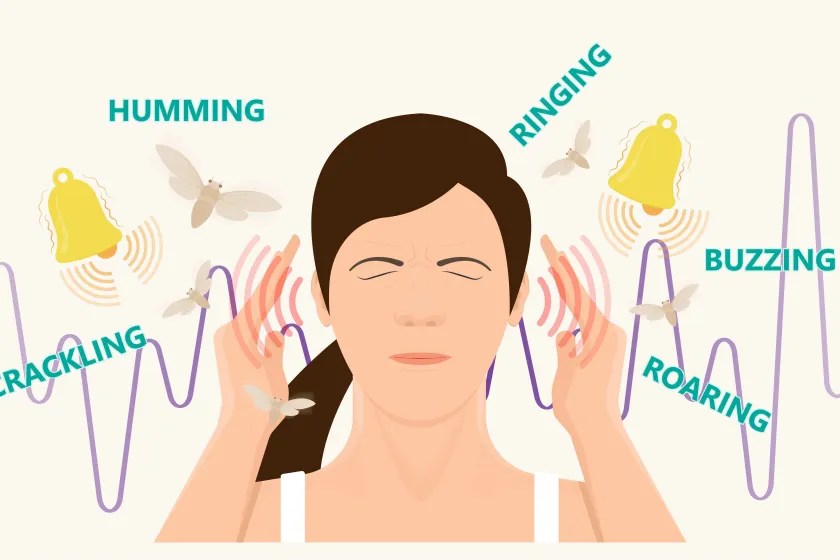
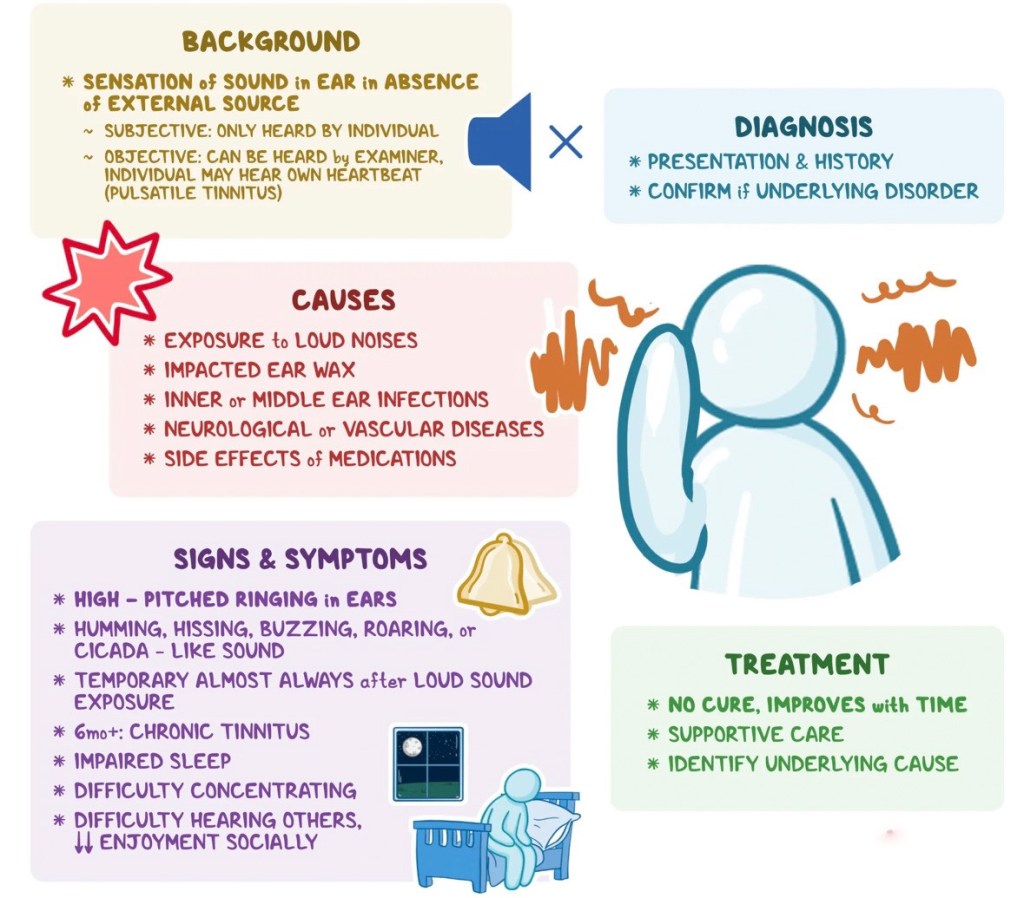
Advertisements

7. Rocking knives. I haven’t bought one yet, but I have spoken to others who have, and they find these knives much easier to handle. Instead of a chopping motion, you rock the knife to cut. These knives are often recommended for people with arthritic hands too. I’ve been looking at the different brands on amazon, but I have yet to order one. Check it out!

8. Double handled pots. I’ve often seen pots in the store with a handle on each side of the pot. These would be ideal to use for people with hand pain. My pots only have one handle, but I often think buying a few extra pots that have two handles would be safer. I have a difficult time lifting pots off the stove to drain the water out. Having two handles would make it easier to lift the pot and much safer.

Advertisements

9. Mixing machine. I own a Kitchen Aid mixing machine. It comes with three different mixers which comes in handy depending on what you are making. These machines cut down the time it takes to manually mix by hand and make baking easier. The one good thing about the Kitchen Aid mixers – there are so many attachments you can purchase to go with the mixer – even a food processor. There are also handheld mixing machines that would also work- less stress on your wrists and lower opportunity for pain levels to go higher.

10. Cook extra food. When I cook meals such as spaghetti or soups, I will cook enough to be able to have left overs for the next day. This way I can have a break from cooking. On my good days where the pain is lower and fatigue is bearable, I will also do some meal prep and freeze these meals. The meals can be taken out and thawed on days that I can’t function enough to cook. I often make Shepards pie, chicken pot pie, and lasagna to freeze. By doing so, this gives me six meals to quickly take out to thaw and eat. Theres many meals you can prepare ahead and freeze them!

With the new counter-top cooking appliances coming out it becomes easier to cook one pot meals very quickly, even from a frozen state. I keep looking into getting a Ninja Foodi 6 in 1 appliance. This appliance can become an air fryer, pressure cooker, steam, bake and roast. It will remain on my wish list for a while as they are fairly pricy. Do you have any kitchen hacks to make it easier cooking with chronic pain?!?

Is your chronic fatigue caused by fibromyalgia? Have you considered chronic fatigue syndrome?

One of the most difficult and frustrating symptoms for myself is the chronic fatigue I have alongside fibromyalgia. When I got told by doctors and specialists that fibromyalgia is often accompanied by fatigue, I never thought the fatigue would be this life disrupting. I’ve learned that feeling tired versus feeling fatigued are two completely separate terms. When a person feels tired, sleeping will cure this tiredness, while fatigue is not relieved by any amount of sleep. In my case I have come to realize no matter how little or how much sleep I get, I feel extremely fatigued the next day, to the point it makes it extremely difficult to function and take care of my basic needs. Who knew eating could become tiring?!? Lifting food to my mouth and chewing the food has proven to be a chore at times. I literally told my doctor this exact sentence not long ago. Some days finding the energy to eat is just overwhelming. Can anyone else relate?

Advertisements

At my last neurologist appointment, he explained to me that chronic fatigue is one of the most difficult things to treat as there are so many factors to think about to even pinpoint why the fatigue may be so disruptive. Fatigue is a symptom of fibromyalgia to begin with. A survey revealed, 780 males who have fibromyalgia, 93% reported chronic fatigue. While 4467 women were surveyed – 97% reported fatigue. The use of certain medications to help limit fibromyalgia pain could be part of the culprit to the added fatigue. Many medications used in treatment; have a possible side effect of fatigue.

Advertisements

Ever hear about chronic fatigue syndrome (CFS)? I have done a lot of research between fibromyalgia and CFS. CFS is a completely separate condition from fibromyalgia. There again, it can be difficult to diagnose – just like fibromyalgia. There is no one test to diagnose CFS. I have never been officially diagnosed with it, but I stand firm when I state I do have it. Chronic fatigue syndrome also presents with many other symptoms. Below are some of the possible symptoms of chronic fatigue syndrome.

Advertisements

Fatigue is not the only symptom people may experience with CFS. I often get daily sore throats, fevers that range from 99-103 F, and swollen lymph nodes. My blood tests always reflect no indication of any infection or that my body is battling a cold or flu. I’ve come to the conclusion that these symptoms I experience, are from chronic fatigue syndrome. There is no other explanation to why I exhibit these symptoms. These symptoms have a very quick onset and with little warning. As I write this blog, I found myself with a fever of 103. When these symptoms arise, it feels like I have the world’s worst flu bug…but I don’t. Have you ever had a flu that has knocked you down for days?!? Most of us have at some point. That is what I experience, but every day. Imagine living with a flu everyday – 24/7 for 365 days. Welcome to my reality.

As for treatment options for CFS, there have only been a few options mentioned to me, but not just a simple fix. My doctor and neurologist both mentioned the possibility of using a stimulant medication such as modafinil. By using a stimulant, one may see a response of wakefulness. Before using these medications there may be many aspects to think about prior. My doctor was very concerned that using a stimulant to improve my wakefulness during the day would be counter-active and not wear off before I went to bed causing further sleep issues to form. There are many listed side effects on these medications as well. Not everyone will experience the possible side effects. I personally find most medications can help relieve some symptoms, but then leave behind another symptom that may be unpleasant to deal with.

Advertisements

The other treatment option that is supposed to help improve chronic fatigue syndrome is exercise. I was never given any further direction on what type of exercises help or duration; however, I’ve found adding exercise into my day very difficult. First of all, who wants to exercise when they are so fatigued and causes pain levels to hit pain levels of 10?!!One must find the right exercises and duration and not over do this exercise and make their fibromyalgia symptoms and fatigue worse. If you are seeing a kinesiologist, they may be able to guide you with this route. This was my running issue balance. In my particular case, trying to add exercise made me go into a fibro flare each and every time. Research states that pain levels will increase at the beginning until one’s pain threshold increases, but I found it difficult to follow through when the results were so negative and debilitating results. There may be other treatment routes to improve chronic fatigue. These two are the ones most talked about.

Advertisements

When a person experiences chronic fatigue everyday it can impact a person’s cognitive abilities. I know I often struggle and search for words when I am trying to speak, leading to stuttering or creating words up that aren’t actually a word. I often joke saying maybe I could become rich by claiming rights to my newly created words. My concentration is also very limited, and I often find myself forgetting things. I will get into how fibromyalgia effects a person’s cognitive abilities in a later blog.

Just like fibromyalgia there is no cure for chronic fatigue syndrome. One must learn to maneuver through life the best he/she can while dealing with the exhaustion and symptoms left behind.

For more information visit: https://www.mayoclinic.org/diseases-conditions/chronic-fatigue-syndrome/diagnosis-treatment/drc-20360510

Advertisements

Fibromyalgia Flare Kit

Fibromyalgia is difficult to handle on any given day, but when experiencing a flare up it becomes even more difficult to function. A flare up can be triggered by doing too much, stress, or even a medication change. My three biggest triggers include cold winter weather, stress and overdoing it on my good days (which I do way too often). These are just a few examples. When a person enters into a fibromyalgia flare all the symptoms get worse and exacerbate intensity of symptoms. New symptoms may even appear. Everyone who has to survive these flare ups soon learn strategies that will help them cope. Flares can last up to a few hours, days and even months. My worst flare lasted over a month. It was a very difficult time and wore me out physically and mentally. Fibromyalgia flares can result in limited abilities or result in being incapacitated leaving one bed ridden. Below are items that I keep readily at hand to get through a fibromyalgia flare up.

Advertisements

My flare up kit includes:

1. Heating pads. I have several heating pads of various sizes. There have been times where I have had all three in use, depending on the severity of my flare. I have a heating pad that is meant to be used on the shoulders and neck. These two areas are problematic when I enter into a flare. Even though the heat doesn’t relieve the throbbing aches long term it helps while in use. I get a short break from the pain. Anything is better than nothing.

Advertisements

2. Heated blankets. I often get chills when I go into a flare. Having a heated blanket takes the chill out of my body. It also acts as a full body heating pad if I have jumping pain all over my body.

3. Weight blanket. I absolutely love my weight blanket. My boyfriend gifted this to me for Christmas one year. If you know anything about weight blankets, you know there are many benefits in using them with or without fibromyalgia. The weight from the blanket is known to help reduce anxiety. For those of us with fibromyalgia, we know anxiety can become an issue. For myself, I find the weight helps relieve my leg pain. I’ve heard from others that the weight causes further pain, so they don’t use a weight blanket. The use of a weight blanket with be dependent on your body. Using a weight blanket is also supposed to help one sleep better. I have noticed when I use the blanket I in fact do sleep better.

Advertisements

4. Travel neck pillow. Often times when I flare my neck becomes very painful and my muscles in my neck get weak. Having to hold my head up feels unbearable. I use the neck pillow to allow my muscle to relax and not have to work as hard to hold my head up. This is easy to take with you anywhere!

5. Medications. Make sure you have extra medications that you may use to remedy any flare up symptoms. For example, when I flare i often get flu like symptoms which can be relieved with over-the-counter Advil cold and sinus pills. Keep any other remedies you use available such as bio freeze spray.

Advertisements

6. Ear plugs and a mask. I often get sensitive to noise, and light. If i try to lay down during the day I may use a sleep mask to cover my eyes. I have also just bought some ear plugs to try during the day if sound bothers me. Sometimes even the vehicles driving down the street is too much noise to handle.

7. Compression gloves. I bought a pair of compression gloves to try. When i flare my hands often ache in every joint possible. Lots of people I have spoken to love their compression gloves. They even have compression socks to help with foot pain. I’m still experimenting with the gloves to see if they make a difference.

Advertisements

8. Comfy clothing or soft pajamas. Comfy clothing often brings one a feeling of comfort. During a fibromyalgia flare I often have sensitive to clothing. i rather be in pajama bottoms or sweatpants then a pair of jeans.

9. Water. Drink lots of water. As I type that sentence, I realize I should take my own advice. Water is important to drink for everyone but can also help during a flare. I find adding lemons or lime to water makes it more desire able to drink.

Advertisements

10. Music. I always have found music soothing and relaxing. I often will turn on music while I relax. Research often states music has the power to reduce pain and anxiety. We often hear about music therapy for children with disabilities. Why wouldn’t it help with people with fibromyalgia?!? Give it a try. What do you have to lose?!?

11. I was going to stop at ten, but I’m going to add one more thing to the list. Do you own a pet?! They can greatly help us through hard times – even a fibromyalgia flare. Did you know petting a dog or cat, can reduce levels of cortisol in your bloodstream, thus lowering muscle tension that may be contributing to pain levels?!! Research says spending even ten minutes with a dog can reduce a person’s anxiety levels. Interesting, isn’t it?!! Dogs are often used at therapy pet for these reasons.

What would be in your flare kit? Everyone’s flare kit will look a little different. Maybe your flare kit includes a book instead of music!

Advertisements

Is Fibromyalgia Progressive?

We often wonder if fibromyalgia is a progressive condition. In all the articles I have read over the years, they all state that it is not progressive. Ever doctor or specialist I have spoken to also states the same. I on the other hand, believe it can be progressive. Some individuals may be able to successfully control their symptoms and their fibromyalgia almost seems to go into a “remission” and possibly only experience fibromyalgia flares from time to time. Other people may not be able to control their symptoms causing their fibromyalgia to become very debilitating. For myself, I have had very little success on finding the correct treatment routes to help relieve my symptoms and the pain and fatigue seem to get worse as the days pass by. I have also noticed many new symptoms appear over the years – symptoms that have no other reason to be present.

Advertisements

I’m a member in many fibromyalgia support groups online and I’ve posed this question to many of these groups. These groups are worldwide with thousands of members. There are a lot of people who agree when I asked this question stating they too feel like their fibromyalgia has progressed and gotten worse over time. I know for a fact in my case my fibromyalgia symptoms are worse after three years then I was when I first got diagnosed. Sometimes I think covid restrictions played against me. I got diagnosed shortly before the pandemic began. Lots of assessments got cancelled and they never were rescheduled due to the restrictions being put into action. I feel like I missed out on the early interventions that could have been put into place to help me control my symptoms- swimming pools and gyms closed and in person courses on fibromyalgia were cancelled. We are often told swimming is an excellent activity for those with fibromyalgia as it is a low impact activity. How does one swim when there is no access to the facility?? I kept being told to go swimming by doctors. It became frustrating when they knew it was closed due to restrictions. I often wonder if I had been given the proper guidance if I would have been back on me feet a little easier. Instead my body desensitized itself and my fibromyalgia symptoms worsened over time.

Advertisements

When I first got diagnosed the pain and fatigue interrupted life to a certain extent, but now I find fibromyalgia has interrupted every aspect of my life. At the beginning the pain only affected a few areas of my body, today it is very much widespread pain. Whenever I explained to doctors or any health care provider that I hurt and have pain head to toe they would always tell me this was not possible. I always responded with, “It sure is possible, because I feel it!!” I always have disliked when I get told my symptoms aren’t possible – for the fact they are not in my body to experience it and it always makes me feel like my pain levels are being downplayed by whoever makes these comments to me.

Advertisements

As I stated, some symptoms have gotten worse over the years, but I still question why. I had a recent appointment with my neurologist and and I was explaining this to him. He stopped me at one point and stated that my prescription medications could also be contributing to some of the worsening symptoms. For example , irritable bowel syndrome is often common with people diagnosed with fibromyalgia. I’ve noticed an increase in stomach issues over the last six months. Now is it IBS or just a side effect from my medications being used. A-lot of my medications state they can cause diareeah as a result. Another example in my case is increased levels of fatigue. Now is this fatigue from fibromyalgia or a side effect from my medications?!? I do know a few of my medications can cause further fatigue to result, but to distinguish and pinpoint the cause is extremely difficult. One would have to wein off their medication to see if the fatigue improved. At this point I am not willing to take this action to find out.

Has anyone ever stopped to think about what happens to our bodies as we age? I often wonder if it is the aging process causing aches and pains to form instead of the fibromyalgia. Doctors often state younger people have a better chance to bounce back and get their fibromyalgia under control then people who are older. It proves to be true with injuries. For example, someone in their twenties will most likely recover from a broken bone faster than someone older. Can this same concept to applied to controlling fibromyalgia symptoms? I don’t have the answer, but it makes a person stop and think. When I had my MRI done on my cervical neck to rule out multiple sclerosis, the MRI reviled I have arthritis in my neck forming. The arthritis is forming at the location that I have constant neck pain- which I always thought was caused by my fibromyalgia. I often stop and wonder if my hand, foot and knee pain is arthritis forming too and fibromyalgia is not the cause of this pain. What is your thought on this? Being I’m only 38, I feel that fibromyalgia is more the culprit in my case. I used to be very active physically – always on the go and now it’s difficult to find the courage to go for a fifteen-minute walk.

Advertisements

What I do know is everyday tasks have become very difficult and daunting to complete. Folding laundry creates a burning sensation to form in my arms and then results in my limb feeling like I’ve been holding a ten-pound weight in the air. Brushing my hair or my teeth often leave me with the same feeling. Walking upstairs can leave me feeling short of breath, cause my legs to burn and I feel like collapsing to the ground. Cooking can leave my hands with deep down to the bone aching and numbness to the point I drop everything. Anyways… you get my point. Everyday tasks can become difficult to complete. Many of these issues I face today were never present during early diagnosis or at least to this extent. Doctors often say fibromyalgia will get worse from being sedentary and letting the pain run your life. When I attended one pain clinic, I had the kinesiologist tell me, “I can’t have you sitting on the couch all day long.” He continued to tell me I was not trying to improve. Little did he know, I don’t just sit on the couch everyday doing nothing! He got frustrated that everything he tried was not helping improve my fibromyalgia. Just because a strategy is unsuccessful doesn’t mean a person is not trying!!

Conclusion: Is fibromyalgia progressive? i guess according to research and the medical field it is not, but I believe it can be! After living with fibromyalgia for myself I feel confident saying in my case it had been progressive. Enduring chronic pain, and other fibromyalgia symptoms continuously must have some effects on one’s body. The strain from fibromyalgia flares over and over decreases a persons quality of life drastically. What about you?!? What is your opinion?! Maybe you have never taken the time to assess your situation in this depth yet.

PREVIOUS POSTS…

Advertisements

Do People Grieve when Diagnosed with Chronic Conditions?

When anyone is diagnosed with fibromyalgia, I feel as if that person grieves who they once were and have to come to accept who they have become. Fibromyalgia alters a person’s life so drastically. Every area of your life is usually impacted to some degree. It took me awhile to realize this. Whether it is a minor change or enormous change, people with fibromyalgia have to learn to live with chronic pain being present in their everyday lives. One of the hardest things to do is to accept and be okay with your diagnosis. At least for me, I felt I was in denial for the longest time. On my good days I often thought to myself, “Awesome I’m better and I can return back to my life before fibromyalgia took a front seat.” When the good day starts to fade into the background and the pain begins to slowly creep back in, emotions can run high and spiral all over the place.

Advertisements

Have you ever heard of the grief cycle? I first learned about the stages of grief when I was enrolled in a psychology course – training to become a mental health rehabilitation worker. When people close to us, pass away and we are grieving the loss, our emotions tend to be all over the place – one minute you are happy, the next sad, or anger sets in. It got thinking, this grief cycle can also be applied to those who live with a chronic condition such as fibromyalgia. No matter what a person is grieving, there can be five different stages of grief that you may go through. I know some grief models discuss seven stages, but in my blog, I will be referring to the 5 stages of grief model. Not everyone will follow these stages in the same order, nor go through each stage. One can also be in a stage and revert back to the previous stage. We all are equipped with different coping mechanisms and grief will affect each and every one of us differently!!

In my own fibromyalgia journey in the last three years, I know I have been in stages of grief and returned several times to different stages. Just like the above picture, my road looked like the image on the right side. I still find myself having mixed emotions – and I dont think that will ever stop. Having fibromyalgia is like being on a rollercoaster- ups and downs. I go back and forth between the different stages, even though I have accepted that my life will look differently then before diagnosis.

Denial – When I first got diagnosed I was shocked with the diagnosis of fibromyalgia. I had a doctor tell me years ago (2014 ish) that he suspected I had fibromyalgia then. I shrugged it off and never thought about it again. Back to 2019…I initially went to the doctor because I was always tired – which soon became apparent that it was fatigue not just tiredness. My hands and elbows were always in constant pain too. The initial action of any doctor is to probably run blood work. Mine kept coming back normal. As the pain got worse over a short period of time, my doctor diagnose me with fibromyalgia as there was no other explanation. I took some time off of work to try to get the symptoms under control. I convinced myself that the migrating pain and the deep down to the bone wrenching aches would just go away and I’d be back to work the following week. I even found myself thinking to myself, “I’m just over thinking things, the pain isn’t really there.” I even tried to convince myself that it was just a bad flu bug, even after diagnosis. I took longer off work, thinking I could heal my fibromyalgia – what I didn’t realize at the time was there no cure to fibromyalgia, only learning how to manage symptoms and learn to accept a new way of living. My medical leave from work, turned into months, a year and so on. It took me close to three years to accept my diagnosis. There are still days where I wonder if something is still undiagnosed and it really isnt fibromyalgia. For now, I carry on with life as if it is fibromyalgia and do the best, I can do every day. Some days I make it from the bed to the couch and that’s ok!!

Advertisements

I often find myself back to this stage. Fibromyalgia takes so much away from a person. I have learned we often take things for granted. A task such as brushing your teeth, walking up a set of stairs or even getting out of bed every morning can become so daunting – especially when you have chronic pain involved. If I do push myself to go out and do something it results in a full-blown fibro flare. Then I find myself angry with myself for pushing too hard. I know my limits, but some days, in order to enjoy life, one has to endure the pain. I find myself being angry because I don’t have the energy to go for a coffee with a friend, a birthday celebration or even a vacation away. Fibromyalgia has taken away from me being able to take part in all my favorite hobbies such as hiking or playing golf. I’ve had to learn to enjoy new hobbies – which some days means binge watching a favorite tv show on Netflix to pass the day in pain. I used to read a book a week, now I can’t get through a book at all. My new hobby is to listen to an audiobook instead.

Advertisements

Research often reports that depression is high for those who get diagnosed with a chronic condition. How can one not become depressed when they have lost so much independence and enjoyment? For the most part, humans are very sociable, but for those who are dealing with chronic pain and fatigue, your social life soon takes a backseat. I have had to cancel plans so many times, due to the fact that I just don’t feel good enough to leave the house. It becomes very frustrating, and one can start to feel depressed from having to isolate themselves due to high pain levels. I’ve become horrible at keeping in touch with friends and family since I have been diagnosed. As of late, I try to at least text people to say hi. I never hit a full depression stage, but I would definitely say I was “down in the dumps.” I did seem to develop major anxiety which can also contribute to depressive states. I don’t have any words of wisdom for this stage, because I’m still struggling with this stage myself. I’m currently trying to live in the now and not worry about what I can’t control in regard to my fibromyalgia. I’ve learned my fibromyalgia symptoms do what they want when they want, and I can’t prevent them. I have to deal with it when it happens. I often feel overwhelmed by the endless symptoms that appear everyday with no warning. I’ve learned its ok to be angry!! Just like the saying says, “It’s okay to have bad days, just don’t unpack there!!”

At this stage, one often thinks if I take specific steps the chronic pain will disappear. I had it in my mind that if I increased my exercise and went swimming, I would get better, or if I go for more walks the pain will disappear. Boy was I wrong. Not only did it increase my pain levels, i created false hope of fixing myself. Don’t get me wrong, exercise is important, but in my specific case, adding exercise was not the simple answer. I attended a pain clinic with high hopes they could fix me. Even though I knew there was no cure for fibromyalgia, I thought specific actions would make it go away and my life return back to normal! I often would think to myself, if only I had listened to the doctor back in 2014 maybe I could have avoided being in so much pain today. Stop beating yourself up!! We are often too hard on ourselves.

Advertisements

Acceptance. This is the last stage. This is where one learns to be okay with the diagnosis of fibromyalgia. We have to learn how to live with a chronic condition and make changes to our lives to be able to function. It is not an easy task to learn to accept – that your life that once was, will never exist again. You have to learn to live and navigate a whole new world – the life living with chronic pain, fatigue and other symptoms that may rear their ugliness. Acceptance can be easier for some, while others may need longer to accept the reality of the situation. It took me almost three years to accept mine. Remember, there is no time frame to acceptance.

PREVIOUS POSTS…

Advertisements

Chest Pain in Fibromyalgia…What is it called?

Did you know that fibromyalgia can cause chest pain? I sure didn’t!!!! The first time I had experienced this type of chest pain was the scariest moment of my life – thinking something was wrong with my heart. Chest pain that is felt with fibromyalgia can mimic what may present as a heart attack. It is actually a condition called Costochondritis – which causes inflammation of your rib cartilage. This cartilage connects your ribs to your breastbone. With the symptoms mimicking a heart attack, I would definitely not just assume its costochondritis and get it checked by a doctor to be sure it’s not anything serious or heart related.

Advertisements

Since I hadn’t heard of this condition before, I decided it was a good time to do some personal research and find out as much information as I could about it as at the time. I was dealing with this chest pain daily for a while. On several sites I used to research, it stated that costochondritis pain is usually only felt in a small area of one’s chest while a heart-attack involves a more widespread area and often causes pain in the neck and into the arms. My chest pain I experience is always on my left side of my chest – hence why at first I thought it was my heart. The pain is a sharp aching pain, which can have a gradual onset or appear immediately. For myself, the chest pain would start minimal and then increase to the point it hurts to breathe or move. I would also feel like there was an air bubble stuck in my chest- it really isn’t an air bubble, but cartilage inflammation. Costochondritis is not a life-threatening, but can be very painful. The attack can usually be relieved by resting and waiting for the condition to improve. Everyone will experience costochondritis differently. Your pain may be less severe than mine, similar or even more severe than I have experienced. I found the duration of the attacks different each time. Sometimes the pain would ease after several hours, while other times it would last until the following day.

To help treat costochondritis I have found lying flat on the bed or couch helps ease my pain. I remain as still as I possibly can as movement aggravates the pain further. I also apply heat with a heating pad to the area. One could also try to ice the area, but I prefer heat. My body responds poorly to icing. My body has become intolerant to icing areas causing pain to arise. Some people may not get any relieve by laying down but may get some relief by standing or sitting in a particular position. You may find yourself experimenting to see which works best for pain relief for you. I often take over the counter pain killers such as Advil or Motrin to help relieve the pain. A few times I have had to rely on prescription anti-inflammatory medication to help.

Advertisements

There has been no solid evidence towards what could cause an attack of costochondritis to form, but possible causes could be anything that may cause tension to the chest area. The stress can therefore cause inflammation to take place. Even a simple action such as coughing, could cause an attack to happen or reaching for an object off a high shelf above your head. In most cases, it remains unknown to what causes each episode of costochondritis to take place. If you can pinpoint the cause, you may be able to prevent future attacks from taking place. However, without being able to know what the direct cause for the cartilage is to become irritated and inflamed, it remains very difficult to prevent.

I have come across a few articles over the years, that states there are exercises and stretching one can use to help relieve the pain felt from costochondritis. However, I have never explored these stretches and exercises as it states it is best to be directed by a trained physiotherapist. If anyone attends physio for other reasons, you may have the opportunity to ask your physiotherapist about these exercises. Usually at physio, they will teach you the proper stretch or exercise, so you do not hurt yourself further. There are many videos on YouTube about these specific exercises if you wish to explore further.

You can find more information on Costochondritis here. You will be redirected to the mayo clinic website for more information.

I’m sure costochondritis can be present without being diagnosed with fibromyalgia. So don’t assume that if you have fibromyalgia, you will have costochondritis or vice versa. Individuals who are diagnosed with fibromyalgia just seem to have higher chances of having the cartilage in their ribs inflame.

Advertisements

Fibromyalgia and Insomnia

Fibromyalgia and insomnia seem to have a high correlation. In all the research I have done on fibromyalgia in the last three years, I have never found a solid explanation as to why people who have fibromyalgia suffer from insomnia. In the book, “What Your Doctor May Not Tell You About Fibromyalgia“, a study states out of 665 males – 80% suffered from insomnia, while out of 4, 075 women 88% reported problems of insomnia. As we know, getting a good night sleep is important for anyone. The less sleep a person gets the less energy reserve one has, causing various negative effects such as cognitive changes. For people with fibromyalgia, insomnia can become a nightly issue. Decreased sleep can cause a person’s pain threshold to become lower. People who have fibromyalgia already have a lower pain threshold to begin with. This is due to desensitization – which will decrease one’s pain threshold even lower as time goes on. With a lower pain threshold, higher levels of chronic pain are formed, and the pain is felt at even higher rates. In all my research, before improving any other fibromyalgia symptoms, the number one advice listed in many sources is – one must first fix their sleep or at least improve their sleep. Sounds easy right? But that is not the case. It is not just an easy fix. I’ve had bouts of insomnia on and off for years, but after so long my body just crashed and I would sleep. These days no matter what I do to try to improve my sleep, it does not happen and results in insomnia. For the last week I have been sleeping poorly. In turn my pain levels have been hitting levels of ten and I’ve been exhausted.

Some of the remedies to help lesson insomnia sound very straight forward, but reality is they are much more difficult than one thinks when factoring in chronic pain/fatigue. Here is what I have struggled with trying to improve sleep quality and quantity.

  1. Stay active and don’t become sedentary. Not so easy when you live with chronic pain and chronic fatigue. Just getting out of bed some days is difficult enough. If you have read my pacing blog – remember the spoon theory? Some days I don’t have a spoon to use to exercise.
  2. Stick to a sleep schedule. I tend to go to bed early and at the same time every night – due to the fact that if I go to bed even an hour later then I usually do, I can’t function at all the next day. Getting up at the same time every morning is a different story. Who wants to drag themselves out of bed if they have not slept at all or very little? Just to keep a scheduled sleep schedule? I rather get sleep when I can.
  3. Lots of times people overlook their medication list as a cause of insomnia. Many medications can have a side effect of insomnia. After researching and speaking to a pharmacist I have come to learn that many of the medications I take to manage my pain, have a possible side effect of insomnia. For example, my one medication I use to manage my migraines, can possibly cause a reduction in melatonin levels being secreted. Melatonin is naturally released in our bodies, and it is an important hormone to trigger optimal sleep. Many doctors may make a suggestion to try melatonin supplements to help with sleep. You can buy these in the vitamin section in any pharmacy (at least in Canada). Before adding in melatonin, I would suggest speaking to your doctor or pharmacist. For myself, I found these melatonin supplements caused me to have very intense and weird dreams, so I stopped using them.
  4. Avoid or limit naps during the day. For myself I need to rest when tired, otherwise the fatigue levels get worse, pain levels increase, and my ability to function over all decreases drastically.
  5. Pain during the night? There are medications out there that can limit pain, but people who have fibromyalgia are often on medications already to help with pain levels. At night pain often wakes me up, and then I cannot get back to sleep. I end up tossing and turning the rest of the night and getting out of bed in the morning feeling like I am a zombie. I’ve yet to find a solution to this issue.
Advertisements

You can find more information about insomnia by clicking here, which will redirect you to the Mayo Clinic website.

It is always a good idea to have a sleep study completed to make sure it isn’t sleep apnea. After my appointment with my neurologist, it was suggested I get a sleep test done to rule out apnea. The take home apnea test is simple to hook up. The only issue I had was getting tangled in the cords at night. My test came back negative, but I know a few others with fibromyalgia who tested positive on their test. Once they got a C-pap machine to use at night, their sleep improved immensely.

The use of sleeping pills to help get the necessary sleep needed, can be a touchy subject. I have found that many doctors do not like to recommend sleeping pills and are very hesitant to prescribe them. Many sleeping pills can become habit forming and an individual can become reliant on the use of these pills. In my case, I decided using sleeping pills – the benefits outweighed the risks. I used to use Zopiclone – which did help me sleep, but this drug is not meant to be used long term or nightly. I would use it one night- get a wonderful sleep and then not use it for nights to come. I would go 2-3 nights without sleep and then breakdown and take one. When I did take it, the medication was not out of my system by morning, and I was often left groggy half the day. My doctor and I had a very in-depth discussion about sleeping pills and he switched me over to another one, which is safe to use nightly and the groggy feeling wears off by morning. Even with the use of a nightly sleeping pill I often wake up anywhere from five to ten times a night – experiencing choppy sleep patterns and feel very fatigued during the day. Even on the nights I do manage to get a solid night’s sleep, I wake up feeling extremely fatigued. However, I am a firm believer I also have chronic fatigue syndrome (CFS), alongside my fibromyalgia. The two conditions usually go hand in hand, but I have never been given a solid diagnosis of CFS by a doctor. If you have done any research on chronic fatigue syndrome, you have probably learned that fatigue experienced with this condition will not go away with sleep. I will be writing a blog on chronic fatigue syndrome soon!

Failing to get enough sleep can have many negative effects on one’s body. I won’t list these effects here because the list is way too long to begin to discuss. The pictures at the end of this blog, show many side effects lack of sleep and insomnia can have on one’s body. I will pick a few effects lack of sleep can have and discuss further in future blog posts. Stay tuned.

The best advice I can give to anyone who is experiencing insomnia alongside with their fibromyalgia, is to have a conversation with your doctor, and come up with a plan to help you with sleep. Everyone’s situation will be different. It may be a trial-and-error situation, to see what works best for you! As you can see even after three years, I still struggle with improving my sleep quantity and quality. Every night is different.

Advertisements

Pacing Yourself….

Every health care provider I have seen, has always discussed how important pacing oneself is when dealing with chronic pain, such as the pain we experience with fibromyalgia. Pacing is a technique we can implement when trying to complete tasks in our day to day lives. It requires one to break up a bigger task into smaller tasks to help us complete them. If you are like me, tasks such as cleaning can become very strenuous on us, resulting in, higher pain levels, extreme fatigue, frustration, fibro flare, etc. I often forget to pace myself because I was always the type of person to work at a task until it was completed. As of recent, I have been working on learning to pace myself to avoid a “fibro flare”. Pacing can be a very difficult strategy to follow, as most times on our good days we push ourselves over our limit just to get things done – instead of things sitting unfinished. I’ve personally made this mistake over and over again – then several hours later or the next day think to myself, “Why did I push myself so hard, instead of stopping at my limit?!” or ” If I had only slowed down while cleaning, I could have attended my friend’s birthday party.” Sound familiar? When doctors first mentioned pacing to me, I thought to myself that it would never help me. Now after 3 years of having to live with fibromyalgia and the forever unpredictable symptoms and flares, I have learned how important it really is to pace. Some days pacing works, some days its ineffective – and that is okay.

At the bottom of this blog, there are two PDF files that I found online on other sites that I personally found useful. Please note I did not write or create these documents, but I am sharing them to pass the knowledge along. I hope you too will find these helpful.

Advertisements

I recently saw an article that explains “the spoon theory” and how it relates to pacing. The spoon theory was written and developed by Christine Miserando. She uses this theory to help people understand how to ration their energy reserve and pace themselves to complete tasks or daily activities. I found this theory rather interesting, and it makes complete sense. It is a great way to have a visual perspective right in front of you. Say we each start our day with 12 spoons sitting on the counter. Each task a person completes will decrease our spoon reserve. For example, getting out of bed might decrease by one spoon some days, while other days finding the courage to get out of bed may use two or three spoons up. Miserando’s theory states that if one did not sleep well the night before, a spoon should automatically be eliminated from the reserve before getting out of bed. I personally find getting out of bed extremely difficult when pain levels are high, and fatigue is at an all-time high. A shower may be considered two spoons, cooking a meal and eating may be three spoons, and going to work can be considered four spoons. Once again this is just an example of her theory. Obviously, everyone’s reserve of spoons (in our case energy) will deplete at different rates. Some days for myself just getting out of bed and eating breakfast requires all my energy, while other days my energy reserve lasts until noon and I can accomplish more. As the day goes on, our collection of “spoons decreases” – just like our energy levels. This is where pacing yourself through-out the day can possibly help you extend your energy to complete more tasks. Even though the tasks may seem to take longer to complete, you may be able to complete more in one day with pacing. Remember, pacing takes practice and patience. It may be difficult at the start, but the more you pace, the more efficiently you may be able to get things done without setting yourself into intense pain levels and possibly causing a fibromyalgia flare to take place. How will you use your spoons?

Advertisements

Stand up and advocate for youself….

Advocate, Advocate, Advocate!!

I wish I had found the courage to advocate for myself sooner than I did. After all, we know our bodies best. Not knowing very much about fibromyalgia when I was diagnosed, I put my trust in health care providers. If I could go back to early diagnosis, I would not be so scared to let my voice be heard. When I finally found the courage to advocate for myself – I got labelled as being difficult, uncooperative and told I was not trying to improve my condition, I held my head high and stood my ground.

Advertisements

By Advocate I mean you should take the time to explain your condition from your viewpoint, not from a medical stance. I’m not a textbook or a website – nor does my body conform to reflect as such. Just because something is listed about fibromyalgia does not mean it will apply to your specific case. Everyones fibromyalgia journey is unique and different – symptoms we experience will be felt at different intensities and treatment plans and options will vary person to person. Don’t be afraid to ask questions. I would encourage you to ask as many questions as you need to clarify with doctors. After all – It is YOUR health involved. If you don’t take the time to ask the necessary questions in regard to your health, who will? By advocating, you will help others involved understand your condition and how they can best support you. If you have a difficult time advocating for yourself there are usually organizations that one can contact who will help you advocate. Often times an advocate can be arranged to attend medical appointments with you.

Here are some following tips in advocating for your health. They have been taken from the Alberta Health Services website to share with you. Please note: if you visit this site from another country other than the province of Alberta in Canada, the information on this site may not apply to you directly. I only linked the page in reference to what is listed below.

Advertisements

Here are some tips that may help:

  1. Learn how to explain your health condition clearly. Practice speaking about your health condition with a parent, friend, or someone else you trust.
  2. Write down your concerns or questions before you go to your healthcare provider. It reminds you to talk about them at your appointment.
  3. Ask whatever questions you need answers to. It is your body and you need all the information to make informed decisions about your health.
  4. Keep track of all your doctors, nurses, and other healthcare providers including who you see, when you see them, and what you talked about.
  5. Stay calm and polite, but assert yourself to get the support or information you need.
  6. Speak up if you don’t agree with your healthcare provider. You are the boss of your own healthcare; no one knows your body better than you do.

Advertisements

Fibromyalgia? Flu? Another illness? Autoimmune?

One day you begin to feel aches and pains in different areas of your body. You assume you have a flu. You take the extra time to care for yourself to ease the body aches you feel – applying heat, ice, soak in a warm bath, take some cold/flu pills to help…Whatever you personally find helps you ease aches and pains from a flu. Nothing eases the dull pain and aches you feel. You make the trip to the doctor’s office in hopes of a professional’s opinion and relief. Your doctor does a physical exam and finds nothing physically wrong and orders bloodwork to investigate further. You return home and continue to try to ease the symptoms of this horrible flu bug you think you have caught. Results come back from your bloodwork and reveals nothing is wrong. No abnormalities detected to indicate your body is malfunctioning in any way. Your doctor decides to run blood work a second time. In the meantime, your body is so tired and fatigued from the consistent aching and pain that you begin to become mentally and physically exhausted. As the days go by the pain continues to become more intense and you notice more areas of your body begin to ache and different intensities of pain levels begin to form. The fatigue and pain become unbearable. You go back to the doctor to get the results. NORMAL? ‘How can everything be coming back normal when I hurt so bad? “Why do I hurt the way I do?” “What is causing my pain? ” Your doctor responds with, “I suspect you have fibromyalgia.” You take a moment for this to sink in and absorb the presented information. Does this story sound familiar? I often hear the same story from many other fibromyalgia sufferers. Some of us have heard of fibromyalgia while some of us have never heard of this diagnosis. Whether you have heard of fibromyalgia or not, most likely you went home to begin your own personal research on fibromyalgia. This is where my journey began. What about you? There is much more to fibromyalgia then just the aches and pains.

Advertisements

The diagnosis process can be very long and a drawn-out process and become frustrating. Doctors often diagnose fibromyalgia from symptoms (which I won’t list here as there are a lot) and possibly will conduct a physical exam as in fibromyalgia, there are 18 trigger point/tender point areas on a person’s body. Some or all of these areas will be tender to the touch. Scroll to the end of this article to see a picture of these tender point areas. For myself I have all 18 areas that are tender to the touch – however my upper back, legs and arms are the most sensitive areas, but the areas can change daily. As most of us know there is not a specific test that can detect fibromyalgia (at least in Canada). I have read articles posted in other areas of the world stating there is now a test that can be conducted to determine if you have Fibromyalgia. I am not sure if this is accurate information, but in a perfect world, wouldn’t it be wonderful to just get a test done to confirm the assumption?!?! I found not having a solid yes on diagnosis hard to accept. I was in denial for the longest time and second guessing my health. Fibromyalgia is diagnosed by eliminating possibilities of other illnesses and conditions prior, which can take time. My doctor diagnosed me fairly quickly – almost so quickly that I wondered if I was really fibromyalgia or misdiagnosed. However, over the years I have seen specialists such as a rheumatologist and neurologist who firmly have agreed with my primary doctor’s diagnosis of fibromyalgia. There are many other conditions that have some overlapping symptoms of fibromyalgia and can be mimic fibromyalgia such as rheumatoid arthritis, Lyme disease, multiple sclerosis (MS) lupus and polymyalgia rheumatica. I’m sure there are other conditions that could possibly mimic fibromyalgia. The above listed are conditions that I read about in my own research. All my blood work kept coming back with no detected abnormalities – no indication of autoimmune disorders. I even requested an MRI be completed to check for brain lesions that may detect MS. To my surprise, a lesion was detected on my brainstem, which is usually an indication of MS. My neurologist quickly ordered a second MRI, to rescan and also had my cervical neck scanned for further lesions. In the end my results never revealed any further lesions and my neurologist stuck with the fibromyalgia diagnosis but never full ruled out MS. My primary doctor was very through in his tests prior to me seeing specialist. My neurologist was impressed at how through he was and ran all necessary tests needed and reran those tests more than once to make sure the results were conclusive.

Advertisements

My advice to you, if you are still in the diagnosis stage and suspect you may have fibromyalgia and want your doctor to investigate further……

  1. Be sure to see doctors, specialists, and any other health care providers that believe in fibromyalgia. There are many health care providers out there that still think fibromyalgia is in one’s head or are not up to current information on fibromyalgia. Never let anyone convince you that fibromyalgia is just a mental state, and you are imagining it. The pain we feel is real and so are the symptoms experienced. I questioned this myself early on and wondered if I was mentally ill – thinking I was in pain, and it was not really there. The best thing my doctor did was tell me the pain I feel is real and that I was not just going crazy!
  2. Don’t be afraid to ask questions. Ask as many as need!
  3. Do your own research. Arm yourself with knowledge. Doctors often discourage you from researching on your own. My doctor encouraged it. It helped me understand fibromyalgia on a different level. Doctors often explain in medical terms which can be confusing and face it “over our heads”. Reaching it yourself and reading it in simpler terms is easier to understand and comprehend without a medical background.
  4. Try to connect with other people diagnosed with fibromyalgia. There are so many wonderful groups on Facebook these days help us stay connected. Connecting with others who are experiencing the exact same as you or similar, even if they are at a distance makes one feel not so alone during this journey.

Advertisements