Tag Archives: #fibromyalgia

The Silent Struggle: A Personal Reflection on misdiagnosed/ misunderstood conditions

I recently had to attend a doctor’s appointment with a doctor who had ordered a lung function test way back in the fall. At the end of August I got extremely sick with what she thought was pneumonia. After weeks of antibiotics, trips to the emergency room and the cough worsening over time, she decided to order further testing on my lungs.

Advertisements

Fast forward to a few weeks ago…2025

My results were normal. The doctor was left puzzled to why I got a viral infection which worsened by the day for almost two months straight – instead of getting better over time. “The test results don’t make sense. They don’t match how sick you got and for the duration.” I knew it was lyme and bartonella complicating my health struggles – lyme is known for shutting down the immune system from functioning properly and bartonella co infection is known to affect one’s respiratory system. After ten months of not informing my doctor of the lyme diagnosis, I decided to “let it slip”. I decided to bring up lyme due to the fact that I do think it is impacting my lungs in some capacity. You may be wondering why I withheld such important information – most medical doctors do not believe in lyme.

Advertisements

I had prepared myself for her reaction – which was exactly what I expected. I was told the lyme tests are unreliable and most likely I had a false positive. She is right, the two tier lyme tests are unreliable and often produce FALSE NEGATIVES even if one has lyme disease. It is very RARE to have a lyme test produce a false positive. However, the lyme test I had done is more in depth and is even recommended by Canlyme ( Canadian lyme disease foundation). We are also told over and over again that we do not have ticks here or have ticks that carry lyme disease – I totally disagree with this statement.

I also mentioned the SIBO gut issues I was being treated for -“SIBO is controversial, we don’t really know if it is a thing!” Say what? If you do a quick google search on SIBO, thousands of medical articles are found. In a matter of a minute, two of my biggest health struggles at the moment were dismissed just like that! I did get referred to a pulmonary specialist – maybe the specialist will be able to to run more in depth testing on my lungs.

Advertisements

Over the last week, I have stepped back to reflect on this experience. How are we supposed to get proper treatment/help when so many medical providers do not think our health struggles/issues are valid and are labelled as controversial? Many medical providers world wide still believe fibromyalgia is not a legitimate condition and is often labeled as a mental illness. I wish I had some inspirational advice to give everyone, but I don’t. It is a frustration many of us face with invisible illnesses or misunderstood conditions.

I often thought my fibromyalgia was diagnosed too quickly. Even though my doctor at the time was thorough in running tests, there were symptoms that just did not match a fibromyalgia diagnosis. These symptoms were left without an explanation for years. I eventually just “accepted” the fibromyalgia diagnosis and tried to move on with life managing symptoms – with little success. Symptoms got worse as did the intensity of the pain. I saw no positive changes, because lyme was the underlying cause of my pain and symptoms – most doctors are not trained to diagnose lyme or simply do not believe lyme disease is an issue. I do have fibromyalgia, but the lyme diagnosis was the missing link.
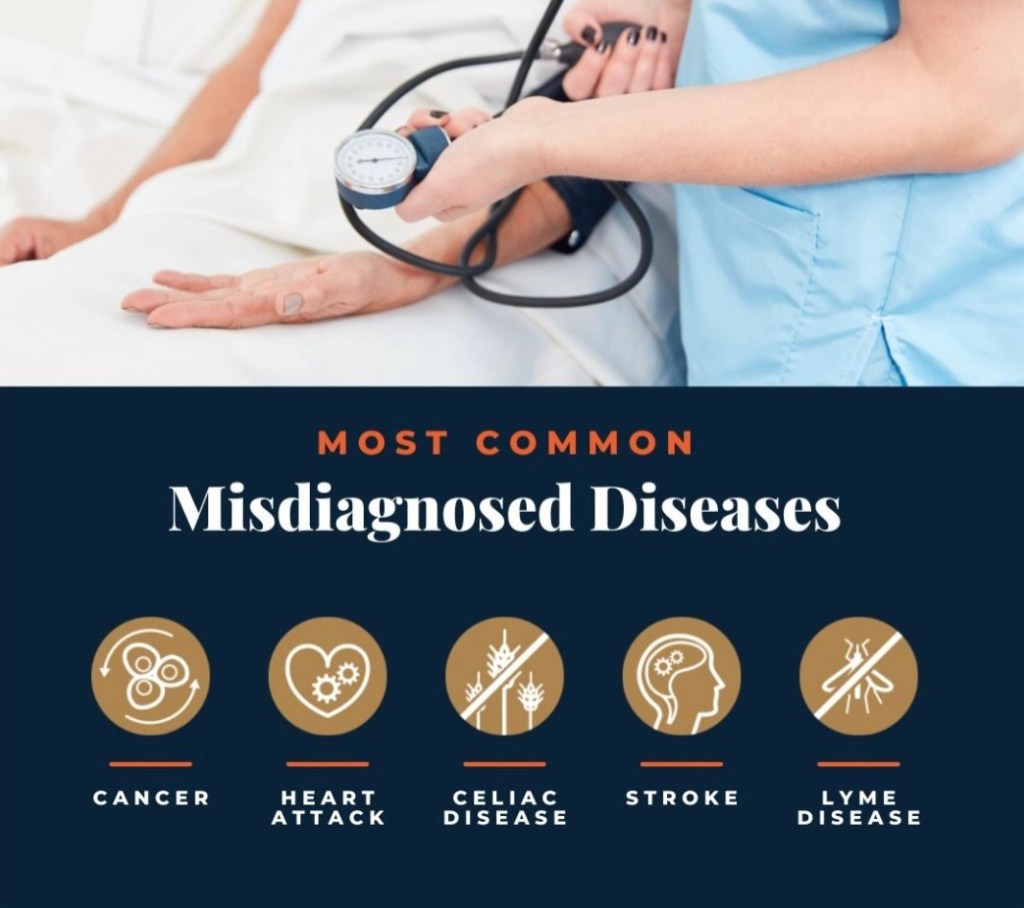
According to one law firm lyme disease is one of the top misdiagnosed diseases.
Advertisements

When medical professionals fail to understand a condition or simply do not believe a condition exists the following may take place:

  1. Being misdiagnosed with the wrong conditions.
  2. With the misdiagnosis – insufficient support and improper treatment .
  3. Health consequences. People continue to get sicker because because of delayed treatment.
  4. Psychological distress

It is hard for me not to think..

1 “If only the lyme had been caught sooner, I wouldn’t have become so sick!” The longer lyme is left untreated the more damage it can cause to one’s body head to toe. It can cause damage to vital organs if left untreated. This week I go for for an ultrasound on my heart to make sure the lyme bacteria has not entered into the layers of my heart muscles – it is known to cause an enlarged heart.

2. ” If only I had reached out to the naturopathic doctor (ND) sooner, instead of repeating the same lab tests over and over which all reflected normal. A friend of mine had given me the ND’s contact information two years prior to me actually reaching out to her. I wish I had done so way sooner.

3. The doubt from some medical providers ( not all) contributed to my anxiety disorder. If I had to see a doctor who was unfamiliar with my file, they would immediately blame the symptoms on anxiety. I’ve also been told by several health providers I was not trying to get better.

I am working on not focusing on the what ifs, as I can’t change what took place. All I can focus on is what is in front of me now – today. The what ifs were only contributing to my anxiety levels – increasing symptoms and making me sicker.


The Struggles of Maintaining Friendships Amidst Chronic Illness: A Personal Journey

We often form friendships with people who have similar hobbies and interests as we do. However, what happens when chronic illness takes away our ability to take part in those activities? Those friendships often cease to exist because we no longer have ” things in common”. This does not happen just with having a chronic illness – but at times friendships just tend to grow apart. Our hobbies and interests may change over time as well as our life goals – it is just how life goes.

Advertisements

How do we make new friends when we have a chronic illness? I often found it difficult to make new friends as an adult before chronic illness set in- it seems like unless one is into the bar scene it is near impossible. It is even harder when you factor in a chronic illness. I soon realized I was hearing from friends less and less even if I reached out first – messeges often showed read and I received no response. For myself, when I got diagnosed with fibromyalgia in 2019, I started joining online support groups to be able to interact and chat to other people who understood the struggle with chronic pain and every other symptom fibromyalgia seems to throw at us. I found a few people on the group that lived locally and we started going out for lunch or coffee. There was never any hurt feelings if we had to cancel last minute due to not feeling well. I later started fibrofighters – there are quite a few followers who I speak to daily, eventually adding them to my personal Facebook account and consider them to be some of my closest friends. I can always count on them to be there to listen to my struggles even though they are half way around the world. They get it! Strange how people who you have never met can become your main support systems.

Advertisements

In April 2024, when I received my lyme diagnosis I found myself facing another bout of lost friendships. When I expressed how disappointed I was in “friends” reactions to being diagnosed with lyme disease to the doctor treating me, she looked at me and asked me one simple question , ” Do you really want/need people like that in your life?” Of course my answer was no. Even though it still stung for several weeks, she was right – I don’t need people like that in my life. These “friends” decided to voice their opinions on my treatment routes – it is fine to have an opinion ( we all have opinions), but was it necessary to launch a personal attack and name call?! NO!! You would think my decisions were impacting their lives directly – when they were not. I know their responses were due to lack of knowledge on lyme – however this did not give them the right to treat me in this manner.

Advertisements

We can’t control how people react and respond, but what we can control is how we react and respond to them. Over the last week I have been listening to Mel Robbins “The Let Them Theory” audiobook. It has been an eye opener for me. I won’t be going into detail about the book itself in my blog as there is just too much information to cover. ” The Let Them Theory” has gone viral and was only published December 24, 2024! I kept seeing her book in every store I went into the last several weeks, so I decided to listen to the audiobook version.

Advertisements

“If they want to leave… let them.

If they choose someone else…let them.

If they don’t support you…let them.

If they don’t invite you…let them.

Stop wasting your energy trying to change or control other people.

Let them show who they really are.

And then you can choose what you do next!”

These seven sentences resonated with me. I felt a sense of peace take over. I realized “friends” opinions and actions reflect who they are, not who I am as a person. The way I respond reflects who I am. I wish I knew about this theory months ago when these situations took place. I would have responded way differently. I think I am going to put this theory to the test. It is going to take time and commitment – but I think it will also better my mental health and over all well being.

LET THEM!

SIBO – What is it? Is there a correlation between SIBO and Fibromyalgia?

Have you ever heard of SIBO? Most people will say no to this question. I hadn’t heard of SIBO until I started seeing a naturopathic doctor. SIBO stands for small intestinal bacteria overgrowth – it is not the same as IBS or c diff.

I started seeing a naturopathic doctor (ND) in April of 2024 to treat chronic Lyme disease. Before we had even tested for Lyme, the ND was positive I was dealing with SIBO. She immediately put me on a herbal treatment for it and it was gone in three weeks. It is said that 70% of people who have lyme disease often get SIBO. This is my third time being treated for SIBO and it has been the worst case I have had thus far.

Advertisements

What is SIBO?

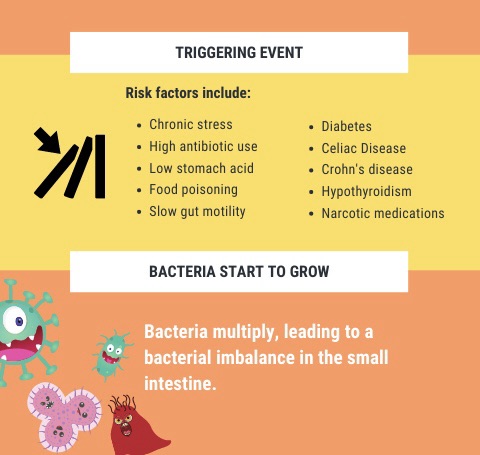
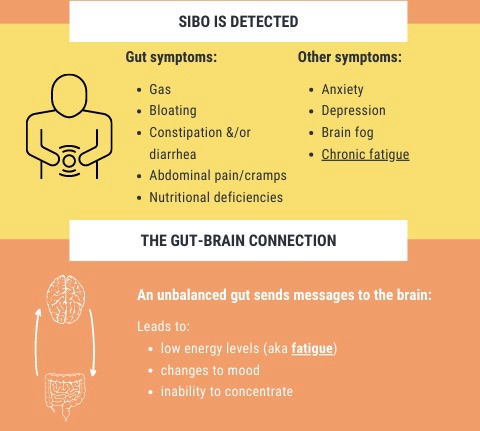
SIBO is a condition where there is an abnormal increase of bacteria in the small intestine.

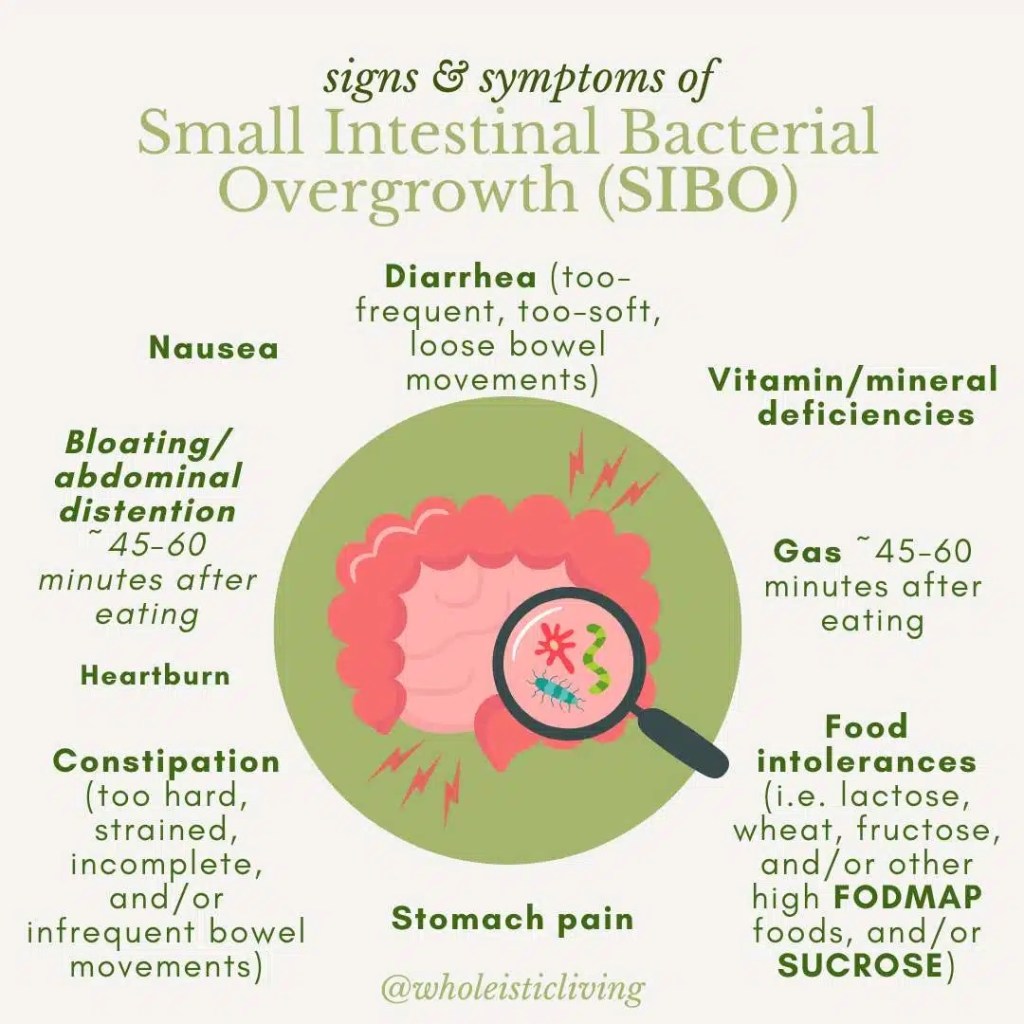
Symptoms of SIBO:

You can find more information about SIBO at the Mayo Clinic here.

Advertisements

How is SIBO diagnosed?

  1. Symptoms. If medical providers know the warning signs of SIBO, a conversation with your provider may lead to a SIBO diagnosis. In my case the ND I see treats SIBO often and she knew what was wrong before we even sat down to discuss details.
  2. There is a breath test that can be done to determine how much hydrogen or methane one breathes out after drinking a mixture of glucose and water. I do not think this test can be ordered in a regular medical lab ( maybe in some areas of the world) . I do know many naturopathic doctors offer the testing, but it can be fairly pricey.
Advertisements

SIBO and Fibromyalgia

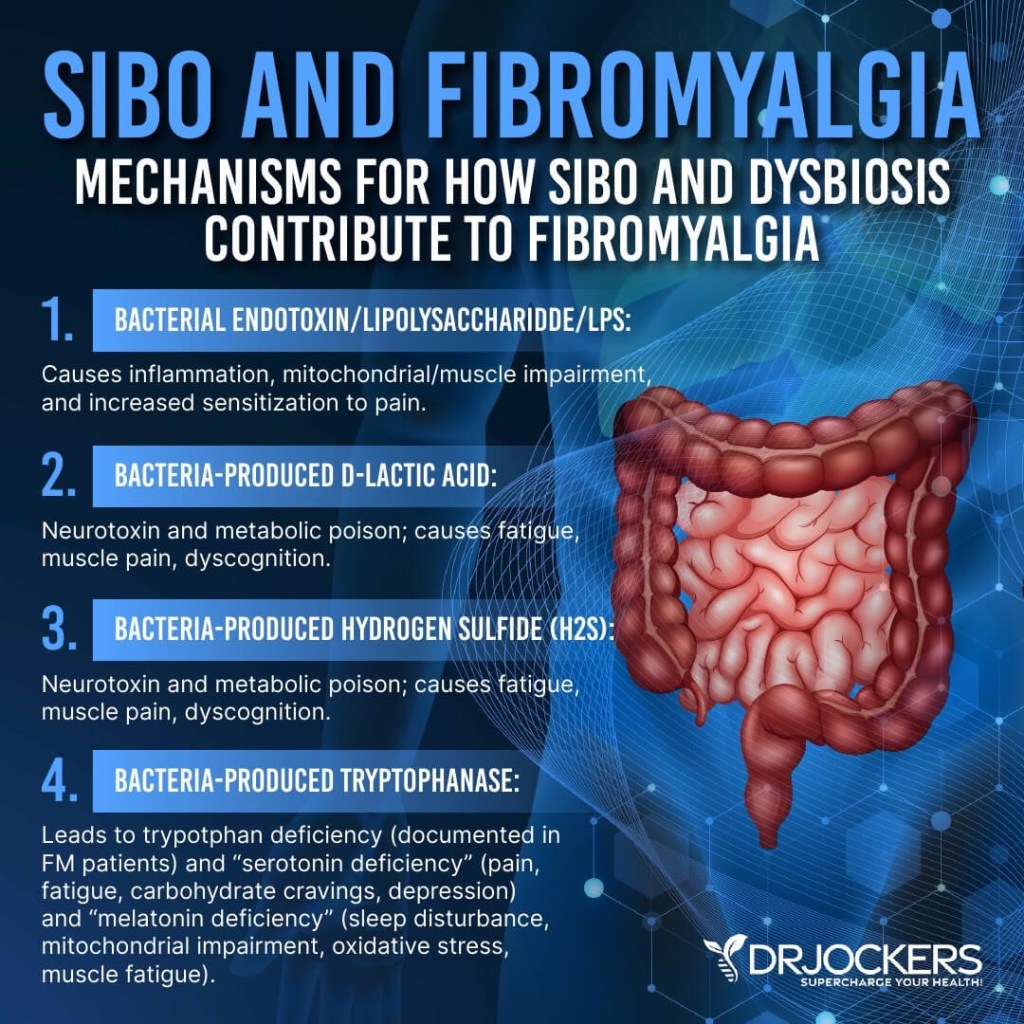
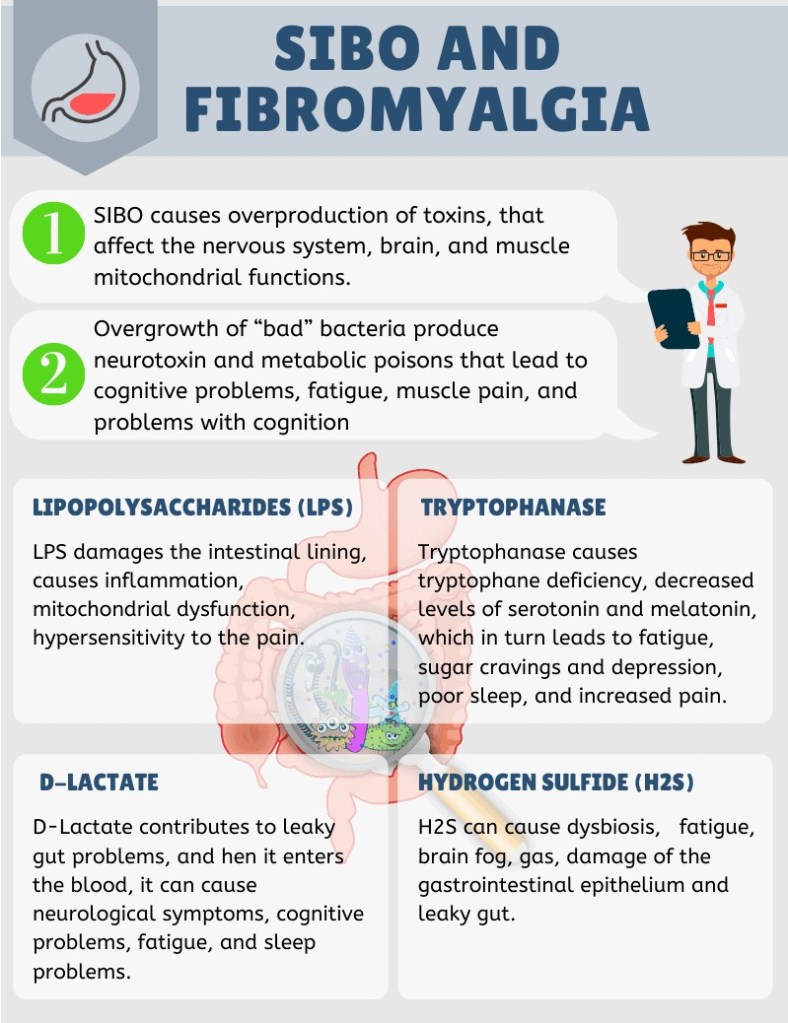
Out of curiosity I began googling fibromyalgia and SIBO – and found many studies indicating there is a correlation between the two conditions. Over the years, I have read that gut health needs to be corrected if one has fibromyalgia, but never understood the connection. I continue to do reading on how the gut biome can affect many health conditions to try to understand. Experts state the gut is connected to many parts of the body – including the brain.

Advertisements

In one study, 815 people were tested for SIBO using the breath test. 123 people in the study were known to have fibromyalgia. Out of the 123 people tested for SIBO, 96 tested positive. That is 78%. The study concluded that small intestinal bacteria over growth is associated with a fibromyalgia and when treated for SIBO intestinal symptoms improved. You can read about the study here.

Another study conducted in 2004, concluded that 100% of the participants with fibromyalgia had SIBO. This study can be found here

Advertisements

Even though these are both older studies the findings/results were consistent. I found a few other studies regarding SIBO and fibromyalgia, but due to very little information on the studies themselves, I chose not to include the links in my blog. I think this is due to the fact that the studies are older so only giving you the quick run down of the studies. It would be interesting to see some current studies on the subject conducted to see if the findings are still similar.

Advertisements

After beginning treatment for SIBO through herbal routes, I mentioned to a few medical doctors that I was being treated for SIBO. To my surprise, their response was, “What is that?” Medical doctors do not seem to even know what SIBO is – yet alone how to diagnose it or treat it. SIBO can be treated with antibiotics, but in my case heavy antibiotic use for seven months for lyme treatment was the culprit to why I developed SIBO in the first place. I was on several probiotics while on antibiotics to help counter act the gut biome from being destroyed – sadly in my case it didn’t seem to be enough and the SIBO bacteria got away on me.

Advertisements

After 4 weeks on various herbal supplements provided by the naturopathic doctor, I began to see improvements. The stomach bloating began to settle down, along with severe cramping, loss of appetite and severe diarrhea. Week 6 – has been fairly up and down with SIBO symptoms yet again. I am attributing the increase of symptoms due to having to switch to another supplement that may not have been strong enough to keep eliminating the bacteria.

I often wonder how I would have gotten the proper medical treatment without the naturopathic doctor being able to recognize the warning signs of SIBO – being medical doctors don’t seem to know what it is. I know I have several months left of treatment, but at least it is slowly getting better.

Next time you may be having major gut issues, consider SIBO as a possibility. You may have to advocate for yourself as many health care providers may not know what SIBO is.

Here is a good ebook i found online about SIBO symptoms. I thought I would include it for those interested in reading more information.

Advertisements

Beyond Fibromyalgia: Uncovering Lyme Disease and Its Impact on My Life

Hey Fibrofighters…

It has been forever since I have written a blog – just shy of 7 months was my last post release. I have not forgotten about you all! For those of you who follow my Facebook page, you all know I continue to post there fairly consistently along with monitoring Fibrofighter’s private support group. I first set out to just take a few weeks break from writing and then life happened….

Advertisements

In February of 2024 my fibromyalgia symptoms got severely worse. I assumed I was in a fibro flare up. The muscle pain turned into full body joint pain and the muscle pain seemed to be non existent. I rarely experienced joint pain since being diagnosed with fibromyalgia – it was usually always muscle pain. The sudden change, left me confused and scrambling to try to figure out what caused such a drastic change to take place. I knew I had confirmed osteoarthritis in my neck and lower back – I just assumed I had osteoarthritis in many other joints through out my body. The joint pain began to severely impact my ability to move. I tried every pain reliever, muscle relaxant, pain medication I was prescribed to help with my fibromyalgia pain over the years with absolutely no relief. I found myself laying in bed almost all day barely finding the motivation to even walk to the bathroom because my hips and knees were so sore. Even to weight bear made my knees want to buckle from the pain. I started having daily high fevers of 105 F , swollen lymph nodes and a sore throat as if I had strep throat. I felt like I had been run over by a bus. Although fibromyalgia can cause these symptoms it is usually not seen daily and at the severity I was experiencing. I had been on a wait list to see an infectious disease doctor to investigate more in depth.

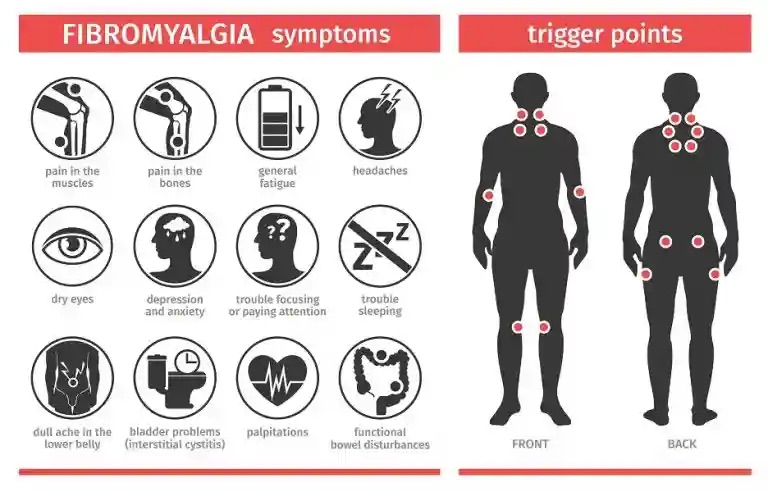
Some fibromyalgia symptoms. There are many more symptoms to fibromyalgia.
Advertisements

Fast forward to April 2024 – knowing I would be told by my doctor it was most likely fibromyalgia and it was just “part of the package”, I never really had an in depth conversation about the new symptoms or worsening symptoms. I did mention the joint pain in my shoulders and was recommended to attend physio. I declined this recommendation as I knew it was all my joints not just my shoulders. My blood work always comes back “pristine” as I am often told. Doctors always responded back stating it is “just fibromyalgia”. If you are reading this post and have fibromyalgia, you totally get the frustration that comes from this comment. The comment we all dread hearing because it makes us feel unvalidated, crazy and as if we are just exaggerating our symptoms. Doctors don’t refer to cancer as “just cancer”, why is fibromyalgia “just fibromyalgia”? Fibromyalgia in itself can be very debilitating and life changing just like cancer can be. I decided it was time to step out of my comfort zone. I reached out on Facebook- on a local group looking for a naturopathic doctor. I was at my wits end after a month and half of severe joint pain, fevers, swollen lymph nodes and a sore throat.

Advertisements

The local licensed naturopathic doctor reached out to me personally on Facebook messenger and we set up a phone call. After a 45 minute phone consultation the naturopathic doctor took me as an urgent new patient. We went ahead with the 2 hour initial assessment and by the time we were done she was confident in stating she was 95% suspicious I had lyme disease ( from a tick bite) and most likely a co infection of lyme. We went ahead with the Germany lyme test – I got a call with the results stating I was positive for lyme and a co infection. The lyme test indicated an active infection which had turned chronic – this means I have had lyme disease for many years making it harder to treat and no cure. All the answers I had been searching for, for years had been answered. I had many symptoms that did not align with fibromyalgia alone. The swollen lymph nodes, sore throat and fever mystery had been solved. Lyme and bartonella are the culprits. Sadly routine blood work does not usually indicate any signs of lyme disease. This part still confuses me – lyme is a bacterial infection, but regular blood work did not indicate any bacterial infection in my body. This is because lyme is smart and can make itself undetectable and hide in tissues instead of the blood. It can even disable the immune system from producing antibodies against the bacteria in order to survive. Lyme disables the innate immune system – which is our body’s first defense against “intruders” ( bacteria or germs). Lyme also produces extremely high inflammation, but does not necessarily show on an inflammation blood test. My body inflammation was low, but lyme was causing inflammation to take place in all my joints. The way I see it ( this is just my personal opinion), lyme defies the scientific world and what doctors are taught in medical school. If lyme can outsmart even the scientific world, what is it really capable of doing to the human body? I try not to over think the possible answers to this question because it becomes overwhelming and my anxiety begins to rise.

Advertisements

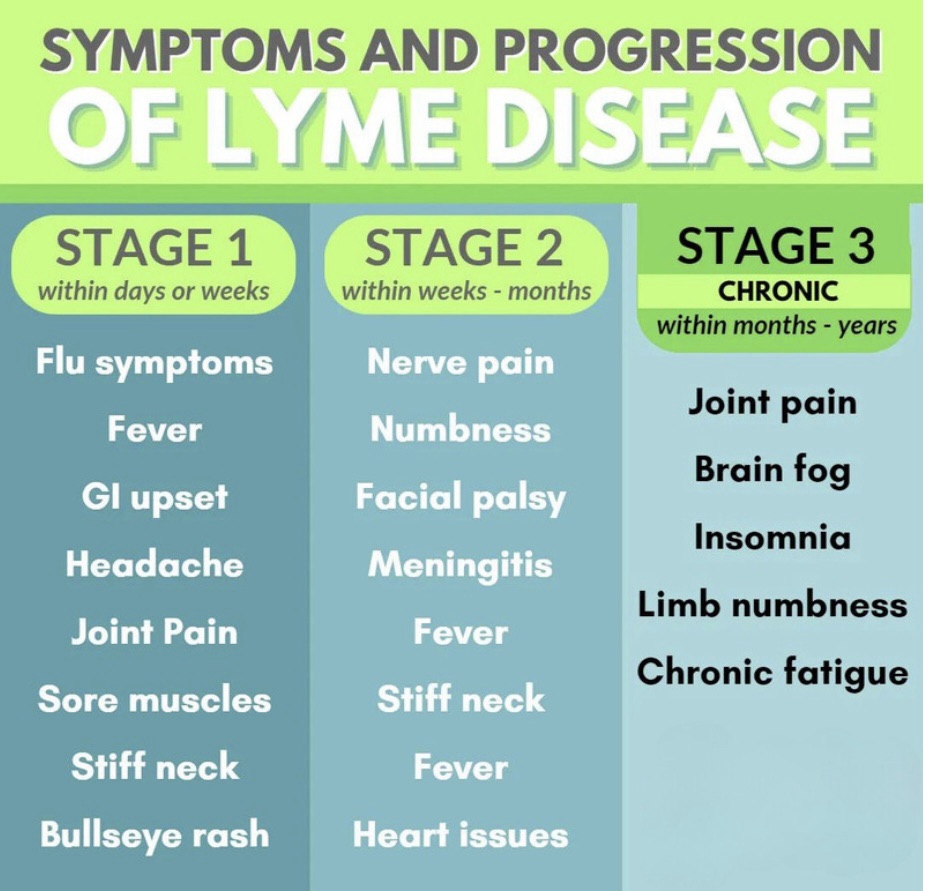
Lyme disease is often misdiagnosed for fibromyalgia because both conditions have many over lapping symptoms. I won’t be going into the over lap in this blog post, but I will be sure to write a blog with this information in the near future. Sooner rather than later!

I started treatment for lyme at the end of April 2024 and it has been a horrendous road thus far. It is definitely not as simple as taking antibiotics for say strep throat or a chest infection. I was not prepared for how sick I would become 2 hours after taking the first dose of antibiotics. I was bed ridden for the first two months of treatment. I thought my symptoms were bad in February and March, it got much worse. I had to learn how to manage a whole new diagnosis, how to treat, manage side effects from supplements and medications and mentally come to terms with the diagnosis in a hurry. I am coming to the end of month four of treatment and still feel lost in this new journey. Chronic lyme means the bacteria has made it into every part of my body – Every tissue, every joint, every organ and has even passed the blood brain barrier. I have many years ahead of the unknown. Our hope is to eliminate as much bacteria as we can and put the lyme into remission. The sad part is chronic lyme can never be fully eliminated. Even if I am lucky enough to get to remission, a stressor or catching even a bad flu could trigger dormant bacteria out of hiding and the infection becomes active again. I have a long road ahead, but when I got diagnosed with lyme I decided it was time to take my life back!

Advertisements

My advice to you all:

  1. If you feel it is more than fibromyalgia never stop looking for answers. Never assume every symptom you experience is fibromyalgia related. Make sure to mention new or worsening symptoms to your doctor.
  2. Trust your gut instinct! I knew deep down that something was extremely wrong, but general doctors often miss the symptoms of lyme. The naturopathic doctor I reached out to is lyme literate and trained to treat lyme.

3. Advocate for yourself. If you don’t stand up for your medical needs, who will? You know your body the best. You know when something is not right.

Much love

Fibrofighter

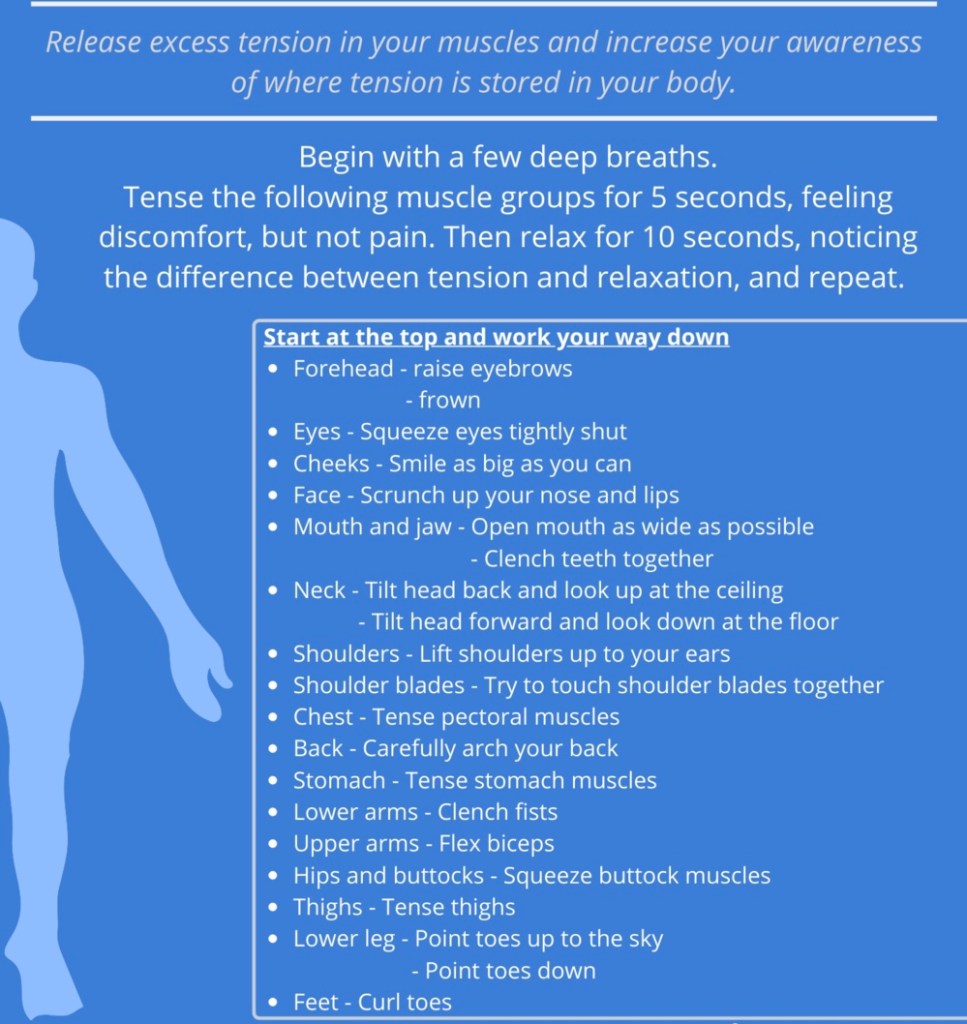
Progressive muscle relaxation and fibromyalgia

Progressive muscle relaxation is a technique used to help decrease muscles tension. It focuses on one part of your body at a time with a goal of relaxing that part. Believe it or not this technique focuses on slowly tensing and releasing each muscle group at a time. You might be discouraged as soon as you read tensing up your muscles, but the technique states to stop tensing before you feel pain!

Advertisements

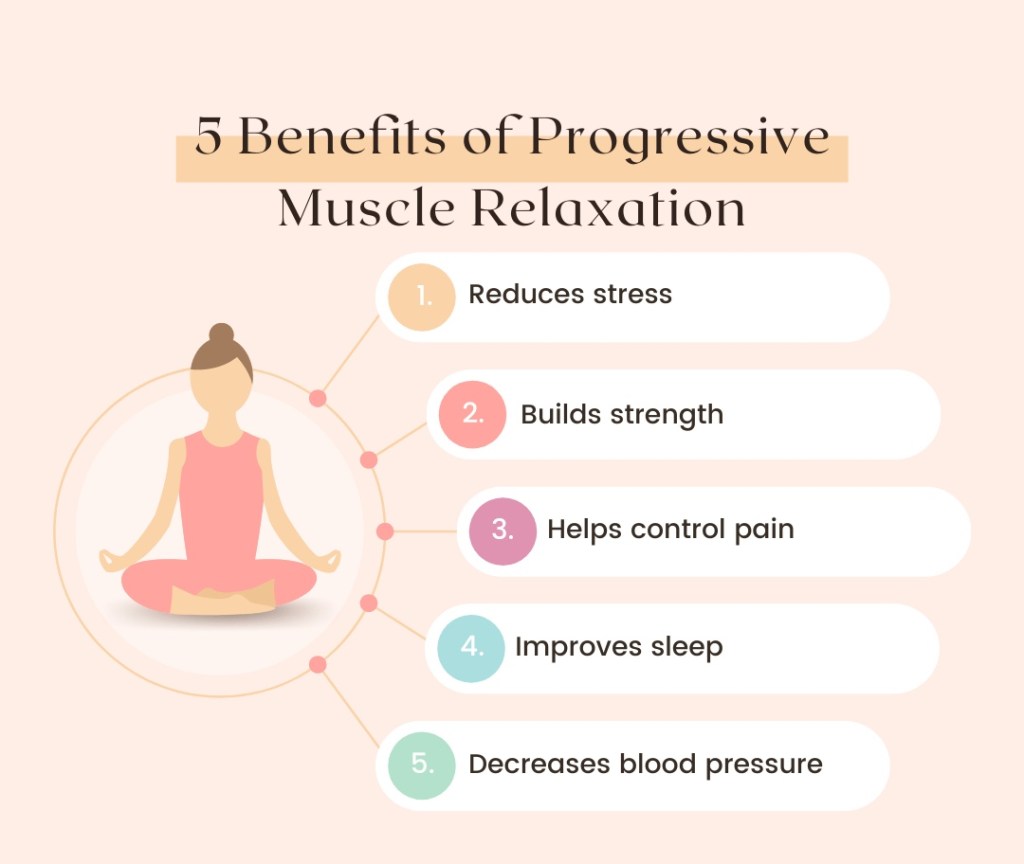
I actually read about this technique in a book I have in regards to PTSD. I decided to research more about progressive muscle relaxation and came across articles stating this technique may be used to help fibromyalgia. There are also many other benefits to using this technique – it helps reduce anxiety, stress, lowers blood pressure, helps migraines, improves sleep issues and lowers pain levels. These are just a few benefits to using progressive relaxation techniques!

Advertisements

A 2022 study (small study) put progressive muscle relaxation to the test to see how people with fibromyalgia were effected. Thirty seven people with fibromyalgia were randomly selected along with a control group of people without fibromyalgia. The group with fibromyalgia took part in progressive muscle relaxation twice a week for eight weeks. The results of the study showed pain and fatigue among the fibromyalgia group significantly decreased. Perceived stress, blood pressure and pulse rate also decreased.

Advertisements

Conclusion.

According to the study progressive muscle relaxation is a feasible treatment route to help improve pain, fatigue, and stress symptoms in people with fibromyalgia. Of course this is just a small study completed, I feel a wider study should be completed to verify the findings. To read the study visit here.

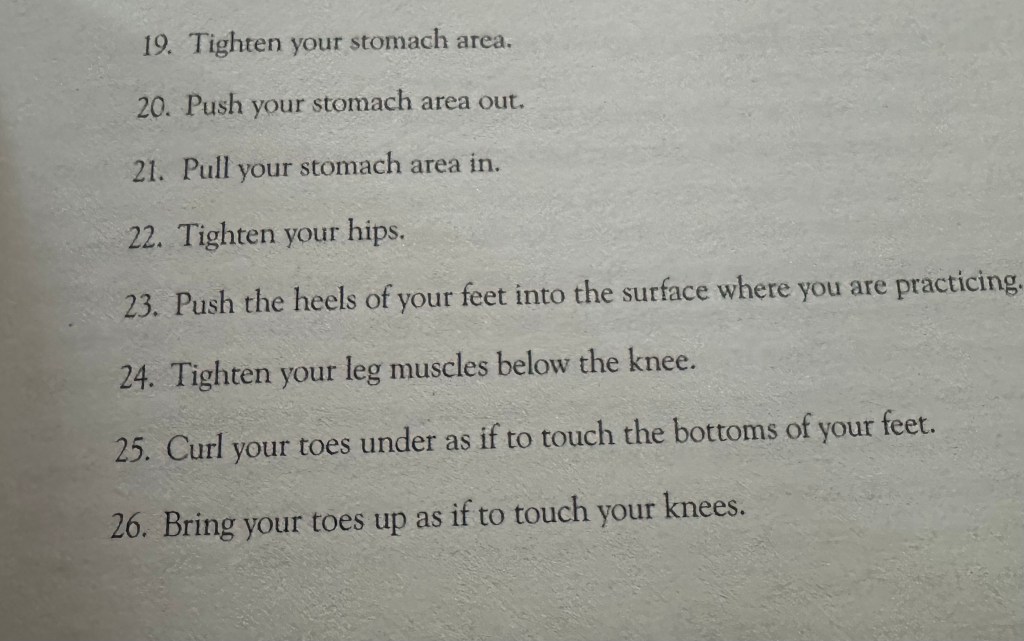
Here is a basic progressive relaxation sequence.

Taken from the book “The PTSD Workbook” third edition
Advertisements

Taken from the book “The PTSD Workbook” third edition
Advertisements

There are many other examples online if you look up progressive relaxation techniques. The above sequence is just one example. I have not personally tried this technique, but I think I will trial it for a few weeks to see how my body reacts.

For more information on progressive muscle relaxation visit the following websites.

1. https://www.healthline.com/health/progressive-muscle-relaxation#about-pmr

2. https://www.anxietycanada.com/articles/how-to-do-progressive-muscle-relaxation/

Fibromyalgia – You Can’t force healing/improvement to happen…

One aspect of dealing with chronic pain that has always frustrated me is how many health care providers think that they can rush you through a program or treatment route as fast as possible and have success at the end. A chronic illness is just that – chronic. You can’t rush a patient through various sessions and advance them above their capabilities faster then they can keep up. This last week I have been enrolled in an overcoming chronic pain summit. One presenter made a key point that you can’t force healing to take place. All that we can do is to create circumstances that make it more likely! Many chronic illnesses ( including fibromyalgia) can’t be healed or cured, but we can learn how to manage our symptoms to the best of our abilities. In order to do so we must first find strategies that work for us as individuals. What works for one person may not benefit another , but make their pain worse.

Advertisements

We can’t force heal a sprained ankle or broken bone. Both injuries take time to heal. If a person requires a cast for six weeks we can’t take that cast off after three and call it good. What makes health care providers think that chronic pain can be forced to be cured or improved!? Even for myself when I was first diagnosed with fibromyalgia I thought I would have myself back up and on the go within a month – was I ever wrong.

Advertisements

We are often convinced that if we take part in yoga, exercise, getting a good night sleep, eating a healthy diet and adding meditation – our chronic pain will magically disappear. It is ingrained into our mind to do as the health care providers say to get our life back to how it once was. I was convinced at the beginning that if I followed what the doctors told me, the pain would stop, and the fatigue would ease. What I found was as time went on both symptoms got worse, and new symptoms appeared. Fibromyalgia is not limited to just pain and fatigue! There are over three hundred symptoms a person with fibromyalgia may experience! I felt like a false sense of hope was engraved into my brain by being told to use these strategies and I would improve. After seeing no improvements you begin to blame yourself as a human being for seeing no changes. You begin to ask yourself what you are doing wrong. You question your sanity more and more. All of which takes a toll on you mentally and physically – causing higher pain levels to result. I personally feel health care providers need to be more clear and explain that these strategies can help create circumstances that MAY improve symptoms. I often think doctors expect patients to read as a text book – meaning here is a symptom and here is the fix. Sadly sometimes illnesses defy the scientific world and it is not always that easy to treat the said symptoms or condition at hand.

Advertisements

I think back to the first pain clinic I attended. I found that the pain clinic wanted to advance me between exercises too fast. Most of the stretches I could not even do or they had to be modified to a laying down version. I found at each appointment they wanted to add more and more exercises on, when I felt I hadn’t had time to allow the previous ones to benefit my body or explore them enough to even see if they would be appropriate for me. They began advancing through sessions so quickly I was beginning to have anxiety and becoming emotional because it was so rushed. I felt like the quickness of the program, set me up for automatic failure. There was such a long waiting list to be accepted into the program, that it began to feel like I was just a number and being pushed through the motions of the program so that they could discharge me and move onto the next patient. I never felt like the multidisciplinary team that was involved in my care while I was in this program even cared about my well being – just going through the motions to get me in and out of the program as fast as possible.

Advertisements

The same experience was noted at the second pain clinic I attended. Even though the main focus of the program was to help improve my quality of life, I was only given a max of eight sessions before being discharged from the program. I again felt I had not benefited from the program due to the fact it was such limited guidance. People with chronic conditions can’t even begin to possibly unravel and decode what they need in such a limited time frame – especially when the symptoms/condition change by the minute or hour. I was never really even given any useful strategies that could help lower pain levels.

Advertisements

Trying to get a grasp on chronic pain takes commitment and dedication. There is no such thing as a one size fits all when it comes to health and well being. Different strategies work for different people at different times in their lives. Often times we must step out of our comfort zones to find strategies that work.

My advice to others struggling:

1. Never give up. Even if strategies do not work at first. Slow but steady wins the race. Keep trying new strategies. Go back and try old strategies later on.

Advertisements

2. You can’t rush through chronic pain strategies and expect success. Slow down. Listen to your body.

Advertisements

3. It takes dedication and commitment. You can’t try a strategy for a week or two. It takes time to see results. Many people get discouraged when results are not immediate. For example, athletes must become dedicated to train to win the final race. They have to keep at it to see results.

Advertisements

4. Be open to all strategies even if they sound strange. We sometimes have to step out of our confront zone to find successful strategies. I used to roll my eyes at the thought of meditation helping lower pain levels and helping me sleep. After a month of meditating right before bed, I have noticed a decline in pain levels at night and sleep better. In the past meditation always failed – or did it? I think it was more me sabotaging the success from thinking it wouldn’t work. I am also learning the way we think and react to situations affect pain levels.

Advertisements

5. If you are finding health care providers are rushing through the motions to help improve chronic pain speak up ( the sooner the better). I felt I waited too long and then when I spoke up I got labelled as difficult. My doctor who diagnosed me also had to tell other providers to slow down and listen to what I have to say.

Advertisements

Nociplastic Pain and Fibromyalgia. What exactly is Nociplastic Pain?

When we stop and think of pain many of us think pain is just pain. I have recently bought two books on how to “live” with chronic pain and to make the best life possible. Both these books introduced a concept that I was not aware of. I am sure the terms have existed for years in the medical field, but since I have been dealing with chronic pain I have not had a doctor explain it using these terms.

Did you know there are actually three types of pain?

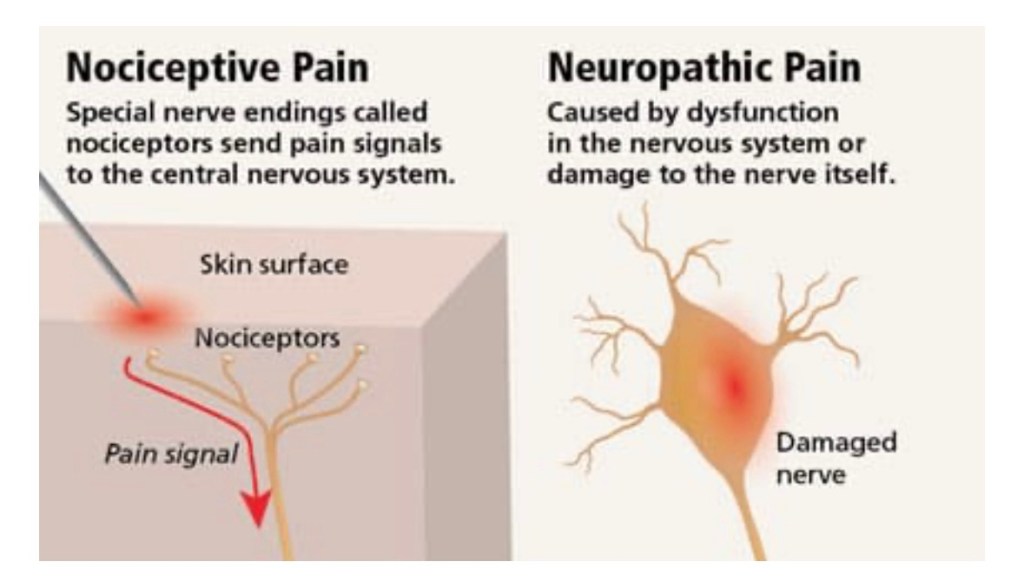
1. Nociceptive pain which occurs if there is an injury such as a broken bone, appendicitis etc.

Advertisements

2. Neuropathic pain occurs when there is an injury or condition to the nerve system. A spinal cord injury or multiple sclerosis are a few examples.

Advertisements

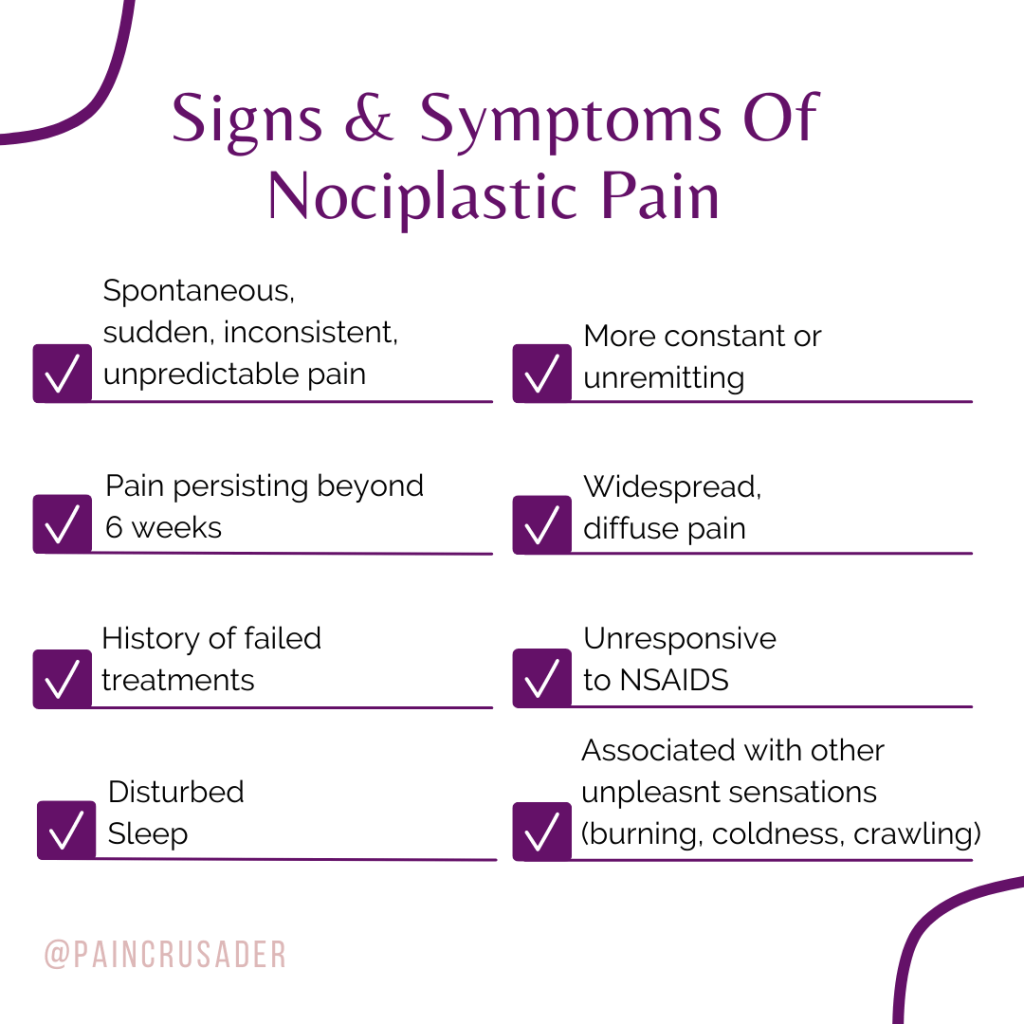
3. Nociplastic pain takes place when the pain system has become sensitized. Nociplastic is the pain felt in fibromyalgia.

Advertisements

You can compare the three types of pain like an alarm system. Nociceptive pain takes place when the alarm system is working properly. In neuropathic pain, the wires of the alarm system are damaged and in nociplastic pain the alarm system has a total malfunction.

When acute pain becomes chronic – changes within the pain system takes place. These changes lead to central sensitization. In central sensitization the spinal cord becomes more sensitive to pain. Our pain system has now altered and become dysfunctional. How do doctors make comments such as “fibromyalgia is just a mental illness” is beyond me when there is proof that the nervous system is affected.

Advertisements

Living in chronic pain will eventually change the synapses ( nerve impulses passing from one neuron to another) in the brain. These synapses become so strong that we feel chronic pain without something triggering pain or without us even being conscious about the pain. According to experts we must reconstruct these synapses in order for the chronic pain to ease or change patterns. Fibromyalgia often leaves areas feeling sore and painful when there is actually no “injury” to treat. For example, I often have upper back pain. It seems to be a very problematic area since my fibromyalgia diagnosis. I can apply heat, ice and take as many pain killers as possible, but my brain still alerts me with chronic pain to that area. It is impossible to fix the area of pain because the problem does not reside in the body part anymore. Make sense?

Think of it this way, we learn to bike or even drive a vehicle. It takes practice. The more we practice the stronger those synapses in the brain become, Eventually it becomes second nature to get on a bike or drive to the store. Same concept happens with chronic pain.

Advertisements

I have not made it far into the book to explain how to deconstruct these synapses to help alleviate chronic pain. Is this where the idea of slowly working our way up to longer increments of time helps reconstruct these synapses?! I am hoping as I make it through the book, it explains how to do this. Many resources explain what needs to be done, but not how to carry out any strategies to make the changes happen! I will be sure to share in a later blog, what I have learned.

Advertisements

According to experts many doctors do not know how to diagnose or treat nociplastic pain. Nociplastic pain is a fairly new concept. When I conducted research to write this blog it was documented that nociplastic pain was only really mentioned and introduced in 2016! That is not very long ago. Many doctors often recommend opioids to their patients to treat chronic pain. However, it is noted that opioids are ineffective in treating nociplastic pain or could eventually lead to worsening of pain. Opioids are also known for making central sensitization worse over time.

Advertisements

No matter what the treatment route is this process will not happen over night. It takes commitment and dedication. A person cannot expect to take part in a week or two program and expect it to resolve. Long lasting pain improvement requires a long term plan which has to be followed to show improvement.

For more information on nociplastic pain and fibromyalgia visit the following websites:

  1. https://www.ncbi.nlm.nih.gov/pmc/articles/PMC9561334/
  2. https://www.thelancet.com/journals/lancet/article/PIIS0140-6736(21)00392-5/fulltext
  3. https://arthritis.ca/living-well/2022/fibromyalgia-new-science-shows-the-pain-is-real

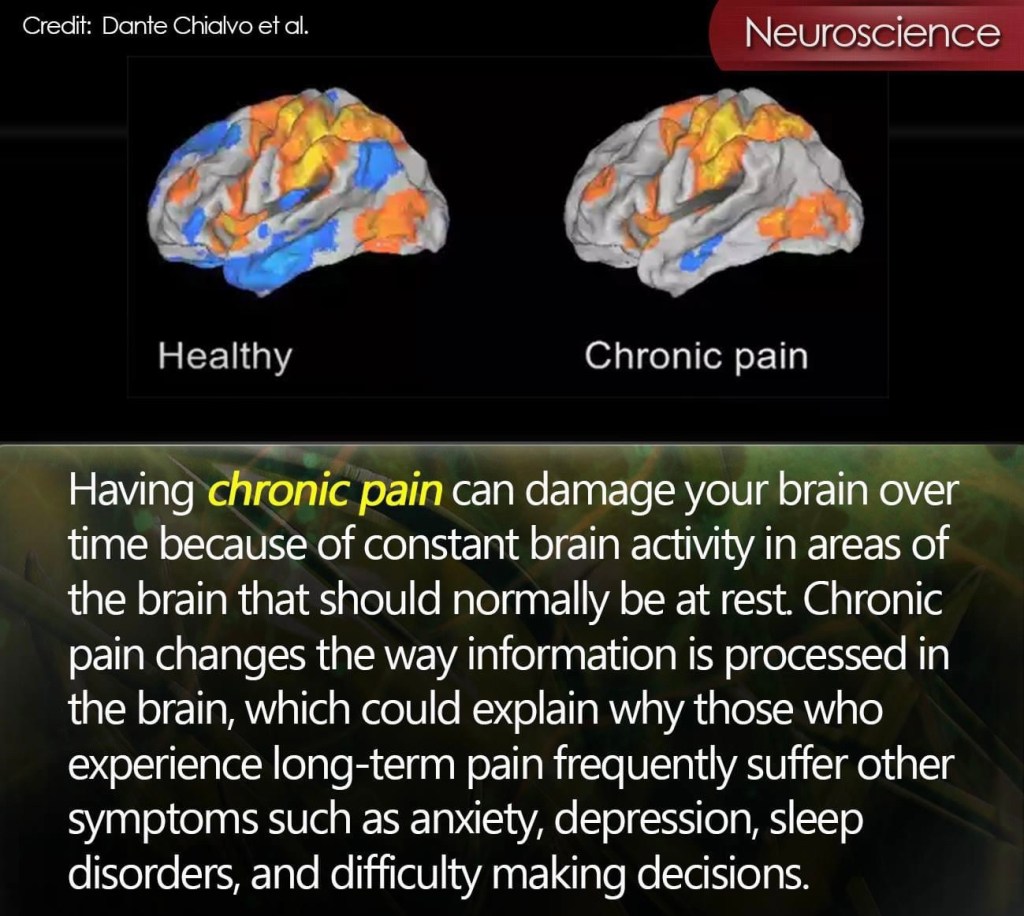
Chronic pain appears to change the brain. Does it cause damage? According to research, chronic pain can possibly can damage our brain

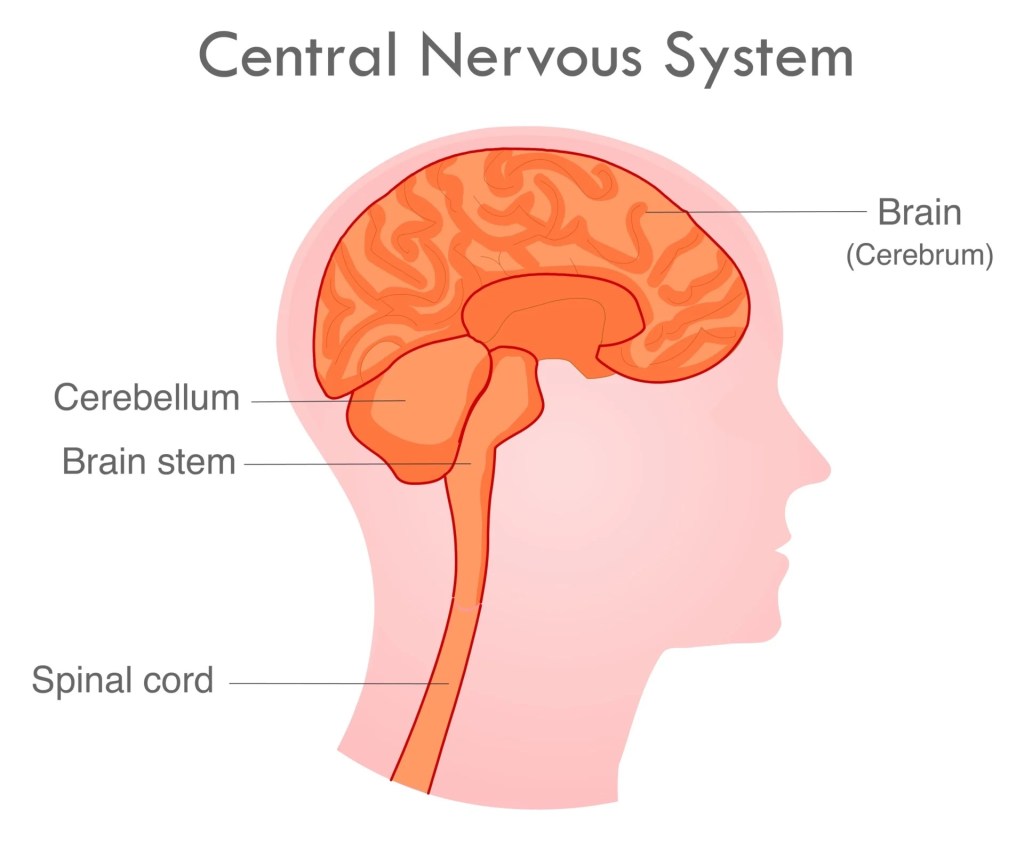
According to experts, fibromyalgia has a neurological component. In fibromyalgia the brain interprets all stimulus as pain – when it really isn’t painful. In return our brain misfires pain signals all over the body causing chronic pain to form. Have you ever stopped to think about what happens to our brain if it is constantly at work sending pain signals out? You may be surprised.

Advertisements
Advertisements

In a healthy brain, all the regions exist in a state of equilibrium. When one brain region is active, the other regions should not be as active. However, chronic pain causes the front region of the brain ( responsible for emotion) to never deactivate. It is always in “full throttle” – meaning it is always fully active. The constant activation can wear out neurons ( information messengers) alternating connections to each other. Researchers used MRI scans to scan the brain a group of people with lower chronic back pain and a pain free group (control group). What they found was that parts of the cortex were activated in the pain free group and others were deactivated ( maintaining the equilibrium). Your brain cortex is responsible for memory, thinking, learning, reasoning, problem-solving, emotions, consciousness and functions related to your senses. However, in the chronic pain group, one of the nodes did not quiet down. Researchers state that then constant firing of neutrons could cause permanent damage. The connections could die because they can’t sustain high activity for this long without a break. People with chronic pain have pain 24/7 – which makes areas of the brain always active. This could hurt the brain. You can read the article here.

Advertisements
Advertisements

In another study in 2007, researchers discovered that people with fibromyalgia, grey matter of the brain is lost. We lose grey matter as we age, but it appears that fibromyalgia may speed up this process. The study revealed that fibromyalgia patients showed a reduction in grey matter and total brain volume compared to the healthy control group. The grey matter that was lost occurred mainly in the regions of the brain related to stress and pain processing. In areas of the brain, the parahippocampal and frontal cortices, the grey matter lost is consistent with cognitive deficits of fibromyalgia ( cognitive impairments seen in fibro). Grey matter atrophy is partially reversible. Grey matter irregularities caused by chronic pain do not reflect brain damage. It will normalize when the pain is treated or under control. You can read this study here.

Advertisements
Advertisements

Both these articles sure made me think and evaluate the neurological aspect of fibromyalgia. Are the changes in the brain that were discovered in these two studies, the reason behind some fibromyalgia symptoms or even a cause to why fibromyalgia may develop? I do not have the answer, as I am not a scientist. I believe a wider study is needed to verify the above findings. These are only two smaller studies completed.

Advertisements

Four reasons I blog about my fibromyalgia journey…

You may be wondering why I write and blog about my fibromyalgia journey. There are many different reasons behind why I began blogging. Many people probably think I blog to receive attention – wrong assumption! Here are the reasons I began blogging…

Advertisements

1. After being diagnosed with fibromyalgia I soon learned that I was beginning to journey down a pathway that many health care providers and people do not understand. I realized fibromyalgia was recognized as a condition, but it is very much misunderstood. After different “treatment” routes attempted and no improvements noted, my frustration soon set in. I figured people all over the world who are diagnosed with fibromyalgia, must be feeling the exact same frustration as myself. It took me a long time to find the courage to begin my blog, because I was afraid of being judged or my blog would simply fail. After months of deep consideration I started my website and promoted as much as I could. My goal was to help other fibro fighters feel not so alone. Chronic illness can be just that- lonely. It becomes a journey that is only understood by those directly affected by fibromyalgia.

Advertisements

2. As I research to write blog posts, I learn more information about fibromyalgia. I’ve learned a lot of new information about fibromyalgia – probably more then most health care providers I have seen know. Most doctors know the basic information about fibromyalgia, but are they able to provide information on all the previous fibromyalgia studies completed? Probably not. The more I research, the more quality information I can also share for you all.

Advertisements

3. Through blogging I am able to find purpose in life. Since being diagnosed with fibromyalgia I had to stop working, give up my career I trained in and stay home most days to learn to manage my fibromyalgia. I felt a loss of identity ( which is often felt by people with chronic illness). As human beings we seek purpose in life. We wake up, go to work, work towards a goal, ect. When one is diagnosed with chronic pain such as fibromyalgia, our whole life is turned upside down. I find since I started my blog I have a sense of purpose back. Blogging gives me a goal to work towards – helping others. It brings a sense of accomplishment when I see people connecting to what I have written! When you have purpose, you are more likely to actively seek self management for your fibromyalgia!

Advertisements

I came across a 2018 study which stated that “regular blogging is potentially useful for people with chronic pain as it provides a conduit to enable them to connect with others who understand and share their experiences of pain, possibly encouraging increased participation in personally meaningful life activities, positive pain management experiences, and social connectedness.” You can read the article here.

Advertisements

4. Raising awareness and fighting stigmas. Writing about fibromyalgia raises awareness – especially if people without fibromyalgia read my blog posts. My posts give people the opportunity to read and understand what living with fibromyalgia is really like. My blogs also help spread fibromyalgia information/awareness to anyone who has just recently been diagnosed as well. When you are newly diagnosed, it can be overwhelming. There is also such a stigma attached to a fibromyalgia diagnosis – even if I can make a small change in one person’s attitude towards chronic pain- I have succeeded!

Advertisements

There you have it! The four main reasons I decided to begin blogging about my journey with fibromyalgia. I hope as you read my blog posts, at least one post resonates with you!

Advertisements

Fibromyalgia and osteoarthritis (OA) – Is there a comorbidity between the two conditions?

Three and a half years ago I never thought I would be being diagnosed with fibromyalgia. Now here in 2023 I find myself being diagnosed with osteoarthritis. Both fibromyalgia and osteoarthritis are chronic pain conditions. Fibromyalgia in itself is debilitating enough. Experts share that fibromyalgia often co occurs with some form of arthritis. In a study 88.7% of participants reported chronic joint pain/degenerative arthritis along side their fibromyalgia. Read more here about the study!

Advertisements

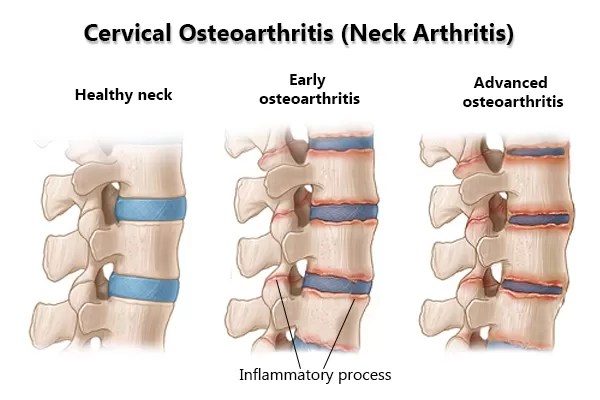
I found out last spring that I have osteoarthritis in my neck. My neurologist had ordered a cervical neck MRI which revealed arthritis. I always thought the neck pain I was experiencing was all fibromyalgia pain. When I found out I have osteoarthritis in my lower back as well, it came as no surprise. If osteoarthritis is found in one area of the body, it is most likely in other areas of the body too! My doctor suspects I may have OA in my finger joints and knees as well. Osteoarthritis has no cure. The belief is that OA often gets worse over time- but not in all cases. Experts say lifestyle measures such as exercising, maintaining a healthy diet/ weight, or attending physiotherapy sessions can help relieve pain and possibly slow progression. However, when you factor in fibromyalgia it complicates osteoarthritis greatly.

Advertisements

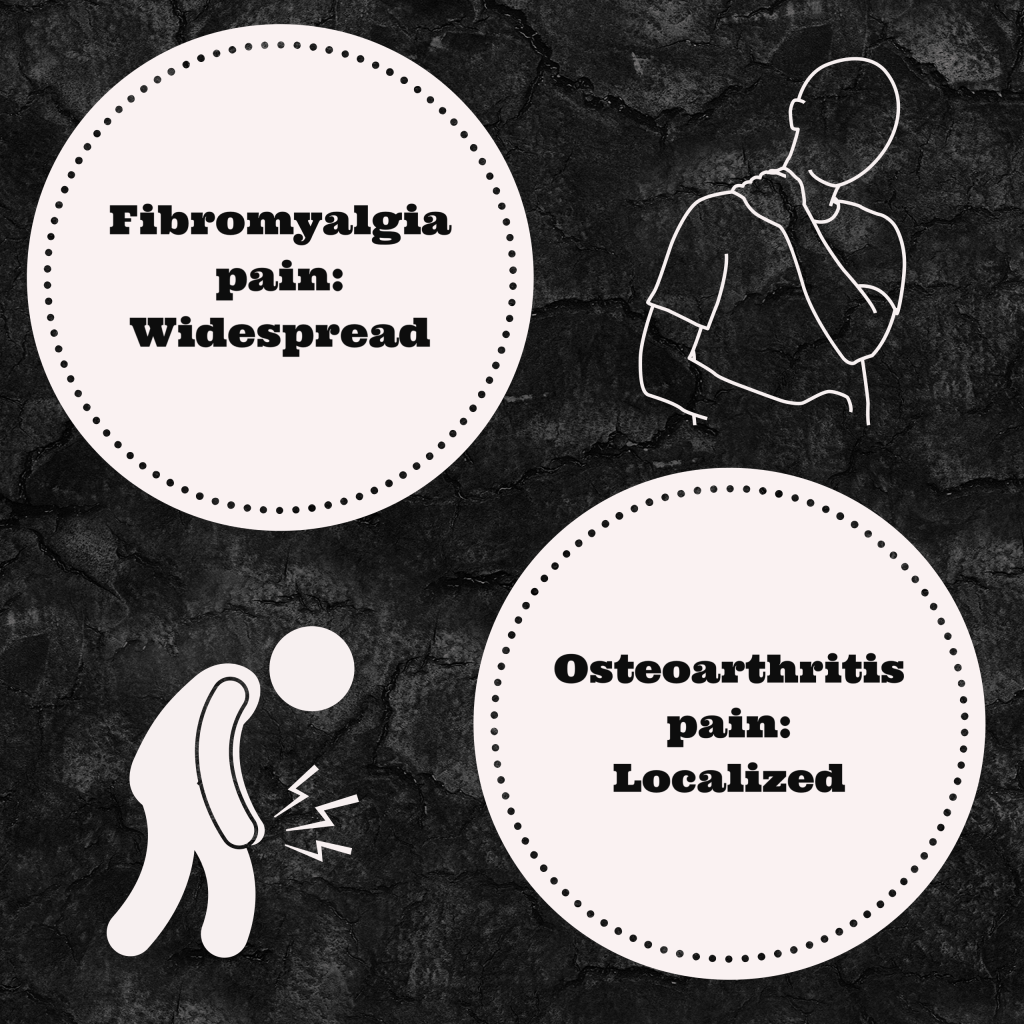
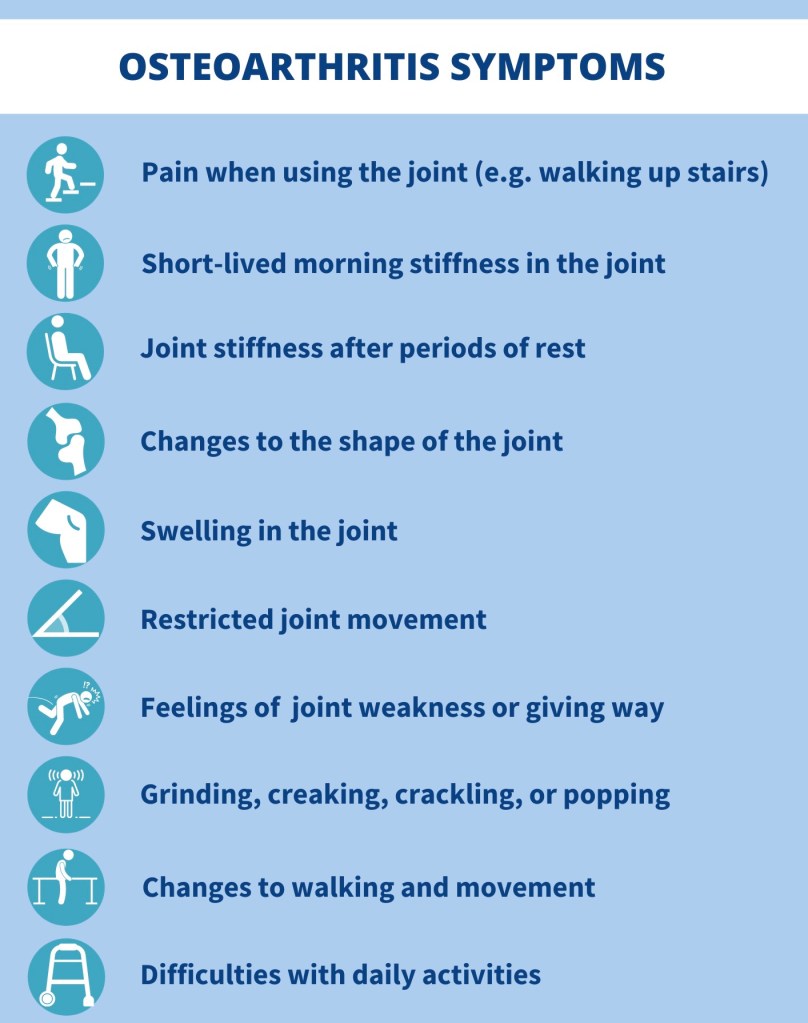
Fibromyalgia and osteoarthritis are two separate conditions. the coexistence of both together can make the symptoms of each condition worse! Both conditions have overlapping symptoms such as stiffness, pain and limited range of motion.

Advertisements

Fibromyalgia causes the brain to misread pain signals. In my case, my fibromyalgia makes my osteoarthritis pain feel worse then what it actually is. Technically my OA is considered mild, but I’ve had several doctors tell me that I am most likely feeling the pain at moderate to severe pain levels. For example, the arthritis is my neck causes severe pain to form leaving me unable to turn my head or even lift my arms. The pain radiates into my shoulders and upper back limiting my range of motion in all areas. Fibromyalgia tender points are often seen in the neck and upper back as well. Adding the pain from both conditions can become very debilitating.

Advertisements

Fibromyalgia and OA both report sleep disturbances. Fibromyalgia rarely left my lower back and hips with pain. When the pain got unbearable I knew something was not right. The lower back and hip pain would continuously wake me up through the night. It was impossible to find a sleep position that wouldn’t exacerbate the pain. I already suffer with insomnia from fibromyalgia,` then the OA pain made sleeping even harder. Research states 70% of people with OA have a sleep disturbance. Cortisol ( hormone that helps control inflammation) levels in your body also drop through the day and are the lowest at night. When cortisol levels are low more inflammation takes place causing pain and discomfort to result. Read more about how osteoarthritis impacts our sleep here.

Advertisements

Mental health issues can also be seen in people with fibromyalgia and any form of arthritis. Anxiety and depression are two examples of mental health issues that can form. No matter what mental health condition you are faced with, it adds extra stress to your body causing more pain or higher pain levels to be felt. It is know that mental health conditions can lower one’s pain threshold even lower. In return, the chronic pain being felt will cause higher levels and anxiety to form even more. It becomes a vicious circle! Learn more about how arthritis can impact your mental health here.

Advertisements

How to limit pain levels in both fibromyalgia and osteoarthritis

1. Massages are often recommended for both conditions. Massages may help relax tense muscles which will reduce pain. In osteoarthritis, massage can help reduce swelling, improve joint mobility, and provide stress relief! If you can handle hands on treatment routes you may find this helpful!

Advertisements

2. Drink plenty of water. Dehydration can cause muscle cramps. Fibromyalgic muscles are tense. Adding dehydration on top can exacerbate the pain. Water helps the muscle flush out toxins that need to be removed. Same goes with osteoarthritis – water helps flush out body toxins and can help fight inflammation and hydrated cartilage helps reduce friction between bones ( move easier) .

Advertisements

3. Swimming or walking in water. Swimming has been proven to help both conditions. Water exercises are easier on your joints and muscles then dry land exercise. Swimming will also help stimulate blood circulation and can help reduce muscle stiffness and ease pain levels. Experts state that the water provides resistance that helps boost your strength and over all range of motion!

Advertisements

4. Walking. Walking has been proven to help both fibromyalgia and osteoarthritis. With both conditions, we need to continue to stay active to prevent muscle/joint stiffness or loss. Even if you can only handle walking for one minute, it will help. Slowly build yourself up in walking time. My max walking time most days is 15-20 minutes at a time. I pushed myself on a walk yesterday and I almost had to send someone home for a vehicle. Walk within your limits! Walking is considered a low impact exercise, which is recommended for both fibromyalgia and osteoarthritis!

Advertisements

5. Heat. For many of us applying heat to our aching bodies help relieve fibromyalgia pain. Osteoarthritis pain can also be relieved with heat. Heat can be very effective to help relieve stiffness of the joints from inactivity!

Advertisements

I am sure there are more strategies out there to help combat fibromyalgia and osteoarthritis. I am currently working along side a physiotherapist to help gain some strength and mobility back. I am also seeing a psychologist who is helping me find routes to help lesson my pain levels. I have only just started my journey with both these health care providers, but I have a feeling both treatment routes will be very beneficial!

Invisible Documentary on Fibromyalgia – What do the doctors say in their interviews? What I found interesting.

I recently watched the newly released documentary on fibromyalgia – “Invisible.” produced by Nick Demos. The interviews with the individuals living with fibromyalgia did not surprise me – being I live with fibromyalgia myself and completely understand their struggles. What it did show me was that people all over the world with fibromyalgia do struggle with many of the same hardships. What I found interesting was the information presented by the doctors and wellness coach in their interviews.

Advertisements

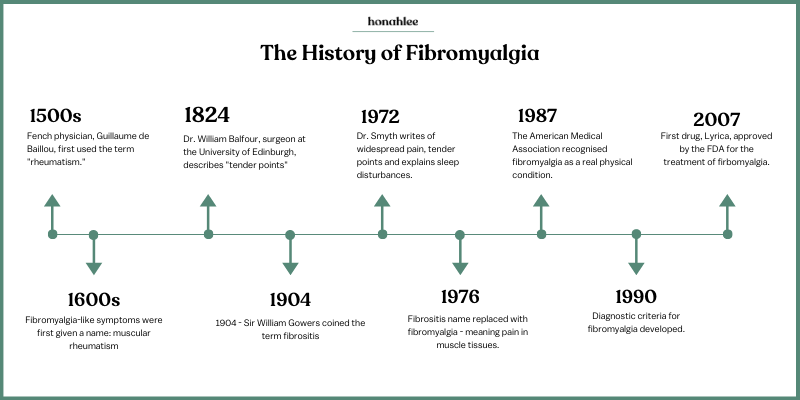
Dr. Liptan was interviewed in this documentary. She got diagnosed with fibromyalgia during medical school, has treated patients with fibromyalgia and now focuses her attention to research on fibromyalgia. She stated she feels we are 50 years behind in regards to fibromyalgia knowledge and treatments. Yes, you read that right, 50 years!!! In fact, she presented a time line of fibromyalgia. Did you know there was a 35 year gap on research or discovering anything new in regards to fibromyalgia!? We all know that there is lack of research, but I never thought there would be such an enormous gap between discoveries on a condition that is being diagnosed more and more. The first FDA approved medication to treat fibromyalgia was not even released until 2007! Reality is that wasn’t very long ago seeing as fibromyalgia was being diagnosed way before 2007! Liptan explains that she feels that fibromyalgia should be considered a disease, not a syndrome. She believes this because there is proof that there is consistent changes in the brain and body.

Advertisements
Timeline of Fibromyalgia- Not the exact one presented in the documentary.
Advertisements

Dr. Liptan also shared her thoughts about insurance companies and how they only pay for certain medical routes. Most support people with fibromyalgia need, is not covered by insurance companies – vitamins, maintenance appointments such as acupuncture, massage, myofascial release, ect. Dr. Liptan states insurance companies will pay for MRIs and expensive medications, but all she wants in some cases is to see insurance pay for a gym membership. It does make sense. I was told from day one I should utilize the gym, but I can’t afford to pay for a membership. Same goes with swimming – all the doctors I saw recommended swimming as a treatment option for fibromyalgia as it is a low impact exercise. However, who can afford a membership? Even a monthly membership to the pool can get costly not to mention the money spent on gas to travel to and from the rec center. In my case, the pool is on the completely opposite side of the city then I live.

Dr. Liptan – Author of the Fibro Manual
Advertisements

Tammy Stackelhouse, who is a fibromyalgia coach and also has fibromyalgia herself was also shown being interviewed by Nick Demos in Invisible. Demos and Stackelhouse converse about how many people can’t afford the holistic treatments that insurance either has a cap on how much they will cover yearly or simply do not cover these treatment options at all. Nick asks what happens then!? I know many people who can’t afford treatments being recommended to them such as yoga, massage therapy, acupuncture..the list goes on – especially with cost of living continuing to increase! I know there are many yoga, tai chi, ect. self directed videos online, but when you factor in chronic pain, it is not as simple as taking part in these follow along videos. There are a lot of other aspects to consider when dealing with chronic pain – which many of us need the guidance with, but don’t receive. Stackelhouse’s response is very realistic and hit me hard emotionally. She states, ” There is not a-lot of hope!” People in these difficult situations – of not being able to get treatment because they can’t afford these routes – “are probably not living really.” In my own struggle with fibromyalgia I often told my doctor I felt I was only existing and not living anymore. When we wake up with chronic pain – pain that hits levels of 10 that lasts all day long and go to bed in pain it makes life unbearable! No one wants to live life trying to “survive” instead of enjoying life, but for many of us living with fibromyalgia that is reality.

Tammy Stackelhouse – Fibromyalgia wellness coach
Advertisements

Stackelhouse explains there is a hopelessness in the fibromyalgia community. How true this statement is. I think all of us who live with fibromyalgia feel hopeless at some point during our journey! How can we not!? We get diagnosed with fibromyalgia which currently has no cure and then we are often left on our own without guidance to figure out how to limit our chronic pain. We are left to adjust to life with fibromyalgia. Many of us may even feel like we have “lost our identity” – of who we are. Through our journey we encounter doctors who believe fibromyalgia is not real and we are often told to get used to it as this is now your life. I recently had two back to back experiences with doctors who I believe do not believe fibromyalgia is a big deal. I got dismissed stating I was not sick and got told my anxiety was the cause of why I was not feeling well. These doctor visits were not even fibromyalgia related.

Advertisements

Advertisements

Demos also gets diagnosed with fibromyalgia while filming the documentary. He visits Dr. Melissa Congdon ( who has fibromyalgia herself and treats many patients with fibromyalgia) who conducts a physical exam to look for a specific pattern of muscle spasms or swellings. I found this interesting information so I decided to do some research on Dr. Congdon. On her website she refers to Dr. St. Amand – who has examined over 10 000 patients with fibromyalgia. He noted in every exam – every patient had muscle spasms and swollen places ( he calls these nodules) scattered pattern like though out the body! 100% of the patients examined had nodules in their left anterior thigh. He believes if someone has nodules in their left anterior thigh they have fibromyalgia. I had never even heard of this theory. Why isn’t this way of diagnosing fibromyalgia used by doctors and specialists!? Is there not enough proof ? Or are doctors, specialists and health care providers just not aware of the information!? I don’t have the answer to this. Again, food for thought!

Dr. Congdon and Dr. St. Amand

I would recommend watching the documentary Invisible! It was put together well and very informative! You can rent it on Vimeo.

Advertisements

Fibromyalgia what you should know about me…

WHAT YOU SHOULD KNOW ABOUT Me

Author’s note: This letter is based on communications with people throughout the world, males and females, who suffer from fibromyalgia. It does not represent any one of the over 10,000,000 people with FMS, but it can help the healthy person understand how devastating this illness can be. Please do not take these people and their pain lightly. You wouldn’t want to spend even a day in their shoes…or their bodies. This is not my post. Im just reposting to share with everyone!

  • My pain – My pain is not your pain. It is not caused by inflammation. Taking your arthritis medication will not help me. I can not work my pain out or shake it off. It is not even a pain that stays put. Today it is in my shoulder, but tomorrow it may be in my foot or gone. My pain is believed to be caused by improper signals sent to the brain, possibly due to sleep disorders. It is not well understood, but it is real.
Advertisements

2. My fatigue – I am not merely tired. I am often in a severe state of exhaustion. I may want to participate in physical activities, but I can’t. Please do not take this personally. If you saw me shopping in the mall yesterday, but I can’t help you with yard work today, it isn’t because I don’t want to. I am, most likely, paying the price for stressing my muscles beyond their capability.

Advertisements

3. My forgetfulness – Those of us who suffer from it call it fibrofog. I may not remember your name, but I do remember you. I may not remember what I promised to do for you, even though you told me just seconds ago. My problem has nothing to do with my age but may be related to sleep deprivation. I do not have a selective memory. On some days, I just don’t have any short-term memory at all.

Advertisements

4. My clumsiness – If I step on your toes or run into you five times in a crowd, I am not purposely targeting you. I do not have the muscle control for that. If you are behind me on the stairs, please be patient. These days, I take life and stairwells one step at a time.

Advertisements

5. My sensitivities – I just can’t stand it! “It” could be any number of things: bright sunlight, loud or high-pitched noises, odors. FMS has been called the “aggravating everything disorder.” So don’t make me open the drapes or listen to your child scream. I really can’t stand it.

Advertisements

6. My intolerance – I can’t stand heat, either. Or humidity. If I am a man, I sweat…profusely. If I am a lady, I perspire. Both are equally embarrassing, so please don’t feel compelled to point this shortcoming out to me. I know. And don’t be surprised if I shake uncontrollably when it’s cold. I don’t tolerate cold, either. My internal thermostat is broken, and nobody knows how to fix it.

Advertisements

7. My depression – Yes, there are days when I would rather stay in bed or in the house or die. I have lost count of how many of Dr. Kevorkian’s patients suffered from FMS as well as other related illnesses. Severe, unrelenting pain can cause depression. Your sincere concern and understanding can pull me back from the brink. Your snide remarks can tip me over the edge.

Advertisements

8. My stress – My body does not handle stress well. If I have to give up my job, work part time, or handle my responsibilities from home, I’m not lazy. Everyday stresses make my symptoms worse and can incapacitate me completely.

Advertisements

9. My weight – I may be fat or I may be skinny. Either way, it is not by choice. My body is not your body. My appestat is broken, and nobody can tell me how to fix it.

Advertisements

10. My need for therapy – If I get a massage every week, don’t envy me. My massage is not your massage. Consider how a massage would feel if that charley horse you had in your leg last week was all over your body. Massaging it out was very painful, but it had to be done. My body is knot-filled. If I can stand the pain, regular massage can help, at least temporarily.

Advertisements

11. My good days – If you see me smiling and functioning normally, don’t assume I am well. I suffer from a chronic pain and fatigue illness with no cure. I can have my good days or weeks or even months. In fact, the good days are what keep me going.

Advertisements

12. my uniqueness – Even those who suffer from FMS are not alike. That means I may not have all of the problems mentioned above. I do have pain above and below the waist and on both sides of my body which has lasted for a very long time. I may have migraines or hip pain or shoulder pain or knee pain, but I do not have exactly the same pain as anyone else.

I hope that this helps you understand me, but if you still doubt my pain, your local bookstore, library and the internet have many good books and articles on fibromyalgia.

Advertisements

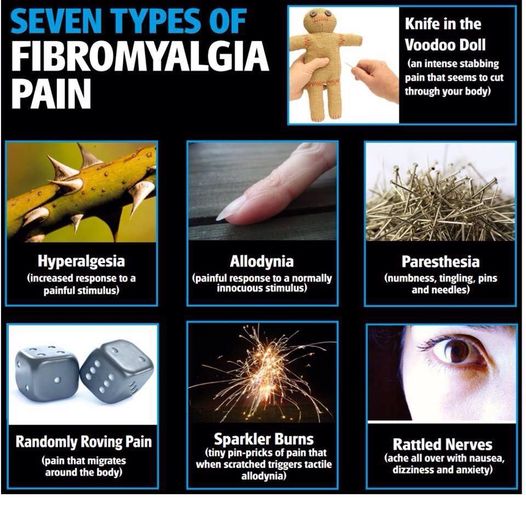
What fibromyalgia pain may feel like. Real life examples…

We all know that fibromyalgia is an invisible condition. I decided to explain what fibromyalgia would look like and feel like to people without fibromyalgia.

Advertisements
Advertisements

I am including a sensitivity warning on this post as I have visually described what some fibromyalgia pain can feel like! If reading such imagery, I suggest you not read this post.

Advertisements

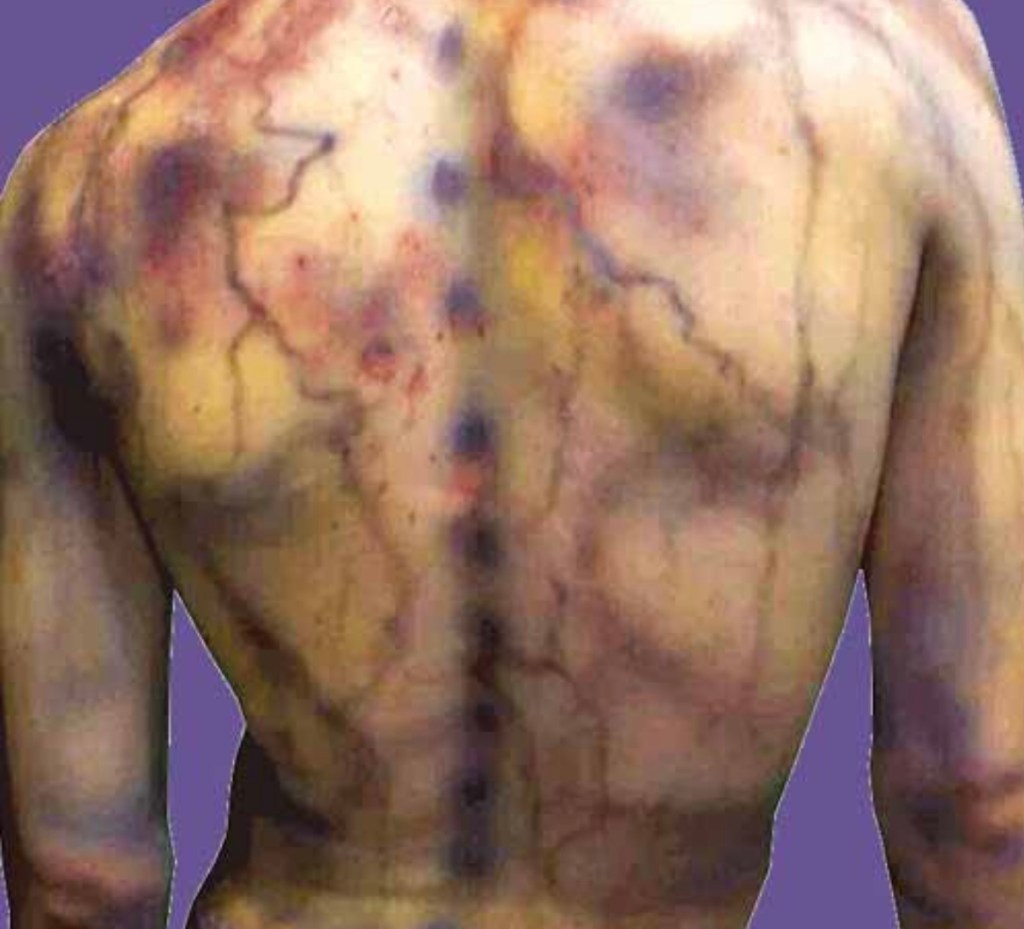
1. Have you ever had a huge bruise somewhere on your body that hurts when you barely touch it?! The type of bruise that turns dark purple/ blue and stays for over a week?!! Image your entire body covered head to toe in bruises. Pretty painful thinking about it. I often tell people my body feels so bruised up. The below picture is a image that represents fibromyalgia pain well. This image often circulates on fibromyalgia groups with a description stating, “If fibromyalgia were visible!”

Advertisements

2. Ever dropped a glass item and watched it shatter such as a drinking glass? I know I have and picking up the glass, results in possibilities of getting glass splinters in your fingers or accidentally stepping on a piece. Now image the spot where the shard entered getting infected and the area starts to throb. Try to image that feeling in every muscle you have – there are over 600 muscles in your body.

Advertisements

3. Have you ever been on an acreage or farm that has barbed wire fences installed?!? The barbs on the fence are very sharp. I know I’ve cut my finger on these fences and snagged my clothing. Now image a piece of barbed wire wrapped around your legs and arms. The bards dig in and feel uncomfortable and possibly cut your skin. Now imagine someone pulling that piece of barbed wire tighter. What an unpleasant thought, yet alone feeling! Welcome to what fibromyalgia pain can be compared to.

Advertisements

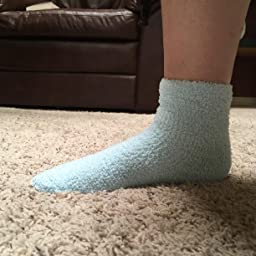
4. We have all received a static shock at some point in our lives unintentionally. Clothing creates shocks during the winter months. Imagine feeling like you are being shocked all day with no break. Everything you touch shocks you. Every step generates a shock. The feeling can become annoying or uncomfortable. Imagine putting on fuzzy socks and dragging your feet across the rug. It creates lots of shocks back to back. Now image these shocks in your brain or in every muscle in your body at once. Ouch!!

Advertisements

5. Ahh! Sunshine!! Image you are Enjoying a beautiful day at the beach, not a worry in sight… until the next day when you realize you forgot to apply the sunscreen. Your skin is screaming back at you as you try to soothe the redness. Your sunburnt area is so sore even applying aloe makes you want to cry or the touch of your shirt lightly resting on your skin is unbearable. People with fibromyalgia can experience sensations like their skin has been burnt, with no relief. The touch of wearing clothing is enough to make us want to scream. People with fibromyalgia often get rashes on their body that can burn. I have experienced a few of these attacks.

Advertisements

6. Image sitting around a relaxing campfire on a beautiful summer evening. You throw a piece of wood on the fire that begins to spit hot coals from the fire and sparks. Have you ever had a spark land on your skin and it hurts?! People with fibromyalgia can also experience these sensations without the visible sparks. It isn’t just one spark, its continuous spark pain for hours on end – even days..

Advertisements
Advertisements

7. Imagine you just got off a long shift at work. You are exhausted and feel like you have been through the wringer! Now force yourself to stay awake. The fatigue a person with fibromyalgia feels everyday is equivalent to someone without fibromyalgia not sleeping at all for three days! Can you function if you were to stay awake for three days straight? Not even a 5 minute cat nap? I bet the answer is no.

Advertisements

Fibromyalgia might be invisible, but there are many ways to visualize and represent what fibromyalgia pain can feel like. These are only six that I have written about. There are many more examples that come to mind.

Advertisements

Fibromyalgia Research 2021 – Study concludes that fibromyalgia may be an Autoimmune Disease

Have you ever stopped and actually thought about treatment options for fibromyalgia? There is no specific treatment route to treat fibromyalgia. It is often a trial-and-error process to see what works for each person. I often wonder why there is no specific treatment for fibromyalgia. You would think in this day and age there would be a solid treatment. It makes me wonder if there are missing pieces and connections in research and discoveries preventing this from happening.

Advertisements

I watched a video which featured Ginevra Liptan , a doctor in the United States. Liptan founded The Frida Center for Fibromyalgia. She shares that there is very little research being done on fibromyalgia due to lack of funding. She is also an author of The Fibro manual. If you haven’t already, I recommend reading this book. It has become a great source of information. I find myself referring back to it a lot. In this book, she begins by explaining when she was in medical school, she herself was diagnosed with fibromyalgia. She treated many people with fibromyalgia at The Frida Center, but as of current she has focused her attention to fibromyalgia research instead of patient treatments.

Advertisements

In the video, she spoke of recent research and discoveries made in fibromyalgia studies. Liptan believes there are missing links in fibromyalgia research that are preventing new treatments from being discovered. In 2021, there was a study done on fibromyalgia and mice. They took antibodies from people who were diagnosed with fibromyalgia and injected the mice with these antibodies. The results are very interesting. I won’t go into detail of the study here, but I will include a few links at the bottom for you to read. The mouse study did not receive as much public attention due to the fact it took place during covid, and media releases were all covid related.

Fibromyalgia and the mouse study overview:

Researchers took blood samples from people with fibromyalgia and injected the IgG (antibodies that stay in your system) antibodies into mice. The mice were found to take on fibromyalgia symptoms that people with fibromyalgia often report as problematic. I find the findings very interesting. It sure makes you wonder what other undiscovered information about fibromyalgia is out there. They also took antibodies from people without fibromyalgia and injected these antibodies into mice to show the difference between the two groups of mice.

1. The mice appeared to be more sensitive to pain.

Advertisements

2. The mice were more sensitive to cold.

3. The mice were observed to have lower grip strength.

4. The mice showed decrease locomotive activity.

5. The mice showed reduced nerve fiber density in their skin.

6. Once the antibodies cleared from the mice after several weeks, fibromyalgia symptoms disappeared, and the mice returned back to normal.

Advertisements

7. The findings reporting in the study could indicate that fibromyalgia has an immune response and could possibly be an autoimmune condition. More research is needed to make these findings accurate.

Liptan explains in her video that the mice displayed pain-like behaviors. The mice showed that their nerves were hyper-excitable. The mice also had reduced activity meaning they were not walking around as much and appeared tired. Maybe their paws hurt so they didn’t move around as much. Nerve damage was also noted in their feet. Liptan continues to explain that the study also showed that the antibodies started to bind to a specific portion of the mices’ spinal cord – an area of the spinal cord which is important- where pain signals are interpreted by the brain. This study may help build the connection between the belief that in fibromyalgia there is a neurological component and an immune component. The new discoveries could help scientists understand what is going on in the muscles nerves and why our brain is hypersensitive to pain. Discoveries in the mouse study indicate there is an immune response component – making fibromyalgia an autoimmune disease.

Advertisements

We know fibromyalgia has existed for years, but I found it so hard to accept that there is no one test to diagnose fibromyalgia and to treat fibromyalgia. There has been a criteria list developed over the years that one must meet to be diagnosed with fibromyalgia, but there is also lot of ruling out other conditions before diagnosis as well. I know the brain is powerful, but I find myself confused at the thought that the brain misinterpreting pain signals can cause so many other symptoms to arise. How can the brain cause rashes and skin conditions to form? Why do many people with fibromyalgia develop irritable bowel syndrome or have bloating issues to arise?! Why are those with fibromyalgia more susceptible to developing chronic dry eye? There are so many unanswered questions. There must be missing links.

Advertisements

Liptan goes on to explain with the new discoveries in the mouse study, she’s positive there will be more research on fibromyalgia taking place in the near future. She hopes this research will help form new treatment routes. Liptan shares, pharmaceutical companies need to see a target – something they can intervene in with a medication. If they see this target, they will put billions of dollars into researching. Liptan has already been contacted by a pharmaceutical company asking her opinion about a new medication being made to treat fibromyalgia. Combining what scientists already know and the new findings through recent studies will help unravel more accurate treatment options for fibromyalgia.

It brings hope of finding a better treatment closer to reality when new discoveries are made. Wouldn’t it be great to be able to say one day, “i used to have fibromyalgia!”

Advertisements

Mouse Study Links:

  1. https://www.the-scientist.com/news-opinion/mouse-study-suggests-fibromyalgia-has-autoimmune-roots-68944
  2. https://pubmed.ncbi.nlm.nih.gov/34196306/
  3. https://www.sciencealert.com/mouse-study-suggests-fibromyalgia-really-is-an-autoimmune-disorder
  4. Here is Dr. Liptan’s video on research and the mouse study. https://www.youtube.com/watch?v=TFQV6hoGS14

Kitchen Hacks: Cooking with Chronic Pain

Cooking a meal should be pretty straight forward, right?! For those of us who live with a chronic pain condition such as fibromyalgia, we must adjust how we work in the kitchen. Preparing a meal becomes very intimidating and exhausting. I have had to make several adjustments in the kitchen be able to get meals cooked.

Kitchen hacks for those with chronic pain:

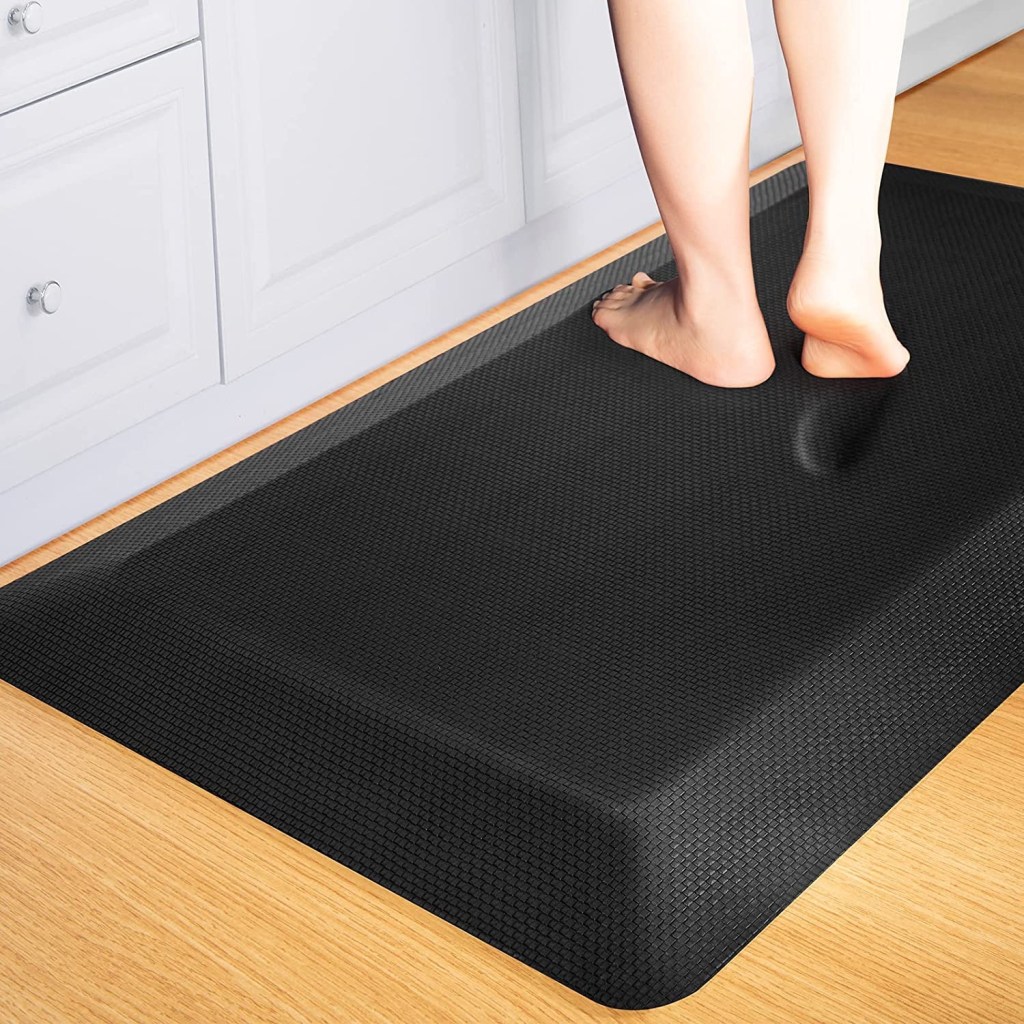
1. Anti-fatigue mats. I have two of these mats in my kitchen. I was reluctant to spend the money on them, because I didn’t know if it would actually help me. Anti-fatigue mats help reduce fatigue on your legs and body. By reducing the fatigue, you prevent or at least minimize the pain levels. I found out how quickly these mats work. With the mat I am able to stand longer to cook or wash dishes then without the mat. If I do not use the mat my legs get weak, feet sore and my shoulders and back begin to hurt. I highly recommend the mats.

Advertisements

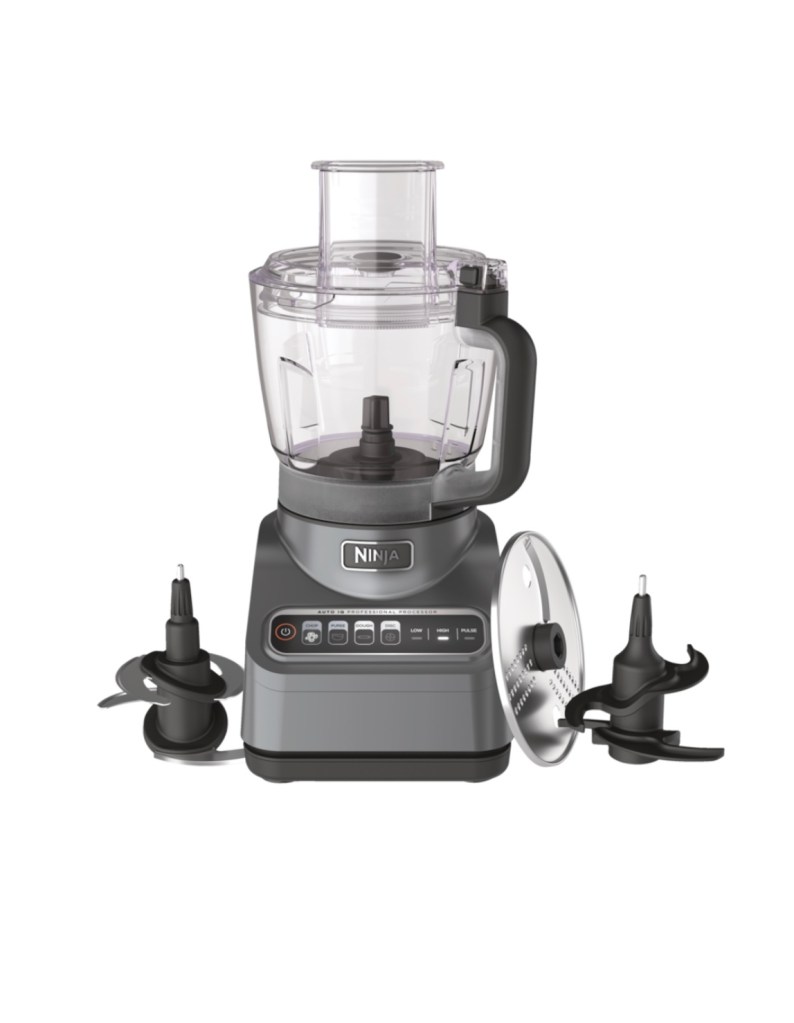
2. Food processor. I recently bought an electric food processor after having a discussion with an occupational therapist. This processor has made a huge difference for meal prep. Before I could not shred a block of cheese by hand. It would cause instant pain in my hands and wrists. The pain that throbs deep down to the bone. With the processor, the cheese is done being shredded in no time and I do not have any pain as a result. If you spend a decent amount of money on a processor, it will come with many different functions such as shredding, chopping and dicing. I even used my processor to slice potatoes. Again, done within a few minutes, and no pain resulted.

Advertisements

3. Electric can opener. I bought an electric can opener a few weeks ago. It is much easier than using an opener you have to manually twist. Another hack to avoid the wrist and hand pain.

Advertisements

4. Slow cooker/ crock pot. These are often recommended because you can cook a whole meal in it. I often cook a roast, potatoes and carrots – easy meal to throw in the pot and set the timer. No need to stand in front of it while it cooks. I often forget to pull my slow cooker out to use, but it would make life so much easier. There are so many recipes for slow cooked meals online.

Advertisements

4. Jar opener tool. I bought one of these from Amazon and it makes jars so easy to open. If you are like me, I no longer have the hand strength to open jars, so this tool comes in handy. People with arthritic hands could also benefit from using this jar opening tool.

5. Utilize sitting down to do meal prep. I often will take whatever ingredients I’m preparing and sit at the table instead of standing. It is less stress to my legs, back, neck and shoulders. Sitting and cutting veggies for a soup is much easier sitting down.

Advertisements

6. Rice cooker. Using a rice cooker instead of cooking rice on a stove top is so much easier. Add the rice, water, any spices you may add to your rice and plug it in and wait for the rice to cook. Rice cookers usually indicate when they are done. Mine clicks over to warm, but it clicks loud enough you can hear it.
Advertisements

7. Rocking knives. I haven’t bought one yet, but I have spoken to others who have, and they find these knives much easier to handle. Instead of a chopping motion, you rock the knife to cut. These knives are often recommended for people with arthritic hands too. I’ve been looking at the different brands on amazon, but I have yet to order one. Check it out!

8. Double handled pots. I’ve often seen pots in the store with a handle on each side of the pot. These would be ideal to use for people with hand pain. My pots only have one handle, but I often think buying a few extra pots that have two handles would be safer. I have a difficult time lifting pots off the stove to drain the water out. Having two handles would make it easier to lift the pot and much safer.


Advertisements

9. Mixing machine. I own a Kitchen Aid mixing machine. It comes with three different mixers which comes in handy depending on what you are making. These machines cut down the time it takes to manually mix by hand and make baking easier. The one good thing about the Kitchen Aid mixers – there are so many attachments you can purchase to go with the mixer – even a food processor. There are also handheld mixing machines that would also work- less stress on your wrists and lower opportunity for pain levels to go higher.
10. Cook extra food. When I cook meals such as spaghetti or soups, I will cook enough to be able to have left overs for the next day. This way I can have a break from cooking. On my good days where the pain is lower and fatigue is bearable, I will also do some meal prep and freeze these meals. The meals can be taken out and thawed on days that I can’t function enough to cook. I often make Shepards pie, chicken pot pie, and lasagna to freeze. By doing so, this gives me six meals to quickly take out to thaw and eat. Theres many meals you can prepare ahead and freeze them!

With the new counter-top cooking appliances coming out it becomes easier to cook one pot meals very quickly, even from a frozen state. I keep looking into getting a Ninja Foodi 6 in 1 appliance. This appliance can become an air fryer, pressure cooker, steam, bake and roast. It will remain on my wish list for a while as they are fairly pricy. Do you have any kitchen hacks to make it easier cooking with chronic pain?!?

Is your chronic fatigue caused by fibromyalgia? Have you considered chronic fatigue syndrome?

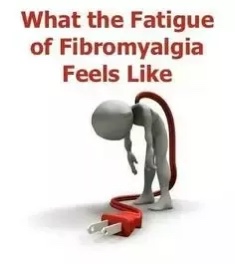
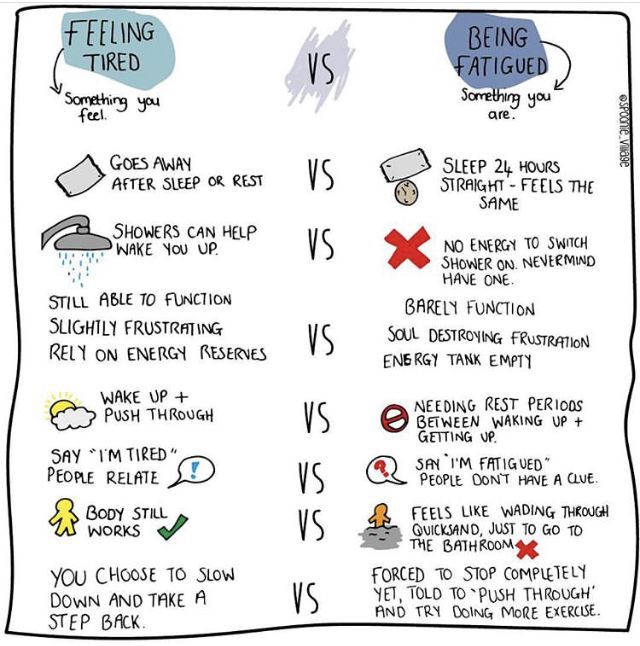
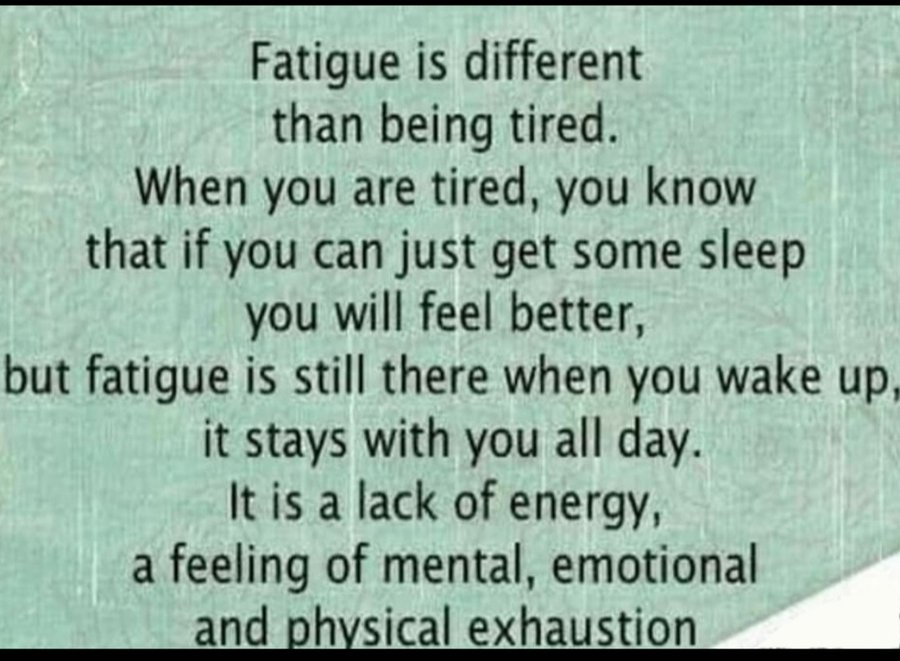
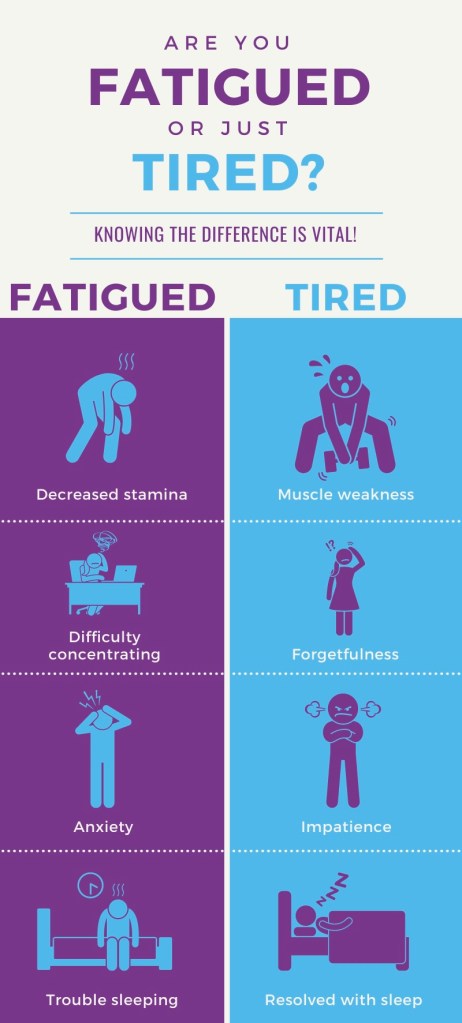
One of the most difficult and frustrating symptoms for myself is the chronic fatigue I have alongside fibromyalgia. When I got told by doctors and specialists that fibromyalgia is often accompanied by fatigue, I never thought the fatigue would be this life disrupting. I’ve learned that feeling tired versus feeling fatigued are two completely separate terms. When a person feels tired, sleeping will cure this tiredness, while fatigue is not relieved by any amount of sleep. In my case I have come to realize no matter how little or how much sleep I get, I feel extremely fatigued the next day, to the point it makes it extremely difficult to function and take care of my basic needs. Who knew eating could become tiring?!? Lifting food to my mouth and chewing the food has proven to be a chore at times. I literally told my doctor this exact sentence not long ago. Some days finding the energy to eat is just overwhelming. Can anyone else relate?

Advertisements

At my last neurologist appointment, he explained to me that chronic fatigue is one of the most difficult things to treat as there are so many factors to think about to even pinpoint why the fatigue may be so disruptive. Fatigue is a symptom of fibromyalgia to begin with. A survey revealed, 780 males who have fibromyalgia, 93% reported chronic fatigue. While 4467 women were surveyed – 97% reported fatigue. The use of certain medications to help limit fibromyalgia pain could be part of the culprit to the added fatigue. Many medications used in treatment; have a possible side effect of fatigue.

Advertisements

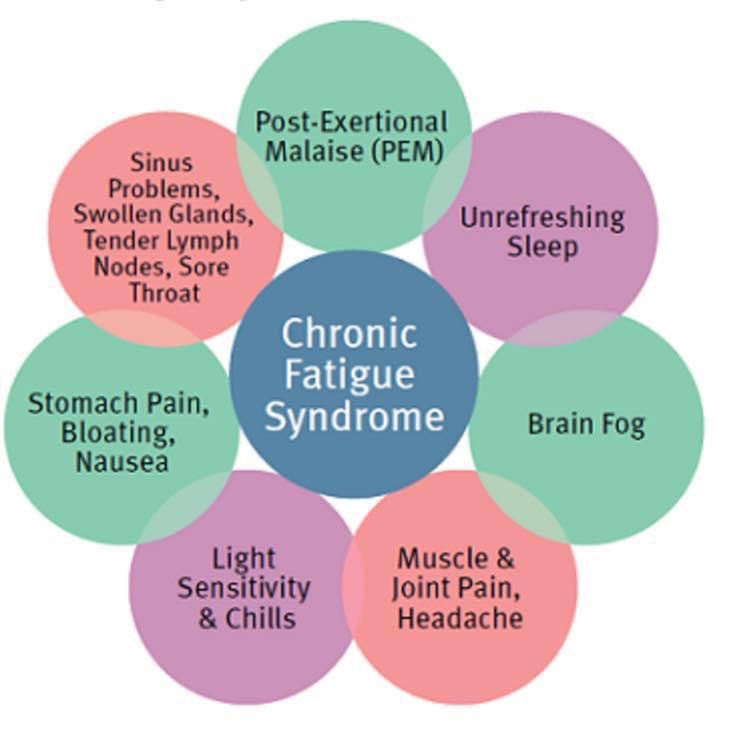
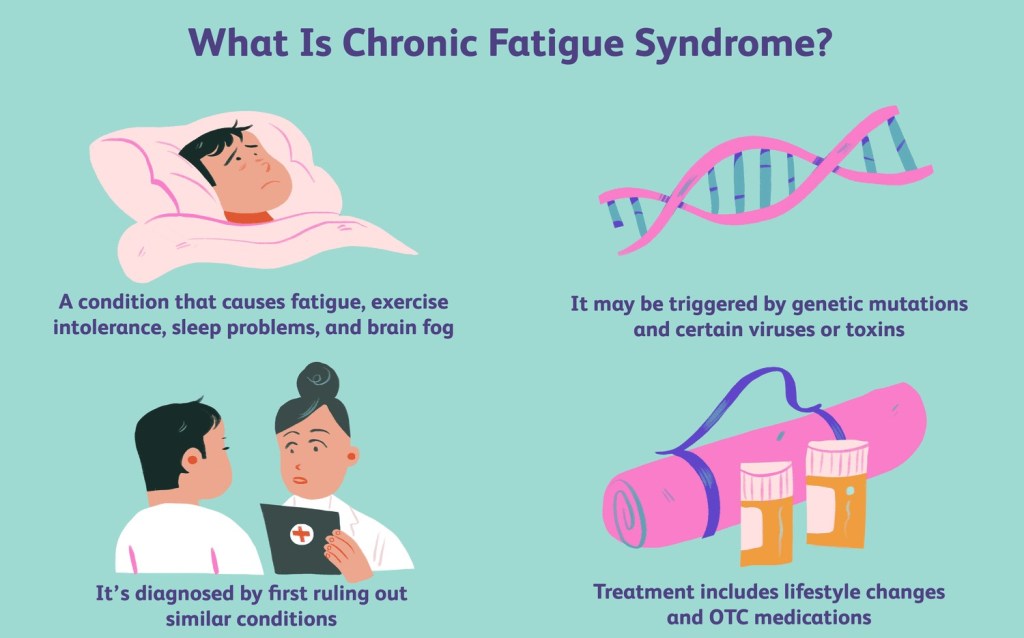
Ever hear about chronic fatigue syndrome (CFS)? I have done a lot of research between fibromyalgia and CFS. CFS is a completely separate condition from fibromyalgia. There again, it can be difficult to diagnose – just like fibromyalgia. There is no one test to diagnose CFS. I have never been officially diagnosed with it, but I stand firm when I state I do have it. Chronic fatigue syndrome also presents with many other symptoms. Below are some of the possible symptoms of chronic fatigue syndrome.

Advertisements

Fatigue is not the only symptom people may experience with CFS. I often get daily sore throats, fevers that range from 99-103 F, and swollen lymph nodes. My blood tests always reflect no indication of any infection or that my body is battling a cold or flu. I’ve come to the conclusion that these symptoms I experience, are from chronic fatigue syndrome. There is no other explanation to why I exhibit these symptoms. These symptoms have a very quick onset and with little warning. As I write this blog, I found myself with a fever of 103. When these symptoms arise, it feels like I have the world’s worst flu bug…but I don’t. Have you ever had a flu that has knocked you down for days?!? Most of us have at some point. That is what I experience, but every day. Imagine living with a flu everyday – 24/7 for 365 days. Welcome to my reality.

As for treatment options for CFS, there have only been a few options mentioned to me, but not just a simple fix. My doctor and neurologist both mentioned the possibility of using a stimulant medication such as modafinil. By using a stimulant, one may see a response of wakefulness. Before using these medications there may be many aspects to think about prior. My doctor was very concerned that using a stimulant to improve my wakefulness during the day would be counter-active and not wear off before I went to bed causing further sleep issues to form. There are many listed side effects on these medications as well. Not everyone will experience the possible side effects. I personally find most medications can help relieve some symptoms, but then leave behind another symptom that may be unpleasant to deal with.

Advertisements

The other treatment option that is supposed to help improve chronic fatigue syndrome is exercise. I was never given any further direction on what type of exercises help or duration; however, I’ve found adding exercise into my day very difficult. First of all, who wants to exercise when they are so fatigued and causes pain levels to hit pain levels of 10?!!One must find the right exercises and duration and not over do this exercise and make their fibromyalgia symptoms and fatigue worse. If you are seeing a kinesiologist, they may be able to guide you with this route. This was my running issue balance. In my particular case, trying to add exercise made me go into a fibro flare each and every time. Research states that pain levels will increase at the beginning until one’s pain threshold increases, but I found it difficult to follow through when the results were so negative and debilitating results. There may be other treatment routes to improve chronic fatigue. These two are the ones most talked about.

Advertisements

When a person experiences chronic fatigue everyday it can impact a person’s cognitive abilities. I know I often struggle and search for words when I am trying to speak, leading to stuttering or creating words up that aren’t actually a word. I often joke saying maybe I could become rich by claiming rights to my newly created words. My concentration is also very limited, and I often find myself forgetting things. I will get into how fibromyalgia effects a person’s cognitive abilities in a later blog.

Just like fibromyalgia there is no cure for chronic fatigue syndrome. One must learn to maneuver through life the best he/she can while dealing with the exhaustion and symptoms left behind.

For more information visit: https://www.mayoclinic.org/diseases-conditions/chronic-fatigue-syndrome/diagnosis-treatment/drc-20360510

Advertisements

Fibromyalgia Flare Kit

Fibromyalgia is difficult to handle on any given day, but when experiencing a flare up it becomes even more difficult to function. A flare up can be triggered by doing too much, stress, or even a medication change. My three biggest triggers include cold winter weather, stress and overdoing it on my good days (which I do way too often). These are just a few examples. When a person enters into a fibromyalgia flare all the symptoms get worse and exacerbate intensity of symptoms. New symptoms may even appear. Everyone who has to survive these flare ups soon learn strategies that will help them cope. Flares can last up to a few hours, days and even months. My worst flare lasted over a month. It was a very difficult time and wore me out physically and mentally. Fibromyalgia flares can result in limited abilities or result in being incapacitated leaving one bed ridden. Below are items that I keep readily at hand to get through a fibromyalgia flare up.

Advertisements

My flare up kit includes:

1. Heating pads. I have several heating pads of various sizes. There have been times where I have had all three in use, depending on the severity of my flare. I have a heating pad that is meant to be used on the shoulders and neck. These two areas are problematic when I enter into a flare. Even though the heat doesn’t relieve the throbbing aches long term it helps while in use. I get a short break from the pain. Anything is better than nothing.

Advertisements

2. Heated blankets. I often get chills when I go into a flare. Having a heated blanket takes the chill out of my body. It also acts as a full body heating pad if I have jumping pain all over my body.

3. Weight blanket. I absolutely love my weight blanket. My boyfriend gifted this to me for Christmas one year. If you know anything about weight blankets, you know there are many benefits in using them with or without fibromyalgia. The weight from the blanket is known to help reduce anxiety. For those of us with fibromyalgia, we know anxiety can become an issue. For myself, I find the weight helps relieve my leg pain. I’ve heard from others that the weight causes further pain, so they don’t use a weight blanket. The use of a weight blanket with be dependent on your body. Using a weight blanket is also supposed to help one sleep better. I have noticed when I use the blanket I in fact do sleep better.

Advertisements

4. Travel neck pillow. Often times when I flare my neck becomes very painful and my muscles in my neck get weak. Having to hold my head up feels unbearable. I use the neck pillow to allow my muscle to relax and not have to work as hard to hold my head up. This is easy to take with you anywhere!

5. Medications. Make sure you have extra medications that you may use to remedy any flare up symptoms. For example, when I flare i often get flu like symptoms which can be relieved with over-the-counter Advil cold and sinus pills. Keep any other remedies you use available such as bio freeze spray.

Advertisements

6. Ear plugs and a mask. I often get sensitive to noise, and light. If i try to lay down during the day I may use a sleep mask to cover my eyes. I have also just bought some ear plugs to try during the day if sound bothers me. Sometimes even the vehicles driving down the street is too much noise to handle.

7. Compression gloves. I bought a pair of compression gloves to try. When i flare my hands often ache in every joint possible. Lots of people I have spoken to love their compression gloves. They even have compression socks to help with foot pain. I’m still experimenting with the gloves to see if they make a difference.

Advertisements

8. Comfy clothing or soft pajamas. Comfy clothing often brings one a feeling of comfort. During a fibromyalgia flare I often have sensitive to clothing. i rather be in pajama bottoms or sweatpants then a pair of jeans.

9. Water. Drink lots of water. As I type that sentence, I realize I should take my own advice. Water is important to drink for everyone but can also help during a flare. I find adding lemons or lime to water makes it more desire able to drink.

Advertisements

10. Music. I always have found music soothing and relaxing. I often will turn on music while I relax. Research often states music has the power to reduce pain and anxiety. We often hear about music therapy for children with disabilities. Why wouldn’t it help with people with fibromyalgia?!? Give it a try. What do you have to lose?!?

11. I was going to stop at ten, but I’m going to add one more thing to the list. Do you own a pet?! They can greatly help us through hard times – even a fibromyalgia flare. Did you know petting a dog or cat, can reduce levels of cortisol in your bloodstream, thus lowering muscle tension that may be contributing to pain levels?!! Research says spending even ten minutes with a dog can reduce a person’s anxiety levels. Interesting, isn’t it?!! Dogs are often used at therapy pet for these reasons.

What would be in your flare kit? Everyone’s flare kit will look a little different. Maybe your flare kit includes a book instead of music!

Advertisements

Chest Pain in Fibromyalgia…What is it called?

Did you know that fibromyalgia can cause chest pain? I sure didn’t!!!! The first time I had experienced this type of chest pain was the scariest moment of my life – thinking something was wrong with my heart. Chest pain that is felt with fibromyalgia can mimic what may present as a heart attack. It is actually a condition called Costochondritis – which causes inflammation of your rib cartilage. This cartilage connects your ribs to your breastbone. With the symptoms mimicking a heart attack, I would definitely not just assume its costochondritis and get it checked by a doctor to be sure it’s not anything serious or heart related.

Advertisements

Since I hadn’t heard of this condition before, I decided it was a good time to do some personal research and find out as much information as I could about it as at the time. I was dealing with this chest pain daily for a while. On several sites I used to research, it stated that costochondritis pain is usually only felt in a small area of one’s chest while a heart-attack involves a more widespread area and often causes pain in the neck and into the arms. My chest pain I experience is always on my left side of my chest – hence why at first I thought it was my heart. The pain is a sharp aching pain, which can have a gradual onset or appear immediately. For myself, the chest pain would start minimal and then increase to the point it hurts to breathe or move. I would also feel like there was an air bubble stuck in my chest- it really isn’t an air bubble, but cartilage inflammation. Costochondritis is not a life-threatening, but can be very painful. The attack can usually be relieved by resting and waiting for the condition to improve. Everyone will experience costochondritis differently. Your pain may be less severe than mine, similar or even more severe than I have experienced. I found the duration of the attacks different each time. Sometimes the pain would ease after several hours, while other times it would last until the following day.

To help treat costochondritis I have found lying flat on the bed or couch helps ease my pain. I remain as still as I possibly can as movement aggravates the pain further. I also apply heat with a heating pad to the area. One could also try to ice the area, but I prefer heat. My body responds poorly to icing. My body has become intolerant to icing areas causing pain to arise. Some people may not get any relieve by laying down but may get some relief by standing or sitting in a particular position. You may find yourself experimenting to see which works best for pain relief for you. I often take over the counter pain killers such as Advil or Motrin to help relieve the pain. A few times I have had to rely on prescription anti-inflammatory medication to help.

Advertisements

There has been no solid evidence towards what could cause an attack of costochondritis to form, but possible causes could be anything that may cause tension to the chest area. The stress can therefore cause inflammation to take place. Even a simple action such as coughing, could cause an attack to happen or reaching for an object off a high shelf above your head. In most cases, it remains unknown to what causes each episode of costochondritis to take place. If you can pinpoint the cause, you may be able to prevent future attacks from taking place. However, without being able to know what the direct cause for the cartilage is to become irritated and inflamed, it remains very difficult to prevent.

I have come across a few articles over the years, that states there are exercises and stretching one can use to help relieve the pain felt from costochondritis. However, I have never explored these stretches and exercises as it states it is best to be directed by a trained physiotherapist. If anyone attends physio for other reasons, you may have the opportunity to ask your physiotherapist about these exercises. Usually at physio, they will teach you the proper stretch or exercise, so you do not hurt yourself further. There are many videos on YouTube about these specific exercises if you wish to explore further.

You can find more information on Costochondritis here. You will be redirected to the mayo clinic website for more information.

I’m sure costochondritis can be present without being diagnosed with fibromyalgia. So don’t assume that if you have fibromyalgia, you will have costochondritis or vice versa. Individuals who are diagnosed with fibromyalgia just seem to have higher chances of having the cartilage in their ribs inflame.

Advertisements

Fibromyalgia and Insomnia

Fibromyalgia and insomnia seem to have a high correlation. In all the research I have done on fibromyalgia in the last three years, I have never found a solid explanation as to why people who have fibromyalgia suffer from insomnia. In the book, “What Your Doctor May Not Tell You About Fibromyalgia“, a study states out of 665 males – 80% suffered from insomnia, while out of 4, 075 women 88% reported problems of insomnia. As we know, getting a good night sleep is important for anyone. The less sleep a person gets the less energy reserve one has, causing various negative effects such as cognitive changes. For people with fibromyalgia, insomnia can become a nightly issue. Decreased sleep can cause a person’s pain threshold to become lower. People who have fibromyalgia already have a lower pain threshold to begin with. This is due to desensitization – which will decrease one’s pain threshold even lower as time goes on. With a lower pain threshold, higher levels of chronic pain are formed, and the pain is felt at even higher rates. In all my research, before improving any other fibromyalgia symptoms, the number one advice listed in many sources is – one must first fix their sleep or at least improve their sleep. Sounds easy right? But that is not the case. It is not just an easy fix. I’ve had bouts of insomnia on and off for years, but after so long my body just crashed and I would sleep. These days no matter what I do to try to improve my sleep, it does not happen and results in insomnia. For the last week I have been sleeping poorly. In turn my pain levels have been hitting levels of ten and I’ve been exhausted.

Some of the remedies to help lesson insomnia sound very straight forward, but reality is they are much more difficult than one thinks when factoring in chronic pain/fatigue. Here is what I have struggled with trying to improve sleep quality and quantity.

  1. Stay active and don’t become sedentary. Not so easy when you live with chronic pain and chronic fatigue. Just getting out of bed some days is difficult enough. If you have read my pacing blog – remember the spoon theory? Some days I don’t have a spoon to use to exercise.
  2. Stick to a sleep schedule. I tend to go to bed early and at the same time every night – due to the fact that if I go to bed even an hour later then I usually do, I can’t function at all the next day. Getting up at the same time every morning is a different story. Who wants to drag themselves out of bed if they have not slept at all or very little? Just to keep a scheduled sleep schedule? I rather get sleep when I can.
  3. Lots of times people overlook their medication list as a cause of insomnia. Many medications can have a side effect of insomnia. After researching and speaking to a pharmacist I have come to learn that many of the medications I take to manage my pain, have a possible side effect of insomnia. For example, my one medication I use to manage my migraines, can possibly cause a reduction in melatonin levels being secreted. Melatonin is naturally released in our bodies, and it is an important hormone to trigger optimal sleep. Many doctors may make a suggestion to try melatonin supplements to help with sleep. You can buy these in the vitamin section in any pharmacy (at least in Canada). Before adding in melatonin, I would suggest speaking to your doctor or pharmacist. For myself, I found these melatonin supplements caused me to have very intense and weird dreams, so I stopped using them.
  4. Avoid or limit naps during the day. For myself I need to rest when tired, otherwise the fatigue levels get worse, pain levels increase, and my ability to function over all decreases drastically.
  5. Pain during the night? There are medications out there that can limit pain, but people who have fibromyalgia are often on medications already to help with pain levels. At night pain often wakes me up, and then I cannot get back to sleep. I end up tossing and turning the rest of the night and getting out of bed in the morning feeling like I am a zombie. I’ve yet to find a solution to this issue.
Advertisements

You can find more information about insomnia by clicking here, which will redirect you to the Mayo Clinic website.

It is always a good idea to have a sleep study completed to make sure it isn’t sleep apnea. After my appointment with my neurologist, it was suggested I get a sleep test done to rule out apnea. The take home apnea test is simple to hook up. The only issue I had was getting tangled in the cords at night. My test came back negative, but I know a few others with fibromyalgia who tested positive on their test. Once they got a C-pap machine to use at night, their sleep improved immensely.

The use of sleeping pills to help get the necessary sleep needed, can be a touchy subject. I have found that many doctors do not like to recommend sleeping pills and are very hesitant to prescribe them. Many sleeping pills can become habit forming and an individual can become reliant on the use of these pills. In my case, I decided using sleeping pills – the benefits outweighed the risks. I used to use Zopiclone – which did help me sleep, but this drug is not meant to be used long term or nightly. I would use it one night- get a wonderful sleep and then not use it for nights to come. I would go 2-3 nights without sleep and then breakdown and take one. When I did take it, the medication was not out of my system by morning, and I was often left groggy half the day. My doctor and I had a very in-depth discussion about sleeping pills and he switched me over to another one, which is safe to use nightly and the groggy feeling wears off by morning. Even with the use of a nightly sleeping pill I often wake up anywhere from five to ten times a night – experiencing choppy sleep patterns and feel very fatigued during the day. Even on the nights I do manage to get a solid night’s sleep, I wake up feeling extremely fatigued. However, I am a firm believer I also have chronic fatigue syndrome (CFS), alongside my fibromyalgia. The two conditions usually go hand in hand, but I have never been given a solid diagnosis of CFS by a doctor. If you have done any research on chronic fatigue syndrome, you have probably learned that fatigue experienced with this condition will not go away with sleep. I will be writing a blog on chronic fatigue syndrome soon!

Failing to get enough sleep can have many negative effects on one’s body. I won’t list these effects here because the list is way too long to begin to discuss. The pictures at the end of this blog, show many side effects lack of sleep and insomnia can have on one’s body. I will pick a few effects lack of sleep can have and discuss further in future blog posts. Stay tuned.

The best advice I can give to anyone who is experiencing insomnia alongside with their fibromyalgia, is to have a conversation with your doctor, and come up with a plan to help you with sleep. Everyone’s situation will be different. It may be a trial-and-error situation, to see what works best for you! As you can see even after three years, I still struggle with improving my sleep quantity and quality. Every night is different.

Advertisements

Fibromyalgia? Flu? Another illness? Autoimmune?

One day you begin to feel aches and pains in different areas of your body. You assume you have a flu. You take the extra time to care for yourself to ease the body aches you feel – applying heat, ice, soak in a warm bath, take some cold/flu pills to help…Whatever you personally find helps you ease aches and pains from a flu. Nothing eases the dull pain and aches you feel. You make the trip to the doctor’s office in hopes of a professional’s opinion and relief. Your doctor does a physical exam and finds nothing physically wrong and orders bloodwork to investigate further. You return home and continue to try to ease the symptoms of this horrible flu bug you think you have caught. Results come back from your bloodwork and reveals nothing is wrong. No abnormalities detected to indicate your body is malfunctioning in any way. Your doctor decides to run blood work a second time. In the meantime, your body is so tired and fatigued from the consistent aching and pain that you begin to become mentally and physically exhausted. As the days go by the pain continues to become more intense and you notice more areas of your body begin to ache and different intensities of pain levels begin to form. The fatigue and pain become unbearable. You go back to the doctor to get the results. NORMAL? ‘How can everything be coming back normal when I hurt so bad? “Why do I hurt the way I do?” “What is causing my pain? ” Your doctor responds with, “I suspect you have fibromyalgia.” You take a moment for this to sink in and absorb the presented information. Does this story sound familiar? I often hear the same story from many other fibromyalgia sufferers. Some of us have heard of fibromyalgia while some of us have never heard of this diagnosis. Whether you have heard of fibromyalgia or not, most likely you went home to begin your own personal research on fibromyalgia. This is where my journey began. What about you? There is much more to fibromyalgia then just the aches and pains.

Advertisements

The diagnosis process can be very long and a drawn-out process and become frustrating. Doctors often diagnose fibromyalgia from symptoms (which I won’t list here as there are a lot) and possibly will conduct a physical exam as in fibromyalgia, there are 18 trigger point/tender point areas on a person’s body. Some or all of these areas will be tender to the touch. Scroll to the end of this article to see a picture of these tender point areas. For myself I have all 18 areas that are tender to the touch – however my upper back, legs and arms are the most sensitive areas, but the areas can change daily. As most of us know there is not a specific test that can detect fibromyalgia (at least in Canada). I have read articles posted in other areas of the world stating there is now a test that can be conducted to determine if you have Fibromyalgia. I am not sure if this is accurate information, but in a perfect world, wouldn’t it be wonderful to just get a test done to confirm the assumption?!?! I found not having a solid yes on diagnosis hard to accept. I was in denial for the longest time and second guessing my health. Fibromyalgia is diagnosed by eliminating possibilities of other illnesses and conditions prior, which can take time. My doctor diagnosed me fairly quickly – almost so quickly that I wondered if I was really fibromyalgia or misdiagnosed. However, over the years I have seen specialists such as a rheumatologist and neurologist who firmly have agreed with my primary doctor’s diagnosis of fibromyalgia. There are many other conditions that have some overlapping symptoms of fibromyalgia and can be mimic fibromyalgia such as rheumatoid arthritis, Lyme disease, multiple sclerosis (MS) lupus and polymyalgia rheumatica. I’m sure there are other conditions that could possibly mimic fibromyalgia. The above listed are conditions that I read about in my own research. All my blood work kept coming back with no detected abnormalities – no indication of autoimmune disorders. I even requested an MRI be completed to check for brain lesions that may detect MS. To my surprise, a lesion was detected on my brainstem, which is usually an indication of MS. My neurologist quickly ordered a second MRI, to rescan and also had my cervical neck scanned for further lesions. In the end my results never revealed any further lesions and my neurologist stuck with the fibromyalgia diagnosis but never full ruled out MS. My primary doctor was very through in his tests prior to me seeing specialist. My neurologist was impressed at how through he was and ran all necessary tests needed and reran those tests more than once to make sure the results were conclusive.

Advertisements

My advice to you, if you are still in the diagnosis stage and suspect you may have fibromyalgia and want your doctor to investigate further……

  1. Be sure to see doctors, specialists, and any other health care providers that believe in fibromyalgia. There are many health care providers out there that still think fibromyalgia is in one’s head or are not up to current information on fibromyalgia. Never let anyone convince you that fibromyalgia is just a mental state, and you are imagining it. The pain we feel is real and so are the symptoms experienced. I questioned this myself early on and wondered if I was mentally ill – thinking I was in pain, and it was not really there. The best thing my doctor did was tell me the pain I feel is real and that I was not just going crazy!
  2. Don’t be afraid to ask questions. Ask as many as need!
  3. Do your own research. Arm yourself with knowledge. Doctors often discourage you from researching on your own. My doctor encouraged it. It helped me understand fibromyalgia on a different level. Doctors often explain in medical terms which can be confusing and face it “over our heads”. Reaching it yourself and reading it in simpler terms is easier to understand and comprehend without a medical background.
  4. Try to connect with other people diagnosed with fibromyalgia. There are so many wonderful groups on Facebook these days help us stay connected. Connecting with others who are experiencing the exact same as you or similar, even if they are at a distance makes one feel not so alone during this journey.

Advertisements