Tag Archives: chronic illness

The Struggles of Maintaining Friendships Amidst Chronic Illness: A Personal Journey

We often form friendships with people who have similar hobbies and interests as we do. However, what happens when chronic illness takes away our ability to take part in those activities? Those friendships often cease to exist because we no longer have ” things in common”. This does not happen just with having a chronic illness – but at times friendships just tend to grow apart. Our hobbies and interests may change over time as well as our life goals – it is just how life goes.

Advertisements

How do we make new friends when we have a chronic illness? I often found it difficult to make new friends as an adult before chronic illness set in- it seems like unless one is into the bar scene it is near impossible. It is even harder when you factor in a chronic illness. I soon realized I was hearing from friends less and less even if I reached out first – messeges often showed read and I received no response. For myself, when I got diagnosed with fibromyalgia in 2019, I started joining online support groups to be able to interact and chat to other people who understood the struggle with chronic pain and every other symptom fibromyalgia seems to throw at us. I found a few people on the group that lived locally and we started going out for lunch or coffee. There was never any hurt feelings if we had to cancel last minute due to not feeling well. I later started fibrofighters – there are quite a few followers who I speak to daily, eventually adding them to my personal Facebook account and consider them to be some of my closest friends. I can always count on them to be there to listen to my struggles even though they are half way around the world. They get it! Strange how people who you have never met can become your main support systems.

Advertisements

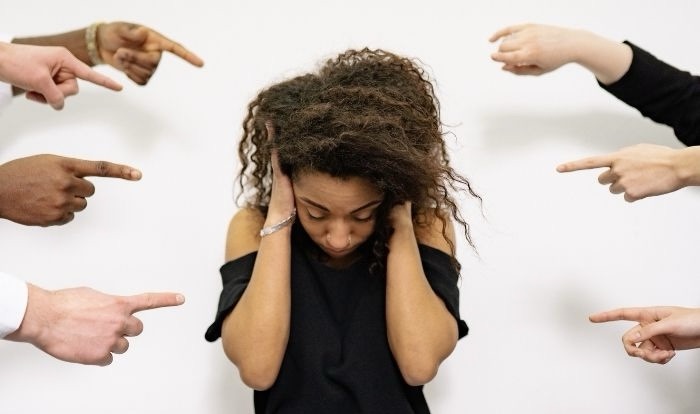
In April 2024, when I received my lyme diagnosis I found myself facing another bout of lost friendships. When I expressed how disappointed I was in “friends” reactions to being diagnosed with lyme disease to the doctor treating me, she looked at me and asked me one simple question , ” Do you really want/need people like that in your life?” Of course my answer was no. Even though it still stung for several weeks, she was right – I don’t need people like that in my life. These “friends” decided to voice their opinions on my treatment routes – it is fine to have an opinion ( we all have opinions), but was it necessary to launch a personal attack and name call?! NO!! You would think my decisions were impacting their lives directly – when they were not. I know their responses were due to lack of knowledge on lyme – however this did not give them the right to treat me in this manner.
Advertisements

We can’t control how people react and respond, but what we can control is how we react and respond to them. Over the last week I have been listening to Mel Robbins “The Let Them Theory” audiobook. It has been an eye opener for me. I won’t be going into detail about the book itself in my blog as there is just too much information to cover. ” The Let Them Theory” has gone viral and was only published December 24, 2024! I kept seeing her book in every store I went into the last several weeks, so I decided to listen to the audiobook version.
Advertisements

“If they want to leave… let them.

If they choose someone else…let them.

If they don’t support you…let them.

If they don’t invite you…let them.

Stop wasting your energy trying to change or control other people.

Let them show who they really are.

And then you can choose what you do next!”

These seven sentences resonated with me. I felt a sense of peace take over. I realized “friends” opinions and actions reflect who they are, not who I am as a person. The way I respond reflects who I am. I wish I knew about this theory months ago when these situations took place. I would have responded way differently. I think I am going to put this theory to the test. It is going to take time and commitment – but I think it will also better my mental health and over all well being.

LET THEM!

SIBO – What is it? Is there a correlation between SIBO and Fibromyalgia?

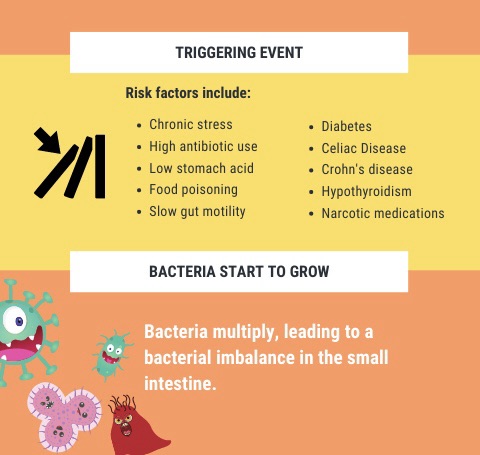
Have you ever heard of SIBO? Most people will say no to this question. I hadn’t heard of SIBO until I started seeing a naturopathic doctor. SIBO stands for small intestinal bacteria overgrowth – it is not the same as IBS or c diff.

I started seeing a naturopathic doctor (ND) in April of 2024 to treat chronic Lyme disease. Before we had even tested for Lyme, the ND was positive I was dealing with SIBO. She immediately put me on a herbal treatment for it and it was gone in three weeks. It is said that 70% of people who have lyme disease often get SIBO. This is my third time being treated for SIBO and it has been the worst case I have had thus far.

Advertisements

What is SIBO?

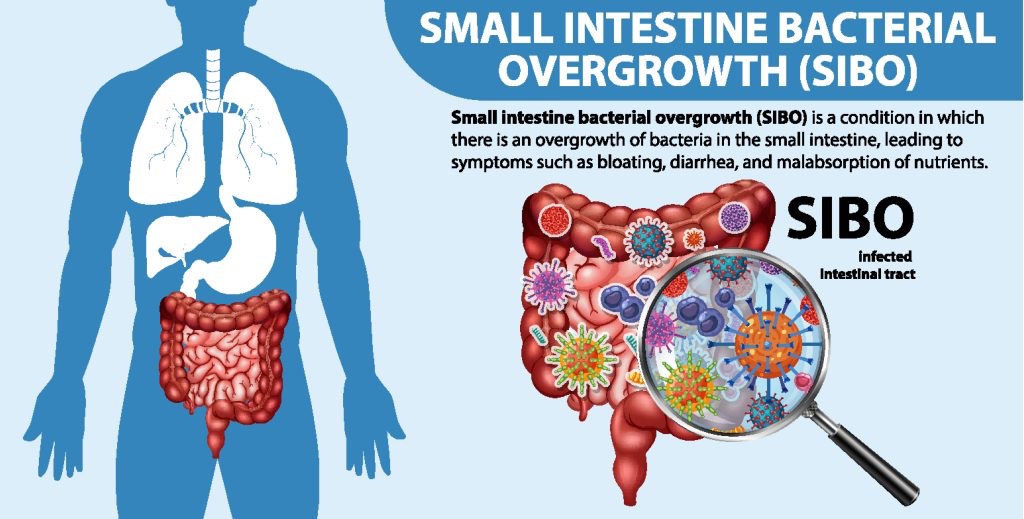
SIBO is a condition where there is an abnormal increase of bacteria in the small intestine.

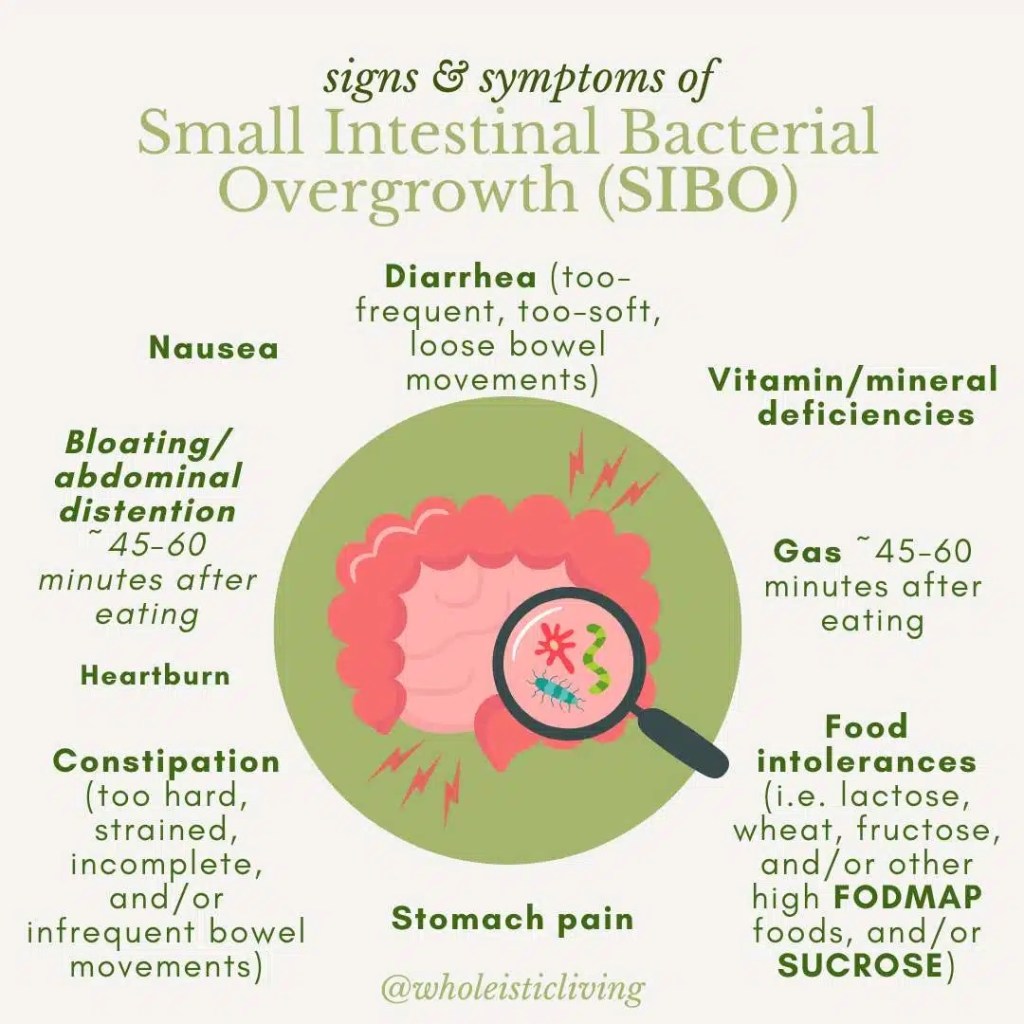
Symptoms of SIBO:

You can find more information about SIBO at the Mayo Clinic here.

Advertisements

How is SIBO diagnosed?

  1. Symptoms. If medical providers know the warning signs of SIBO, a conversation with your provider may lead to a SIBO diagnosis. In my case the ND I see treats SIBO often and she knew what was wrong before we even sat down to discuss details.
  2. There is a breath test that can be done to determine how much hydrogen or methane one breathes out after drinking a mixture of glucose and water. I do not think this test can be ordered in a regular medical lab ( maybe in some areas of the world) . I do know many naturopathic doctors offer the testing, but it can be fairly pricey.
Advertisements

SIBO and Fibromyalgia

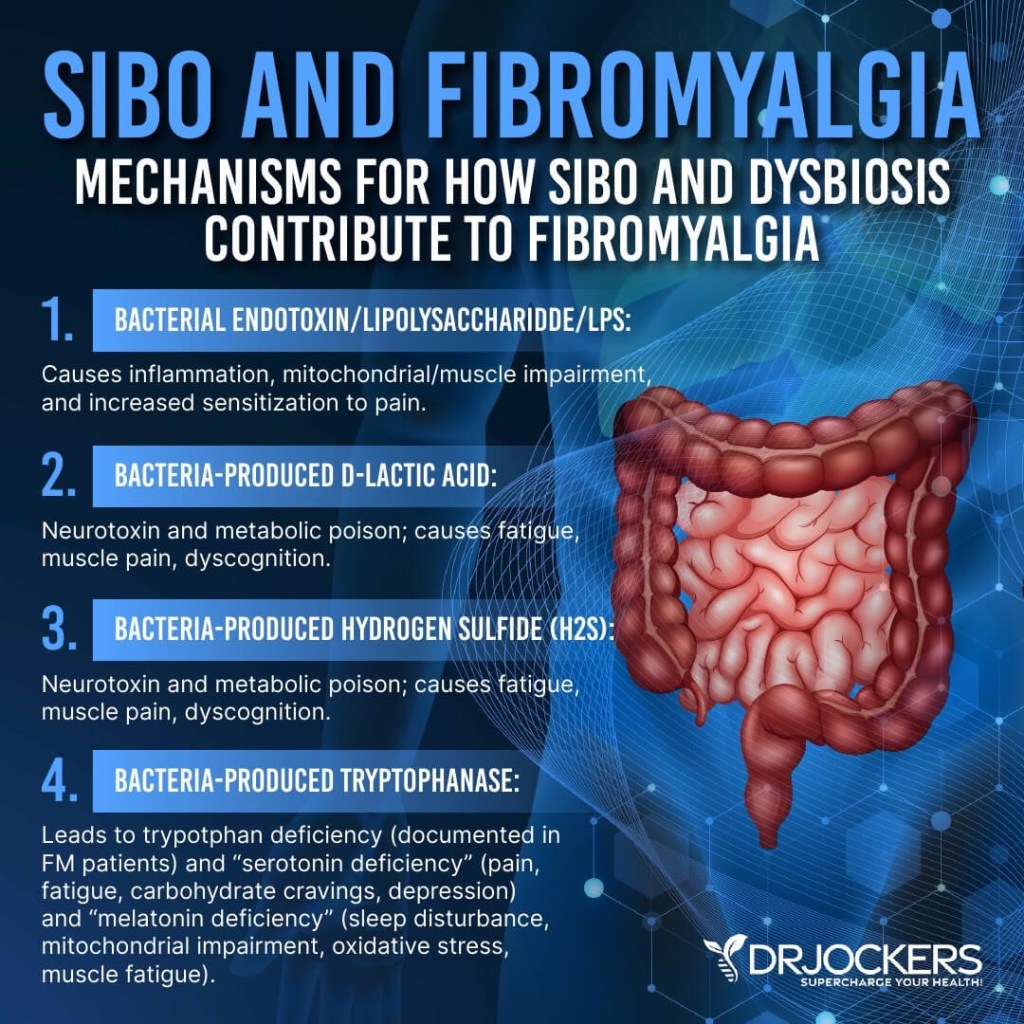
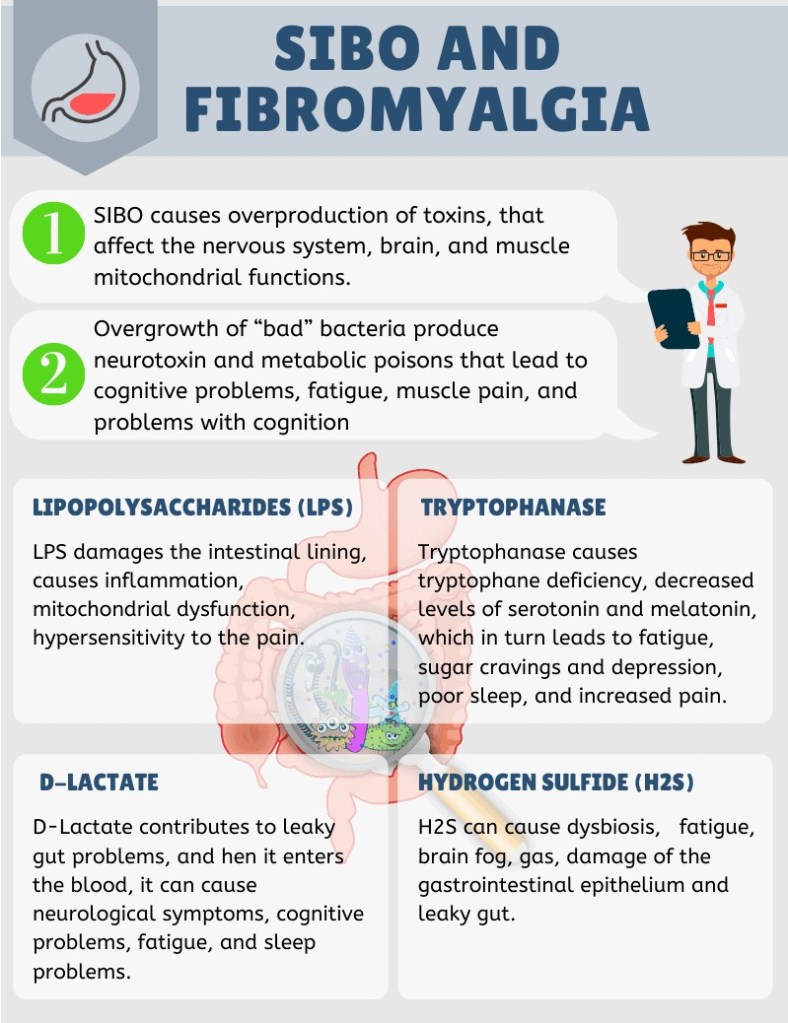
Out of curiosity I began googling fibromyalgia and SIBO – and found many studies indicating there is a correlation between the two conditions. Over the years, I have read that gut health needs to be corrected if one has fibromyalgia, but never understood the connection. I continue to do reading on how the gut biome can affect many health conditions to try to understand. Experts state the gut is connected to many parts of the body – including the brain.

Advertisements

In one study, 815 people were tested for SIBO using the breath test. 123 people in the study were known to have fibromyalgia. Out of the 123 people tested for SIBO, 96 tested positive. That is 78%. The study concluded that small intestinal bacteria over growth is associated with a fibromyalgia and when treated for SIBO intestinal symptoms improved. You can read about the study here.

Another study conducted in 2004, concluded that 100% of the participants with fibromyalgia had SIBO. This study can be found here

Advertisements

Even though these are both older studies the findings/results were consistent. I found a few other studies regarding SIBO and fibromyalgia, but due to very little information on the studies themselves, I chose not to include the links in my blog. I think this is due to the fact that the studies are older so only giving you the quick run down of the studies. It would be interesting to see some current studies on the subject conducted to see if the findings are still similar.

Advertisements

After beginning treatment for SIBO through herbal routes, I mentioned to a few medical doctors that I was being treated for SIBO. To my surprise, their response was, “What is that?” Medical doctors do not seem to even know what SIBO is – yet alone how to diagnose it or treat it. SIBO can be treated with antibiotics, but in my case heavy antibiotic use for seven months for lyme treatment was the culprit to why I developed SIBO in the first place. I was on several probiotics while on antibiotics to help counter act the gut biome from being destroyed – sadly in my case it didn’t seem to be enough and the SIBO bacteria got away on me.

Advertisements

After 4 weeks on various herbal supplements provided by the naturopathic doctor, I began to see improvements. The stomach bloating began to settle down, along with severe cramping, loss of appetite and severe diarrhea. Week 6 – has been fairly up and down with SIBO symptoms yet again. I am attributing the increase of symptoms due to having to switch to another supplement that may not have been strong enough to keep eliminating the bacteria.

I often wonder how I would have gotten the proper medical treatment without the naturopathic doctor being able to recognize the warning signs of SIBO – being medical doctors don’t seem to know what it is. I know I have several months left of treatment, but at least it is slowly getting better.

Next time you may be having major gut issues, consider SIBO as a possibility. You may have to advocate for yourself as many health care providers may not know what SIBO is.

Here is a good ebook i found online about SIBO symptoms. I thought I would include it for those interested in reading more information.

Advertisements

Beyond Fibromyalgia: Uncovering Lyme Disease and Its Impact on My Life

Hey Fibrofighters…

It has been forever since I have written a blog – just shy of 7 months was my last post release. I have not forgotten about you all! For those of you who follow my Facebook page, you all know I continue to post there fairly consistently along with monitoring Fibrofighter’s private support group. I first set out to just take a few weeks break from writing and then life happened….

Advertisements

In February of 2024 my fibromyalgia symptoms got severely worse. I assumed I was in a fibro flare up. The muscle pain turned into full body joint pain and the muscle pain seemed to be non existent. I rarely experienced joint pain since being diagnosed with fibromyalgia – it was usually always muscle pain. The sudden change, left me confused and scrambling to try to figure out what caused such a drastic change to take place. I knew I had confirmed osteoarthritis in my neck and lower back – I just assumed I had osteoarthritis in many other joints through out my body. The joint pain began to severely impact my ability to move. I tried every pain reliever, muscle relaxant, pain medication I was prescribed to help with my fibromyalgia pain over the years with absolutely no relief. I found myself laying in bed almost all day barely finding the motivation to even walk to the bathroom because my hips and knees were so sore. Even to weight bear made my knees want to buckle from the pain. I started having daily high fevers of 105 F , swollen lymph nodes and a sore throat as if I had strep throat. I felt like I had been run over by a bus. Although fibromyalgia can cause these symptoms it is usually not seen daily and at the severity I was experiencing. I had been on a wait list to see an infectious disease doctor to investigate more in depth.

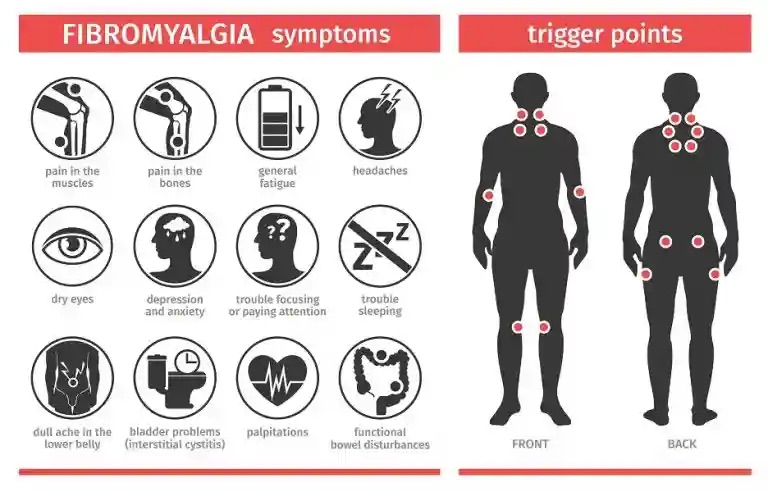
Some fibromyalgia symptoms. There are many more symptoms to fibromyalgia.
Advertisements

Fast forward to April 2024 – knowing I would be told by my doctor it was most likely fibromyalgia and it was just “part of the package”, I never really had an in depth conversation about the new symptoms or worsening symptoms. I did mention the joint pain in my shoulders and was recommended to attend physio. I declined this recommendation as I knew it was all my joints not just my shoulders. My blood work always comes back “pristine” as I am often told. Doctors always responded back stating it is “just fibromyalgia”. If you are reading this post and have fibromyalgia, you totally get the frustration that comes from this comment. The comment we all dread hearing because it makes us feel unvalidated, crazy and as if we are just exaggerating our symptoms. Doctors don’t refer to cancer as “just cancer”, why is fibromyalgia “just fibromyalgia”? Fibromyalgia in itself can be very debilitating and life changing just like cancer can be. I decided it was time to step out of my comfort zone. I reached out on Facebook- on a local group looking for a naturopathic doctor. I was at my wits end after a month and half of severe joint pain, fevers, swollen lymph nodes and a sore throat.

Advertisements

The local licensed naturopathic doctor reached out to me personally on Facebook messenger and we set up a phone call. After a 45 minute phone consultation the naturopathic doctor took me as an urgent new patient. We went ahead with the 2 hour initial assessment and by the time we were done she was confident in stating she was 95% suspicious I had lyme disease ( from a tick bite) and most likely a co infection of lyme. We went ahead with the Germany lyme test – I got a call with the results stating I was positive for lyme and a co infection. The lyme test indicated an active infection which had turned chronic – this means I have had lyme disease for many years making it harder to treat and no cure. All the answers I had been searching for, for years had been answered. I had many symptoms that did not align with fibromyalgia alone. The swollen lymph nodes, sore throat and fever mystery had been solved. Lyme and bartonella are the culprits. Sadly routine blood work does not usually indicate any signs of lyme disease. This part still confuses me – lyme is a bacterial infection, but regular blood work did not indicate any bacterial infection in my body. This is because lyme is smart and can make itself undetectable and hide in tissues instead of the blood. It can even disable the immune system from producing antibodies against the bacteria in order to survive. Lyme disables the innate immune system – which is our body’s first defense against “intruders” ( bacteria or germs). Lyme also produces extremely high inflammation, but does not necessarily show on an inflammation blood test. My body inflammation was low, but lyme was causing inflammation to take place in all my joints. The way I see it ( this is just my personal opinion), lyme defies the scientific world and what doctors are taught in medical school. If lyme can outsmart even the scientific world, what is it really capable of doing to the human body? I try not to over think the possible answers to this question because it becomes overwhelming and my anxiety begins to rise.

Advertisements

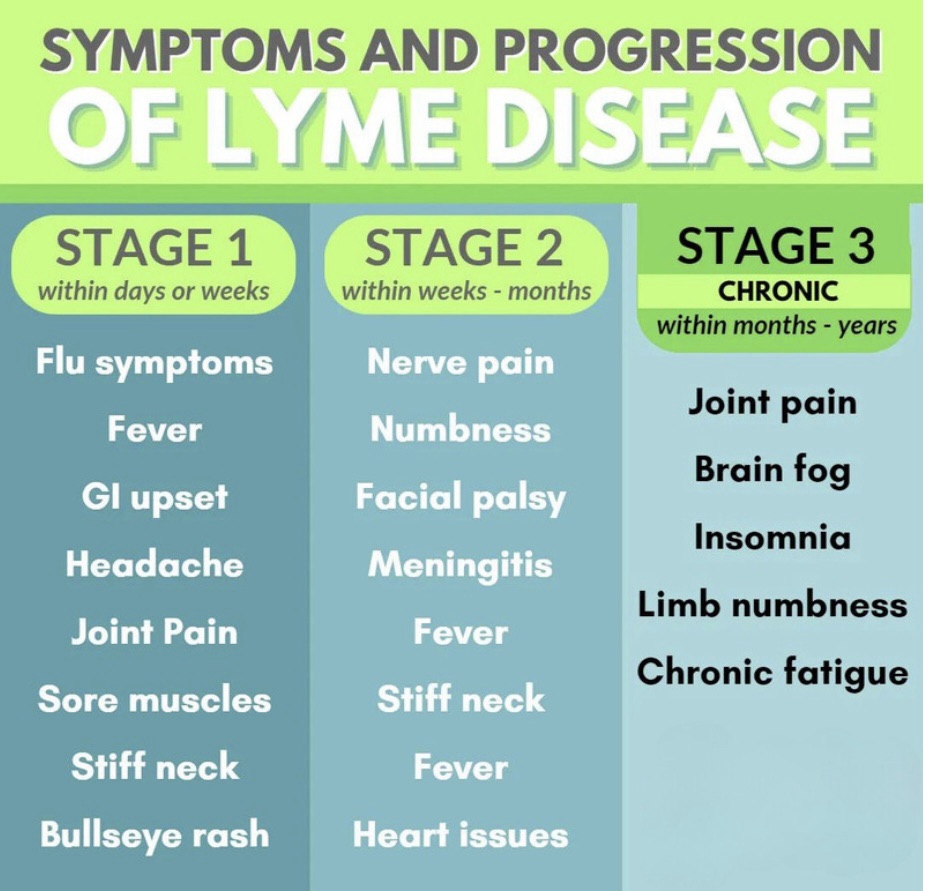
Lyme disease is often misdiagnosed for fibromyalgia because both conditions have many over lapping symptoms. I won’t be going into the over lap in this blog post, but I will be sure to write a blog with this information in the near future. Sooner rather than later!
I started treatment for lyme at the end of April 2024 and it has been a horrendous road thus far. It is definitely not as simple as taking antibiotics for say strep throat or a chest infection. I was not prepared for how sick I would become 2 hours after taking the first dose of antibiotics. I was bed ridden for the first two months of treatment. I thought my symptoms were bad in February and March, it got much worse. I had to learn how to manage a whole new diagnosis, how to treat, manage side effects from supplements and medications and mentally come to terms with the diagnosis in a hurry. I am coming to the end of month four of treatment and still feel lost in this new journey. Chronic lyme means the bacteria has made it into every part of my body – Every tissue, every joint, every organ and has even passed the blood brain barrier. I have many years ahead of the unknown. Our hope is to eliminate as much bacteria as we can and put the lyme into remission. The sad part is chronic lyme can never be fully eliminated. Even if I am lucky enough to get to remission, a stressor or catching even a bad flu could trigger dormant bacteria out of hiding and the infection becomes active again. I have a long road ahead, but when I got diagnosed with lyme I decided it was time to take my life back!

Advertisements

My advice to you all:

  1. If you feel it is more than fibromyalgia never stop looking for answers. Never assume every symptom you experience is fibromyalgia related. Make sure to mention new or worsening symptoms to your doctor.
  2. Trust your gut instinct! I knew deep down that something was extremely wrong, but general doctors often miss the symptoms of lyme. The naturopathic doctor I reached out to is lyme literate and trained to treat lyme.

3. Advocate for yourself. If you don’t stand up for your medical needs, who will? You know your body the best. You know when something is not right.

Much love

Fibrofighter

Fibromyalgia – It is okay to not be okay…It does not make you weak!

I saw the above picture being shared over and over on many chronic illness/pain and fibromyalgia communities. I often share my belief that it is okay to have days where your chronic condition wins. Trying to find relief and battling our own bodies day in and day out can be exhausting in itself. I am definitely struggling with this lately myself. How do we keep pushing forward when there is no cure for fibromyalgia? Some days I wonder how I do it myself – reality…we are not given a choice. However, it can become very discouraging and daunting at times.

Advertisements

I was recently scrolling through a fibromyalgia advocate’s Facebook page and came across a few facts about fibromyalgia. I am unsure where these stats came from, but from a 2021 post she shared… “Of the currently available medication treatment for fibromyalgia, only 40% of those with this medical condition find mild to moderate relief of their symptoms.” To put this into further perspective that means out of 22,200,000 people world-wide with fibromyalgia only 8,800,000 find any relief! That leaves 13,320,000 million with fibromyalgia with NO relief at all for their symptoms. I am sure the stats read a bit different now as we are nearing the end of 2023 and these stats were from 2021 – however the point is so many people world-wide are left without relief. No break from fibromyalgia.

Advertisements

I am one of those 13,320,000 people with fibromyalgia who has found little to no relief from many of the symptoms. I have tried many different strategies to try to diminish symptoms and improve my overall quality of life. I think health care providers often forget that pain and fatigue are not the only symptoms we suffer head on from fibromyalgia. Did you know fibromyalgia has over 300 possible symptoms? Yes! You read that right. Most likely a person won’t ever have 300 of the symptoms at one time ( or even develop all 300) – but many symptoms begin to pile up on top of one another and we are left scrambling to remedy these symptoms (without much guidance). The pain and fatigue is enough to deal with on their own. I’ve once noted over 50 fibromyalgia symptoms in one day. It is near impossible to try to even diminish 50 symptoms at a time! These are the days I allow my chronic condition to win. These are the days I shut the world out and sleep my day away because trying to remain put together and functionable are just not realistic goals. If you haven’t already read my blog post about how having a chronic illness/condition can become a full time job, you can read it here!

Advertisements
Advertisements

I often say that fibromyalgia will not win nor define who I am, but lately I feel like it has won. Some days I feel like I am wasting what little energy I do have on trialing and erroring different strategies to maintain fibromyalgia – in most cases the strategies back fire and I find myself bed ridden for days on end. Some days I stop and wonder if I should just enjoy the good days instead of worrying about making sure I add in exercise or another management strategy because that is what the medical system expects. Maybe instead – I should be out having lunch or having a coffee with a friend. Many of us who live with fibromyalgia feel like we are just existing and not really living anymore.

Advertisements

For those of you reading this who do not have fibromyalgia – experts state that in order to understand the severity of chronic fatigue alone that fibromyalgia can create – you must stay awake for three consecutive days. 72 hours without sleep and continue on with your daily routines. Signs of sleep deprivation set in after 24 hours of no sleep and become evident to people around you. Here is a fact: after staying awake for 24 hours similar cognitive effects of a blood alcohol level of .10% begin to take place. That is actually higher than the legal blood alcohol level to drive! Sure puts things into perspective. Here is a breakdown of what happens to ones body after 72 hours of no sleep.

Advertisements
Advertisements

Usually I write to inspire and encourage everyone who reads my blog posts. However today’s blog I decided to write realistically and from the heart. After all a blog is meant to be realistic and personal. I am sure many of you reading this can relate 100% to being so discouraged at times. Negative thinking takes over and it is difficult to pull ourselves out of this cycle. I always say – it is okay to have bad days – just don’t unpack and live there! Gentle hugs to all who need it. Don’t forget – no matter how bad of a day you have or situation there is always something yo be grateful for ( no matter how small it is).

Advertisements

Fibromyalgia: Doctor-patient relationship. How does empathy make a difference?

I have been reading the book, ” The Invisible Kingdom”, written by Meghan O’Rourke. The chapter on doctor-patient relationship really resonated with me. I grew up in a smaller town, were your family doctor had the time to spend an adequate amount of time with you during appointments. It wasn’t out of the ordinary to ask how life was going and have a short personal conversation about family. Today, with such a shortage of doctors (in many areas of the world), finding a family doctor is near impossible. We are left attending walk in clinics, where you end up seeing a different doctor every time. Doctors and patients are not even given enough time in appointments to discuss medical concerns. We are often told to limit our visit to one or two health issues to discuss and only have maybe ten minutes in which to do this.

Advertisements

People living with chronic conditions, have a difficult time discussing one topic in an appointment yet alone two health issues. Having such limited one on one time together, I feel that the doctor- patient relationship is slowly beginning to fade away and has become a thing of the past. In “The Invisible Kingdom” the writer explains that doctors don’t seem to display much empathy towards patients anymore. I believe many of us suffering with fibromyalgia have been in many situations where empathy has failed to be shown. However, research states that doctors should take the time to empathize with each patient. Showing empathy often results better.

Advertisements

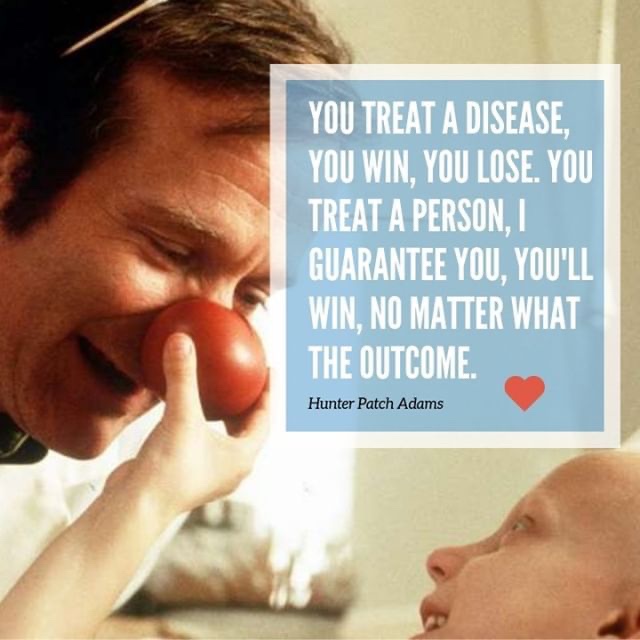
Have you ever watched the movie “Patch Adams” with Robin Williams?! It is actually based on a true story. If you have never watched it, I recommend it! “Patch” admits himself into a mental institution for suicidal thoughts at the beginning of the movie. After witnessing how doctors treat the other patients and himself while in their care, he quickly discharges himself from their care and sets out on a mission attending medical school. He graduated becoming a doctor. His goal was to help other people – taking into consideration the PERSON not just the illness. He wanted to connect with each and every patient he encountered. Patch was set out to bring joy to all patients – no matter how grim of a diagnosis they had just been given. He gained patients trust and made a huge difference in many peoples lives.

Advertisements

Empathy and compassion in a doctor-patient relationship can make a huge difference. Both qualities are said to be highly effective and powerful. Empathy requires health care providers to put themselves in the patient’s shoes. If the physician takes the time to pay attention to a patient’s emotions a caring treatment plan can be created. A well thought out ,treatment plan will have positive results instead of negative.

Advertisements

In one study, 2898 patients took part who suffered from moderate to severe chronic pain. The same doctor visited each patient at baseline, 1, and three months – having each patient fill out questionnaires. At the end of the study it was reported that chronic pain significantly decreased. It is said that by showing empathy patients are more likely to adhere to treatments and more improvements are seen. This study did not state if people with fibromyalgia were part of the study, but regardless it revealed how powerful empathy can be. You can read the results of this study here.

Advertisements

Empathy not only allows the doctor and patient to connect on a better level, it also is proven to lower a patient’s anxiety levels. In fibromyalgia, stress and anxiety are one culprit of raised pain levels and other symptoms. I’ll use the pain clinic I attended for an example. The clinic began to have a very negative effect on my health. I was beginning to have anxiety attacks the day prior to my appointments – which then led to a full blown fibromyalgia flare up the following morning. I never saw eye to eye with a few of the pain clinic staffing who were directly involved in my care. When I stated I felt my fibromyalgia may have been triggered by a knee injury I got the spring prior, I was told an injury was not a possible cause of fibromyalgia. An injury is considered trauma – trauma is a possible cause of fibromyalgia is it not? As the months went on staff began belittling me and told me I was making their job too difficult. I complied with treatment, but when I expressed my frustration to the mental health counsellor that all strategies were only increasing my pain – I got told I was being too negative and that mental health would not continue to see me. I always thought psychologists and counsellors were there to help a person through the tough times and help change the negative to more positive thinking. “Making their job too difficult “- in my eyes this meant they didn’t know what else to do to help me – so they put the blame on me. It is easier to blame the patient then admit the program failed to help me. I often wonder if empathy was used, if I would have had a better outcome? I soon realized I was just a number to push through their pain clinic program so it would free up a spot for their long wait list. They eventually discharged me without even speaking to me first.

Advertisements
Advertisements

Here is a video I found that brings a powerful meaning on empathy. It has been viewed 6.9 million times.

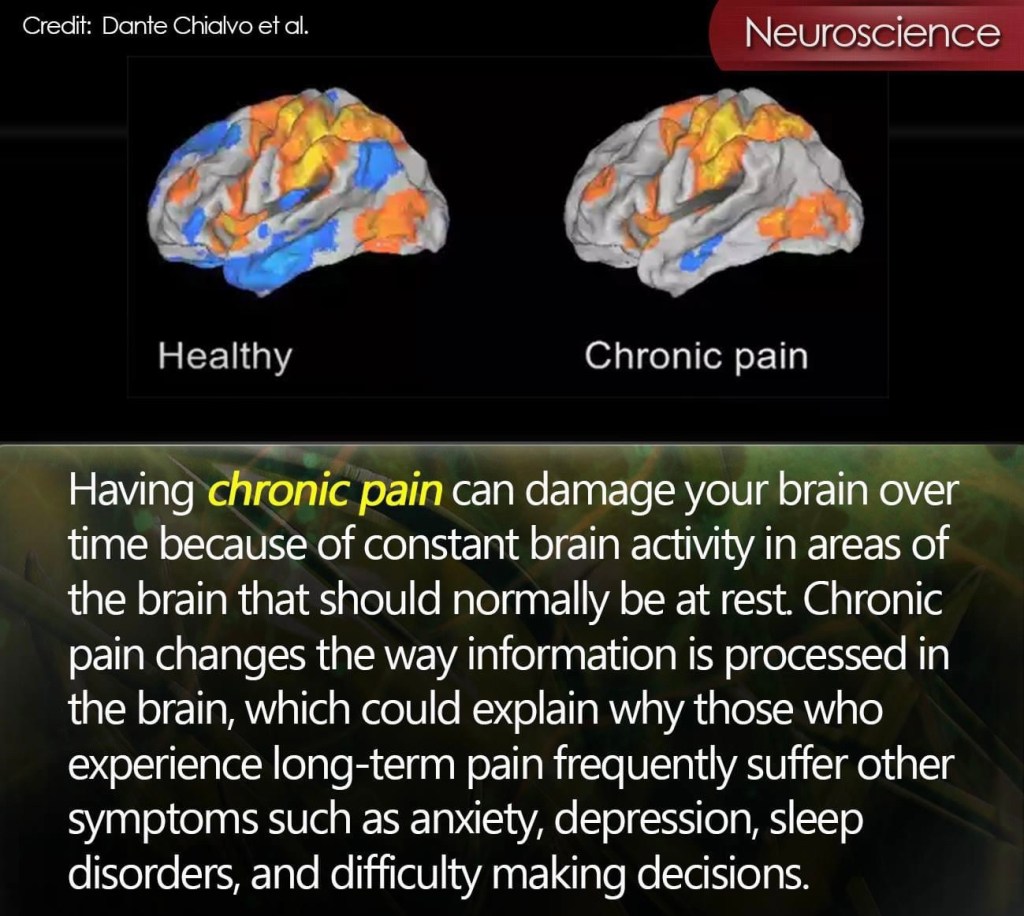
Chronic pain appears to change the brain. Does it cause damage? According to research, chronic pain can possibly can damage our brain

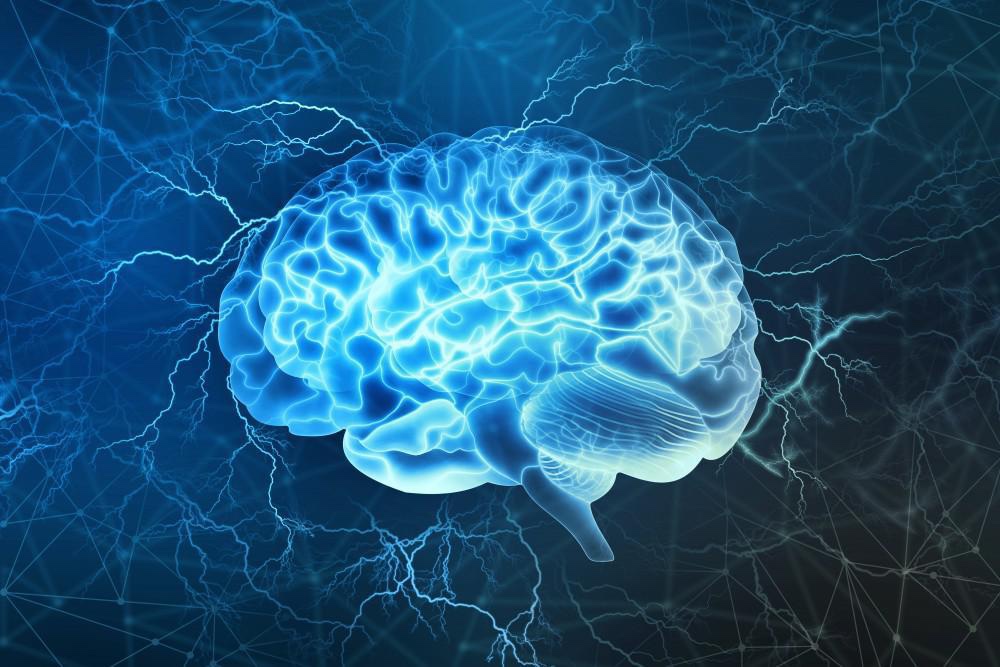
According to experts, fibromyalgia has a neurological component. In fibromyalgia the brain interprets all stimulus as pain – when it really isn’t painful. In return our brain misfires pain signals all over the body causing chronic pain to form. Have you ever stopped to think about what happens to our brain if it is constantly at work sending pain signals out? You may be surprised.

Advertisements
Advertisements

In a healthy brain, all the regions exist in a state of equilibrium. When one brain region is active, the other regions should not be as active. However, chronic pain causes the front region of the brain ( responsible for emotion) to never deactivate. It is always in “full throttle” – meaning it is always fully active. The constant activation can wear out neurons ( information messengers) alternating connections to each other. Researchers used MRI scans to scan the brain a group of people with lower chronic back pain and a pain free group (control group). What they found was that parts of the cortex were activated in the pain free group and others were deactivated ( maintaining the equilibrium). Your brain cortex is responsible for memory, thinking, learning, reasoning, problem-solving, emotions, consciousness and functions related to your senses. However, in the chronic pain group, one of the nodes did not quiet down. Researchers state that then constant firing of neutrons could cause permanent damage. The connections could die because they can’t sustain high activity for this long without a break. People with chronic pain have pain 24/7 – which makes areas of the brain always active. This could hurt the brain. You can read the article here.

Advertisements
Advertisements

In another study in 2007, researchers discovered that people with fibromyalgia, grey matter of the brain is lost. We lose grey matter as we age, but it appears that fibromyalgia may speed up this process. The study revealed that fibromyalgia patients showed a reduction in grey matter and total brain volume compared to the healthy control group. The grey matter that was lost occurred mainly in the regions of the brain related to stress and pain processing. In areas of the brain, the parahippocampal and frontal cortices, the grey matter lost is consistent with cognitive deficits of fibromyalgia ( cognitive impairments seen in fibro). Grey matter atrophy is partially reversible. Grey matter irregularities caused by chronic pain do not reflect brain damage. It will normalize when the pain is treated or under control. You can read this study here.

Advertisements
Advertisements

Both these articles sure made me think and evaluate the neurological aspect of fibromyalgia. Are the changes in the brain that were discovered in these two studies, the reason behind some fibromyalgia symptoms or even a cause to why fibromyalgia may develop? I do not have the answer, as I am not a scientist. I believe a wider study is needed to verify the above findings. These are only two smaller studies completed.

Advertisements

You can’t put a time limit on learning to manage fibromyalgia or any chronic condition

When I first got diagnosed with fibromyalgia I was set out to fix myself – the doctor wrote a letter to keep me off of work for two weeks to try to figure out how to get a handle on my fibromyalgia. Little did I know, learning to manage fibromyalgia was not just a two week process. My two weeks on medical leave ended before I even figured out what fibromyalgia was! Weeks turned into months, then a year – Here I find myself three and a half years later. I have realized you can’t put a time limit on learning to live with fibromyalgia – as it can change drastically in minutes. After all – it is considered a chronic condition.

Advertisements

My doctor referred me to a persistent pain clinic after I had a rheumatologist confirm my fibromyalgia diagnosis. Pain clinics usually function as a multidisciplinary team. The team works together to help relief pain and help you learn how to maintain the pain on a daily basis. I had high hopes when I finally got a call back to come in for my initial appointment. After a few appointments at the pain clinic I soon questioned myself to whether I made the right choice in attending a pain clinic. There are many mixed emotions on pain clinics. Some people feel they have benefited from them, while others are at the totally opposite end of the scale and express they have not helped manage their chronic pain at all. My experience was by far the worst experience of my life.

Advertisements

With that being said, I come to my first word of advice about learning to live with fibromyalgia.

1. Take your health into your own hands and take responsibility. Don’t wait for someone to “fix” you. I soon realized that many health care providers did not want to help guide me in trying to manage my fibromyalgia. It is not our fault we got diagnosed with fibromyalgia, but it is our responsibility to step up, and try to improve symptoms.

Advertisements

2. Learn your limitations! Do not let anyone else determine these limitations for you. You know your body best- especially if you learn to pay attention to the warning signs! I always explain to doctors that I know I am close to my limit by a certain level of pain or fatigue at the time. No one else can determine this, but YOU! Obviously everyone has a different pain threshold and tolerance. It took me months to realize when to stop and rest. I can’t even begin to put it into minutes. Usually we are asked by health care providers how long can we work at a task before the pain or fatigue set it. I stopped trying to explain this to people in minutes, because frankly it changes everyday. I now explain – until I feel a certain pain level or fatigue.

Advertisements

Let’s talk about pain threshold for a second. A pain threshold is a ” minimum intensity at which a person begins to perceive a stimulus as being painful.” If you push yourself way over this pain threshold – you will experience more pain or a fibro flare. Experts say to push yourself just above this threshold line, to allow your pain tolerance to slowly increase.

3. Learn your strengths! I learned a long time ago, instead of concentrating on weaknesses, one should find their strengths. Your strengths can help build up your weaknesses. If you focus solely on your weaknesses you may feel defeated. Fibromyalgia can bring about many weaknesses/limitations. By building off your strengths, one will be more motivated and involved in their treatment routes too! Example: I may be able to walk for 10 minutes at a time. Before fibromyalgia took a front seat I could walk hours on end. However, walking 10 minutes is a strength in my eyes. Not my weakness. I can still walk and move! A ten minute walk is better then zero? Correct?

Advertisements

4. Don’t compare yourself or allow anyone to compare you to others. If you know others with fibromyalgia and you are also faced with having to learn to live with fibromyalgia – don’t compare yourself to them. Don’t let health care providers compare you to other patients with fibromyalgia either! Your fibromyalgia journey is your own. You can’t begin to compare yourself to others. You may experience the same symptoms, but the way your body responds will be far different. I’ve had health care providers tell me they saw success when a specific patient did a certain exercise routine. That same routine caused me flare ups every time.

Advertisements

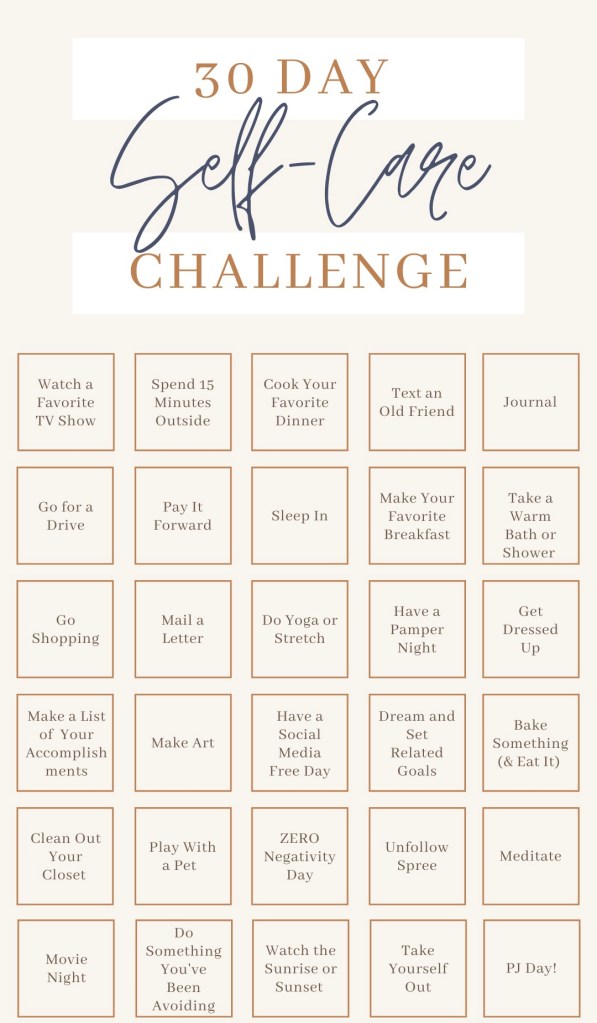
5. Self care is not negotiable. Life gets busy and it begins to pass by in the blink of an eye. Our schedules get hectic and we often forget to take those moments for self care. I soon realized when living with fibromyalgia, self care is not an option – it is a SURVIVAL tool. You must take those moment to indulge self-care practices – even if it is five minutes to watch the last few moments of the sunset disappear behind the horizon while you drink a cup a tea from your favorite coffee mug. There are many other ways to take part in selfcare. Try a 30 day self care challenge like the one below!

Advertisements

6. Learn to live life at a slower pace. Ever hear the saying, ” stop and smell the roses!” It simply means slow down and enjoy life. It is hard to enjoy life when we live in constant pain all the time, but living with fibromyalgia has taught me to slow down and look at life a little differently. When I slowed down ( I was always on the go) my pain levels began to lower. Having a slower paced life, does not mean you have failed. It means you are doing what your body needs – and that is okay!

Advertisements

Now is all we have. We don’t know what an hour from now will look like or even what tomorrow will bring. One moment you are feeling well enough to get something done, the next there is severe pain ruining your day. The unpredictability of fibromyalgia had made me realize I have to live in the NOW. Is this why we are often told to work at being more mindful? Did you know practicing mindfulness can help relieve stress, lower blood pressure, reduce chronic pain, and improve sleep!

Advertisements

I have come to the conclusion learning to manage fibromyalgia is a lifetime process. You cannot put a time limit on this process. I found when I did try to set a time frame, I became frustrated and discouraged when those goals were not met. Day by day – or better yet minute by minute!

Four reasons I blog about my fibromyalgia journey…

You may be wondering why I write and blog about my fibromyalgia journey. There are many different reasons behind why I began blogging. Many people probably think I blog to receive attention – wrong assumption! Here are the reasons I began blogging…

Advertisements

1. After being diagnosed with fibromyalgia I soon learned that I was beginning to journey down a pathway that many health care providers and people do not understand. I realized fibromyalgia was recognized as a condition, but it is very much misunderstood. After different “treatment” routes attempted and no improvements noted, my frustration soon set in. I figured people all over the world who are diagnosed with fibromyalgia, must be feeling the exact same frustration as myself. It took me a long time to find the courage to begin my blog, because I was afraid of being judged or my blog would simply fail. After months of deep consideration I started my website and promoted as much as I could. My goal was to help other fibro fighters feel not so alone. Chronic illness can be just that- lonely. It becomes a journey that is only understood by those directly affected by fibromyalgia.

Advertisements

2. As I research to write blog posts, I learn more information about fibromyalgia. I’ve learned a lot of new information about fibromyalgia – probably more then most health care providers I have seen know. Most doctors know the basic information about fibromyalgia, but are they able to provide information on all the previous fibromyalgia studies completed? Probably not. The more I research, the more quality information I can also share for you all.

Advertisements

3. Through blogging I am able to find purpose in life. Since being diagnosed with fibromyalgia I had to stop working, give up my career I trained in and stay home most days to learn to manage my fibromyalgia. I felt a loss of identity ( which is often felt by people with chronic illness). As human beings we seek purpose in life. We wake up, go to work, work towards a goal, ect. When one is diagnosed with chronic pain such as fibromyalgia, our whole life is turned upside down. I find since I started my blog I have a sense of purpose back. Blogging gives me a goal to work towards – helping others. It brings a sense of accomplishment when I see people connecting to what I have written! When you have purpose, you are more likely to actively seek self management for your fibromyalgia!

Advertisements

I came across a 2018 study which stated that “regular blogging is potentially useful for people with chronic pain as it provides a conduit to enable them to connect with others who understand and share their experiences of pain, possibly encouraging increased participation in personally meaningful life activities, positive pain management experiences, and social connectedness.” You can read the article here.

Advertisements

4. Raising awareness and fighting stigmas. Writing about fibromyalgia raises awareness – especially if people without fibromyalgia read my blog posts. My posts give people the opportunity to read and understand what living with fibromyalgia is really like. My blogs also help spread fibromyalgia information/awareness to anyone who has just recently been diagnosed as well. When you are newly diagnosed, it can be overwhelming. There is also such a stigma attached to a fibromyalgia diagnosis – even if I can make a small change in one person’s attitude towards chronic pain- I have succeeded!

Advertisements

There you have it! The four main reasons I decided to begin blogging about my journey with fibromyalgia. I hope as you read my blog posts, at least one post resonates with you!

Advertisements

The Spoon Theory – What is it and how to use it?

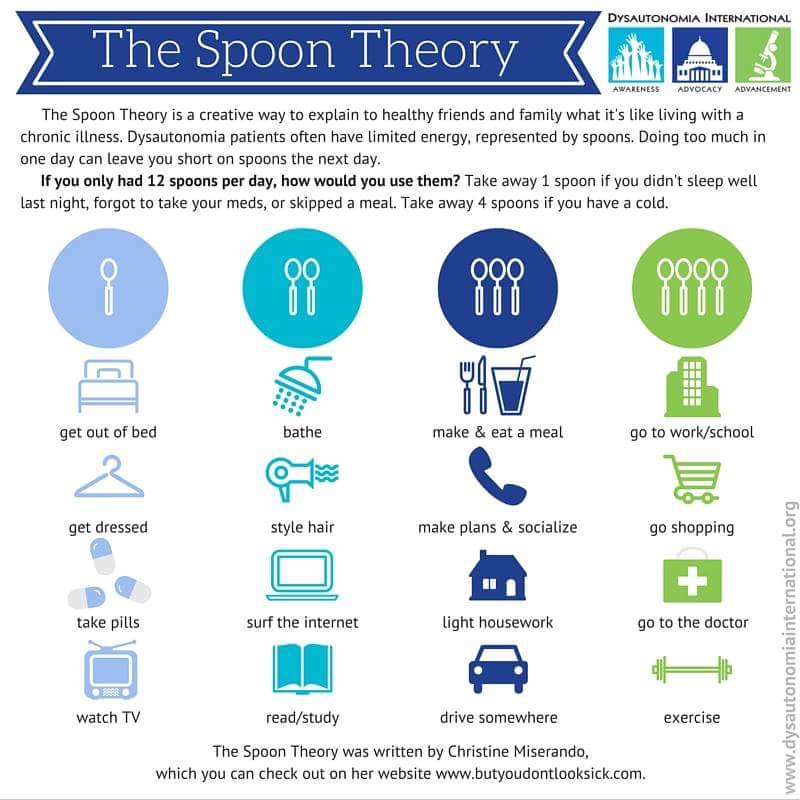
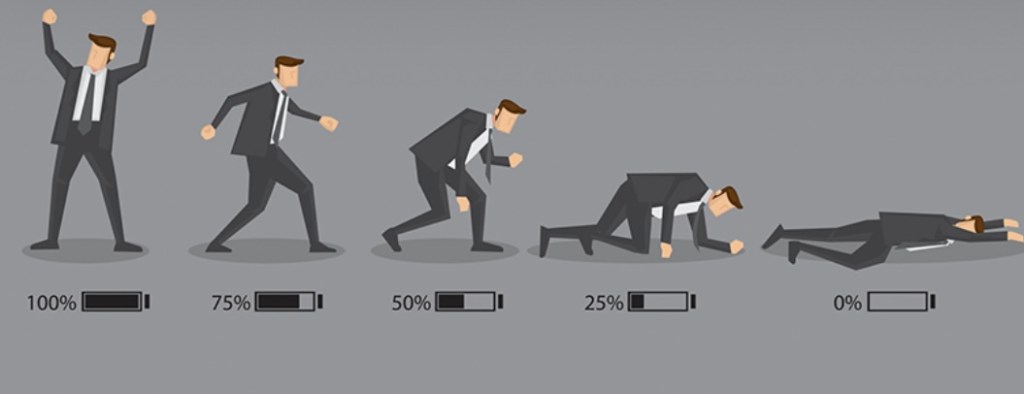
Have you ever heard of the spoon theory?! The spoon theory was created to help give a visual picture to help illustrate the energy limitations on people who live with a chronic illnesses ( which included chronic pain). The spoons represent a unit of energy. Every task you work at during the day uses up a spoon – depleting your energy reserve. Some tasks use more spoons then others. This theory not only helps people living with the chronic illness, but also helps those living without a chronic condition understand those who live with chronic illnesses.

Advertisements

The spoon theory is usually based on a 12 spoon count. You begin each day with 12 spoons. If one doesn’t get a good nights sleep, forgot medications or even skipped a meal immediately take a spoon away. If you have a cold or are sick automatically take four spoons away. Imagine starting your day with limited spoons. How would you function?! For example, you have a cold bug, were too exhausted to eat supper the night before, forgot to take your evening medication and did not sleep well. That leaves you 5 spoons left for the day.

Advertisements

I was introduced to the spoon theory in the fall of 2022. Before this I had never heard of this theory before. I wish health care providers would have shown me this theory long ago. We are often told to pace ourselves during the day, but most of us struggle with what pacing looks like when factoring in chronic pain. When given the visual aid of the spoon theory, we are able to understand how to be economical in how to spread and use our energy ( spoons) through out the day! I try to refer to this theory so I remember to pace myself everyday.

Advertisements

To “replenish” spoons a person needs to rest or take breaks between tasks to allow energy reserves to build back up. Keep in mind, just because you rest between tasks, does not necessarily mean your energy will rebuild. If you are like me, once I hit my limit for the day, no matter how much I rest, my energy does not seem to rebuild. Example. If I clean the floors in the morning and then rest for a few hours, my energy is still not replenished by the evening. Even though I use pacing the day, I still find myself exhausted. To help replenish spoons practicing self-care can help restock your energy.

Advertisements

Here are a few examples of what helps me replenish my energy ( your list will look different)

1. Music

Advertisements

2. Resting in bed

Advertisements

3. Reading

Advertisements

4. Time with pets

Advertisements

5. Puzzles

Advertisements

6. I recently found a few guided meditation sessions that relax me so much that I am almost asleep at the end of them.

Advertisements

There are many websites out there explaining the spoon theory in greater depth. If you need more examples of which tasks use how many spoons, I found looking under images on google have a lot of different visual aids with different tasks. For more information on the spoon theory visit: here.

I asked! You shared! What advice would you give to a fellow fibrofighter!? 40 answers shared

I asked the following question on many different social media platforms. “What advice would you give to a fellow fibrofighter?” I asked. You all shared. I decided to put together a post sharing all these wonderful ideas and tips. I hope those reading these can find some comfort, useful tips and feel understood.

1. Give yourself permission to take as many breaks as you need and don’t ever feel lazy or guilty about it!

Advertisements

2. Slow down! Don’t push yourself!

Advertisements

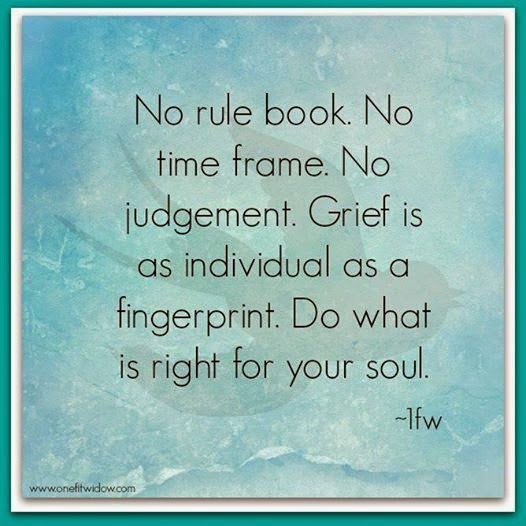
3. Give yourself time to grieve.

Advertisements

4. Advocate for yourself.

Advertisements

5. Adaption and acceptance are long term processes, they don’t come over night. You will develop routines that help you adapt to situations better.

Advertisements

6. Know your limits!

Advertisements

7. Having compassion for yourself is so important. Take things slowly and listen to your body.

Advertisements

8. Learn to pace and read your body’s signals. This isn’t something anyone can teach you. It is something you have to figure out on your own. How much can you do in a day? How often you should take a break? How much exercise does your body needs and how much is too much? Only you can answer these questions!

Advertisements

9. Breathe. Remember to breathe!

Advertisements

10. Take it one day at a time. You have good days and bad days. Give yourself credit for what you can do and don’t beat yourself up over what you can’t do.

Advertisements

11. It is okay to be frustrated by fibromyalgia. Especially since there is no cure. Don’t dwell on it, but allow yourself to grieve.

Advertisements

12. Accept modern medicine will not cure fibromyalgia. Look at other aspects such as diet and exercise.

Advertisements

13. We shouldn’t belittle another’s pain. We feel things a little differently then the average joe. Others may not have the same pain tolerance! What may bring the average joe to their knees is something most of us deal with on a daily basis. For them it is more shocking, dramatic and immediate.

Advertisements

14. Don’t push yourself to the point of exhaustion, because that just makes it worse.

Advertisements

15. Listen to your body. If it tells you to rest, then rest.

Advertisements

16. Fibromyalgia is a long haul situation. Try to accept that now. I think acceptance makes life easier.

Advertisements

17. Don’t be ashamed to use mobility aids if you need to! It does not mean it is the end of the world. Those aids are there to help us, not shame us.

Advertisements

18. Find your new normal, slow your pace of life and say NO if you have to!

Advertisements

19. You don’t have to fight all the time. Retreat and regroup!

Advertisements

20. Be more purposeful with your days. By that I mean instead of just trying to get through them, try to be actively present throughout the day. Check in with your mind, body and surroundings often. Catching any off moments, can prevent the pain from getting worse.

Advertisements

21. Look after yourself. Do things according to how you feel and how your body feels. Don’t pressure yourself and be patient!

Advertisements

22. Keep up on electrolytes. We burn through them faster then people without fibromyalgia.

Advertisements

23. Deep relaxation and meditation helps.

Advertisements

24. You are not weak. Having to survive and get by in daily pain is something only tough people can do! Let the insensitive comments roll off your shoulders.

Advertisements

25. Find new hobbies you can succeed it. It helps take your mind off the pain!

Advertisements

26. Do something every day that warms your heart!

Advertisements

27. Do your best, because that is good enough!

Advertisements

28 . Do not give up. Pain is real. It is very tough, but not stronger then our hope!

Advertisements

29. You don’t have to try to be positive every second of every day! It is okay to say, ” this is really S***. I can’t do this today and wallow. As long as it isn’t everyday!

Advertisements

30. I tell myself, ” yes today is rough” and I allow myself to take it easy!

Advertisements

31. Don’t try to do everything all at once. Don’t feel guilty or berate if you are not able to get things accomplished. Do listen to your body. Rest when you need to.

Advertisements

32. Be patient and gentle with yourself. Remember every day is different.

Advertisements

33. What works for one person might not work for someone else. Keep trying different things.

Advertisements

34. You don’t have to validate your pain to others.

Advertisements

35. Accept that a sofa day is not being lazy, it is healing yourself.

Advertisements

36. Accept that not everyone will understand that your pain is real. Don’t worry about them, worry about you!

Advertisements

37. Don’t be scared to ask for help. If people offer you help, don’t be afraid to accept it.

Advertisements

38. Focus on what you can do, rather then what you can’t do! ad

Advertisements

39. Don’t let family or friends push you into doing more than you can.

Advertisements

40. Do not let fibromyalgia define who you are!

What I wish I knew early diagnosis of fibromygia!

1. Learn to slow down and pace myself! Fibromyalgia requires you to slow down so you don’t cause a flare up to form! It also helps reserve energy. I wish I was told this earlier on. I could have prevented so many flare ups from forming. You may not get everything done that you wanted to in a day and that is ok. Learn to prioritize what is most important. There are many days where I have a list of things I want to get done. I may only get to one or two on the list.

Advertisements

2. Health care providers stress self care with fibromyalgia! I wish I knew how important this truly is when dealing with chronic pain. Most times our lives get so busy to even factor in self care, but once you are diagnosed with fibromyalgia or any chronic pain condition self care becomes so important. Make sure to take the time for you! Even if you can’t manage to take say 30 consecutive minutes, I am sure 5 minutes is possible. I noticed once I started to take time for me to wind down or relax my pain levels stay a bit lower.

Advertisements

3. I wish I would have known how important self advocacy was earlier on! I was always too scared or shy to speak up. After 3.5 years I have learned to use my voice! After all, we know our body best and know what may work and not work by gaging from our limitations. I feel by not speaking up sooner, I have now gotten labelled as being “difficult” by many health care professionals. It is not that I am difficult, I now know what works and what doesn’t. Repeating failed treatment routes is not where I want to find myself. It only causes frustration and anxiety to form!

Advertisements

4. I wish I knew that there was more to fibromyalgia than just chronic pain! When we see the list of possible symptoms that can occur along side fibromyalgia, we often think it isn’t possible. Reality is it is possible! As the months pass, I often find myself dealing with a new symptom.

Advertisements

5. Fibromyalgia is not a uniform condition. Everyone’s fibromyalgia journey will look very different! What works for some people, will not work for others. Do not compare yourself to others with fibromyalgia. This is not how the condition works. Remember, your body does not read like a textbook. Just because a symptom or solution is listed on a site or book, doesn’t mean it will be successful! Keep exploring ideas for relief if one option fails. I have watched several attempts fail, but I keep searching for something new to try!

Advertisements

6. I didn’t realize I would grieve my diagnosis before I could accept it! Fibromyalgia is a very debilitating condition with no cure. It took me three years to come to terms with the fact that my life is very different now. Fibromyalgia takes a-lot away from a person and you need to learn to accept and adjust to the new normal! Don’t feel weak if you are grieving. Grieving does not make you weak!

Advertisements

7. That I would come across many people who do not understand fibromyalgia. There will be many insensitive comments and gestures be made. Remember, it is lack of knowledge and understanding fibromyalgia at work here! Many doctors and health care providers don’t quite understand fibromyalgia themselves. Friends and family may make remarks that are hurtful and insensitive! Try to share information you know to be true about fibromyalgia to help educate people around you – to be able to somewhat understand the condition!

Advertisements

8. How exhausting fibromyalgia actually is. We are always told that fatigue is a symptom of fibromyalgia, I never realized how much fatigue would control my life. The exhaustion is not simply just being tired. It is a complete life altering fatigue to the point where it can become difficult to take care of your basic needs. Early diagnosis I had fatigue, but it has gotten worse over the years. Every task no matter how small it is, just drains every last energy reserve I had built up!

Advertisements

9. I wish I would have known how important it is to listen to my body. As the saying goes your body never lies to you! If your body is telling you to rest, then rest. It is what it needs at that moment. We learn that being in tune with our body becomes an important survival mechanism needed when dealing with fibromyalgia.

Advertisements

10. I wish I knew the amount of strength it requires to push through each day living with fibromyalgia. We are often thought to be weak because we can’t handle the pain levels. It is actually the opposite. It takes alot of courage and strength to live everyday in extreme pain levels and actually succeed to get at least something done in 24 hours!

Advertisements

Fibromyalgia – I wish doctors and other health care providers could live in our shoes for a month! Would they be able to take part in their own recommendations?

There are times I wish every health care provider we deal with could actually put themselves in our shoes for a month to see how it truly feels to live with chronic pain on a daily basis. I bet if they were faced with the chronic pain and other symptoms that they too would have a difficult time finding the energy to take part in all the recommendations to decrease pain levels. When health care providers recommend these routes, do they stop to understand the whole picture? Or are they just recommending these routes because according to science it works? Most times I now take many of the recommendations as a “grain of salt.” If you haven’t heard of the saying ” take it with a grain of salt” it simply means to not completely believe something that you are being told. During early diagnosis, I believed what I was being told could fix fibromyalgia. I soon learned that this was not the case and my body does not respond well to many of the recommendations.

Advertisements
Advertisements

There have been many recommendations made to me that I should attend physiotherapy, massage therapists, and just learn to exercise more. I know health care providers mean well by recommending these treatments, but I know they don’t exactly understand how painful it can be for us who live daily with fibromyalgia. Adding chronic fatigue on top of the pain makes it very difficulty to find the courage to take part.

Advertisements

I recently started physiotherapy for osteoarthritis in my lower back. After assessment I felt it might actually be a great decision. However, after my third appointment, I found myself in a full blown flare up. After almost a week of increased pain levels and major fatigue I am second guessing myself. A treatment that was supposed to help relieve my lower back and hip pain has turned into widespread jumping pain down to the bone. Most times we are told to push through and it will get easier- in most cases it doesn’t get easier and we are left bed ridden.

Advertisements

I had the same experience when I attended a pain clinic and was working along side a kinesiologist. The basic stretches they gave me would send me into a complete spiral and I would go into a flare for days. After months of trying to slowly work stretches in without causing a flare up, I gave up. For myself the extra pain the stretches were causing was just too much to handle on top of my everyday pain I was dealing with.

Advertisements

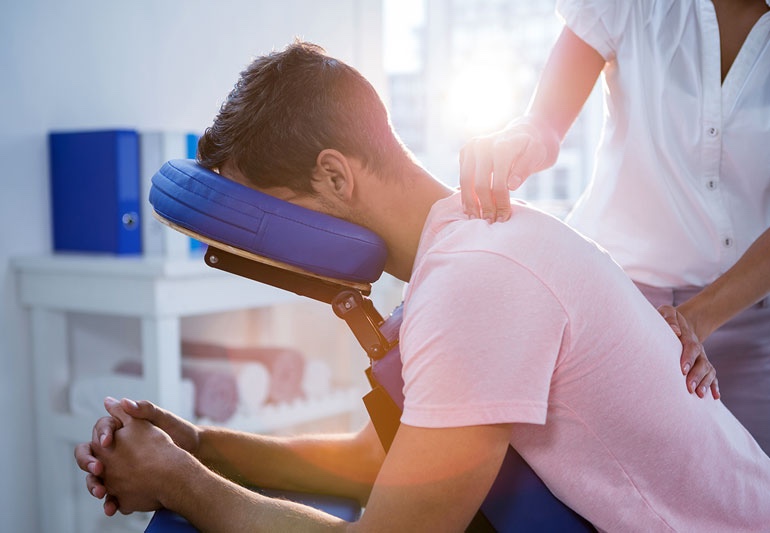
Massage therapy is often recommended to help relieve fibromyalgia. I am sure there are many out there that find it helpful, but I do not think it is the right route for me to take. I have never attended a massage therapist, but even the slightest pressure to my muscles hurt me. I could not even imagine someone trying to manipulate my muscles to make them feel less painful. Even a muscle roller where I can control the pressure causes extreme pain to form.

Advertisements

Exercise! Don’t get me wrong, exercise is important, but it just isn’t as easy as it sounds when you factor in fibromyalgia. Is anyone else absolutely tired of being told to exercise more and fibromyalgia will get better? I was always told to get a gym membership and go to the gym, but reality is the gym is just too much for me to handle. They want me to use the treadmill to walk, but what they don’t understand is I can’t even walk fast enough on the warm up setting. A stationary bike was also recommended, but my legs burn so bad after 15 seconds of peddling and my knees begin to ache. When I step off the bike I feel like collapsing. I won’t push through because I will just end up in a flare.

Advertisements

I often wonder why certain routes work with some people and not others. Does it come down to how severe your fibromyalgia is? I know fibromyalgia isn’t exactly classified as mild, moderate or severe, but some of my symptoms over the years have gotten worse. I can guarantee it isn’t because I don’t exercise and move. My doctor always said some people recover fully from fibromyalgia with adding some exercise and lifestyle changes , some improve and then hit a plateau and remain there, while others get worse. After speaking to many people on numerous fibromyalgia support groups world wide, I now realize how true his statement was. He believed I hit that plateau. We exhausted all routes we could possibly explore – it has now been quality of life based treatments.

What I took for granted before I got diagnosed with Fibromyalgia!

Being able to get out of bed. Before being diagnosed with fibromyalgia, I always wished I could stay in bed just for ten more minutes when my alarm rang. When you live with fibromyalgia you soon learn just finding the courage to get out of bed every morning becomes overwhelming. Some days I get up and I find myself back in bed an hour later because sitting on the couch is painful, movement hurts and is unbearable or I cannot function at all. The chronic fatigue and pain can become very debilitating!

Advertisements

Being able to shower and personal hygiene. Before I was diagnosed with fibromyalgia a shower was refreshing, a way to wake up and relaxing at the same time. Showering never felt like I was using any energy. Now, showering can be painful and exhausting. The longer I stand in the shower – my legs begin to ache and my feet and toes hurt with jumping pain. I never know where the pain is going to hit next. Washing my hair makes my arms ache, feel heavy and my fingers begin to cramp up. I often get out of the shower feeling absolutely exhausted and find myself laying back in bed to recover! I never thought I wouldfind myself having to rest after showering. Some days even brushing my hair hurts. The brush touching my scalp can cause pain and if I comb over a few knots in my hair it can trigger my brain to send out migrating wide spread pain through-out my body! Even brushing my teeth can hurt at times. My hands may cramp up and ache, and my back begins to throb from standing in front of the sink

Advertisements

Being social. I was never an overly social person, but I still went out to visit friends. Living with fibromyalgia I have become a home body. I do still try to keep in touch with friends through text or a quick call. I do miss going out for dinner, concerts or just hanging out in general. Being social and interacting with others when living with chronic pain can become exhausting. Even carrying out a conversation is difficult at times as I suffer from brain fog and often search for my words.

Advertisements

Sleeping without any issues or waking up feeling refreshed. Since I got diagnosed with fibromyalgia I have not been able to get a decent night sleep. I took part in a sleep study which revealed normal findings. The pain constantly wakes me up all night long, or insomnia decided to attack. I often lay in bed and experience “painsomnia”. – exhausted but in too much pain to sleep. Even when I do manage to get a full night rest, without waking up I wake up feeling exhausted and I can’t function!

Advertisements

Grocery shopping. Before fibromyalgia, I used to automatically go grocery shopping every Saturday or Sunday morning to prepare for my busy week ahead. It just becomes a routine. Now to find the energy to drive to the grocery store is hard enough yet alone shopping. I have a difficult time pushing a grocery cart once it begins to fill with food. It absolutely exhausts me. After walking two or three aisles, the chronic fatigue sets in and it feels like I am dragging fifty pound weights behind me. I often have to rest the after shopping. Some times I can recover other times it becomes a movie day because shopping has proven to be too much.

Advertisements

Standing and walking. We learn at such a young age to stand and walk. As adults, it just comes naturally. I was one of those people who was not in a rush to get my drivers license as I grew up in a small town where walking everywhere was feasible. I used to walk to the stores, work ect. Being diagnosed with fibromyalgia, I am lucky to make a 15-20 minute walk. My feet hurt when I stand and I get major pain in my back. I miss just being able to go for daily walks.

Advertisements

Being able to work. Most people can’t wait for a day off of work to rest and just relax. I was like that before fibromyalgia. Now, I wish I could work! I’ve had to remain off of work due to the forever changing symptoms , pain and fatigue. Fibromyalgia is unpredictable! I miss socializing with coworkers, providing for myself and being independent. I do count myself lucky as I receive disability, but when on disability it is a fixed income that is lower then what I would make working full time! Cost of living continues to increase, but my monthly income remains the same.

Advertisements

Being able to be physically active. I used to be someone who was always on the go – biking, hiking, walking ect. Now, I have a difficult time walking up a set of stairs or taking a walk for even 15 minutes. The first thing doctors or health care providers tell someone with fibromyalgia is to exercise. How do you exercise when you do not have any energy to do it?

Advertisements

Being able to travel. Before fibromyalgia took a front seat in my life, I was spontaneous and travelled all the time. Now travelling takes alot of preplanning. It is exhausting having to imagine every single scenario that could cause chronic pain to increase or go out of control. I find even driving 10 minutes too much for me these days.

Advertisements

Cleaning and laundry. We all hate cleaning and laundry! However it is part of life. When you factor in fibromyalgia, both tasks become overwhelming. I often try to break up cleaning into smaller tasks to make it manageable. After I vacuum and wash floors I am struggling with lack of energy, major fatigue and pain through out my body or stop many times to rest. I often find myself having to lay down for several hours after. Folding laundry causes my finger joints to ache and my arms feel like they are on fire. I have found myself hanging most of my clothing in the closet to avoid folding so many articles of clothing.

Advertisements

Eating without pain. Eating a meal when you live with chronic pain can be challenging. Most times we eat and don’t really think about it. For myself I developed TMJ and my jaw hurts and locks if I bite down wrong or if I attempt to eat certain foods. I am often left with jaw pain after every meal. Some days even eating with a fork or spoon creates pain. To grasp the cutlery may cause my hands and finger joints to ache. I have been telling health care providers lifting food to my mouth and chewing the food makes me exhausted.

Advertisements

Having a chronic illness/condition is a full time job!

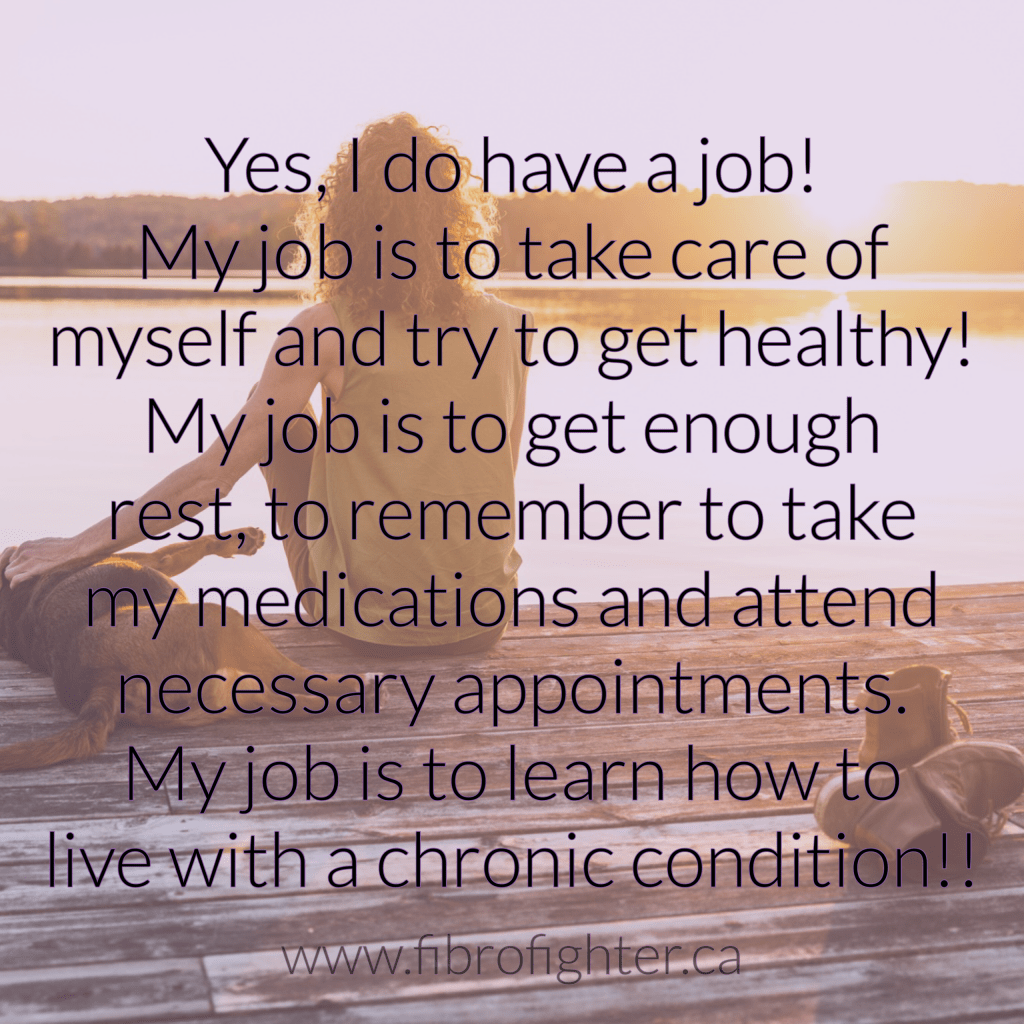
If you have been forced to remain off work or given up your career due to a chronic condition, people often assume you don’t work! Having to live daily trying to manage the condition can actually become a full time job! A chronic condition is just that- chronic. There are many aspects that need addressing when you live with a condition that can become debilitating like fibromyalgia.

Advertisements

Before we even get a diagnosis we are often already adjusting life so we can function better. As we slowly adjust, we sit and wait for answers. Fibromyalgia is not an immediate diagnosis and is a process. We wait for tests to be completed, referral letters to be accepted and in general waiting for answers to why we hurt so much. Waiting can actually become a full time job in itself. You must be prepared for any upcoming appointments. As we prepare and wait for these appointments we keep on adjusting our lives to be able to get through the days the best we can.

Advertisements

Once diagnosed or even before, we have to learn how to live with a chronic condition. The life we once knew is no more and a new ‘normal’ needs to be found. One must learn their limitations and adjust life around those limitations. This is not an easy task! Nor does it happen overnight. It takes time. When you finally think you have it figured out, fibromyalgia decided to throw you an unexpected curve ball to knock you off track. New symptoms can arise daily and we are left scrambling trying to figure out a possibly remedy.

Advertisements

Self advocacy takes a-lot of time, preparation and energy. Do you know how many hours I have spent writing down medical information to share with doctors?! Too many to even remember! There are many questions to ask doctors or specialists, symptoms to be logged, medication lists, possible treatment routes, ways to lower pain….the list goes on and on. If we don’t advocate for ourselves who will!

Advertisements

Medication management. My medication list seems to grow longer and longer every year. It used to bother me that I had to be on so many medications, but I decided if I can function why should I be ashamed for using these medications!? I often thought people would think I was just a “drug addict”. Believe me, I tried to go medication free at the beginning of my fibromyalgia journey. The pain was too excruciating! I have daily medications I have to remember to take. I have to continuously manage how many days worth of medications I have left so I do not run out. When I go to the pharmacy, I often tell the pharmacy staff this is my second home as I’m there so much picking up medications and speaking to the pharmacists. Most medications I use leave behind side effects. These side effects also need managing. I may take medications to manage my pain, but these meds may leave behind numerous side effects to deal with.

Advertisements

Having to manage 24/7 symptoms can become exhausting then to add in a flare up makes managing pain even more complicated. Most of us learn to manage our flare ups, but there are times where our flare ups appear and we are left scrambling to find new strategies to try to find relief. Even on our most excruciating pain day there is no break because we have to always “troubleshoot” our own bodies. A strategy used yesterday may not help the next day! It is rather exhausting to always try to manage chronic pain.

Advertisements

Managing mental health. Often times when we are left dealing with a chronic illness, our mental health can become rather low. I know for myself I developed an anxiety disorder. We must learn to lower stress levels, anxiety and depression. High stress levels contribute to fibromyalgia flares and increased pain levels. We may need to take time through out the day to complete calming exercises to help lower stress and pain levels.

Advertisements

Attending weekly appointments or treatments. Often times we are encouraged to attend a program such as a pain clinic. Appointments can possibly be daily (Monday to Friday) depending on how your program is set up. You may be required to work with a kinesiologist one day, psychiatrist the next day and so on. Attending the appointments can be exhausting and leave us with higher pain and symptoms to manage after the fact.

Advertisements

Make sure to rest. People with a chronic illness such as fibromyalgia need to be sure to pace and rest when needed. Resting doesn’t sound like a hard task to do, but when it comes to fibromyalgia it can be. You need to learn to stop and rest at certain times. I decide when I need to rest from fatigue levels and pain levels. If I am cleaning and all of a sudden I notice dark bags under my eyes form, I know I need to stop and rest. If I do not, a flare up begins to start! Again this can be quite time consuming to be able to predict when to rest appropriately.

Advertisements

Researching. Fibromyalgia is not well understood. Some doctors have a great understanding of fibromyalgia while others do not. I often find myself researching a lot on my own. Knowledge is power. Arm yourself with as much information as you can. Researching when you have a chronic illness that is forever changing daily can take up alot of time.

Advertisements

Ten things NOT to say to someone with fibromyalgia or any chronic condition

1. Don’t tell me everything will get better. Fibromyalgia is a neurological condition with no cure. We can’t predict the course it will take. Some people find improvement, while others may never find any relief.

Advertisements

2. Don’t tell me to get more sleep because I say I’m fatigued. Did you know with fatigue, sleep does not improve the situation. Don’t get me wrong sleep is important, but with chronic fatigue, no matter how much sleep you get you don’t feel refreshed!

Advertisements

3. Don’t tell me to exercise. We are constantly told to exercise to improve fibromyalgia symptoms. Exercise may help relieve some symptoms, but it is not a cure!

Advertisements

4. Don’t tell me at least it isn’t fatal. It might not be fatal, but living with chronic pain 24/7 is life altering and debilitating. Fibromyalgia wears you down little by little. A chronic illness diagnosis is almost like getting a life sentence.

Advertisements

5. Don’t tell me I should get a job to distract my pain. If I could work I would. If my doctor deems me not fit to work, that is just how it is going to be.

6. Don’t tell me you also have the same aches and pains as I do. We may both have back pain, knee pain ect, but chronic pain is more intense then your regular sore back from sitting too long in an office chair.

Advertisements

7. Don’t ever tell me it is all in your head. This comment shows me lack of respect and understanding! If you must know it is all in my head – its a neurological condition!

Advertisements

8. Don’t ever say you are too young to have fibromyalgia. Age has nothing to do with it. Even children can be diagnosed with fibromyalgia!

Advertisements

9. Don’t ever say fibromyalgia isn’t real. If fibromyalgia wasn’t a real condition doctors would not be diagnosing so many people with it. There is also research to back up fibromyalgia does exist. It is just not well understood!

Advertisements

10. Do not ever tell me I don’t look sick! Fibromyalgia is an invisible condition – with over 100 symptoms.

Advertisements

Why do some doctors stigmatize fibromyalgia!?? My personal experience!

Why is there such a stigma attached to fibromyalgia!? Why do some doctors believe fibromyalgia is a real condition, while other doctors do not accept fibromyalgia as a diagnosis!? I was lucky that the doctor I first started to see in regards to fibromyalgia had an in-depth understanding of it and was supportive over the last 2.5 years. My doctor relocated last spring and I have been left seeing walk in clinic doctors at different clinics. I find it absolutely insulting the way some of the doctors reaction to the fact I have fibromyalgia. I often feel like having a fibromyalgia diagnosis on my file, red flags me right away.

Advertisements
Advertisements

I recently had to visit the local hospital due to the fact I had severe lymph node pain in my neck. After a three hour wait in emergency, the doctor spent literally 40-50 seconds with me in the exam room. He began asking me questions such as how long have I had a sore throat, cough, swollen lymph nodes and fevers. Any of us who live with fibromyalgia and chronic fatigue often suffer from all the above daily. I told the doctor I had fibromyalgia and his whole demeanor changed after mentioning this to him. He got frustrated that I could not answer his questions and soon dismissed me from the exam room after I told him a second time I could not verify how many days I ran a fever. Dismissed me without even addressing my sore throat. I got left sitting in a dark waiting room by myself where my anxiety began to rise. I left the hospital untreated and hysterical. I believe the fact I mentioned fibromyalgia made him think I was just at the hospital to pill shop or that my pain in my lymph nodes was not severe and made up. I would say this was the worst health care I have ever received in my life. I rarely go to the hospital, but the pain in my lymph nodes in my neck was so severe all I could do was sit and cry. At that point, the lymph node pain was more severe then my fibromyalgia pain when I am in a flare!

Advertisements

Later that morning I decided to attend a walk in clinic since I had no luck at the hospital. A clinic I had never gone to. A clinic where the physicians do not know my file and severity of fibromyalgia. The doctor did address my lymph node pain, but was more focused on the MRI results I had over a year ago. I had to keep repeating over and over that my MRI results were being overseen by my neurologist and to not worry about it. He soon found on my file that I have fibromyalgia and then told me my lymph node pain was caused by anxiety. There is a belief that anxiety can cause enlarged, swollen lymph nodes, but all the articles I read state its a highly controversial subject. There isn’t a medical connection between lymph nodes and stress. Lymph nodes function to fight off an infection. They do not swell to fight off anxiety. Again I left the clinic without treatment of my swollen painful lymph nodes. Instead the doctor concentrated more on my fibromyalgia and the fact I have high anxiety. His advice- lower your anxiety and the lymph node pain would reside. I actually had no anxiety until the hospital incident earlier that morning.

Advertisements

This morning I decided to go back to the clinic for a second opinion. I finally was heard. I have strep throat, tonsillitis and my right ear was starting to get infected!! That was three days since I saw the other two doctors. I had been sick for awhile, since these infections don’t just appear over night.

Advertisements

In the past I have also had to see different doctors for prescription refills and have to explain and defend why I am on each and every medication. If these doctors would look at my file, they would see these prescriptions have been in use consistently and prescribed by the same doctor before he moved. Some doctors feel like we are pill shopping, when we are not! I have left the clinic without prescription refills because the doctor did not want to refill them. Thankfully my neurologist stepped in and gave me 15 months worth of refills on several medications.

Advertisements
Advertisements

Why is it I have a difficult time getting my medications for fibromyalgia refilled, but someone else who needs the same drug for depression not have an issue!? Because fibromyalgia is stigmatized by many doctors. Sadly in this day and age I thought the stigmas would have been eliminated by now. Why should people with fibromyalgia defend their medication list each and every time they see a different doctor!? The truth is we shouldn’t have to. Nor should we feel like we have been denied care because a physician doesn’t understand fibromyalgia and continues to think it is caused by mental instability. After this experience, I was left feeling crazy, unheard and with high anxiety. I should not be left feeling unheard because fibromyalgia is marked on my file!

Advertisements

How can family/friends support someone with Fibromyalgia ( or any chronic illness)

1. In order to be supportive to someone with fibromyalgia or any chronic illness, you first need to understand what the condition is. Fibromyalgia is more then just chronic pain. Research is the best option to arm yourself with information. The web holds a-lot of knowledge at a click of a button. Just be aware of what sites you are reading, there are many misconceptions about fibromyalgia floating about. If your loved one is on medications – know that with the use of medications comes unwanted side effects. With knowledge comes greater understanding!

Advertisements

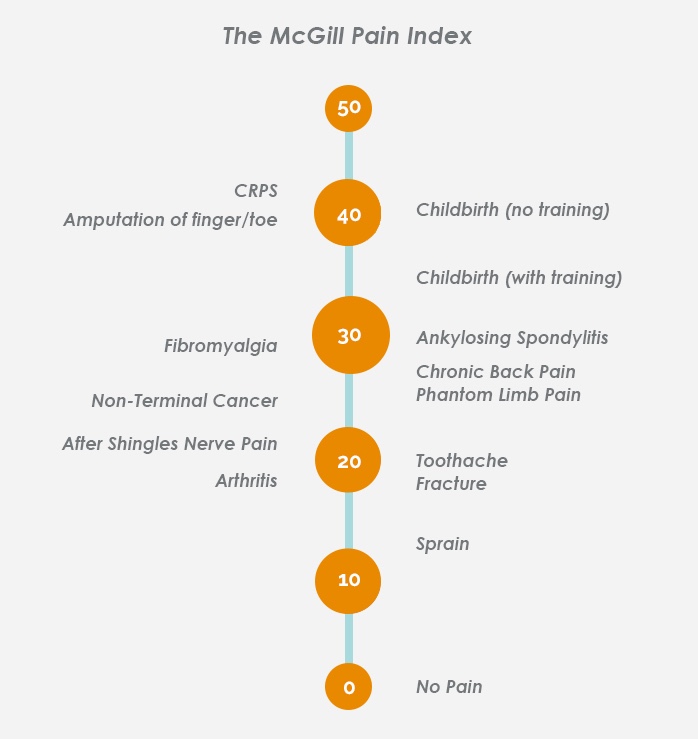
2. Understand the pain cycle and pain scale of chronic pain. Chronic pain is not the same type of pain a sprained ankle brings. The pain from a sprained ankle will eventually go away. Chronic pain is just that- chronic. It will not heal or go away. I am left dealing with extreme pain that is debilitating. Did you know fibromyalgia pain is listed on the McGill pain scale just below childbirth!?

Advertisements

3. Offer to help with tasks or chores around the house. Don’t automatically assume you need to do everything for me. I appreciate the help, but I still need to maintain a sense of independence. Fibromyalgia has takes away many things from me. Please allow me to continue to keep some independence, but at the same time offer help where you can. Even if you know a task I’m working on is going to possibly backfire and cause increased pain or symptoms to arise allow me to try. I often use these moments to evaluate my limits.

Advertisements

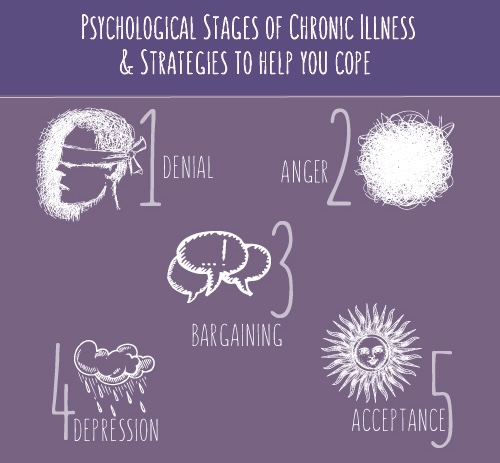
4. Please know that living with fibromyalgia we grieve who we used to be. I miss the full of life, spontaneous person I used to be too! It is said people living with any chronic condition, tend to go through the 7 stages of grief. I may be frustrated with myself, but it comes out as anger towards you. Let me say this now. I’m sorry for the way I react somedays. Frustration can get the better side of me. I am still learning how to accept my illness.

Advertisements

5. Chronic illnesses can cause a flood of emotions and can begin to effect our mental health. Please watch for signs of anxiety or depression quietly. Living in extreme pain and dealing with all the other symptoms cause mental exhaustion. I may not connect how living with fibromyalgia affects my mental health early on. If you notice any signs of anxiety or depression, please be gentle in telling me.

Advertisements

6. Sometimes we just need someone to listen without judgement or opinions being put forth. As the saying goes, “Sometimes we need someone to simply be there. Not to fix anything or to do anything in particular. But just to let us feel that we are cared for and supported!”

Advertisements

7. Know that we understand it is as hard on you as it is us. Chronic illness affects all involved. Please understand it will be a difficult road ahead. Support each other the best we can and try not to get angry with each other. There will be times where it happens. After all, we are only human.

Advertisements

8. Please understand I am not my pain. It is not my fault that my pain levels and other symptoms arise at what seems like the most inconvenient times. I still want to live and enjoy life as much as you do. If we had plans to go do something and suddenly can’t I am not being difficult. Please remain flexible! Be realistic instead of having extremely high expectations when it comes to making plans.

Advertisements

9. Please respect my physical limitations. Fibromyalgia is often accompanied with fatigue. I get fatigued very quickly. Know that my fatigue is not like your tiredness. My fatigue doesn’t go away. Some days I need to slow down or take a break. Just because I was capable of something today, doesn’t mean I will be capable tomorrow.

Advertisements

10. Please take the time to believe what you see and what I tell you. I am not just making up symptoms, to share with you. My pain is real and so are all my symptoms I speak of. There is often a misconception that chronic pain suffers fake or exaggerate their pain. Don’t you think if I could choose I would choose to be happy, full of life and be who I once was – before the chronic illness over took my body!? I don’t enjoy being isolated from others and possibly have to be in bed all day long.

Advertisements
Advertisements