Tag Archives: chronic condition

How my father’s terminal cancer battle/memories have helped me through my fibromyalgia struggle!

As of recent, I have been focusing a lot of my time on grieving. After being diagnosed with fibromyalgia, I learned grieving the loss of my old life needed to take place. When one is diagnosed with fibromyalgia we often lose our identity. It took me years to realize this. Once I grieved the loss of myself, I began to find the strength to push through again. At an appointment with the psychologist I currently see, I soon realized I did not really grieve the loss of my father. I once again had to allow myself to grieve ( and still in the process). Grieving the loss, many conversations my dad and I had while he was sick began to flood my mind.

Advertisements

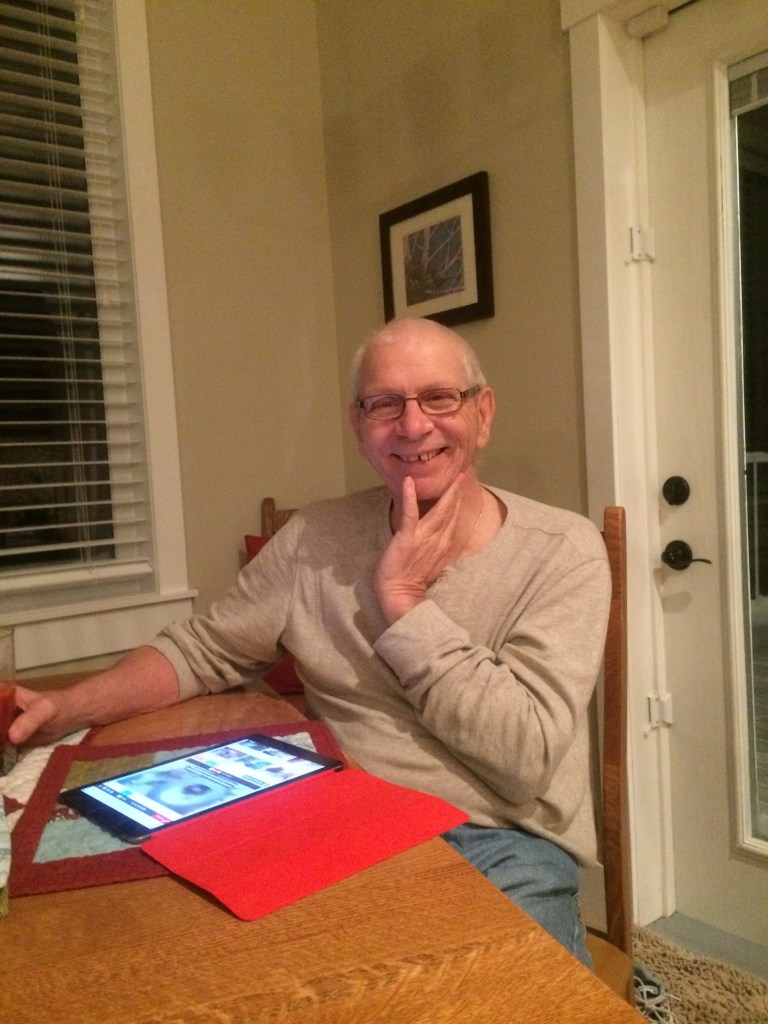
In 2015, I lost my father to a long battle with cancer. One of our conversations always comes back to my mind. “No matter what, take care of yourself. Get all the testing possible to detect anything at early stages. I am not just referring to cancer! Promise me this my girl. ” As we sat on the couch I whispered beneath my tears I promise. My dad always called my mom and I his girls and he was always so proud to have been able to call us this. I don’t have cancer, but I do have fibromyalgia which is also a very debilitating condition ( obviously not the severity as terminal cancer).
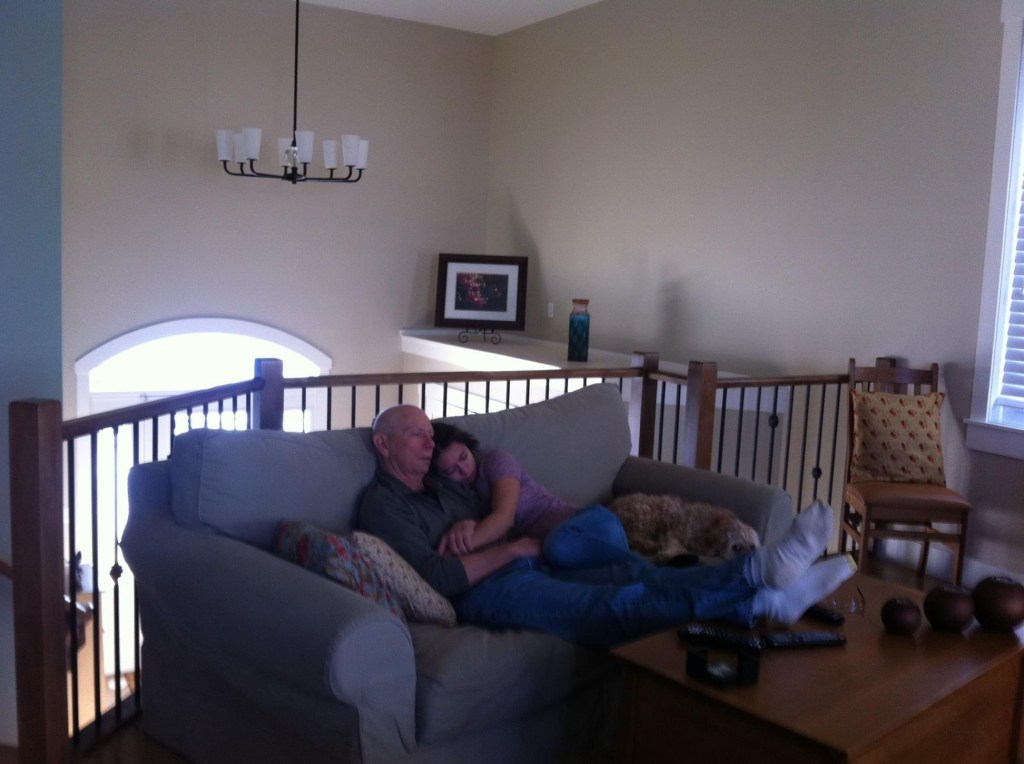
Picture taken at the moment of the above conversation in 2014.
Advertisements

I kept my promise. Doctors probably think I am a hypochondriac because when my symptoms of fibromyalgia began I insisted on every test possible. I even pushed for a brain MRI to make sure it was not MS ( MS and fibro have many overlapping symptoms) – even though there was no indications of rheumatoid conditions in my blood work detected. We only get one body, so it is important to take care of it no matter what. I know I am not a hypochondriac, so I decided if doctors want to have that opinion of me, they can own the problem.
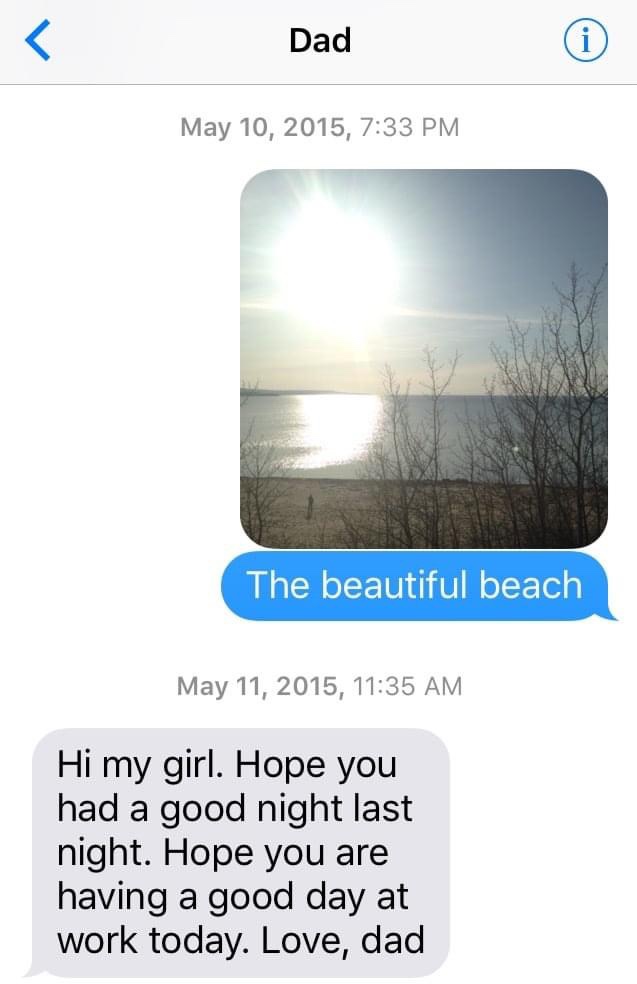
This text I hold close to my heart. My last text my dad sent to me.

I look back at my dad’s courageous battle, and realized not once did he ever complain about the pain from cancer or side effects of chemotherapy. I often wonder how he did this with the bone pain he experienced. I too have bone pain with fibromyalgia and wonder if the bone pain I have is similar to what my father felt. I assume the pain from cancer is much worse and it amazes me how he never complained once. Obviously many tears were shed, but never once did I hear him speak negatively. The bone pain I experience breaks me most of the time – to the point I can’t stand up out of bed or off the floor. I try to stay strong remembering how strong he was during his battle. It motivates me to not allow fibromyalgia to overtake my life. I refuse to let it win. I was recently listening to a podcast on fibromyalgia and Dr. Liptan ( author of The Fibro Manual and fibromyalgia warrior herself) spoke two sentences which resonated with me. “Your life is not over. It’s probably going to look different, though!” It sure does look different, but she is correct when she states your life isn’t over because of fibromyalgia.

Advertisements

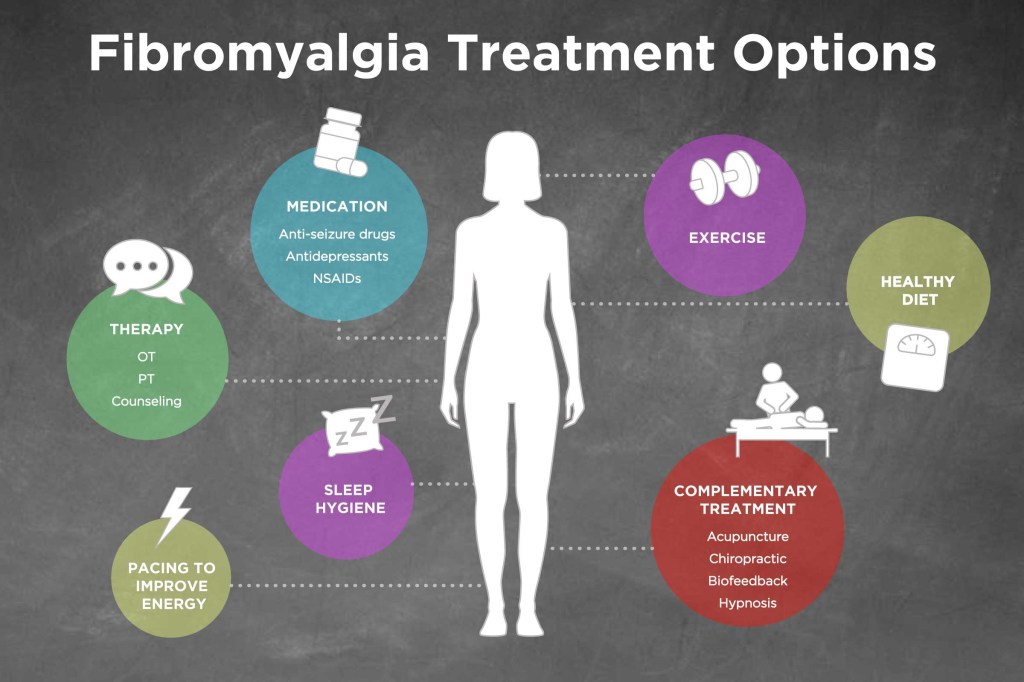
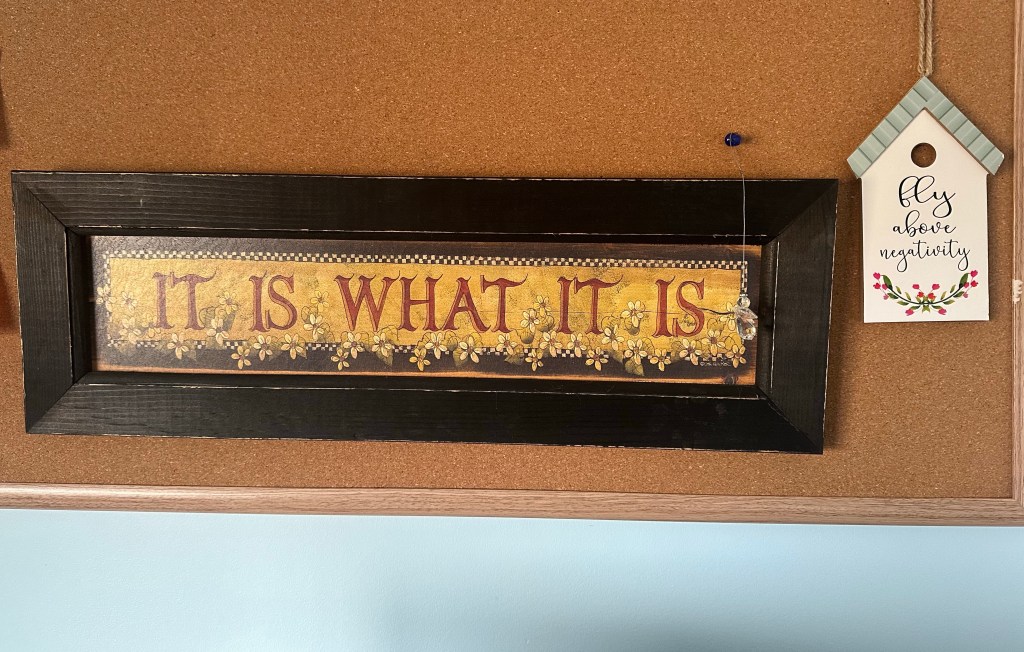
My dad often was heard saying “It is what it is!” after being diagnosed with terminal cancer. These five small words have made such a drastic impact on me and have stuck in my mind. The saying is often used when a person is facing a challenging situation that cannot be changed and must learn to accept these circumstances. I often find myself saying these exact words in regards to being diagnosed with fibromyalgia. I had to come to terms with the fact I got diagnosed with a chronic pain condition with no cure. There are many strategies out there that can help improve fibromyalgia symptoms, but finding the right combination is the challenging part. What works for one person may not work for the other.
Advertisements

My journey has led me down a pathway of stepping out of my comfort zone and trying new strategies with the guidance of a psychologist. Strategies that I finally feel are showing benefits instead of resulting in failures. I got so frustrated and discouraged with health care providers trying to “fix” me instead of helping me learn how to manage fibromyalgia and it’s symptoms or trying to repeat failed treatment routes. False hope does not help improve fibromyalgia – just like false hope does not cure cancer. It can create high anxiety/depression and further frustration to set in ( at least in my case). Even the rheumatologist who confirmed my fibromyalgia diagnoses told me ” Go enjoy nature alone and ignore society – your fibromyalgia will improve!” Say what!?!? Nature is good for the soul, but please do not take this rheumatologist’s advice. Don’t hide from society! Find the courage to live your best life under the circumstances that you are faced with . “Fly above negativity.”

The occupational therapist I was working along side, gave me this decorative piece at discharge. She knew I felt I had hit rock bottom, and needed to hear these words of wisdom!
Advertisements

As for my father…I hold the memories close to my heart. My father’s final words to me were “Smile, don’t be sad! The last life lesson he taught me before he passed away – GRATITUDE!

What I wish I knew early diagnosis of fibromygia!

1. Learn to slow down and pace myself! Fibromyalgia requires you to slow down so you don’t cause a flare up to form! It also helps reserve energy. I wish I was told this earlier on. I could have prevented so many flare ups from forming. You may not get everything done that you wanted to in a day and that is ok. Learn to prioritize what is most important. There are many days where I have a list of things I want to get done. I may only get to one or two on the list.

Advertisements

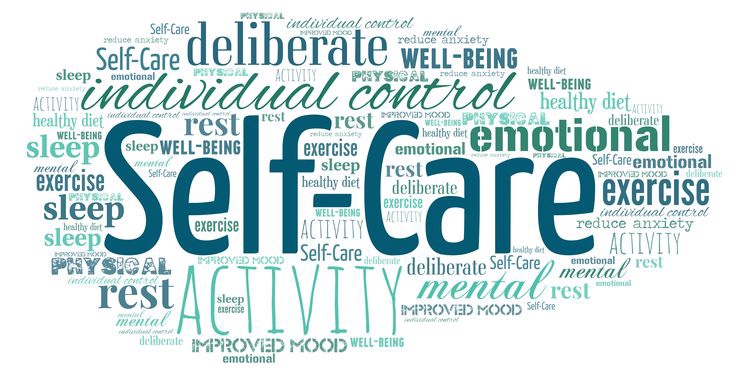
2. Health care providers stress self care with fibromyalgia! I wish I knew how important this truly is when dealing with chronic pain. Most times our lives get so busy to even factor in self care, but once you are diagnosed with fibromyalgia or any chronic pain condition self care becomes so important. Make sure to take the time for you! Even if you can’t manage to take say 30 consecutive minutes, I am sure 5 minutes is possible. I noticed once I started to take time for me to wind down or relax my pain levels stay a bit lower.

Advertisements

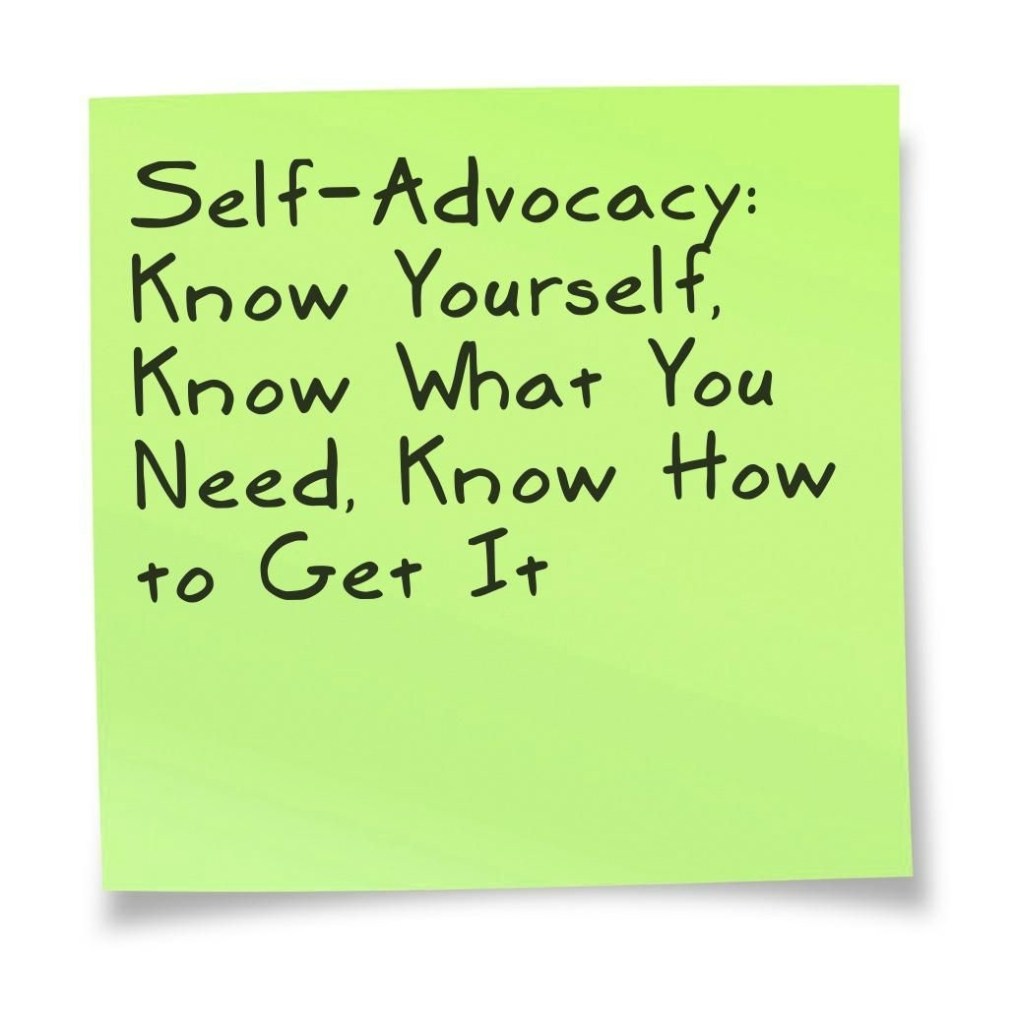
3. I wish I would have known how important self advocacy was earlier on! I was always too scared or shy to speak up. After 3.5 years I have learned to use my voice! After all, we know our body best and know what may work and not work by gaging from our limitations. I feel by not speaking up sooner, I have now gotten labelled as being “difficult” by many health care professionals. It is not that I am difficult, I now know what works and what doesn’t. Repeating failed treatment routes is not where I want to find myself. It only causes frustration and anxiety to form!

Advertisements

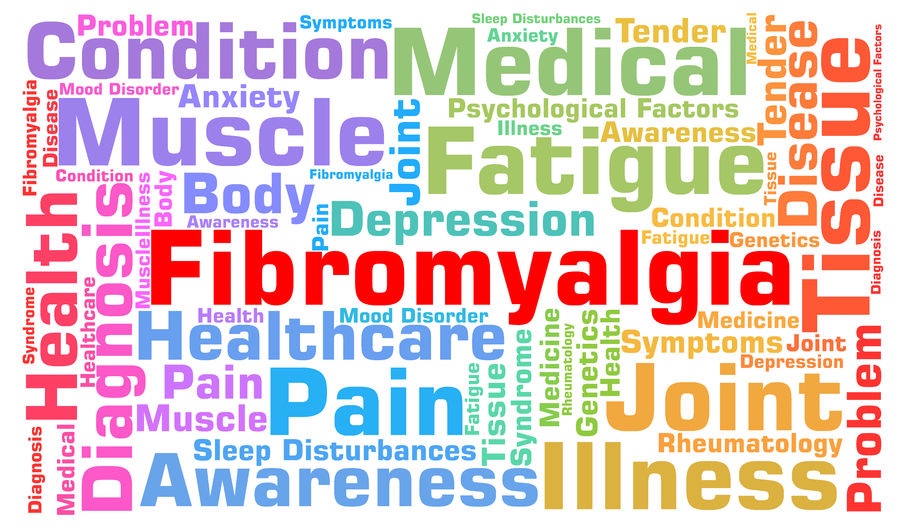
4. I wish I knew that there was more to fibromyalgia than just chronic pain! When we see the list of possible symptoms that can occur along side fibromyalgia, we often think it isn’t possible. Reality is it is possible! As the months pass, I often find myself dealing with a new symptom.

Advertisements

5. Fibromyalgia is not a uniform condition. Everyone’s fibromyalgia journey will look very different! What works for some people, will not work for others. Do not compare yourself to others with fibromyalgia. This is not how the condition works. Remember, your body does not read like a textbook. Just because a symptom or solution is listed on a site or book, doesn’t mean it will be successful! Keep exploring ideas for relief if one option fails. I have watched several attempts fail, but I keep searching for something new to try!

Advertisements

6. I didn’t realize I would grieve my diagnosis before I could accept it! Fibromyalgia is a very debilitating condition with no cure. It took me three years to come to terms with the fact that my life is very different now. Fibromyalgia takes a-lot away from a person and you need to learn to accept and adjust to the new normal! Don’t feel weak if you are grieving. Grieving does not make you weak!

Advertisements

7. That I would come across many people who do not understand fibromyalgia. There will be many insensitive comments and gestures be made. Remember, it is lack of knowledge and understanding fibromyalgia at work here! Many doctors and health care providers don’t quite understand fibromyalgia themselves. Friends and family may make remarks that are hurtful and insensitive! Try to share information you know to be true about fibromyalgia to help educate people around you – to be able to somewhat understand the condition!

Advertisements

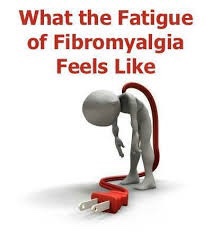
8. How exhausting fibromyalgia actually is. We are always told that fatigue is a symptom of fibromyalgia, I never realized how much fatigue would control my life. The exhaustion is not simply just being tired. It is a complete life altering fatigue to the point where it can become difficult to take care of your basic needs. Early diagnosis I had fatigue, but it has gotten worse over the years. Every task no matter how small it is, just drains every last energy reserve I had built up!

Advertisements

9. I wish I would have known how important it is to listen to my body. As the saying goes your body never lies to you! If your body is telling you to rest, then rest. It is what it needs at that moment. We learn that being in tune with our body becomes an important survival mechanism needed when dealing with fibromyalgia.

Advertisements

10. I wish I knew the amount of strength it requires to push through each day living with fibromyalgia. We are often thought to be weak because we can’t handle the pain levels. It is actually the opposite. It takes alot of courage and strength to live everyday in extreme pain levels and actually succeed to get at least something done in 24 hours!

Advertisements

Fibromyalgia – I wish doctors and other health care providers could live in our shoes for a month! Would they be able to take part in their own recommendations?

There are times I wish every health care provider we deal with could actually put themselves in our shoes for a month to see how it truly feels to live with chronic pain on a daily basis. I bet if they were faced with the chronic pain and other symptoms that they too would have a difficult time finding the energy to take part in all the recommendations to decrease pain levels. When health care providers recommend these routes, do they stop to understand the whole picture? Or are they just recommending these routes because according to science it works? Most times I now take many of the recommendations as a “grain of salt.” If you haven’t heard of the saying ” take it with a grain of salt” it simply means to not completely believe something that you are being told. During early diagnosis, I believed what I was being told could fix fibromyalgia. I soon learned that this was not the case and my body does not respond well to many of the recommendations.

Advertisements
Advertisements

There have been many recommendations made to me that I should attend physiotherapy, massage therapists, and just learn to exercise more. I know health care providers mean well by recommending these treatments, but I know they don’t exactly understand how painful it can be for us who live daily with fibromyalgia. Adding chronic fatigue on top of the pain makes it very difficulty to find the courage to take part.

Advertisements

I recently started physiotherapy for osteoarthritis in my lower back. After assessment I felt it might actually be a great decision. However, after my third appointment, I found myself in a full blown flare up. After almost a week of increased pain levels and major fatigue I am second guessing myself. A treatment that was supposed to help relieve my lower back and hip pain has turned into widespread jumping pain down to the bone. Most times we are told to push through and it will get easier- in most cases it doesn’t get easier and we are left bed ridden.

Advertisements

I had the same experience when I attended a pain clinic and was working along side a kinesiologist. The basic stretches they gave me would send me into a complete spiral and I would go into a flare for days. After months of trying to slowly work stretches in without causing a flare up, I gave up. For myself the extra pain the stretches were causing was just too much to handle on top of my everyday pain I was dealing with.

Advertisements

Massage therapy is often recommended to help relieve fibromyalgia. I am sure there are many out there that find it helpful, but I do not think it is the right route for me to take. I have never attended a massage therapist, but even the slightest pressure to my muscles hurt me. I could not even imagine someone trying to manipulate my muscles to make them feel less painful. Even a muscle roller where I can control the pressure causes extreme pain to form.

Advertisements

Exercise! Don’t get me wrong, exercise is important, but it just isn’t as easy as it sounds when you factor in fibromyalgia. Is anyone else absolutely tired of being told to exercise more and fibromyalgia will get better? I was always told to get a gym membership and go to the gym, but reality is the gym is just too much for me to handle. They want me to use the treadmill to walk, but what they don’t understand is I can’t even walk fast enough on the warm up setting. A stationary bike was also recommended, but my legs burn so bad after 15 seconds of peddling and my knees begin to ache. When I step off the bike I feel like collapsing. I won’t push through because I will just end up in a flare.

Advertisements

I often wonder why certain routes work with some people and not others. Does it come down to how severe your fibromyalgia is? I know fibromyalgia isn’t exactly classified as mild, moderate or severe, but some of my symptoms over the years have gotten worse. I can guarantee it isn’t because I don’t exercise and move. My doctor always said some people recover fully from fibromyalgia with adding some exercise and lifestyle changes , some improve and then hit a plateau and remain there, while others get worse. After speaking to many people on numerous fibromyalgia support groups world wide, I now realize how true his statement was. He believed I hit that plateau. We exhausted all routes we could possibly explore – it has now been quality of life based treatments.

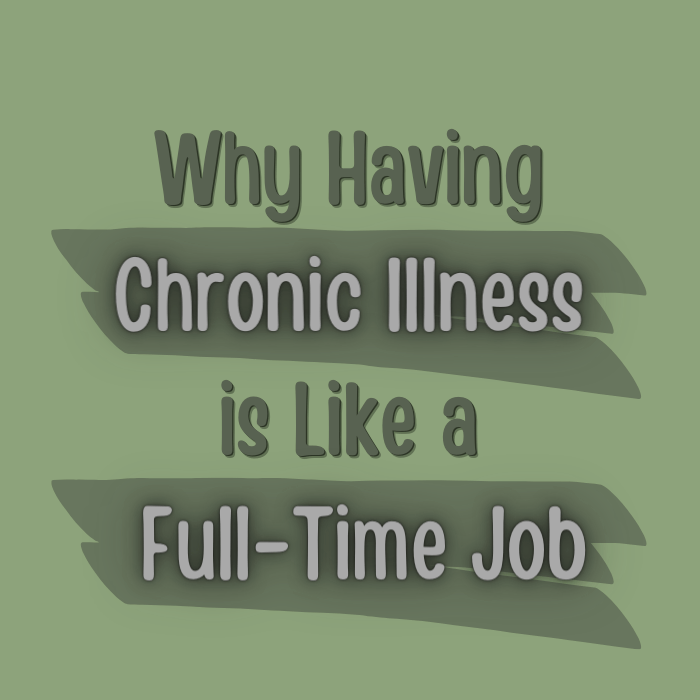
Having a chronic illness/condition is a full time job!

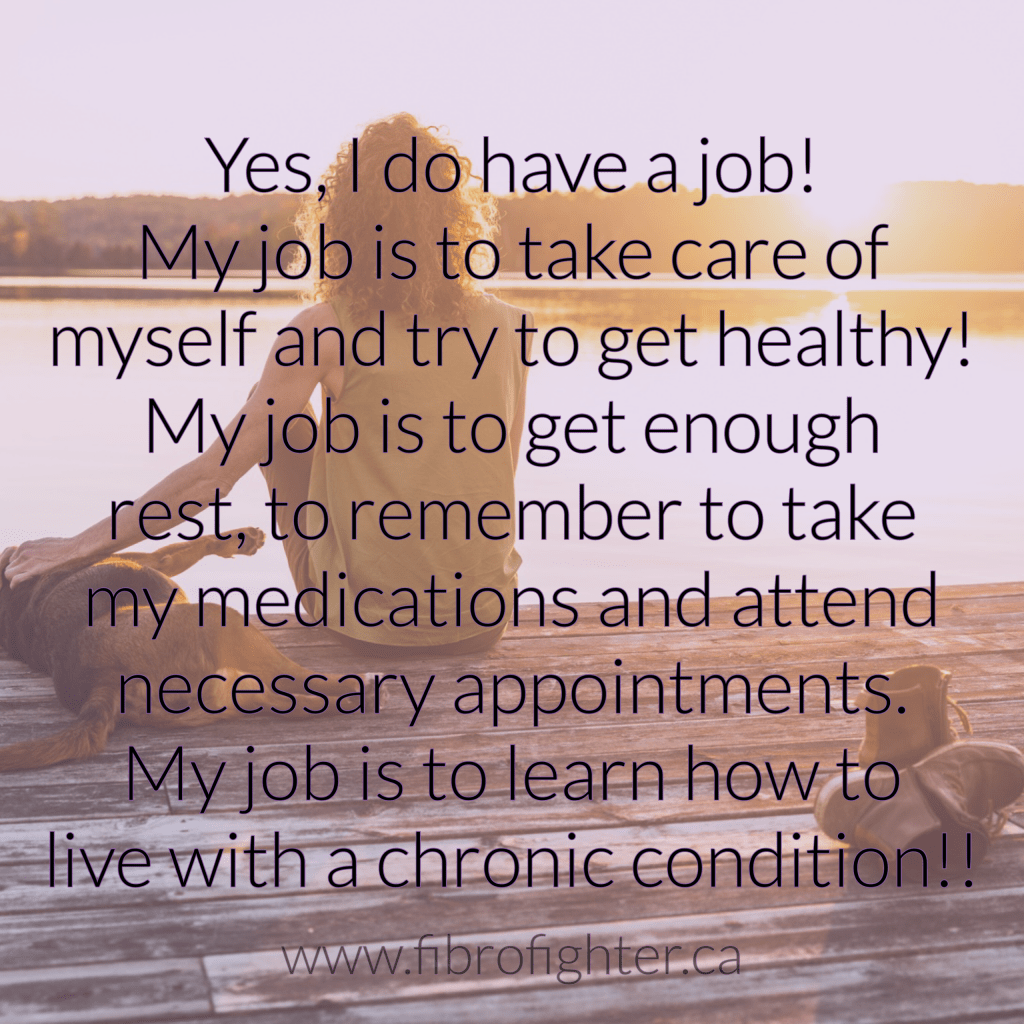
If you have been forced to remain off work or given up your career due to a chronic condition, people often assume you don’t work! Having to live daily trying to manage the condition can actually become a full time job! A chronic condition is just that- chronic. There are many aspects that need addressing when you live with a condition that can become debilitating like fibromyalgia.

Advertisements

Before we even get a diagnosis we are often already adjusting life so we can function better. As we slowly adjust, we sit and wait for answers. Fibromyalgia is not an immediate diagnosis and is a process. We wait for tests to be completed, referral letters to be accepted and in general waiting for answers to why we hurt so much. Waiting can actually become a full time job in itself. You must be prepared for any upcoming appointments. As we prepare and wait for these appointments we keep on adjusting our lives to be able to get through the days the best we can.

Advertisements

Once diagnosed or even before, we have to learn how to live with a chronic condition. The life we once knew is no more and a new ‘normal’ needs to be found. One must learn their limitations and adjust life around those limitations. This is not an easy task! Nor does it happen overnight. It takes time. When you finally think you have it figured out, fibromyalgia decided to throw you an unexpected curve ball to knock you off track. New symptoms can arise daily and we are left scrambling trying to figure out a possibly remedy.

Advertisements

Self advocacy takes a-lot of time, preparation and energy. Do you know how many hours I have spent writing down medical information to share with doctors?! Too many to even remember! There are many questions to ask doctors or specialists, symptoms to be logged, medication lists, possible treatment routes, ways to lower pain….the list goes on and on. If we don’t advocate for ourselves who will!

Advertisements

Medication management. My medication list seems to grow longer and longer every year. It used to bother me that I had to be on so many medications, but I decided if I can function why should I be ashamed for using these medications!? I often thought people would think I was just a “drug addict”. Believe me, I tried to go medication free at the beginning of my fibromyalgia journey. The pain was too excruciating! I have daily medications I have to remember to take. I have to continuously manage how many days worth of medications I have left so I do not run out. When I go to the pharmacy, I often tell the pharmacy staff this is my second home as I’m there so much picking up medications and speaking to the pharmacists. Most medications I use leave behind side effects. These side effects also need managing. I may take medications to manage my pain, but these meds may leave behind numerous side effects to deal with.

Advertisements

Having to manage 24/7 symptoms can become exhausting then to add in a flare up makes managing pain even more complicated. Most of us learn to manage our flare ups, but there are times where our flare ups appear and we are left scrambling to find new strategies to try to find relief. Even on our most excruciating pain day there is no break because we have to always “troubleshoot” our own bodies. A strategy used yesterday may not help the next day! It is rather exhausting to always try to manage chronic pain.

Advertisements

Managing mental health. Often times when we are left dealing with a chronic illness, our mental health can become rather low. I know for myself I developed an anxiety disorder. We must learn to lower stress levels, anxiety and depression. High stress levels contribute to fibromyalgia flares and increased pain levels. We may need to take time through out the day to complete calming exercises to help lower stress and pain levels.

Advertisements

Attending weekly appointments or treatments. Often times we are encouraged to attend a program such as a pain clinic. Appointments can possibly be daily (Monday to Friday) depending on how your program is set up. You may be required to work with a kinesiologist one day, psychiatrist the next day and so on. Attending the appointments can be exhausting and leave us with higher pain and symptoms to manage after the fact.

Advertisements

Make sure to rest. People with a chronic illness such as fibromyalgia need to be sure to pace and rest when needed. Resting doesn’t sound like a hard task to do, but when it comes to fibromyalgia it can be. You need to learn to stop and rest at certain times. I decide when I need to rest from fatigue levels and pain levels. If I am cleaning and all of a sudden I notice dark bags under my eyes form, I know I need to stop and rest. If I do not, a flare up begins to start! Again this can be quite time consuming to be able to predict when to rest appropriately.

Advertisements

Researching. Fibromyalgia is not well understood. Some doctors have a great understanding of fibromyalgia while others do not. I often find myself researching a lot on my own. Knowledge is power. Arm yourself with as much information as you can. Researching when you have a chronic illness that is forever changing daily can take up alot of time.

Advertisements