Tag Archives: brain

Fibromyalgia and Neuroinflammation – Neuroinflammation is being found in people with fibromyalgia!

Fibromyalgia can be a very confusing condition. Not all healthcare providers believe fibromyalgia derives from the same body system issues. Some classify fibromyalgia as arthritis, others state it is neurological and then there are still health care providers out there that believe fibromyalgia is a mental illness. The one question we all ask is “Does fibromyalgia initiate an inflammatory response in the body? If one was to do a quick google search the results quickly reveal fibromyalgia does not produce inflammation in the body. However, many of the current speakers at fibromyalgia summits (usually doctors) state there is actually inflammation – neuro inflammation. The regular blood test to check for over all body inflammation does not seem to diagnose this inflammation. This makes it difficult to measure the actual inflammation seen in the body with fibromyalgia!
Advertisements
Advertisements

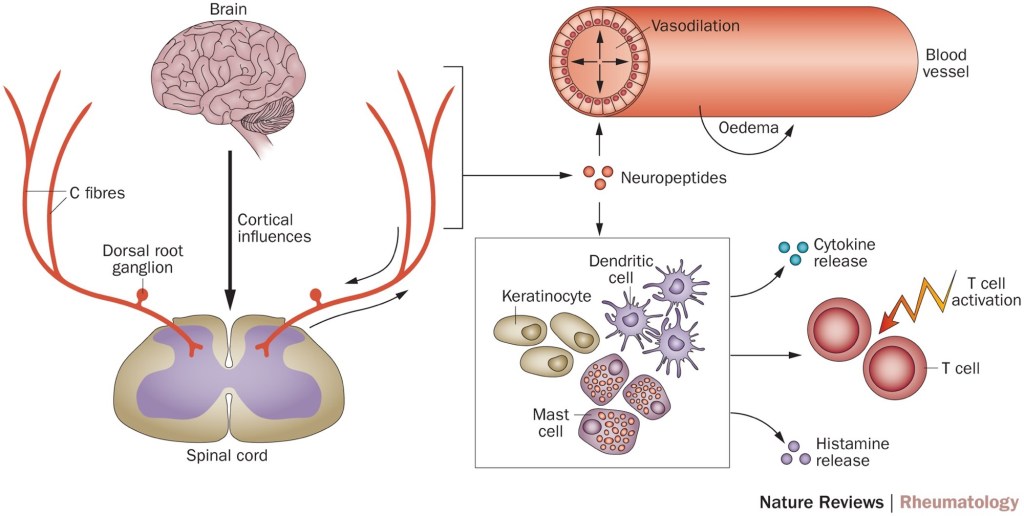
A 2018 study revealed that there appears to be increased neurological derived inflammatory mechanisms taking place in the peripheral tissues , spinal cord and brain in people with fibromyalgia! Why do doctors not know about these studies on neuroinflammation? Is it because these were just smaller studies and more evidence is needed? Regardless, these results were logged at the end of this study.
Advertisements

The study suggests that neuropeptides, chemokines and cytokines are all affected and cause activation of the innate and adaptive immune systems. I had no idea what these two systems were so I had to do further research. The innate immune system is the bodies first line of defense against invading pathogens while the adaptive immune system is set out to destroy the invading pathogens. As this process takes place, several peripheral clinical features of fibromyalgia are produced – swelling and dysesthesia ( unpleasant feelings in the body). The central nervous system may also be influenced thus causing changes in cognition and produces fatigue. As a result, stress related psychological mechanisms and emotional stress is triggered. All this will increase neuro inflammation. Food for thought ( my own opinion) is this why fibromyalgia is known to cause flu like symptoms in many people with fibromyalgia? I often have daily flu like symptoms and when I get sick the illness seems to last even longer compared to those I know without fibromyalgia. Is it the innate and adaptive immune system causing these symptoms? If both the innate and adaptive immune system are at play – is this more evidence that fibromyalgia may have an autoimmune component? I don’t have these answers for you all, but when I read this study, this are the questions that kept floating through my mind. Maybe one day this study will give us more insight into fibromyalgia.
Advertisements

When you put all this information together, it does make sense. We are always told that these are all fibromyalgia symptoms, but no one ever explains why. This study breaks it down. Hopefully the explanation I gave wasn’t too scientific. Here is the link for the 2018 study. It is only the summary – the study in its entirety doesn’t seem to be available anywhere.
Advertisements

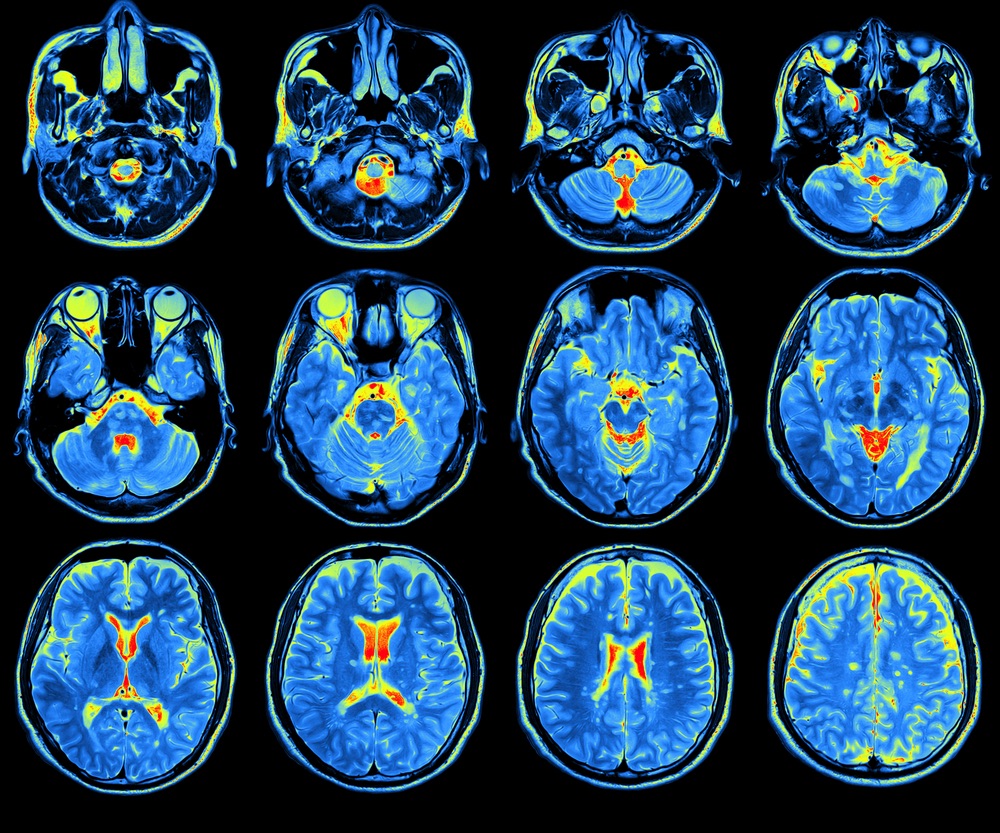
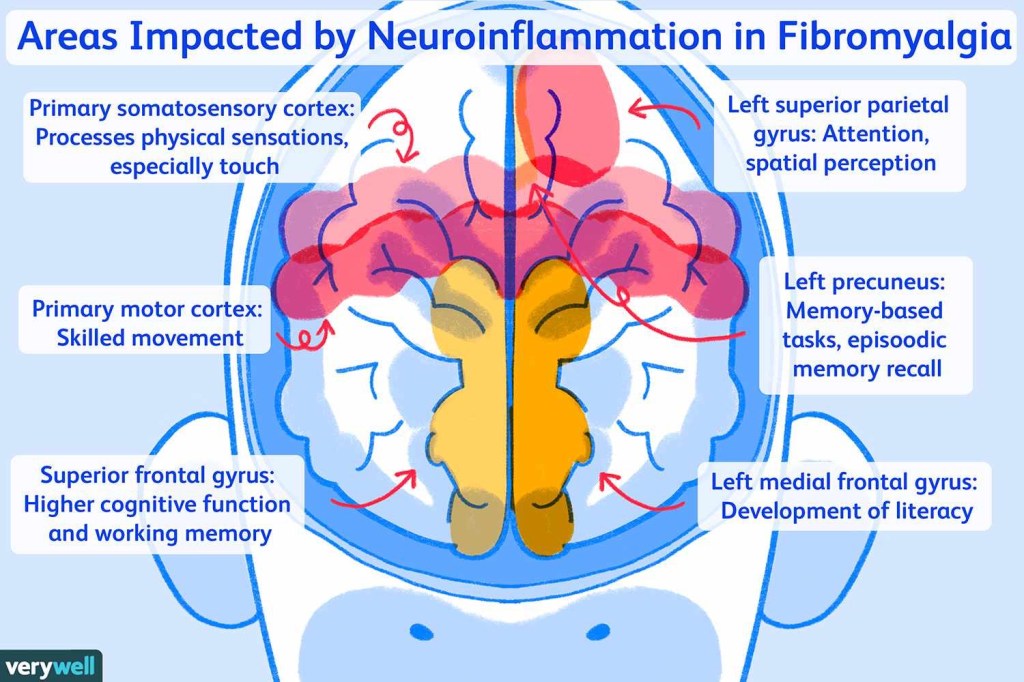
Another study done in 2021 on neuro inflammation using PET scans. There is not much for me to summarize as this study does not give much details. I will include the link. Again the results revealed that people with fibromyalgia showed a significant higher neuroinflammation than those in the control group. Conclusion – abnormal neuroinflammation can be an important pathological factor in fibromyalgia. The study revealed critical regions affected by neuroinflammation – which could help improve diagnosis and effective medical treatment for fibromyalgia.
Advertisements

A third study completed in 2022, using Diffusion kurtosis imaging was also completed. By using this technique, microstructural alterations associated with neuroinflammation were able to be observed. Again, the results showed that people with fibromyalgia have significantly higher neuro inflammation then thee control group. The report stated that the results will help provide valuable information in regards to brain neuroinflammation. To read the study visit here.

Advertisements

Hopefully in the near future, these studies help improve the way fibromyalgia is diagnosed and treated. There appears to be consistent results and findings at the end of all three studies – neuro inflammation is known to be prevalent in people with fibromyalgia!
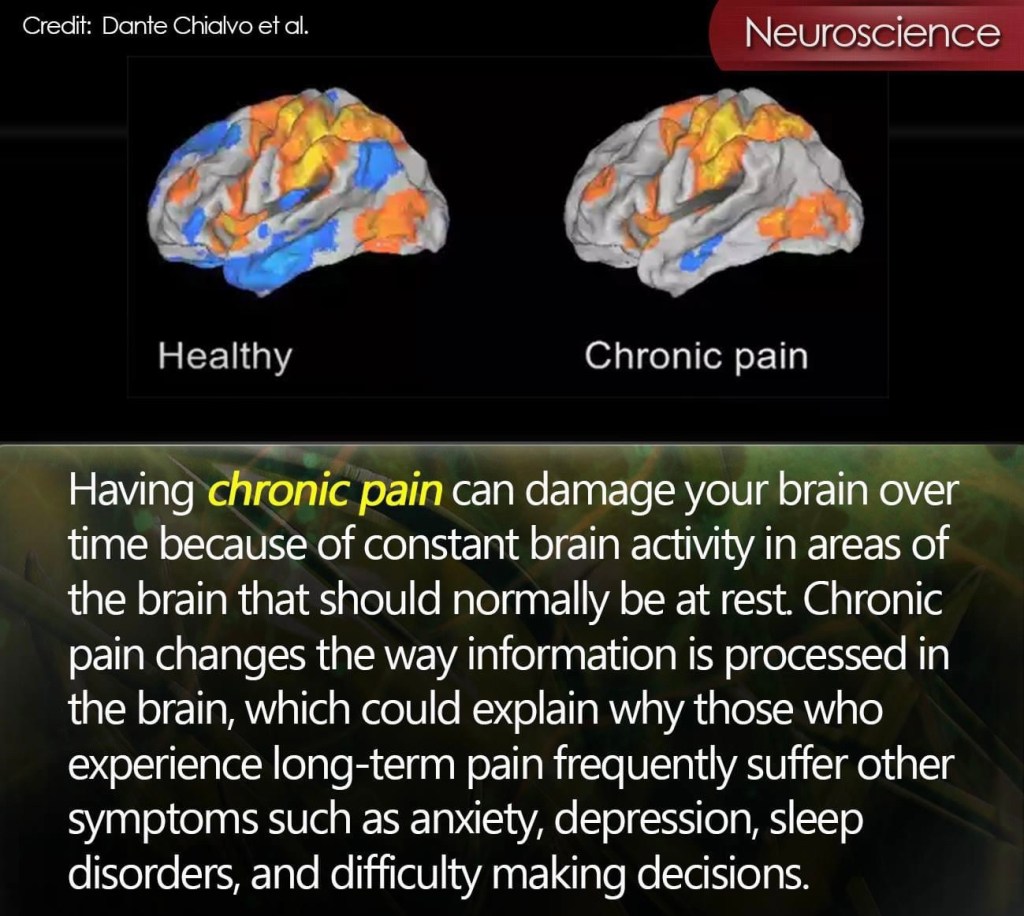
Chronic pain appears to change the brain. Does it cause damage? According to research, chronic pain can possibly can damage our brain

According to experts, fibromyalgia has a neurological component. In fibromyalgia the brain interprets all stimulus as pain – when it really isn’t painful. In return our brain misfires pain signals all over the body causing chronic pain to form. Have you ever stopped to think about what happens to our brain if it is constantly at work sending pain signals out? You may be surprised.

Advertisements
Advertisements

In a healthy brain, all the regions exist in a state of equilibrium. When one brain region is active, the other regions should not be as active. However, chronic pain causes the front region of the brain ( responsible for emotion) to never deactivate. It is always in “full throttle” – meaning it is always fully active. The constant activation can wear out neurons ( information messengers) alternating connections to each other. Researchers used MRI scans to scan the brain a group of people with lower chronic back pain and a pain free group (control group). What they found was that parts of the cortex were activated in the pain free group and others were deactivated ( maintaining the equilibrium). Your brain cortex is responsible for memory, thinking, learning, reasoning, problem-solving, emotions, consciousness and functions related to your senses. However, in the chronic pain group, one of the nodes did not quiet down. Researchers state that then constant firing of neutrons could cause permanent damage. The connections could die because they can’t sustain high activity for this long without a break. People with chronic pain have pain 24/7 – which makes areas of the brain always active. This could hurt the brain. You can read the article here.

Advertisements
Advertisements

In another study in 2007, researchers discovered that people with fibromyalgia, grey matter of the brain is lost. We lose grey matter as we age, but it appears that fibromyalgia may speed up this process. The study revealed that fibromyalgia patients showed a reduction in grey matter and total brain volume compared to the healthy control group. The grey matter that was lost occurred mainly in the regions of the brain related to stress and pain processing. In areas of the brain, the parahippocampal and frontal cortices, the grey matter lost is consistent with cognitive deficits of fibromyalgia ( cognitive impairments seen in fibro). Grey matter atrophy is partially reversible. Grey matter irregularities caused by chronic pain do not reflect brain damage. It will normalize when the pain is treated or under control. You can read this study here.

Advertisements
Advertisements

Both these articles sure made me think and evaluate the neurological aspect of fibromyalgia. Are the changes in the brain that were discovered in these two studies, the reason behind some fibromyalgia symptoms or even a cause to why fibromyalgia may develop? I do not have the answer, as I am not a scientist. I believe a wider study is needed to verify the above findings. These are only two smaller studies completed.

Advertisements

Can we make our brain not misread pain signals? Food for thought…

Just a blog to make you think deeper. I attended an online fibromyalgia summit not long ago. Dr. Whitten spoke along side Dr. Murphree. Both these gentlemen treat fibromyalgia patients in the United States. The information in the video I watched made me think on a different level.

Advertisements

Food for thought…

We all know there is no cure for fibromyalgia, but what about treatment options ?!? Finding a treatment or routine that helps improve your fibromyalgia symptoms can be tricky. Looking at my own journey I have realized I haven’t really ever found that treatment route that works – especially when symptoms appear when they feel like it. I feel like no matter how much I try to prevent fibromyalgia symptoms , I’m fighting a losing battle. I’ve come to realize that my body will do what it wants to do and it’s hard to rein it back. You learn to deal with your symptoms day by day as you never know which symptoms will be prevalent that day.

Question:

Fibromyalgia is considered neurological at this point, so how do we rewire our brain so we don’t feel pain so intense?

Advertisements

If fibromyalgia is really caused by our brain misreading signals, how do we think we will be able to control it or change it? Ever been driving to the store and your mind wanders and you find yourself thinking about other things? “I really should finish that assignment for work. What should I buy at the store? I should really be cleaning. I can’t forget my best friends birthday on the weekend.” We usually don’t even realize our brain is thinking up thoughts without us thinking. Interesting, isn’t it? This is our chatty brain talking. If we cant even shut off our chatty brain, how do we make our brain not misread signals ?!! Technically we can help limit our mind from wandering by “living in the moment.” It takes a lot of redirection of our thoughts. If our brain is stuck in fight mode (fight or flight) how do we rewire our brain so we can increase our pain threshold? I asked the following two questions to most health care providers I have seen and I have never been giving any answers. I don’t have the answers to these questions. Just a few questions for you to ponder over.

*”Pain threshold is the minimum intensity at which a person begins to perceive, or sense, a stimulus as being painful. Pain tolerance, is the maximum amount, or level, of pain a person can tolerate or bear.”

1. How does one raise that pain threshold without causing excruciating pain, chronic fatigue or flares to arise!?!

2. How does one create a successful treatment plan without the pain going out of control?

Advertisements

I was often told to raise the pain threshold level by slowly adding time to activities or tasks, but I found this unsuccessful. Example: adding 30 extra seconds a week to your walking ability may help raise your tolerance slowly. Some people may add time to their activity every few days, but I found this to be physically demanding on my body causing increased pain levels to arise. For myself, this strategy would just backfire and cause me to flare, even if I stopped before I hit my pain threshold line. After three years of trying to incorporate this strategy, I can say it has failed. No matter the time increments I can’t seem to get passed being able to walk longer distances. Don’t forget, everyone’s body will respond differently. Just because it didn’t work for me, doesn’t mean it wont work for you. Give it a try! You can alter this strategy however you want.

Advertisements

Health care providers mentioned using yoga to help raise the pain threshold. Yoga incorporates meditation, physical poses along with mental training. Many people without fibromyalgia take part in fibromyalgia and find it relaxing along with many increased health benefits. These benefits include increased muscle strength, flexibility, energy, weight reduction and energy. However, for people with fibromyalgia it can become very difficult to get in the “zone” to concentrate enough to take part in yoga. Being able to meditate can be difficult on its own, but factor in chronic pain and fatigue levels makes it even harder. For myself, I found yoga too slow for my liking and I couldn’t even get into half the yoga poses due to pain levels increasing. How does one find the benefit of yoga with difficulties concentrating and have limited motion /flexibility to get into the yoga poses is beyond me. I even started with the easy poses and had a difficult time. Yoga may benefit some people, but it wasn’t for me.

There may be more strategies out there, but these are the only two I was ever introduced to.

Advertisements

If our pain, fatigue or flare ups increase drastically during treatment routes, I personally think that this is a failed treatment route. I’m not a believer in the “no pain, no gain” saying when it comes to fibromyalgia. First of all I live with daily pain, why would I do something that causes further pain to result!? My goal is to decrease pain levels not cause further pain from forming. When we live with pain levels that are 10/10 why would I want to “add to injury”?!? In my eyes, a successful treatment route should cause limited or no pain at the time being done. A successful treatment plan should not cause a flare up to form the next day. If it does, it means you have gone over your pain threshold level and pushed too hard. I am a firm believer in stopping before one hits that threshold level. You may want to try to push just slightly above that line to help try to heighten that threshold level. Successful programming or treatment routes should improve your ability to function and move better and not result in more pain. After-all the goal is to improve quality of life not hinder it further!

Advertisements

In my experience, health care providers do not seem have current up to date information on fibromyalgia or have a lack of knowledge of the condition. Don’t get me wrong, some are very knowledgeable on fibromyalgia. The lack of understanding and knowledge often can lead to hands on treatments – which are often too aggressive. Example: A massage therapist may not even know what fibromyalgia is and when you go for a massage may not apply gentler pressure while massaging your back or legs – resulting in extreme pain levels. Many healthcare providers overlook the common issue in fibromyalgia – our bodies are hypersensitive. Dr. Whitten also mentioned this in his discussion.

Advertisements

In order to help reduce fibromyalgia symptoms, we must find the right combination of routes for ourselves. This process can be very exhausting. Don’t give up! Try everything you can possibly try. Don’t be afraid to speak up if a health care provider mentions possible strategies that have maybe failed you. They may even be able to provide you with ways to modify those strategies that may help you find success!

Advertisements