Fall Weather – The struggle is real! My personal story!

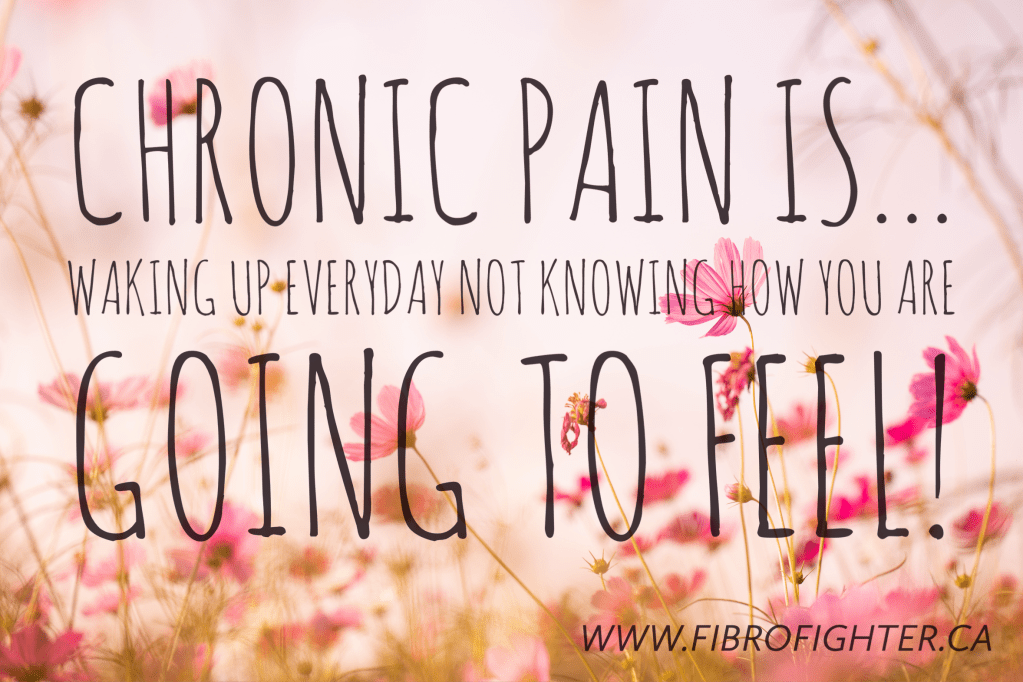
Living with fibromyalgia we learn quickly how unpredictable the condition and its symptoms can be. We learn how to manipulate and change our surrounds and routines to avoid certain symptoms from spiraling out of control. However, what happens when we can’t prevent said symptoms from arising or becoming worse?? If you have fibromyalgia you know too well what I mean by this comment. For those of you reading this who do not live with the daily struggle of chronic pain you may be wondering how one can’t possibly control their symptoms.
Advertisements

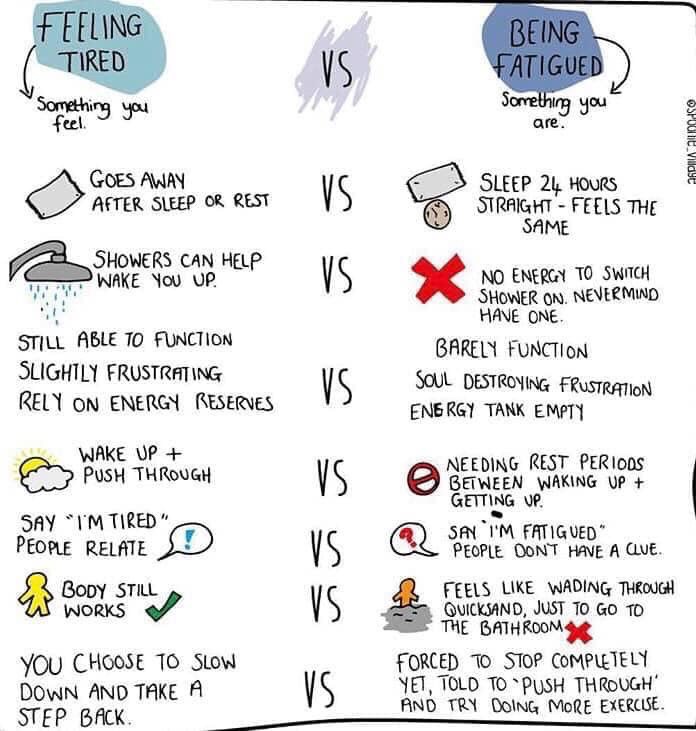
For myself as summer changes to fall weather – my fibromyalgia symptoms go out of control and no matter what steps I take to prevent this from happening , it happens. The extreme fatigue appeared like clock work – the beginning of October the fatigue showed up full force. By 6 pm every evening I am barely able to keep my eyes open. I am even finding myself sleeping in past 7 am every morning ( which is not normal for me). This cycle has been consistent since my fibromyalgia diagnosis. As fall turns into winter weather, the fatigue sets in even further. The last few weeks all my body wants is to sleep all day long – even though the acquired sleep does not leave my body feeling any more refreshed. I am absolutely exhausted. Exhausted from battling the exhaustion! I try not to allow myself to sleep all day, as we all know it is not exactly a healthy habit to form. However, as my body transitions to the winter weather I allow myself to rest more. This was a learning curve for me over the years as if I do not allow my body to rest, the more intense my fibromyalgia gets. I don’t consider the added rest as a failure to control my fibromyalgia, or allow my mind to convince myself I am lazy anymore. I have simply come to terms with this is what my body needs at this moment – to rest. Eventually the fatigue eases a bit to the point where I don’t feel the need to sleep all day.
Advertisements
Advertisements

Lets talk about pain levels…

For those of us with fibromyalgia most of us can agree that we are never totally pain free. Even on days when I say my pain levels are lower, I still feel a degree of pain. A degree of pain that I can still function enough to get a few chores done around the house. However again the summer to fall/winter weather aggravates my pain. The intensity increases the cooler the weather gets. The last week has been a very trying week. A week of unpredictable fluctuating pain. Head to toe pain that feels like my bones are being drilled into. For the ladies out there with long hair ( or the males who may have long hair) – you know that feeling you get when you have worn your hair up in a ponytail for so long and then you try to brush your hair and your scalp hurts?! I often describe this as my hair hurts. What really causes the pain – the hair has been compressed so tight in the ponytail that it has caused the nerves in our scalp and under our hair follicles to become sensitive and aggravated. Seriously though it is called ponytail headache and is considered a form of allodynia. People with fibromyalgia experience allodynia which is pain due to a stimulus that does not normally create pain. This is how I explain how my entire body feels every fall.

Advertisements
Advertisements

It took me a long time to accept the fact that weather is one of my biggest flare up triggers. Weather is one aspect we have no control over. What I can change is my attitude towards the increased pain/fatigue levels and how I cope through these challenging times. It is definitely a learning curve. What I have learned is to be gentler with myself during season changes and weather that triggers my pain levels. Do I still get annoyed, discouraged and even angry at times – YES. After all I am only human. What I have allowed myself to feel these emotions and pick myself back up and carry on with life. After all – what more can a person do when living with a chronic condition. Some days are harder to pick myself back up, but giving up and allowing fibromyalgia to win is not an option. Stay strong fibrofighters. Remember to be kind to yourself! Gentle hugs to you all.

Advertisements

Nociplastic Pain and Fibromyalgia. What exactly is Nociplastic Pain?

When we stop and think of pain many of us think pain is just pain. I have recently bought two books on how to “live” with chronic pain and to make the best life possible. Both these books introduced a concept that I was not aware of. I am sure the terms have existed for years in the medical field, but since I have been dealing with chronic pain I have not had a doctor explain it using these terms.

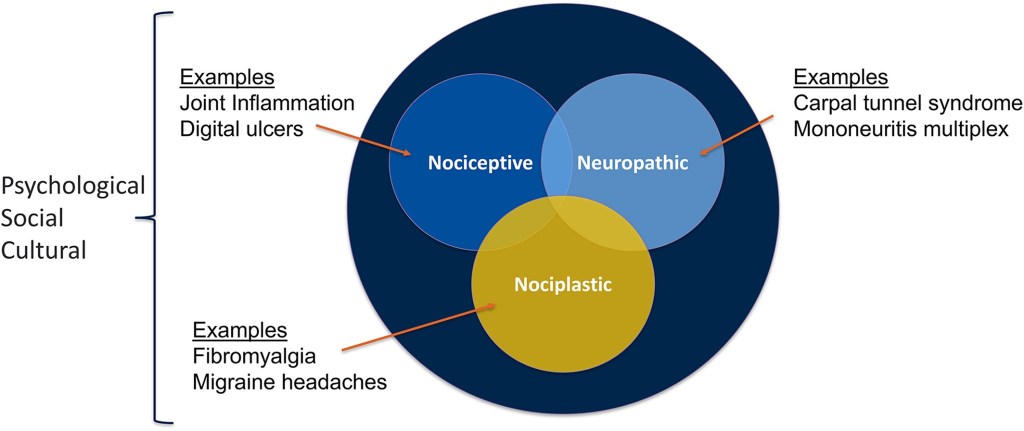
Did you know there are actually three types of pain?

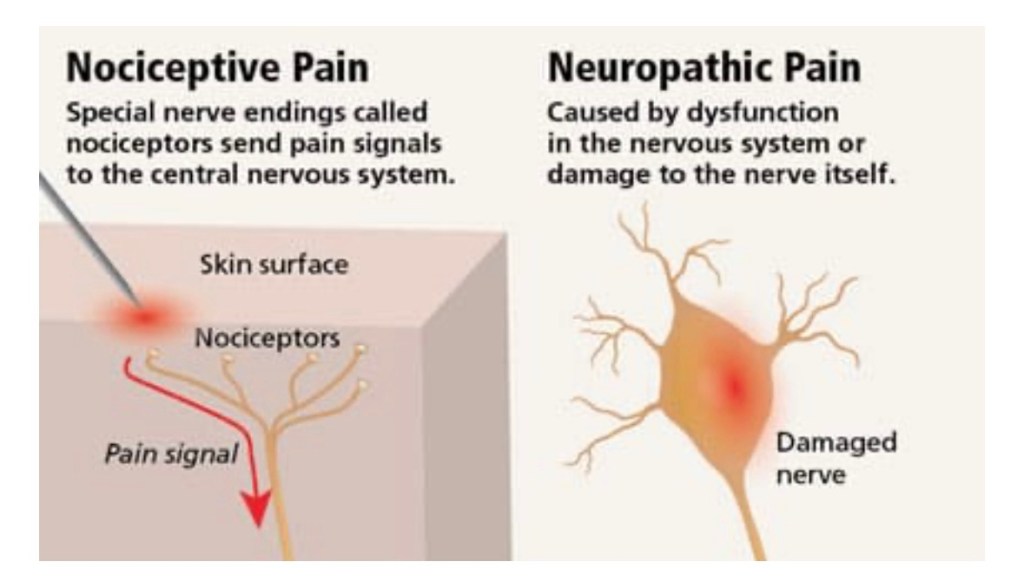
1. Nociceptive pain which occurs if there is an injury such as a broken bone, appendicitis etc.

Advertisements

2. Neuropathic pain occurs when there is an injury or condition to the nerve system. A spinal cord injury or multiple sclerosis are a few examples.

Advertisements

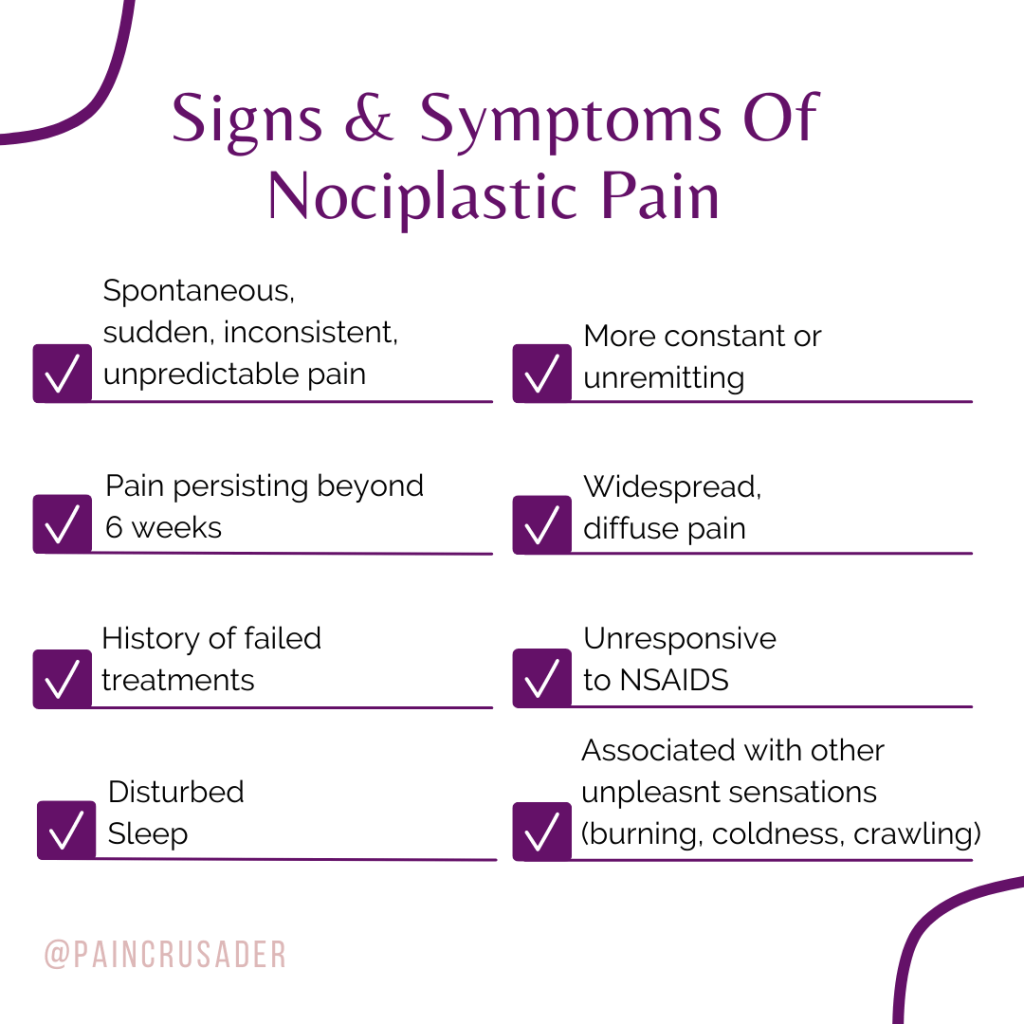
3. Nociplastic pain takes place when the pain system has become sensitized. Nociplastic is the pain felt in fibromyalgia.

Advertisements

You can compare the three types of pain like an alarm system. Nociceptive pain takes place when the alarm system is working properly. In neuropathic pain, the wires of the alarm system are damaged and in nociplastic pain the alarm system has a total malfunction.

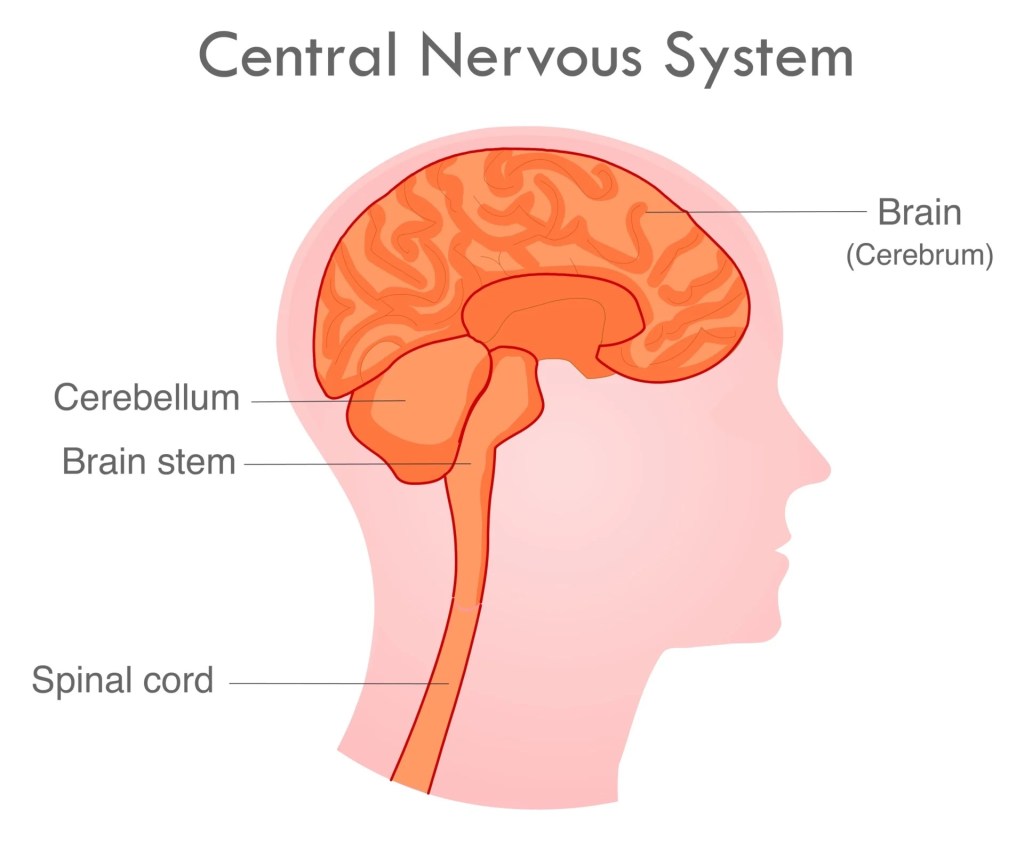
When acute pain becomes chronic – changes within the pain system takes place. These changes lead to central sensitization. In central sensitization the spinal cord becomes more sensitive to pain. Our pain system has now altered and become dysfunctional. How do doctors make comments such as “fibromyalgia is just a mental illness” is beyond me when there is proof that the nervous system is affected.

Advertisements

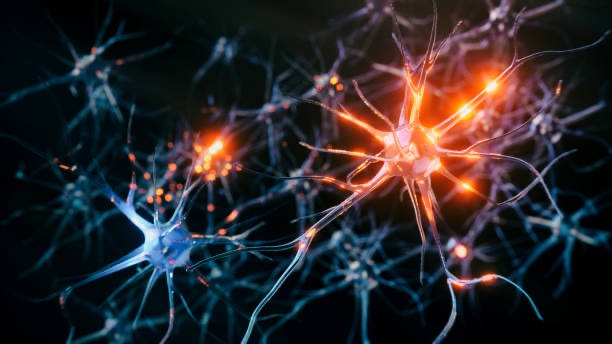
Living in chronic pain will eventually change the synapses ( nerve impulses passing from one neuron to another) in the brain. These synapses become so strong that we feel chronic pain without something triggering pain or without us even being conscious about the pain. According to experts we must reconstruct these synapses in order for the chronic pain to ease or change patterns. Fibromyalgia often leaves areas feeling sore and painful when there is actually no “injury” to treat. For example, I often have upper back pain. It seems to be a very problematic area since my fibromyalgia diagnosis. I can apply heat, ice and take as many pain killers as possible, but my brain still alerts me with chronic pain to that area. It is impossible to fix the area of pain because the problem does not reside in the body part anymore. Make sense?

Think of it this way, we learn to bike or even drive a vehicle. It takes practice. The more we practice the stronger those synapses in the brain become, Eventually it becomes second nature to get on a bike or drive to the store. Same concept happens with chronic pain.

Advertisements

I have not made it far into the book to explain how to deconstruct these synapses to help alleviate chronic pain. Is this where the idea of slowly working our way up to longer increments of time helps reconstruct these synapses?! I am hoping as I make it through the book, it explains how to do this. Many resources explain what needs to be done, but not how to carry out any strategies to make the changes happen! I will be sure to share in a later blog, what I have learned.

Advertisements

According to experts many doctors do not know how to diagnose or treat nociplastic pain. Nociplastic pain is a fairly new concept. When I conducted research to write this blog it was documented that nociplastic pain was only really mentioned and introduced in 2016! That is not very long ago. Many doctors often recommend opioids to their patients to treat chronic pain. However, it is noted that opioids are ineffective in treating nociplastic pain or could eventually lead to worsening of pain. Opioids are also known for making central sensitization worse over time.

Advertisements

No matter what the treatment route is this process will not happen over night. It takes commitment and dedication. A person cannot expect to take part in a week or two program and expect it to resolve. Long lasting pain improvement requires a long term plan which has to be followed to show improvement.

For more information on nociplastic pain and fibromyalgia visit the following websites:

  1. https://www.ncbi.nlm.nih.gov/pmc/articles/PMC9561334/
  2. https://www.thelancet.com/journals/lancet/article/PIIS0140-6736(21)00392-5/fulltext
  3. https://arthritis.ca/living-well/2022/fibromyalgia-new-science-shows-the-pain-is-real